


Geauga County’s hilly landscapes make up the character of the land that once attracted 19th-century pioneers from New England and now attracts 21st-century families and farmers to its rural culture and small town life.
Geauga County’s hilly landscapes make up the character of the land that once attracted 19th-century pioneers from New England and now attracts 21st-century families and farmers to its rural culture and small town life.
“Geology, topography, bedrock and glacial deposits, combined with climate (water) and culture have determined the destiny of Geauga County — how we used land and resources, how agriculture and resource-based industry have evolved to become the place we know and love,” said Dan Best, Geauga Park District naturalist.
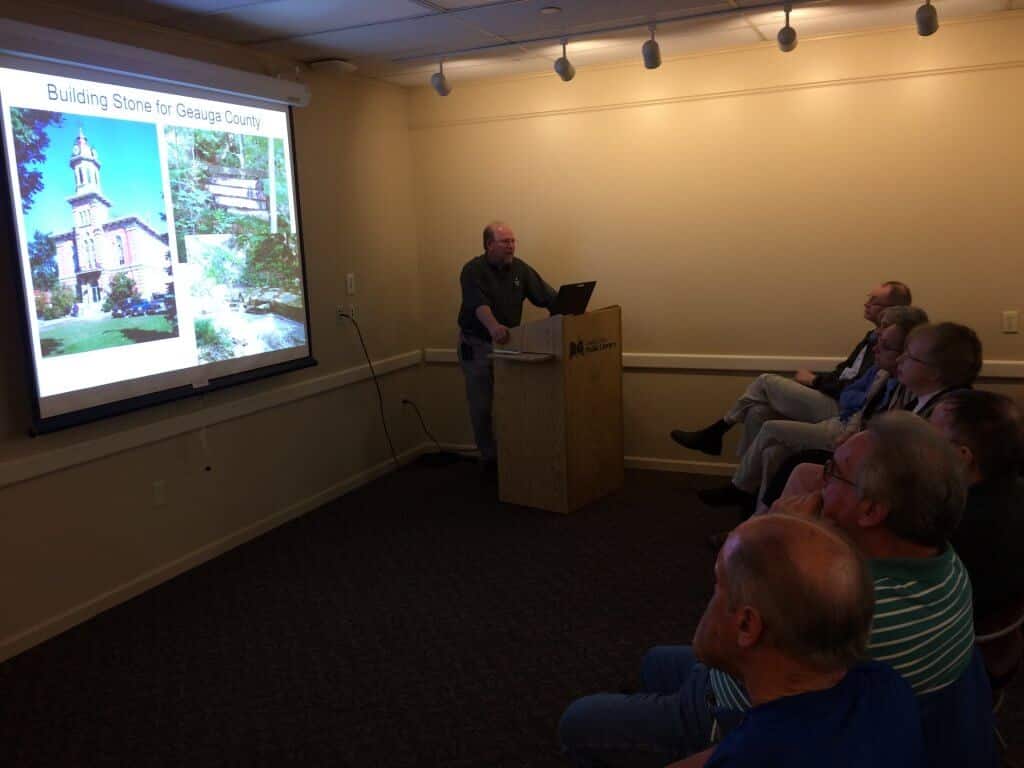
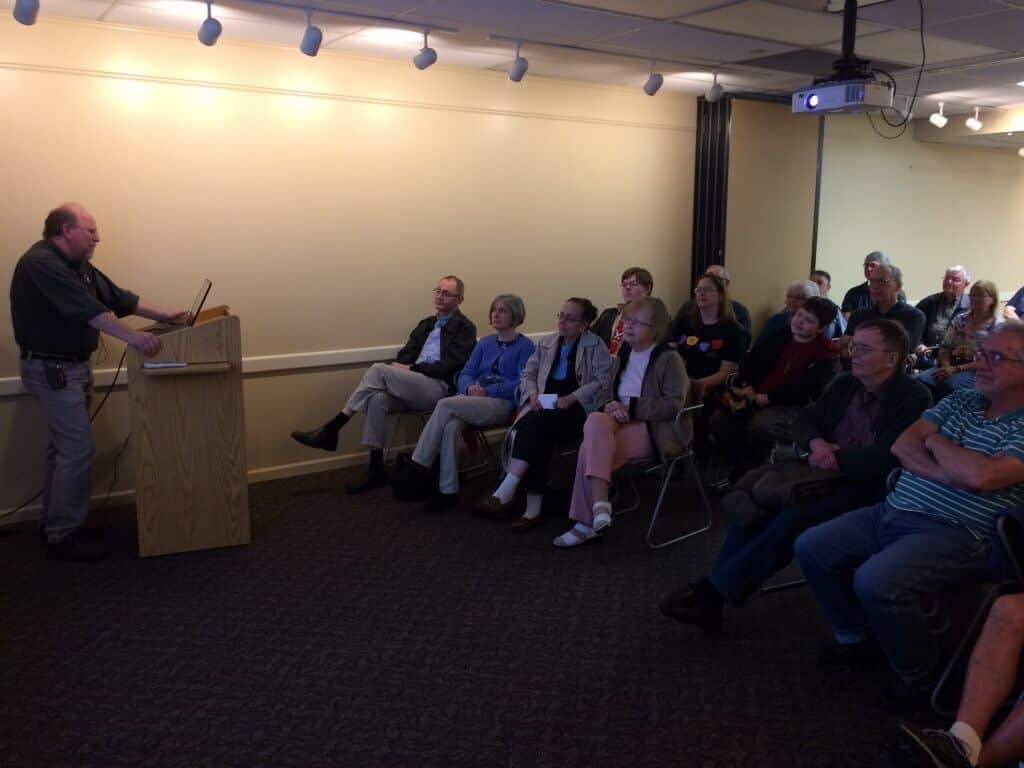
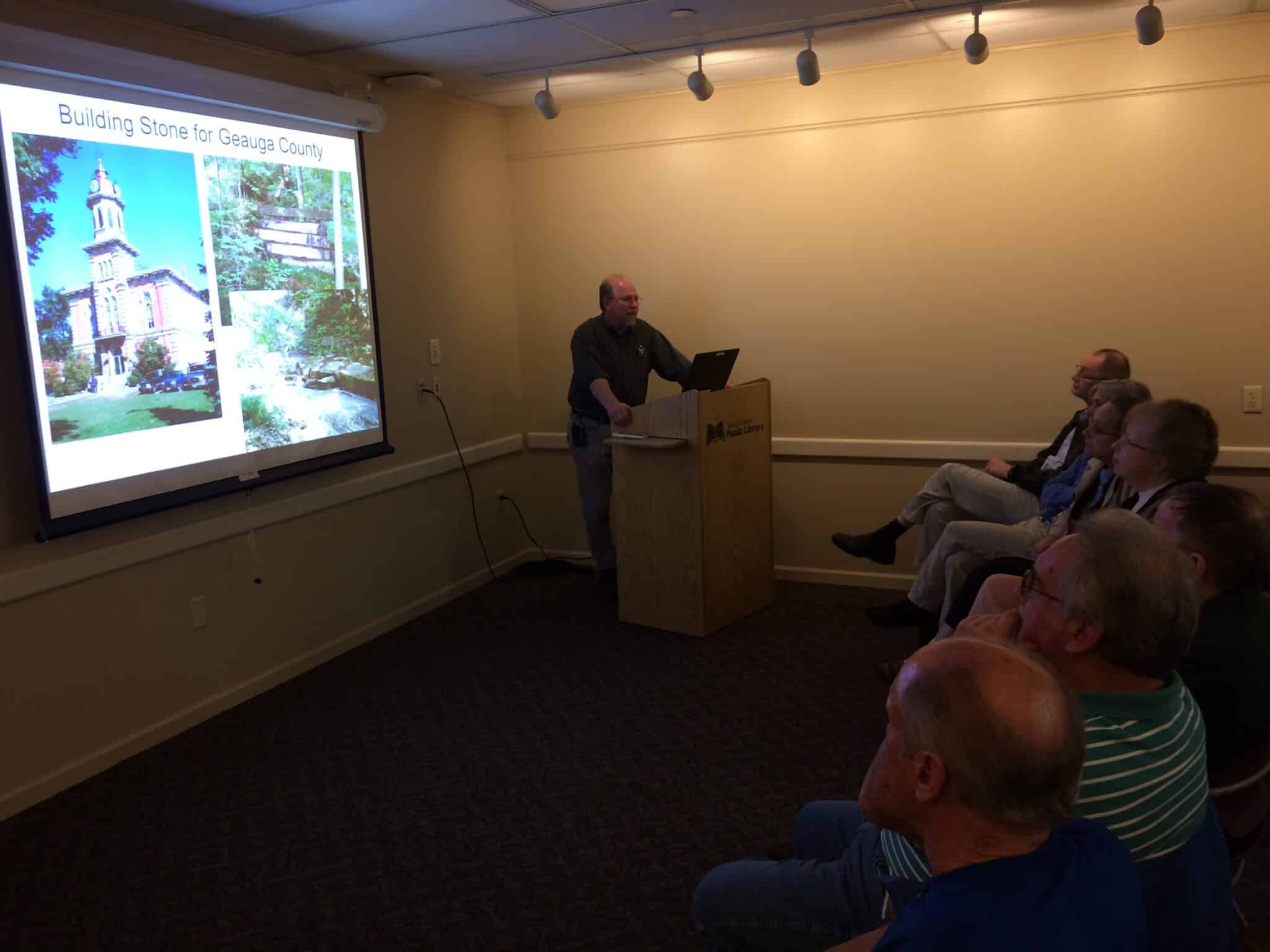
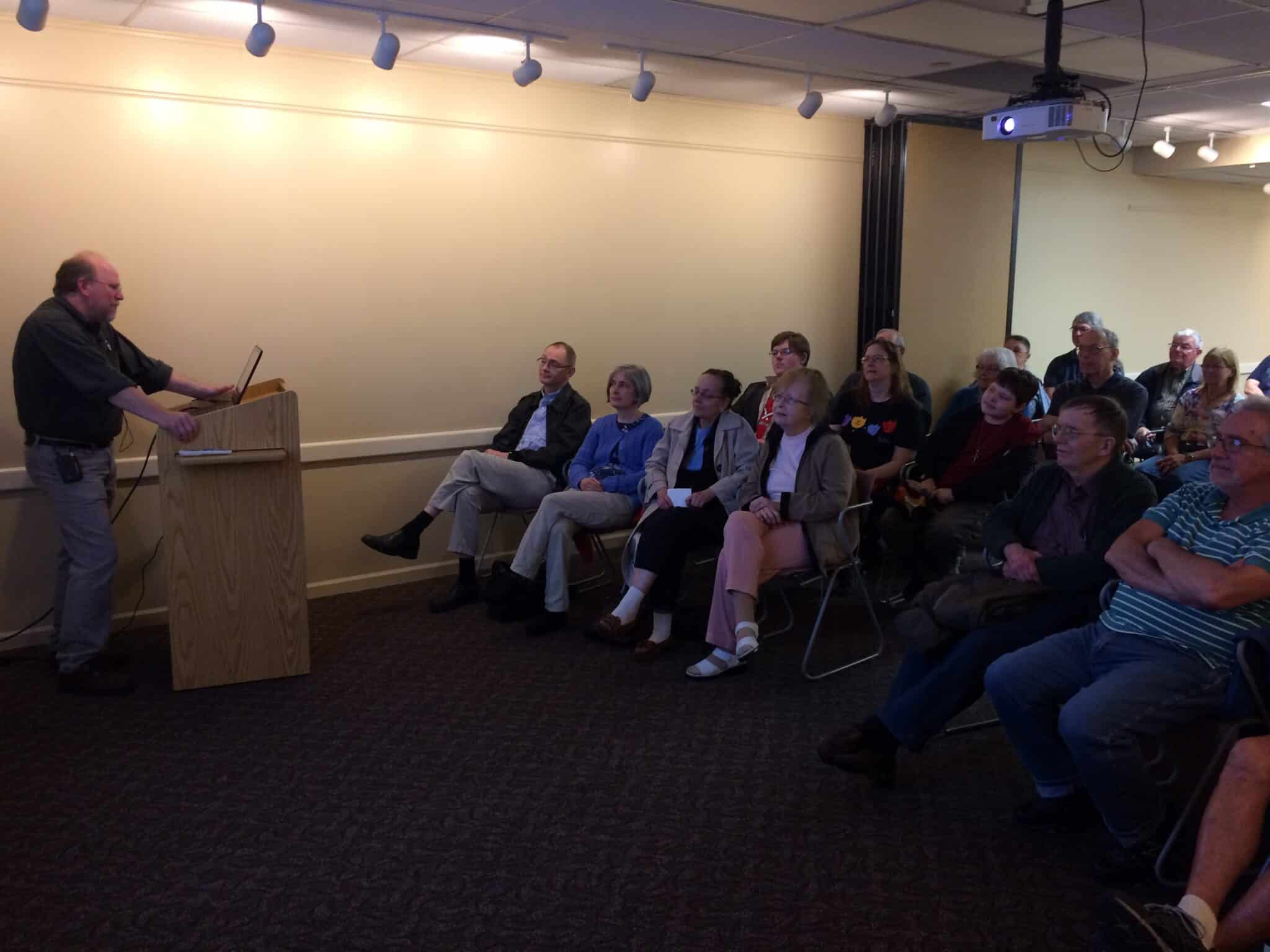
Best shared his extensive knowledge April 20 on the “ups and downs” of Geauga County’s bedrock and glacial geology for a greater understanding of Geauga’s landscape at a free program at Chardon Public Library.
“The best places to view our local geology is where bedrock or glacial deposits are exposed,” Best said. “As for Geauga Park District, that would be Ansel’s Cave at The West Woods and the valley section of Swine Creek Reservation. Perhaps the most impressive geologic site in the county is Thompson Ledges Township Park.
The illustrated presentation addressed bedrock borne of the sediments of ancient seas and hundreds of millions of years of erosion that carved a topography where major rivers’ headwater and glacial deposits determined the agricultural, and therefore, economic history of Geauga County.
According to local historian Bari Oyler Stith, in “History of Geauga County,” “Over 15,000 years ago, the Wisconsin glacier crept inexorably across northeastern Ohio’s Appalachian Plateau, shearing off and grinding down mountain tops, then depositing fine layers of topsoil and hills of glacial till, full of sandstone and granite pebbles.”
Best added public interest in natural history tends to lean toward living things, such as wildflowers and wildlife, but all of these things are related and influence each other.
“However, our particular biological diversity that we harbor here in our forests, streams and wetlands is very much tied to our geology — our glacial soils and bedrock … and of course, climate,” Best said.
Chardon’s Laura Vokoun and her sons, Asher and Owen, arrived early for a topic all three admittedly have great interest in.
Both brothers are members of Chardon High School’s Science Olympiad, a program of extra-curricular study designed to challenge and enrich the most scientifically motivated students.
“Geology is so fascinating and there is so much still to discover,” Vokoun said. “There is always something new to learn. It was fascinating to hear where different rock formations outcrop around the county, so I think that was my favorite thing.”
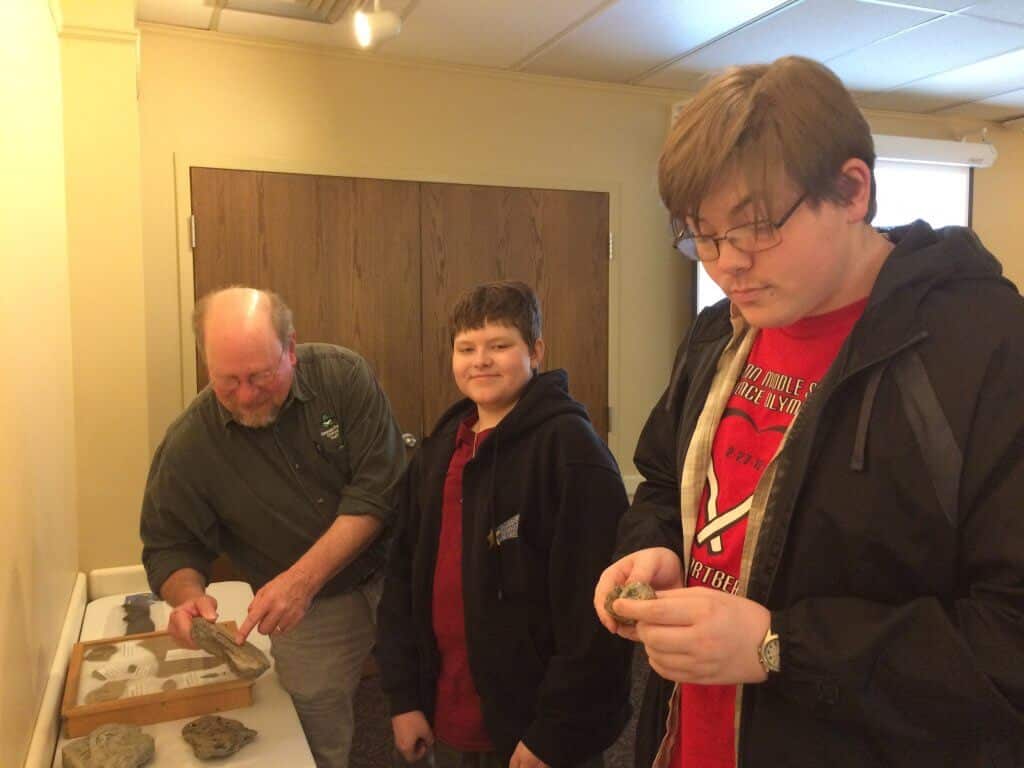
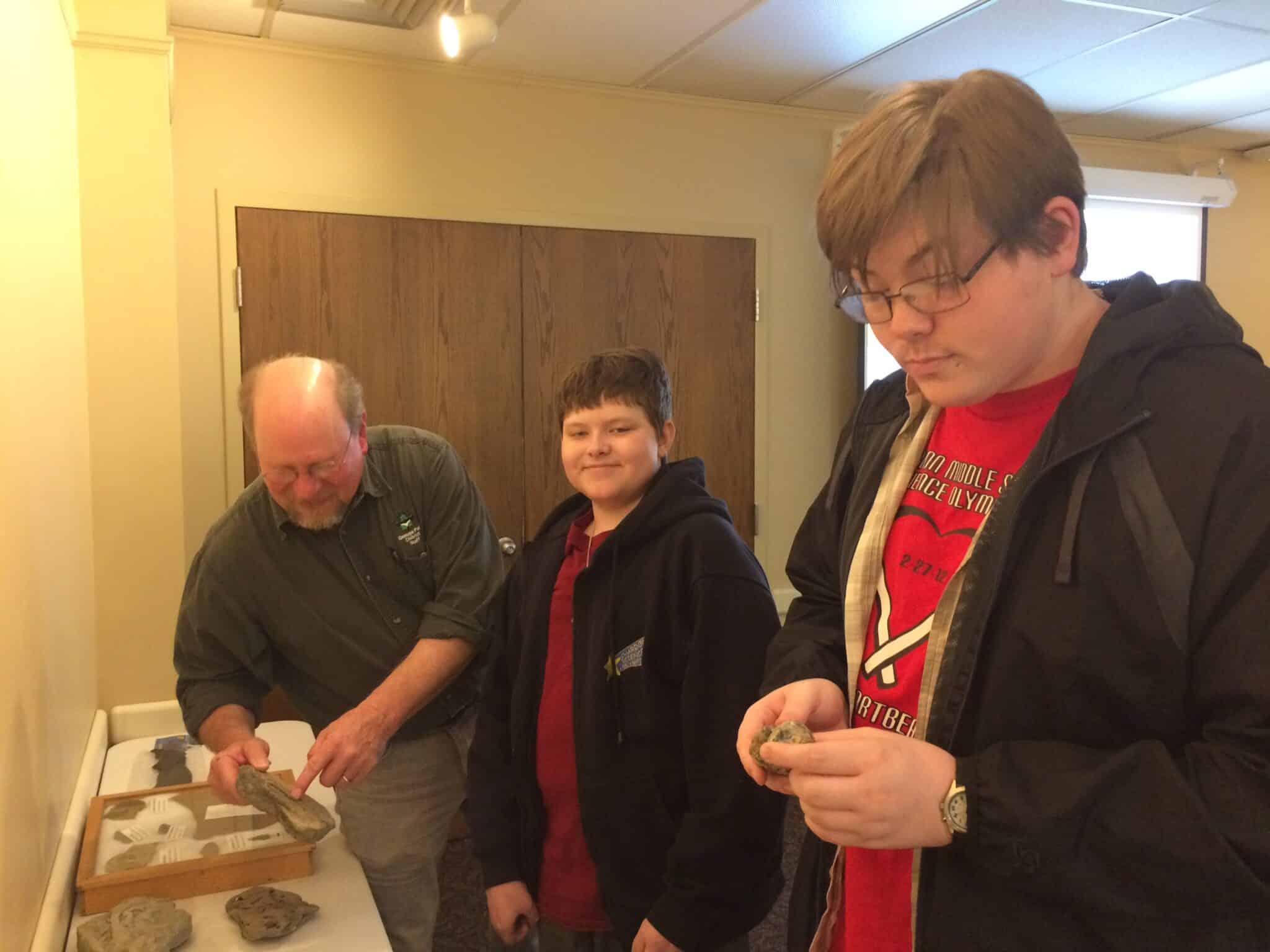
The Vokoun brothers examined a table of fossil samples on display.
Best said Geauga County, unfortunately, is not the best location for fossils.
“Most of the fossil-bearing bedrock layers are the older and therefore deeper shale layers that are better exposed in Lake and Cuyahoga (counties),” Best said. “For example, the Devonian Age fish fossils found in Cuyahoga County’s deep layers of Cleveland Shale — most notably the fearsome Dunkleosteus — has made Cleveland famous in the world of paleontology.”
Best said he hoped attendees gained “a greater awareness and appreciation for our local landscape, why it is the way it is. That is, why are we more ‘hilly’ than surrounding counties.”
“I learned about the actual structure of the bedrock below Geauga County,” Asher said. “I learned some county history and the presentation also helped bring back some glaciers’ knowledge from when that was a Science Olympiad event.”
Some participants jotted down notes as Best highlighted the presentation with PowerPoint slides that included photos and diagrams.
“The short answer to explaining the ‘hill and dale’ topography of Geauga County is our bedrock of alternating layers of soft shales and erosion-resistant sandstones and siltstones,” Best said. “For a very, very long period of time, this sedimentary rock was exposed to erosional forces of streams that ‘carved’ valleys, separating hills, knobs and ridges. The Grand, Chagrin and Cuyahoga rivers rise among these hills in a convoluted pattern of headwater streams.”
Asher shared his philosophy regarding geography.
“Saying what lies below is much harder — for one, we can’t see it,” Asher said. “In addition, among general audiences, there isn’t nearly as much interest in geology as there is in space. As such, it makes sense that we wouldn’t know as much about the bedrock than we would about the sky. In short, learning about the bedrock of Geauga County is so interesting because geology itself is still a new and evolving science, and to study it is to be at the front.”
He added, “I did not expect there to be such a crowd. As someone interested in geology, this was greatly pleasing. Programs such as these continue to add to the depth of knowledge needed for long-term success in Science Olympiad.”
His younger brother shared his sentiments as well.
“Geauga is my home county and I think knowing its history is important,” Owen said.
Upcoming Events:
The park district’s partnership with Geauga County Public Library continues with its popular Fun Bus series, bringing books on wheels to park district parks and special events.
The spring schedule includes alternating parks with Tuesdays at Orchard Hills Park and Wednesdays at The West Woods, as well as impromptu appearances at other parks, if time allows, such as Big Creek Park and Headwaters Park.


