
Company Founder Vince Slusarz Creates Vinyl Niche
Music lovers over 50 remember carefully sliding a black vinyl record out of its jacket, gently placing it on the steel spindle, turning on the stereo, watching the record drop to the turntable and the stylus magically finding the groove.


Music lovers over 50 remember carefully sliding a black vinyl record out of its jacket, gently placing it on the steel spindle, turning on the stereo, watching the record drop to the turntable and the stylus magically finding the groove.
Within seconds, the familiar sounds from the 50s, 60s and 70s would emanate sweetly from the speakers. Listeners would dance, sing along or just sit and enjoy.
But recorded music, like so much else, evolved — first to eight-track tapes, then cassettes, compact discs and then iPods.
Yes, portable and downloadable doesn’t necessarily provide that something special, be it atmosphere, sound quality or just the feel of the thin, smooth, shiny disc in hand.
Sensitive to all those special somethings, record-head Vince Slusarz of Chester Township has had his own collection of oldies-but-goodies since his college days.
When he left his position as attorney/production manager at Kinetico, where he was exposed for eight years to plastic injection molding, Slusarz was ready for another challenge.
Aware that vinyl was on the verge of making a comeback, he heard Sun Plastics in New Jersey was getting out of the business, so he bought the equipment and partnered up with people he knew who could handle sales and marketing.
Since it was clear, even then, the Internet would play a huge role in the new business, Slusarz had an expert create and manage the fledgling company’s website.
Starting out, Slusarz said he figured he would need about 6,000 square feet of production space. Plus, he wanted to carve out his niche in Cleveland, home of the Rock and Roll Hall of Fame, a number of recording studios and many musicians.
On a good day, the drive from his Geauga County home is 25 minutes.
“I love Northeast Ohio and Cleveland. I wanted to show my commitment to the city,” he said.

The aged, red brick Tyler Village, a former elevator company on the East Side just off Superior Avenue, provided just the location Slusarz wanted. He also liked the fact the facility was home to a collection of eclectic operations, such as Chill Pop, Open Door Academy and Moderncre8tive.
“I really felt the manufacturing (atmosphere) was very important,” he said, so the spacious, ground-level suite off E. 36th Street was just the thing. As the business grew, it has provided 18,000 square feet for production space, a roomy shipping department and a convenient inside dock exiting into a large parking lot.
In August 2009, Gotta Groove Records produced its first 100 records in one of the first new record pressing plants in the U.S., with just Slusarz and one other person manning the machines, he said.
Today, the picture is quite different.
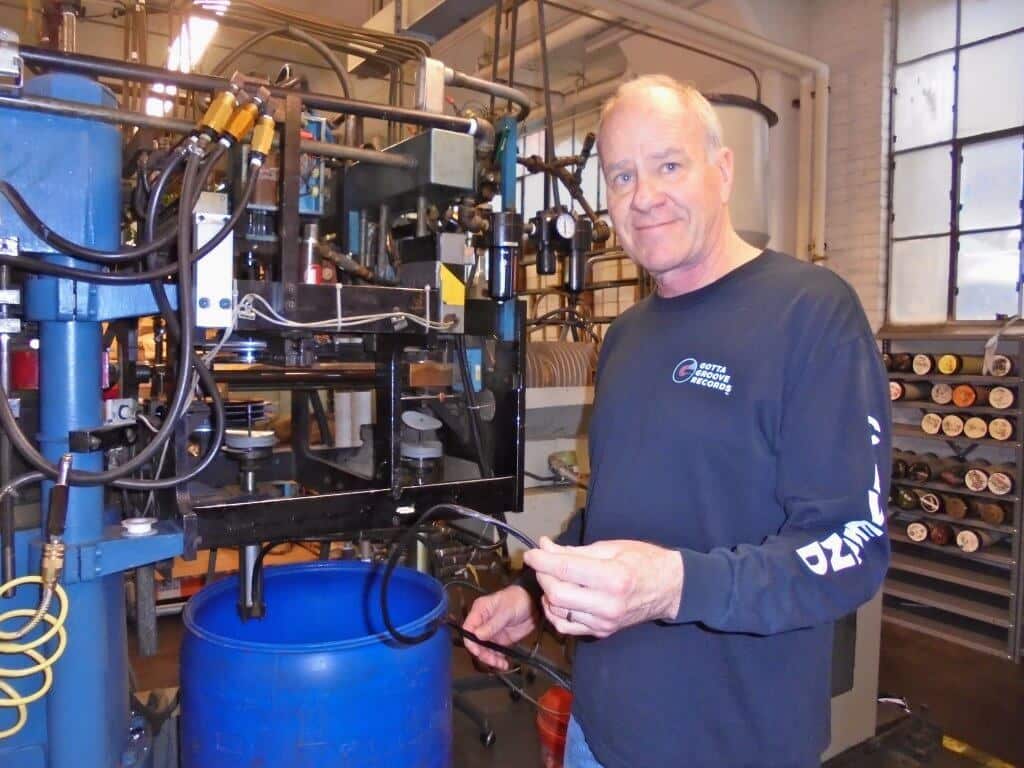
The whirring and clanking of eight record pressing machines is music to Slusarz’s ears. His tiny two-desk office looking over the factory floor barely has space for the Gotta Groove founder and a secretary.
All the action revolves around the vinyl.
Slusarz picks up a 12-inch metal disc, coated with a smooth layer of lacquer.
Placed on a lathe, which he describes as “a turntable on steroids,” the music is inscribed with programmable logic controls on the surface by a cutting head.
“People ask ‘How does the music get on the record?’ It’s not transmitted by the press,” Slusarz said.
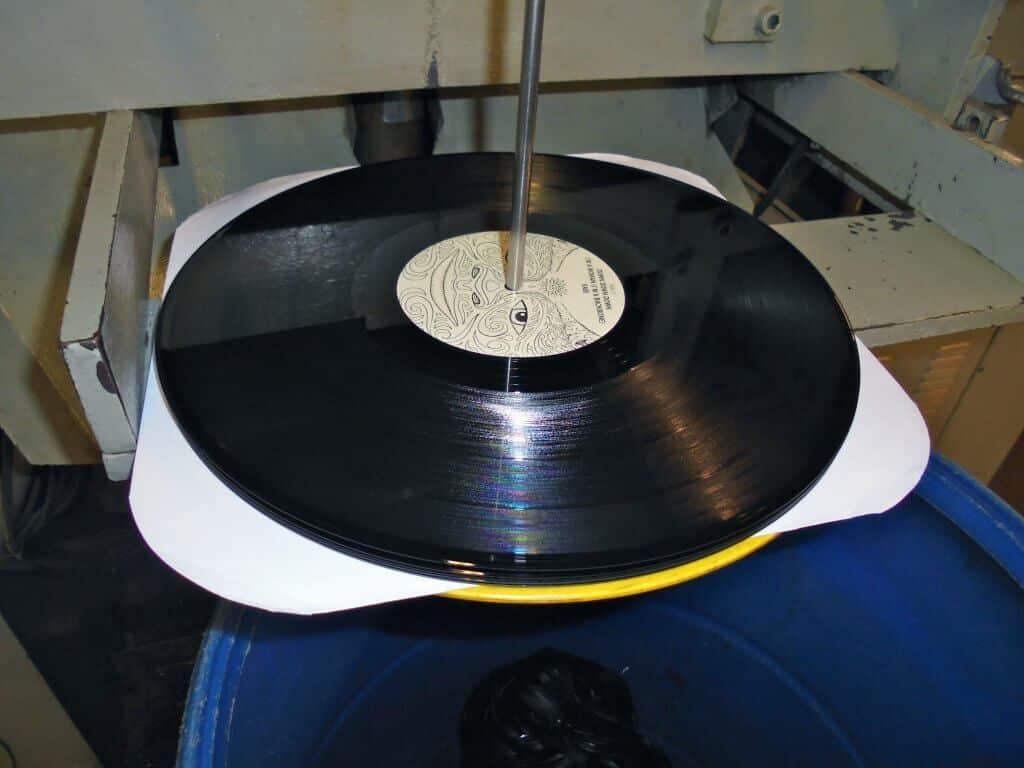
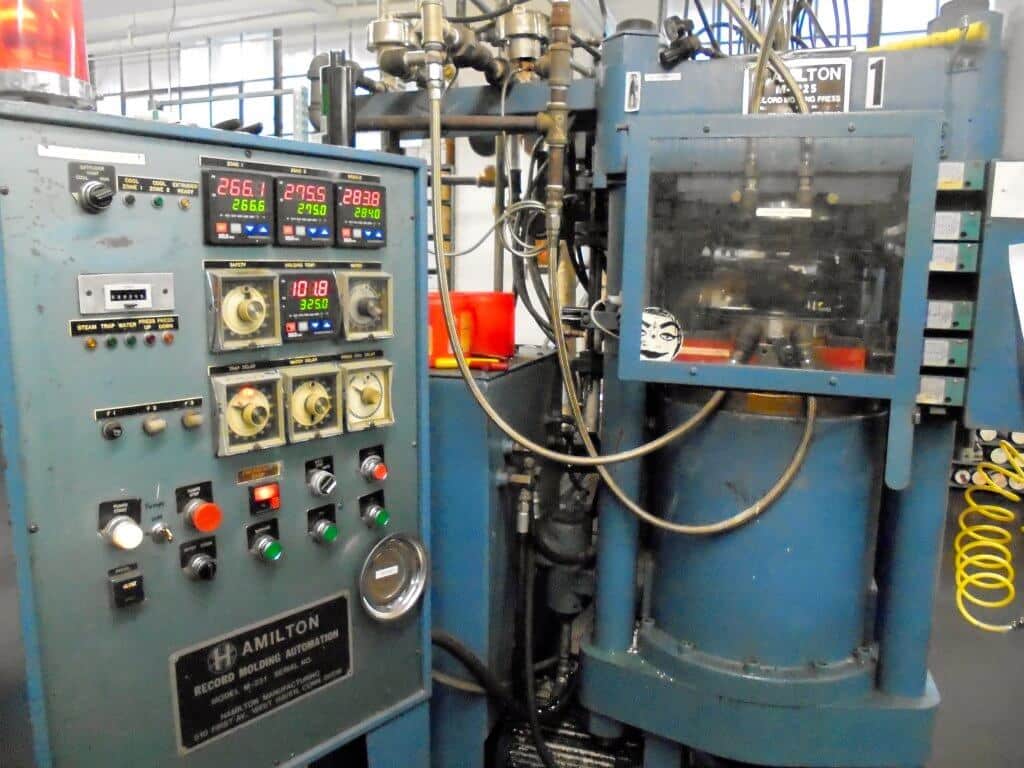
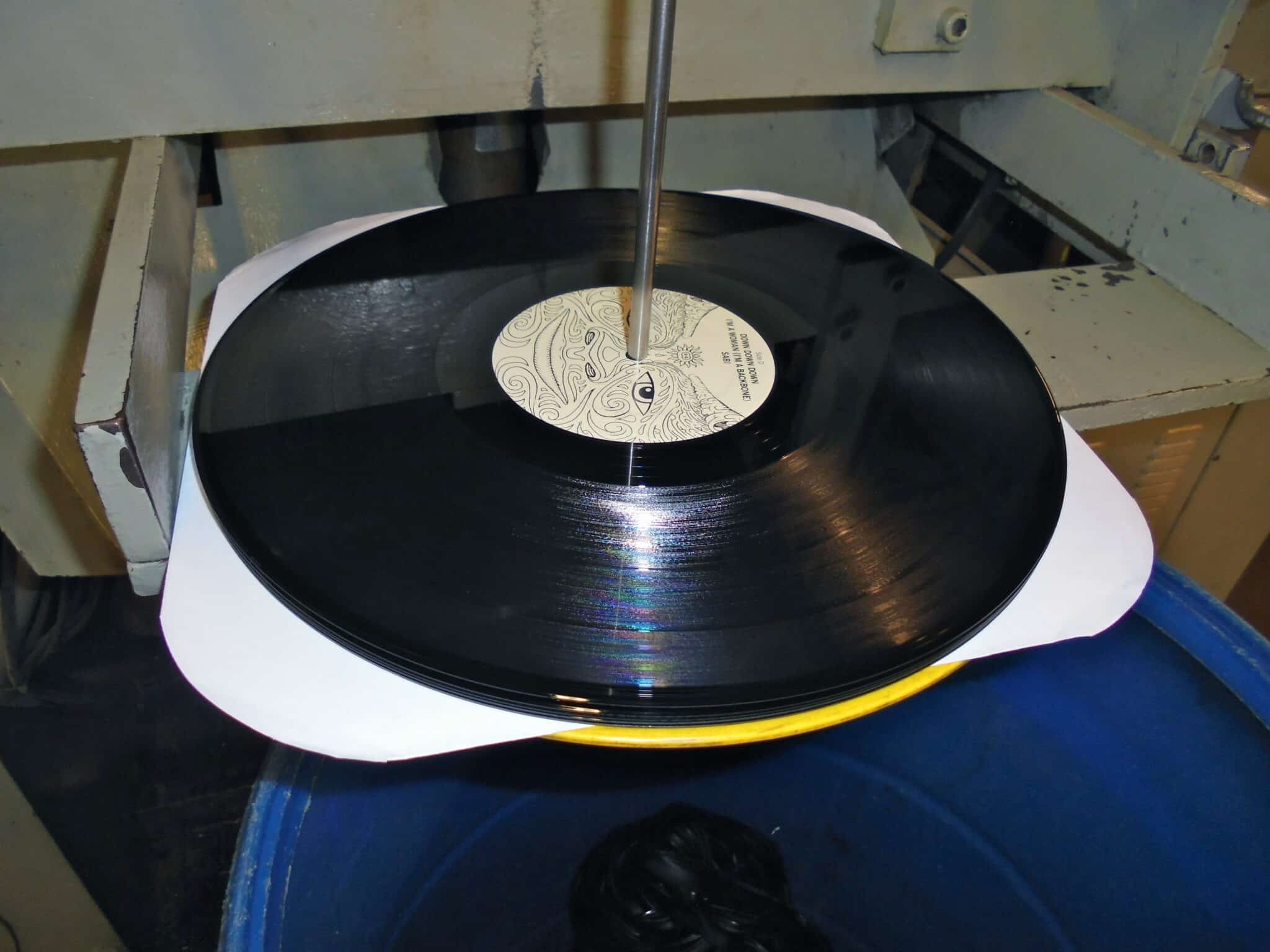
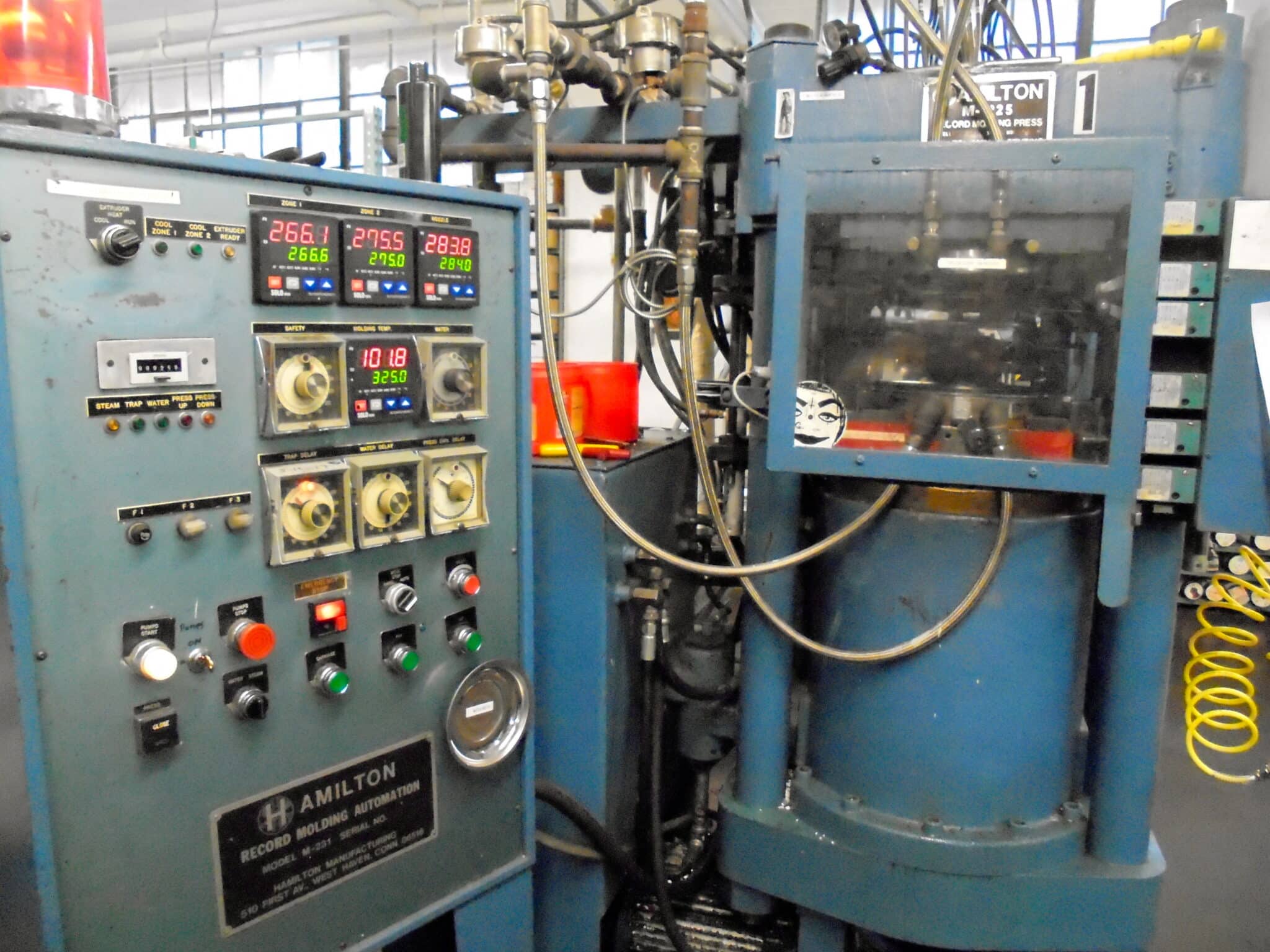
Rather, melted vinyl is pressed onto the lacquered disc along with the label in the press. The plate leaves grooves with microscopic variations that will cause a stylus to play the music.
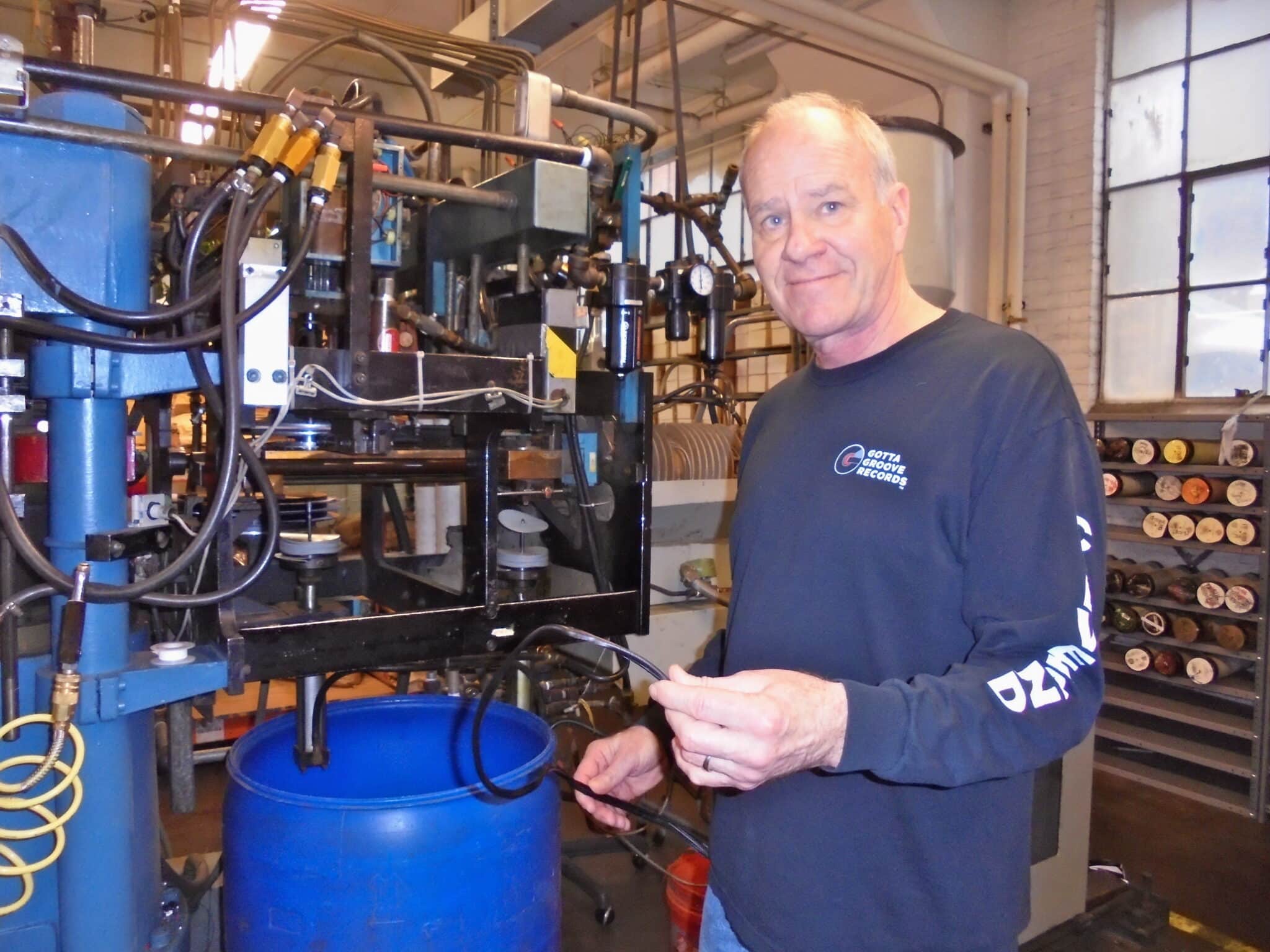
The vinyl comes in huge bags of tiny cubes that are poured into a hopper. Once melted, the machine drops the vinyl onto the plate, where it is pressed into the grooves and the label, then quickly water-cooled and separated from the plate. The excess vinyl is trimmed while still in the press and then out pops a record.
Slusarz estimated about a third of his orders specify different hues of vinyl and custom designs, such as multi-colored swirls, are a specialty at Gotta Groove.

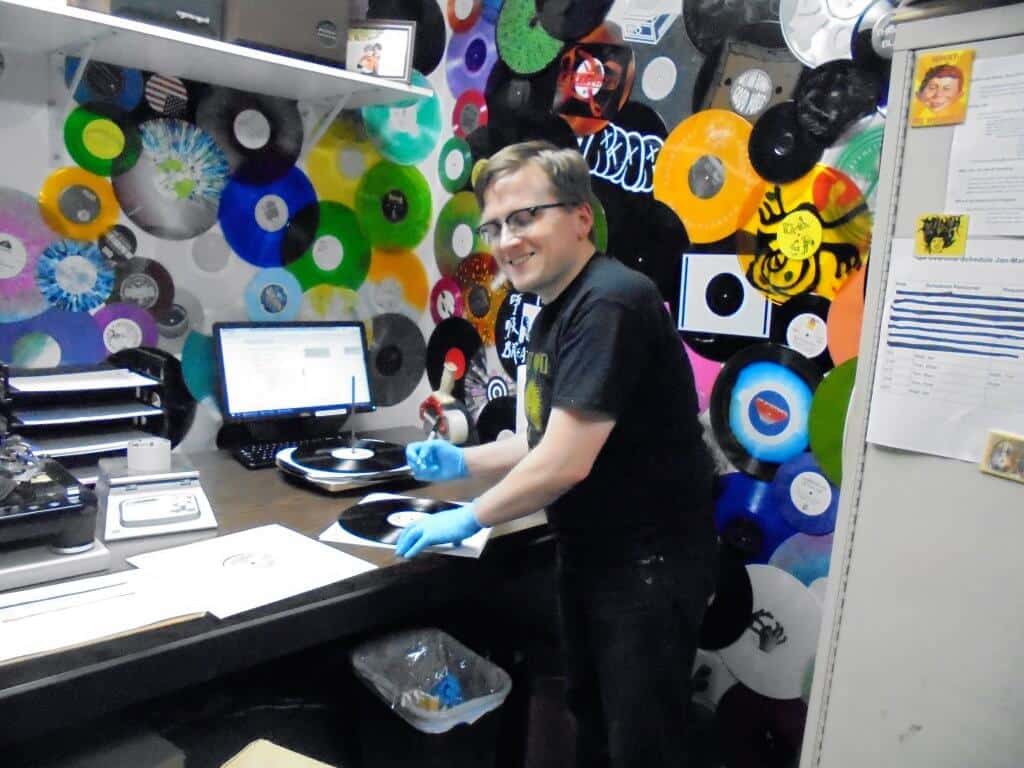
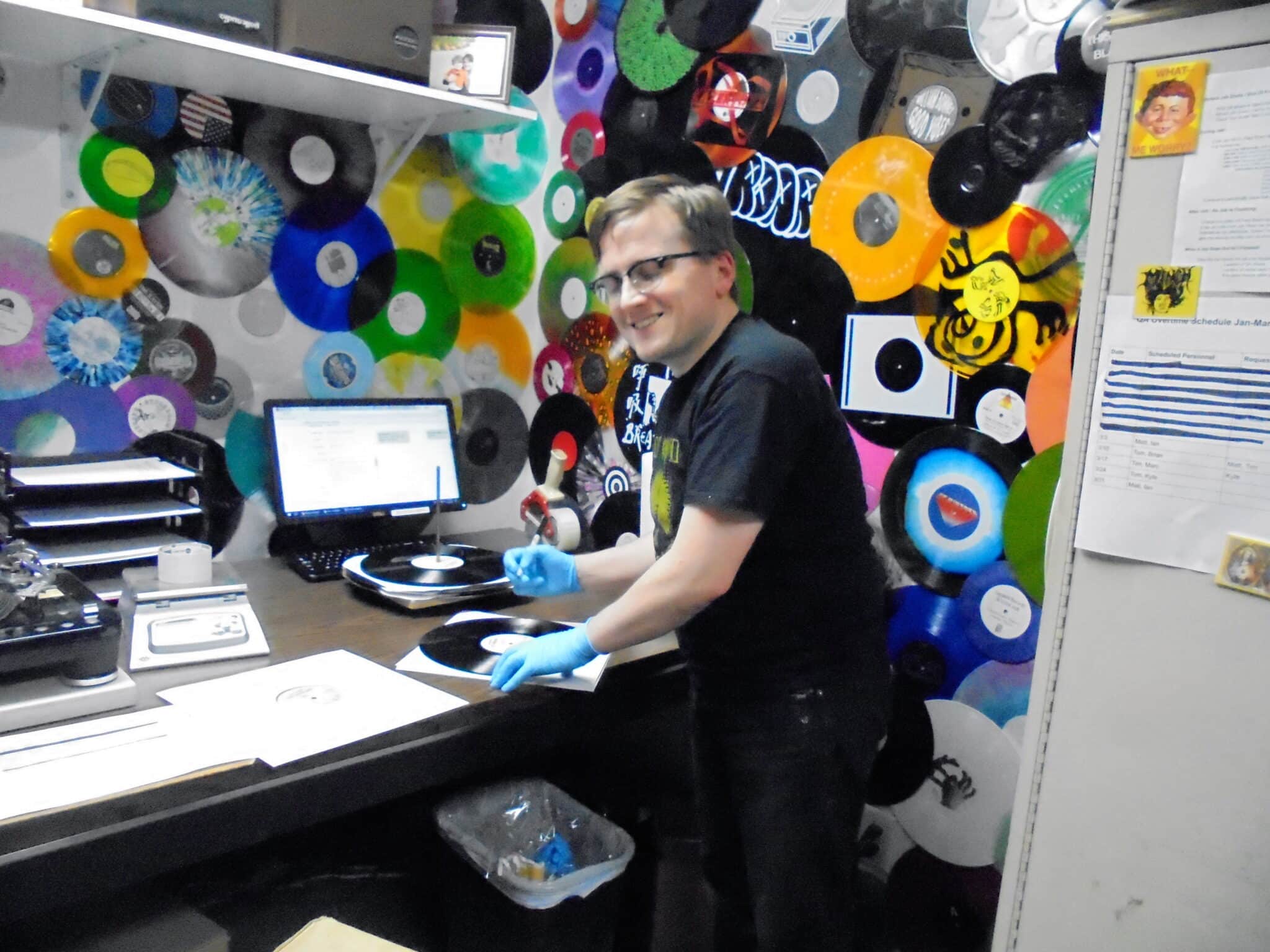
Quality control, especially when working with machines that are older than many of the operators, is essential. To insure there is no slippage in the end product, Tim Thornton sits in a small room and listens to every 25th record as it comes off the press.
It might seam to be a dream job, except the music is played very slowly so any defects can be detected, he said.
Gotta Groove has a vertical market that covers all bases, from buying the bags of vinyl (one lasts two to three days) to inserting the records into protective sleeves to packaging the albums and shipping them to the customer, Slusarz said.
Printing of labels, sleeves and jackets can be arranged at Gotta Groove and download hosting is offered, as well, according to the company’s website.
Customers hail from all over and Slusarz meets few of them. The music is sent in 24-bit high-resolution files through the Gotta Groove website, after the customer, sitting at a computer anywhere in the world, downloads the material to be recorded, he said. His presses can also handle analog material.
After eight years in business, the company has a good reputation, but the interactive website make the process seamless.
“In today’s world, we get most of our customers when they do an Internet search,” Slusarz said. “Our business is international.”
Demand continues to increase and so does his workforce. At this point, Slusarz has one part-time and 35 full-time employees split between two shifts and the small shop has produced about a million records.
Orders come in from all kinds of local sources, but a common one is a band having a concert in Cleveland, he said.
Records sell well at those venues, so a band might order 500 albums to supply merchandise tables.
If the common, long-lasting black vinyl is used and the jacket is nothing fancy, Slusarz said the cost per record is about $4.50.
Gotta Groove’s record presses date back a number of decades and, in case the market for vinyl records is a flash in the pan, there are few companies tooling up to make newer ones, he said.
So, like others in the budding industry, Slusarz keeps his eyes open for any antique machines that come up for sale and is currently retrofitting a reclaimed one to increase his production capacity.
He has the people, the space, the energy and the passion, putting his company in the groove to increase its share in a growing market.