Women’s place in Geauga County’s history is something historian Bari Oyler Stith has been interested in for as long as she can remember.
Women’s place in Geauga County’s history is something historian Bari Oyler Stith has been interested in for as long as she can remember.
So many tales are about great fires, great snow, the great Yankee migration, she told the small group assembled at the Thompson branch of Geauga Public Library during her presentation Nov. 11.
“There’s a lot of great things out here in Geauga County, clearly, but so much of it is based on what the menfolk were doing,” she said, adding an ongoing problem in women’s history is it does not get documented.
Stith recounted a moment while working on a project with her grad students at Matthews House in Painesville when someone asked who Matthews was.
While Dr. John Matthews, for whom the house was named, was important, he also had a wife — Martha Devotion Huntington, who was the daughter of Ohio’s third governor, Samuel Huntington.
“Do you really think that Martha Devotion Huntington Matthews had nothing to do with the building of her house?” Stith asked. “It couldn’t have been just the doctor, it had to be the two of them. So why isn’t this the Dr. John and Martha Devotion Huntington Matthews house?”
From there, they had looked at coveted designations. Of the 72 National Historic Landmarks in Ohio, 27 were aligned with men, one was named for a married couple, and one is named for a woman. All other names are gender neutral.
The National Register of Historic Places is similar, with approximately 8% across the United States embodying underrepresented communities, including women. In Ohio, about 3.68% of Ohio Historical Markers represent women.

The Cult of True Womanhood
The cover of “The History of Geauga and Lake Counties,” bears the phrase “Illustrations and Biographical Sketches of its Pioneers and Most Prominent Men.”
When Stith began to look at the images inside, she counted 44 single portraits of men, one single portrait of a woman and 12 small portraits of a woman with her husband and family.
There are also 13 areas where a woman appears in a larger group. There are 53 biographical sketches of men and zero of women.
In discussing why that was, Stith pointed to a 19th century ideal, “the cult of true womanhood.”
True womanhood has four virtues — piety, purity, submissiveness and domesticity, she said, adding none lend themselves to biographical sketches in histories.
Those ideals are also reflected in the text. Stith read aloud some of the ways women are described — grace and character, kindness and charity, intelligence and energy.
An audience member noted a woman on the page displayed didn’t get her own name, being called by her husband’s first and last name instead.
As pioneers, Geauga women often stretched beyond true womanhood, Stith said.
“We do know one of the places where women are kind of prominent in Geauga County written histories is when they come up against bears,” she said. “Our pioneers seem to be so surprised by the bears.”
While stories like that are fun, they also tell something about the chutzpah and grit of the women, she said.
“And from that, they took all that grit, all that Yankee knowhow, all that moving forward and they started to become very, very active in the community,” she added. “It’s what we call social housekeeping.”

Where Were the Women
Women were very active within their communities.
“You go down through, you find them frequently helping to create those newest churches. There were officers in Soldier’s Aid Society of Northern Ohio, there are officers later on in the Geauga County Tuberculous and Health Association, they’re active in the Welfare Association, the Board of Public Assistance, meaning, they’re really spreading their wings, they’re getting out there and making this a much better Geauga County,” Stith said.
During World War II, Geauga women helped with ration stamps and worked with the Red Cross and disaster services. Some were involved with civil defense station management, Stith said, adding an early director of the Geauga Opportunity School, the precursor to Metzenbaum, was a woman.
“They were even, by the early 20th century, being elected,” Stith said. “You’re finding them on the Geauga County Board of Educations, we had multiple Geauga County auditors that were women before 1953 and also clerks of common pleas and county treasurers.”
Women were also extremely active in the agricultural economy, including the Geauga County Agricultural and Manufacturing Society, which put on the first Great Geauga County Fair, she said.
There was a farmer’s club in Chardon that had a ladies counterpart, but little information exists about it — a pattern in surrounding townships, she said.
“1874, Union Grange in Thompson, women were officers,” she said. “And wouldn’t you like to know more about what those women were, what they confronted as far as issues for Union Grange?”
By 1948, half of the officers in the Geauga County Farm Bureau were women, Stith said, adding they are also active in businesses and professions in early Geauga history, such as millers, dressmakers, postmistresses, grocers, clerks and infirmary superintendents.
The assistant county superintendent in charge of health education was a woman, Stith noted. But, despite their presence in the community, finding names and learning about their stories is challenging, she said.
Geauga also had seven female doctors in the 19th century, which was unusual, Stith said, adding Geauga’s proximity to Cleveland and the Cleveland Medical College may have had something to do with it.
Over half a dozen women were allowed into the CMC over a span of 10-15 years after Elizabeth Blackwell, the first woman in the United States to earn a medical degree, wrote to College Dean John Delameter due to her sister struggling to find a place to study.
The board of trustees allowed Delameter to decide if women applying would be let in.

Union Chapel and Feminist History
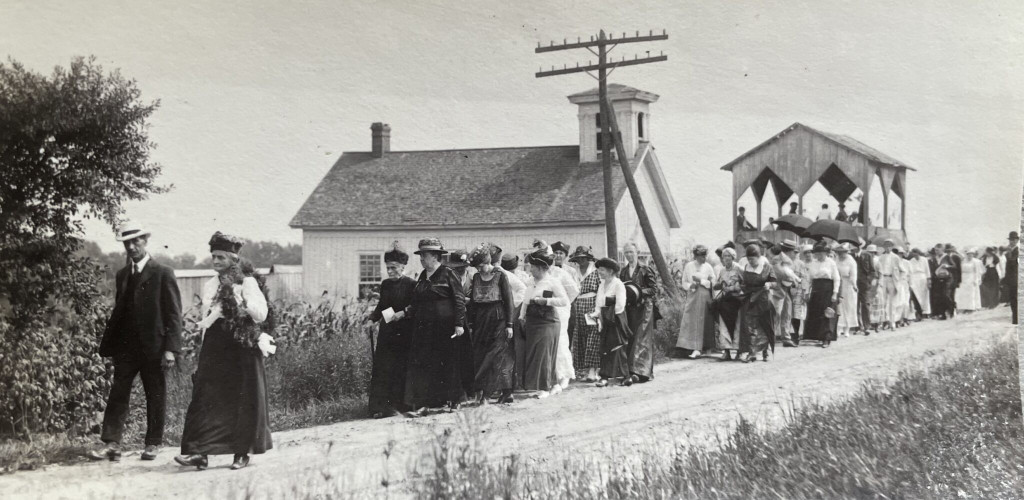
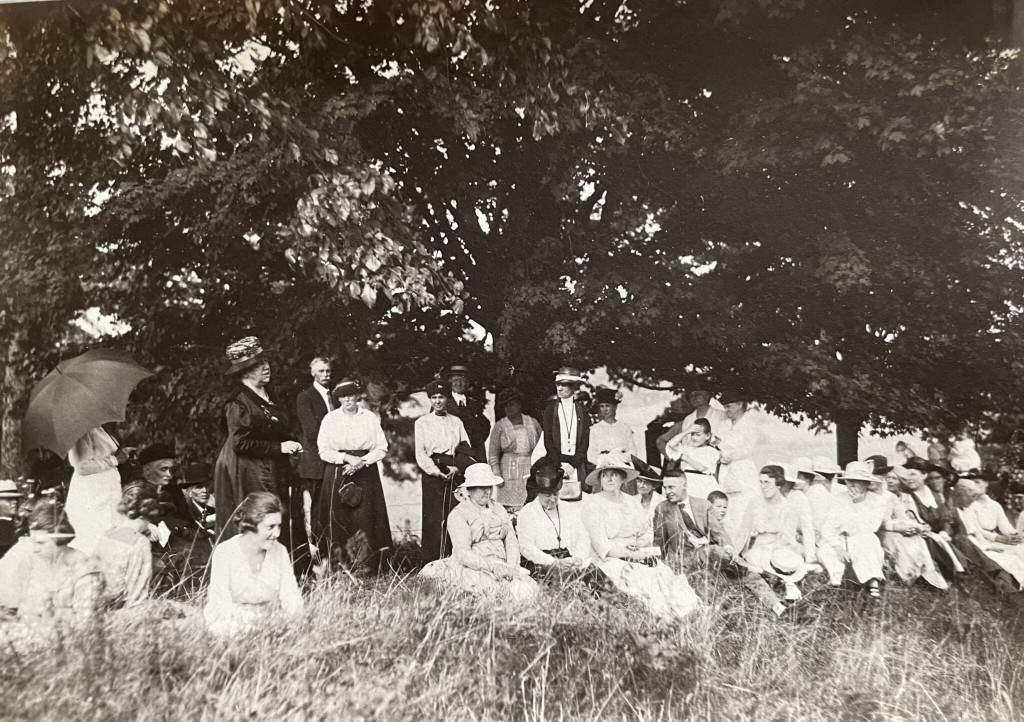
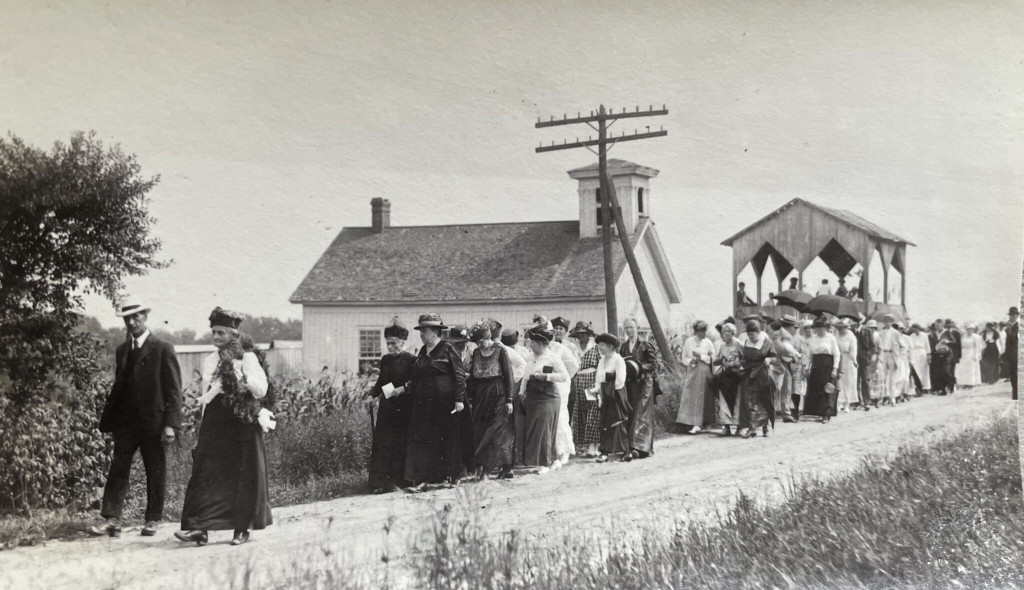
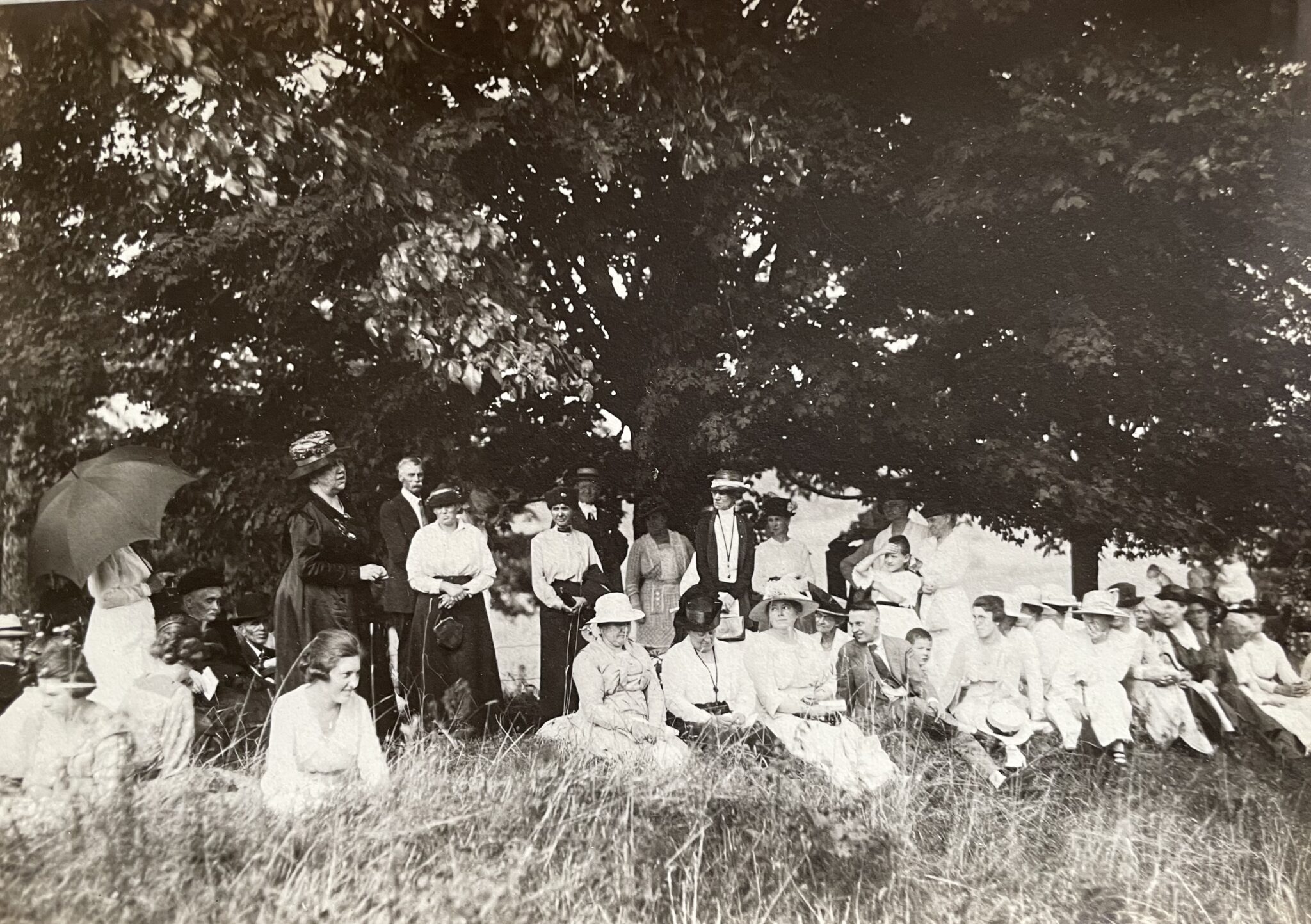
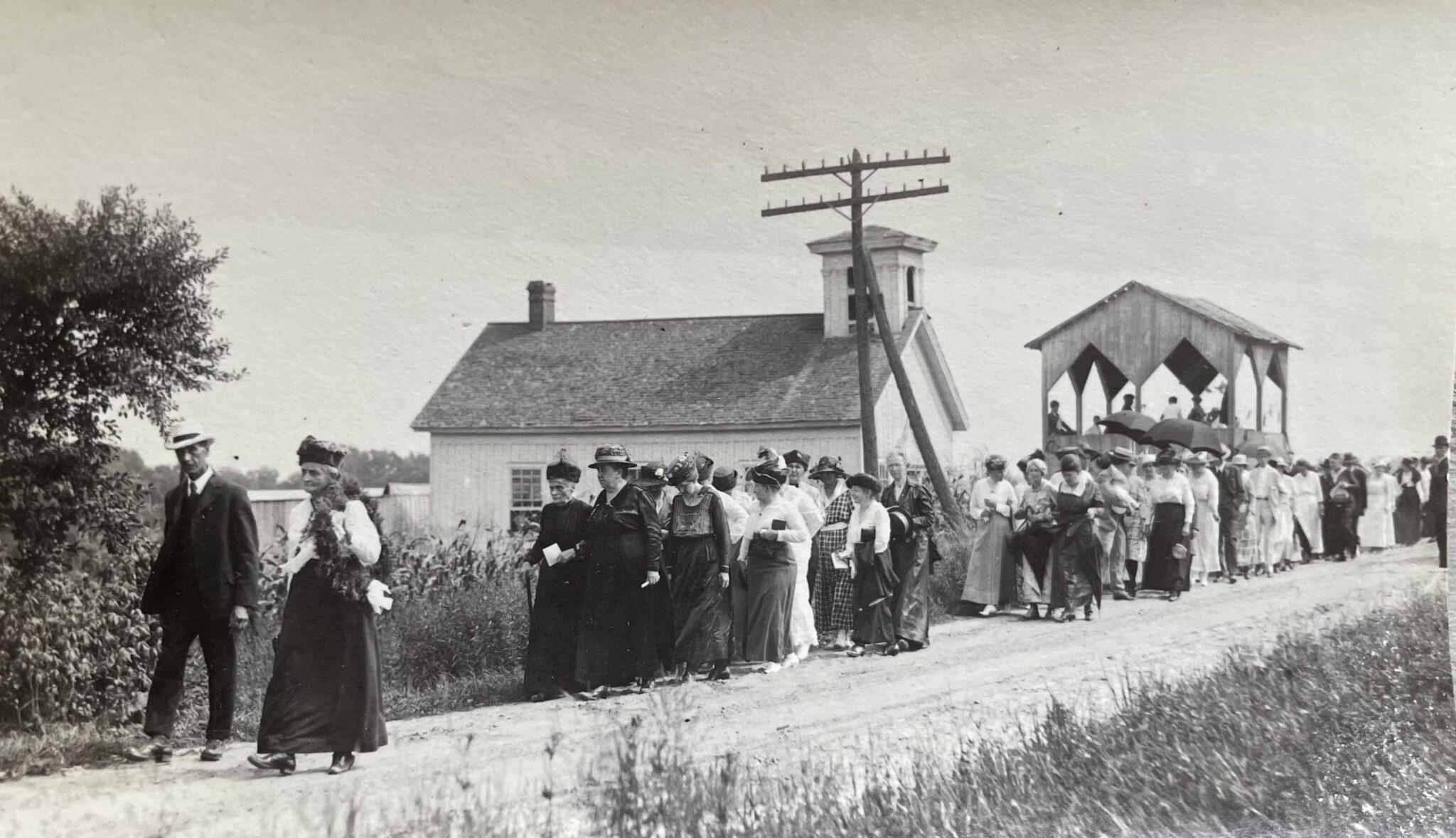
The South Newbury Union Chapel serves as a small hub of feminist history within Geauga.
The chapel has never actually been used as a church and was, instead, dedicated to freedom of speech, having been erected after James A. Garfield, who later became the 20th president of the United States, was banned from speaking at the local church, Stith said.
Garfield was instead sequestered to a dance hall, angering locals.
The chapel became the headquarters of the Northern Ohio Dress Reform Association, the Newbury Women’s Suffrage Political Club, the Women’s Temperance Society and the Cold Water Army, she said.
Both Susan B. Anthony and Harriet Taylor Upton notably spoke there, Stith said.
As the chapel was a polling place, it became important within the suffrage movement specifically, with women repeatedly and illegally casting votes there, she added.
Stith recalled a story of a group of young men chain smoking inside the chapel to try and deter the women from voting.
The women voted anyway, and many of the young men fell ill, having never smoked before.