


When Marimon Cook built his home in Burton in 1806, he likely didn’t imagine his eighth great-granddaughter would stand proudly before it over 210 years later.
When Marimon Cook built his home in Burton in 1806, he likely didn’t imagine his eighth great-granddaughter would stand proudly before it over 210 years later.
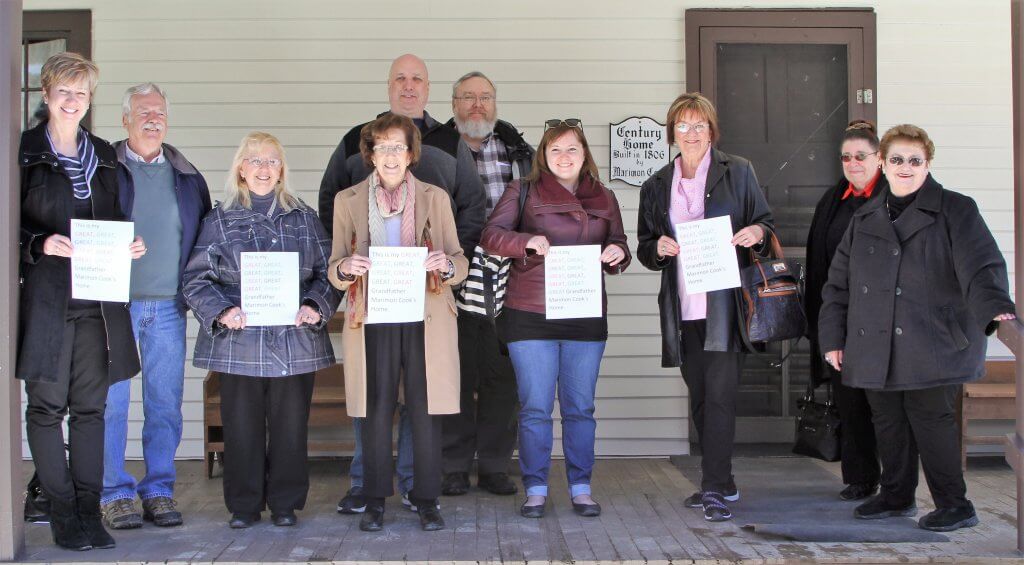
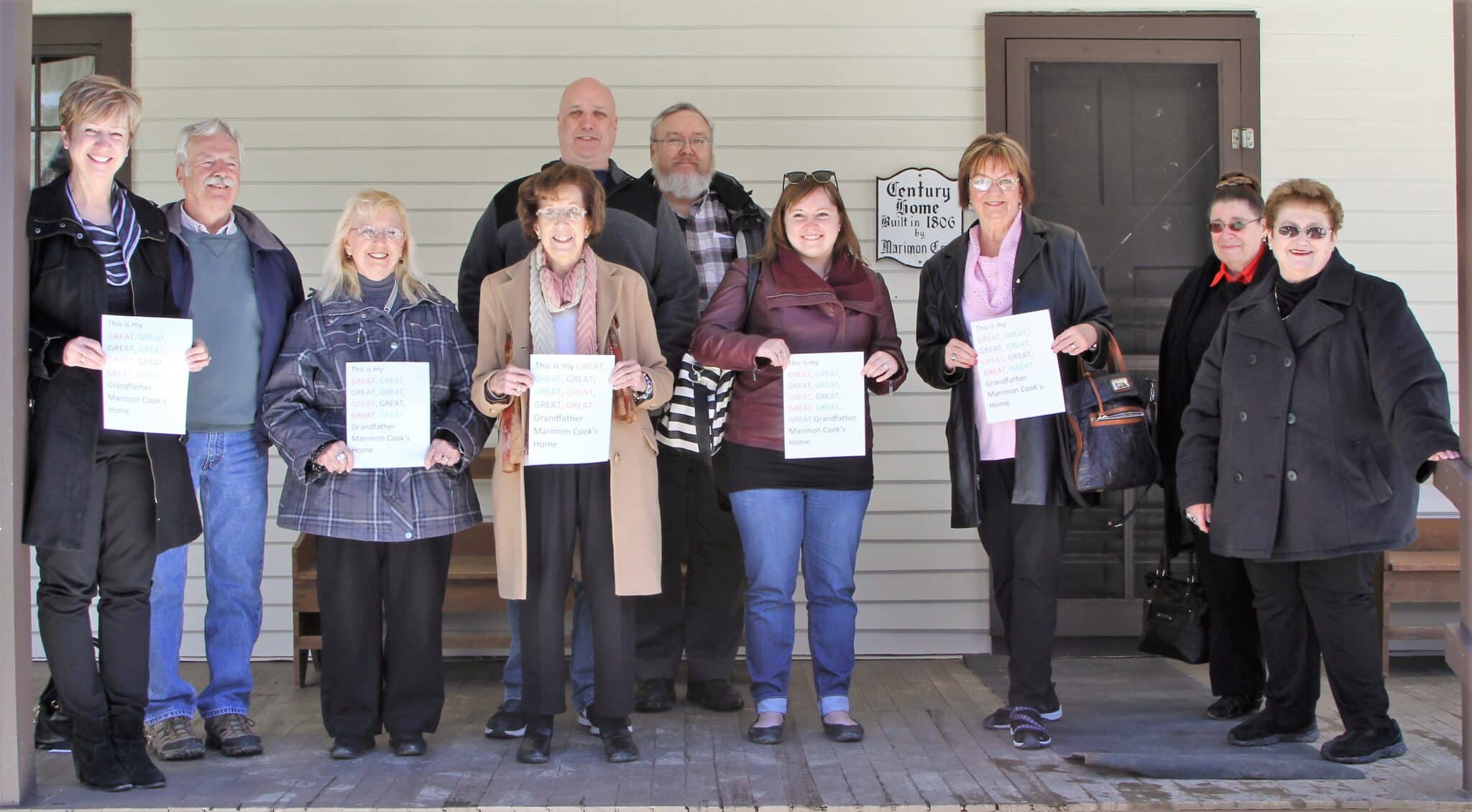
Yet, on a recent Saturday morning, there Katherine Kovach was, alongside her mother, Louise Hall, during the dedication of the “Marimon Cook Leather Shop” at Century Village Museum in Burton.
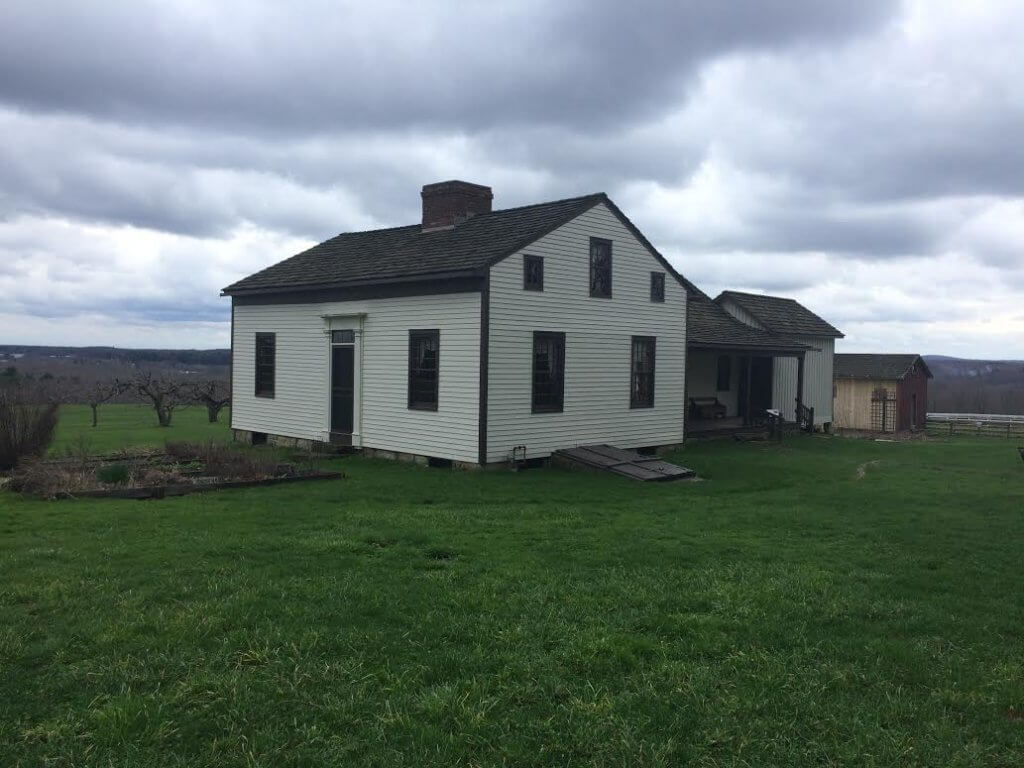
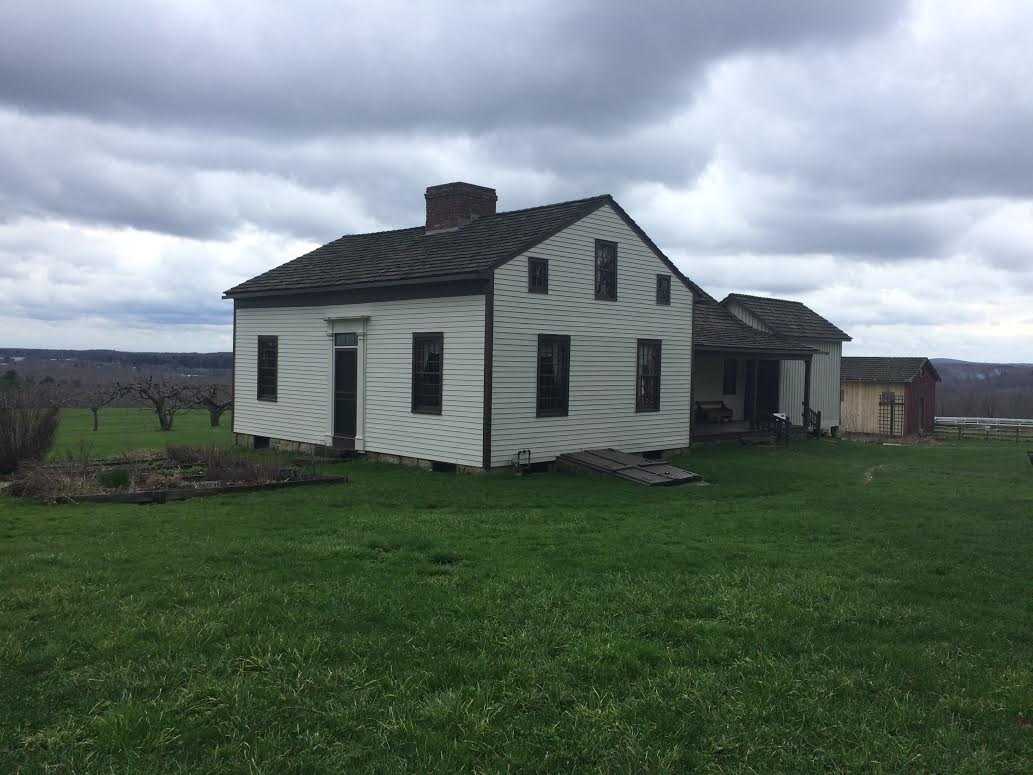
The shop is next to Cook’s home, which the Geauga County Historical Society moved from its original spot on what is now the Kent State University-Geauga campus to Century Village in 1971. It is showcased as the oldest home in the county.
“It is fascinating to think of all the generations of people we have descended from, especially when you know their names and some history,” said Kovach, of Mentor. “However, nothing brought (Cook) to life in my mind and heart, until we actually visited his home. The leather shop gave us a sense of how his work day was spent. I feel so fortunate to be able to have this connection. It’s still hard to believe we can be in his home and walk where his family walked.”

Hall had traced her and her daughter’s relationship to Cook, allowing them to join the New Connecticut Daughters of the American Revolution because of Cook’s service in the war.
“They have done an outstanding job at Century Village and the leather shop is exceptional,” Hall said during the April 8 dedication, which 10 Cook family members attended.
Hall, also of Mentor, visited Cook’s grave awhile back for the first time, in Burton Memorial Cemetery, after documenting her lineage to join DAR.
Hall said the dedication was a wonderful day and many of the gathering descendants plan future visits.
“It’s funny to think that in a couple hundred years, our homes could end up next to his in Century Village and perhaps his 16th great-granddaughter can visit,” Kovach said. “We really appreciated the hard work of the volunteers here. The Leather Shop opening was very special.”
Ten members of the New Connecticut Chapter of DAR attended the dedication, since they helped finance the project and were recognized with a plaque.
Four members of the chapter are direct descendants of Cook.
“How often does one see such a familial bridge over 200 plus years of time,” said Louise Jackson, Geauga County Historical Society’s chairperson of collections. “Marimon Cook and his family were representative of those early settlers who left the comforts of their established lives in New England to carve out new homes for themselves in this wild, uncivilized and unsettled part of the Western Reserve in the first few years of the 1800s.”
She added, “He and his family demonstrated the bravery and genius needed to not only survive, but prosper in spite of untold hardships, taking on multiple and varied roles in their community so that needs of that community could be met.”
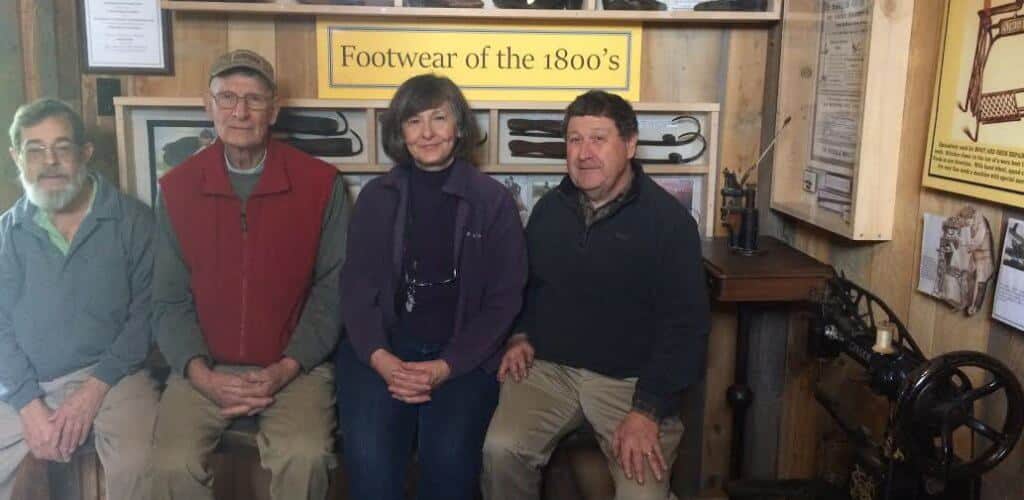
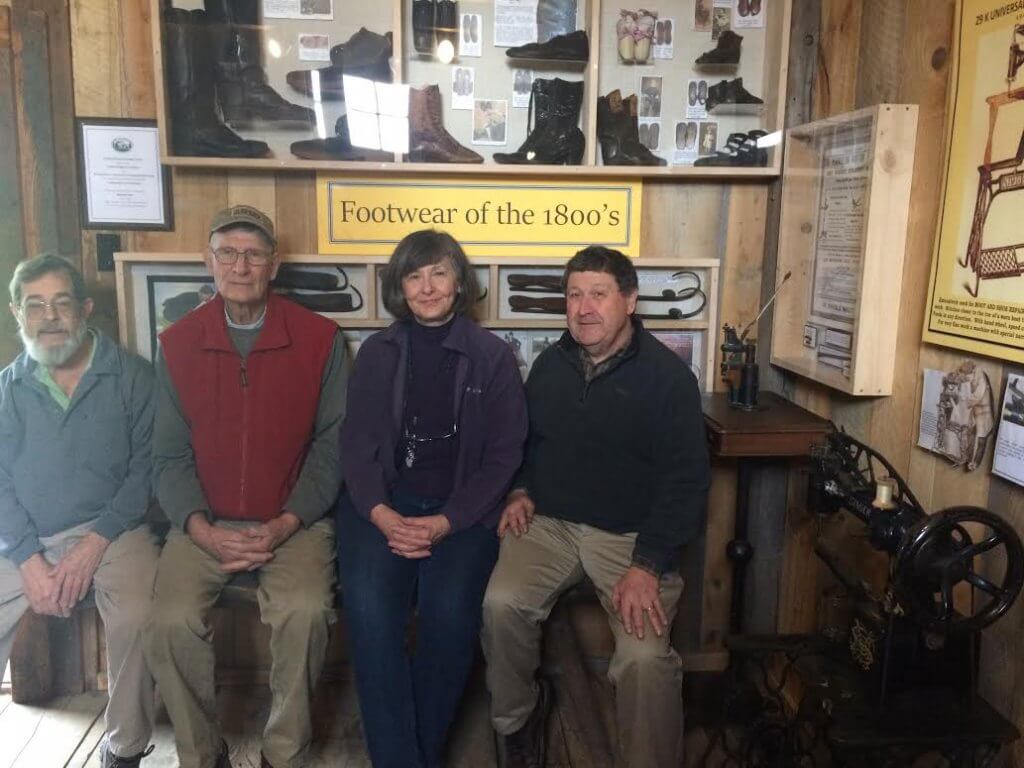
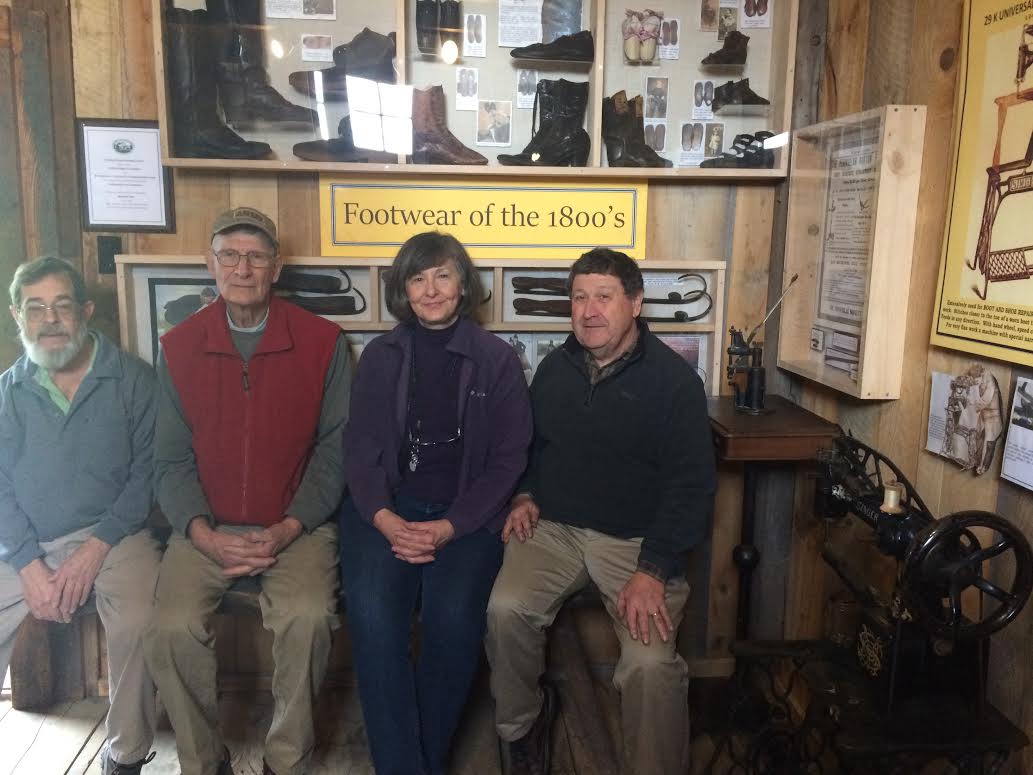
Cook was a tanner and shoemaker. Displays of shoemaking, harness making and tanning are housed inside the leather shop.
“It brings together a host of artifacts previously in storage and now available for public viewing, some for the first time,” Jackson said. “The artifacts tell the fascinating stories of some of the occupations necessary to our early Western Reserve settlers at a time when useful, everyday items were hand-made by humble craftsmen who took pride in the quality of their work.”
Born Nov. 12, 1761, in Cheshire, Conn., Cook was a soldier in the American Revolution.
When the war against the British started, Cook, at age 15, joined the Connecticut Militia, helping to cook for officers and care for the sick, and later became a captain in the militia, said David Webster, Hall’s nephew.
On April 20, 1807, a year after he built his home in Burton, Cook and his first wife, Lole Bradley, and four of their five children, left Cheshire on the 44-day trip to Ohio, Webster said.
The home of Cook has been staged and on display on the grounds at Century Village, with a picturesque view of rolling countryside as a backdrop, since it was moved there from its original North Cheshire Street foundation, Jackson said.
The attached shed had been unfinished until this spring.
After six months of construction, research and installation of educational displays, it is now ready for public viewing with weekend tours and by appointment.
The shop’s project team included Chuck Hendricks, Dick Kane and Bill Jackson, with interior building construction and master display-cabinet woodworkers, and Louise Jackson as researcher, artifacts display designer and educational signage creator.
One of the first shoemakers in Burton, Cook was an original charter member of Burton Congregational Church and its first deacon, and also a judge in local judiciary proceedings, Webster said.
The shop’s time period encompasses not only Cook’s era, but continues through to the turn of the century (1900), showcasing improvements in the trades through the years.

Webster wrote about the Cook family history for an annual reunion eight years ago, upon Hall’s request.
“Two years ago, I had the ideas to scan old pictures held by each branch of the family,” Webster said. “I put these on a CD and distributed to those that contributed. I had 350 pictures … but none of Marimon.”
Webster’s father (Hall’s eldest brother) was one of seven children growing up in Painesville.
Webster said Cook was the last Revolutionary War veteran that lived in Burton, and at 70 years of age, he applied for a military pension that paid him $41.65 per annum. At age 90, he applied and received a grant of bounty lands.
“We have the code numbers of his bounty lands, but have not determined where they were,” Webster added.
Cook lived to the age of 97.
“He’s buried in Burton’s Lower Cemetery, his two wives on one side and his mother Abigail on the other,” Webster said.


