


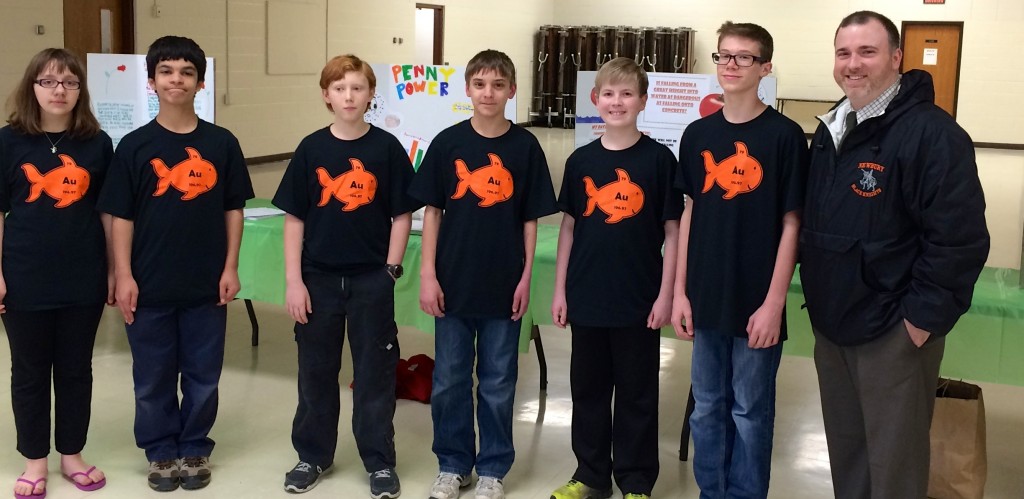
Scientific questions are sparked by imagination, and in sixth-grader Alex Hammonds's case, the power of a potato or the ability of an apricot.Newbury Junior/Senior High…
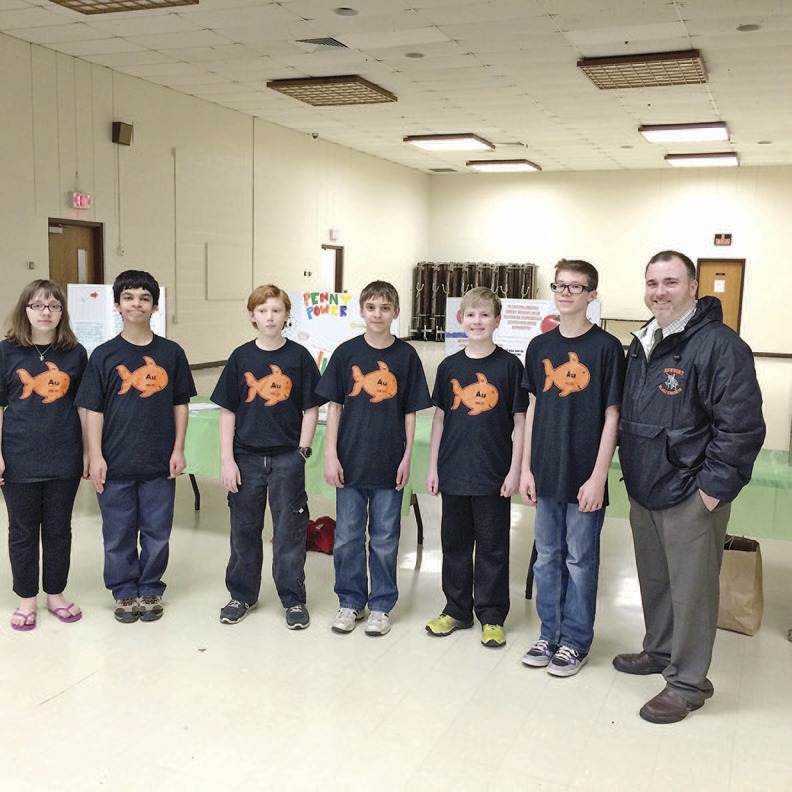
Scientific questions are sparked by imagination, and in sixth-grader Alex Hammonds’s case, the power of a potato or the ability of an apricot.
Newbury Junior/Senior High School kicked off their inaugural Science Fair 2015 last week amid a panel of judges and young science-enthusiasts inside the high school cafeteria.
“I think it’s great for the kids,” said Assistant Principal Anthony Forfia between sharing time with each student. “It shows their dedication.”
The mission of the science fair is to encourage students to have fun with science, to stimulate creativity and to facilitate further study and research in the fields of science and technology.
“This year, we combined our two parent groups — elementary PTO and junior/senior High Boosters Club — to become the Black Knight Parents, volunteering our time and raising funds to provide a variety of activities to our students, from extra educational opportunities to supporting the sports program and just plain fun,” fair organizer Audrey Ray said. “We aim to support the teachers and kids in any way that we can.”
Students were told in mid-February of the new science fair, selected their topics and designed an experiment, with most of the work completed at home.
“My role has primarily been communicating information between students and organizers, to encourage participation and help develop ideas,” said science teacher Samuel Miller, also the school’s assistant baseball coach who hurried to the event following an away game.
Participants recorded all of their work in a composition notebook, then wrote a lab report and constructed a display for fair presentation.
Four judges, including Newbury High School graduate Christopher Rulison, a chemical engineer and polymer and surface scientist, interviewed each student.
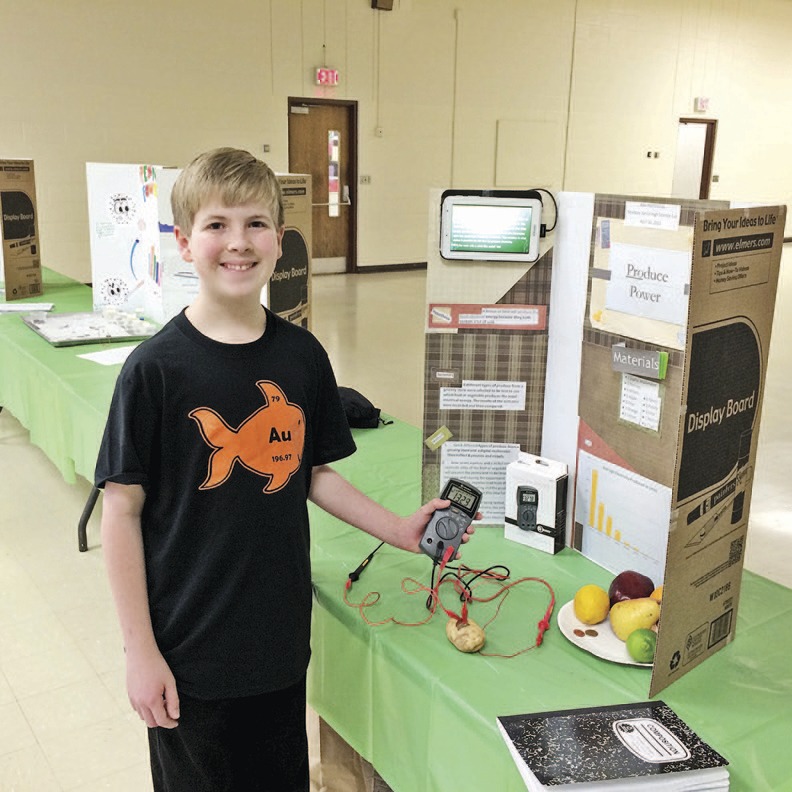
Hammonds explained how eight different types of produce from a grocery store were tested to see which fruit or vegetable produces the most electrical energy. The results of the outcome were recorded and compared.
“I thought this would be a really cool experiment,” Hammonds said, of getting energy from a fruit. “I learned the value of systematically working through an idea and feeling a sense of accomplishment.”
He said the apricot produced the most electrical energy, resulting in the conclusion that the acidity of the food is not related to the amount of electricity it produces.
“He’s naturally always liked science,” said Linda, Hammonds’ mother. “His play is doing science, rather than play. He really gets into this. He is already thinking of ideas for next year’s science fair.”
Nearby, a homemade Periodic Table of Elements cookies display, created by Ray, adorned a refreshment table.
“I was pretty proud of the kids and all of the work they did,” Ray said. “There was a great deal of support, not just from their families, but from the school community as well. Our superintendent, principals, board members, parents and friends came.”
The first-place prize of $100 went to eighth-grader Maxwell Plesmid for Electromagnet, the second-place prize of $75 went to eighth-grader Caleb Ray for Water vs. Concrete, and the third-place prize of $50 went to Alex Ham-monds for Produce Power. All entrants received T-shirts from Newbury Kiwanis Club.
“I hope my students gain an appreciation for the rigor of science, but also the fun and excitement of finding answers to questions,” Miller added. “I want my students to learn how making detailed notes during an experiment is crucial. Some may discover this when writing their lab reports.”
“Ever since I was little I liked science,” said Katerina Nichols, standing in front of her Egg Geode display. “A lot came from teachers encouraging me.”


