


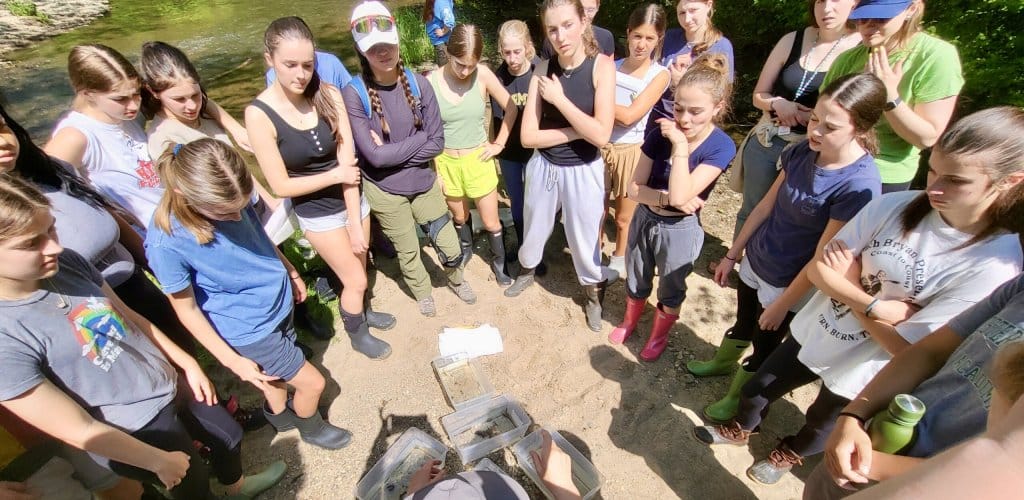
Under a blazing sun, a group of Laurel School students hiked from Beechwood Drive, under power lines and through shaded woodlands, down to the Chagrin River to survey its quality May 21.
Under a blazing sun, a group of Laurel School students hiked from Beechwood Drive, under power lines and through shaded woodlands, down to the Chagrin River to survey its quality May 21.
The survey, conducted at the Upper Chagrin Preserve in Russell Township, focused on micro invertebrate types and numbers.
Students were accompanied by LuAnn Judis, of the Russell Township Citizens Park District Board, and Rebecca Donaldson, of the Ohio Department of Natural Resources, along with Laurel faculty and student shadows.
The trip is good for giving students practical experience of what they read about in the classroom, said Laurel School staff member Carrie Ruhrkraut.
“Tomorrow, we’ll be out at our Butler campus sampling from Griswold Creek there to just kind of compare these two sites,” she said. “And then to also think about how the land use in the area of Novelty is impacting the water quality for good or bad. And then they’ll write a land use proposal with some of what they’ve learned.”
This is Laurel School’s first year taking this trip, but they hope to do it again next year.
“That’s our goal, to do more citizen science, as involved as possible,” Ruhrkraut said.
The students’ involvement also aids the township.
“Russell Township wants to know if the river suddenly drops in quality,” Judis explained in an email May 27.
Pausing in the woods on the way down, Donaldson explained to students wooded buffers are taken into consideration when designating an area as a scenic river.
There are a number of reasons for this, she explained, while asking students how they thought trees help rivers.
The shade from trees can help keep the oxygen in the river, Donaldson said, adding the creatures the students are looking for are also cold water adapted, meaning a shaded habitat is necessary for them.

Leaves falling into the river in the autumn also provide food for some creatures, with some decomposing the leaves and others scraping algae from them. Trees will also help anchor the ground and prevent erosion, Donaldson explained.
Other considerations for scenic rivers include the number of road crossings, as bridges can cause erosion problems and easier access for pollution to enter the river, as well as the number of dams, she said.
The river is designated a scenic river from Bass Lake to the crossing of U.S. Route 6 in Willoughby, marking almost 70 miles, Donaldson said.
Though some entomophobic students weren’t thrilled at the prospect of searching the river for insects, Donaldson assured the group the more bugs found, the better.
“The bugs actually predict that it’s good,” she said. “If we are looking at the bugs today and we get a really poor rating, we know something’s going on with the water quality.”
Down at the river, Donaldson explained to students how the survey worked and what they would be doing.
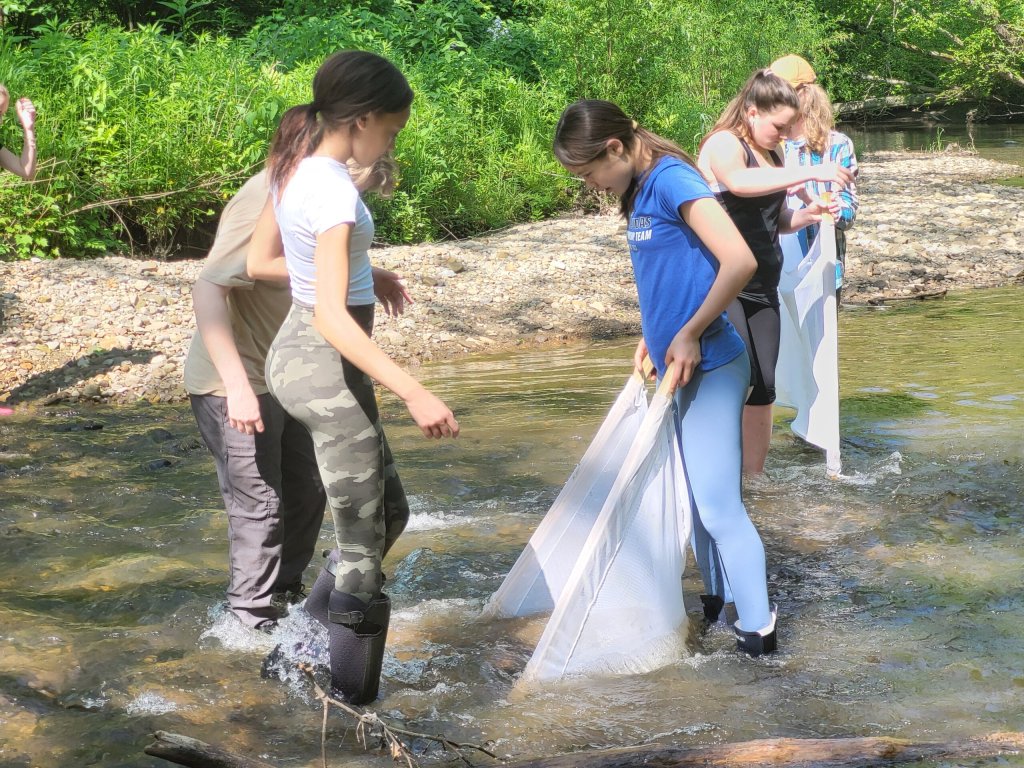
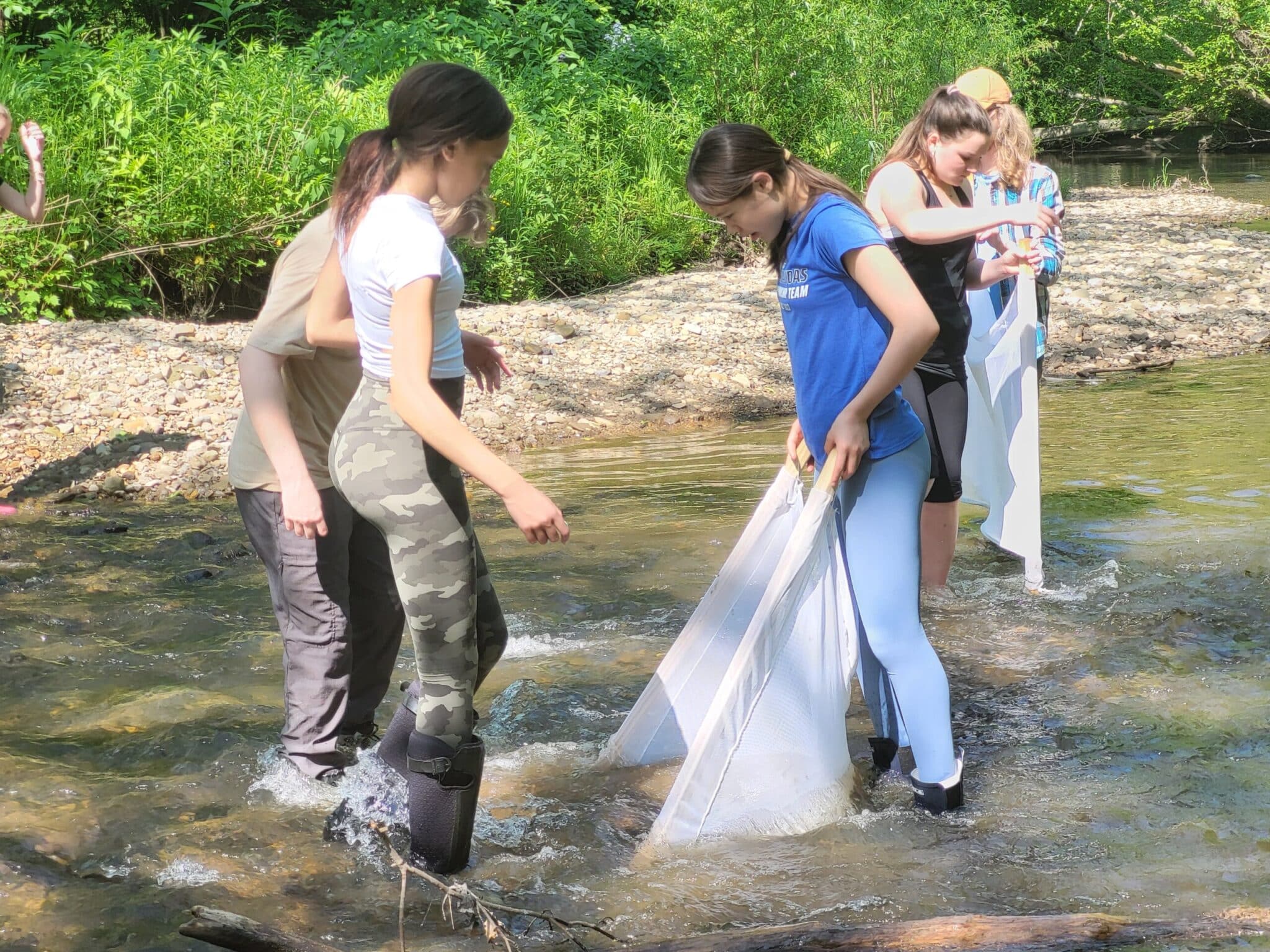
One method involved planting a net in a riffle habitat, a fast moving and shallow area of the river, and kicking in rocks.
“We would even pick up rocks and rub them off because there might be critters that are clinging to the rocks trying to escape that disturbance, and they’ll let go, float down and get caught in the net,” she said.
Once the area was disturbed well enough, students would pick the net up and carry it back to their stations, where a shower curtain and containers of water were set up. Students would then examine and document their findings.
“It’s amazing to think that these critters are living in these riffles unbeknownst to us, right?” Donaldson said. “We’re standing here at the river and we can’t even see it.”
Students also did a turbidity tube measurement.
Turbidity is the measurement of particles in water. The higher the turbidity, the cloudier the water. When measuring turbidity, students collected water in a tube and looked down through the water to attempt and see a dot at the base.
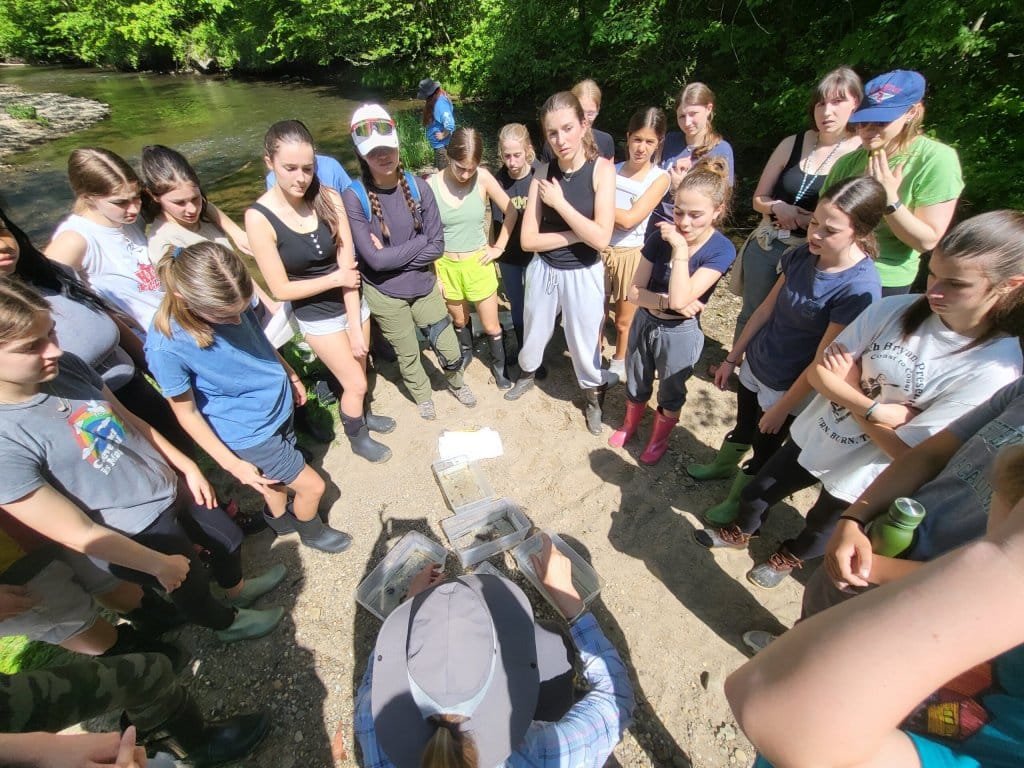
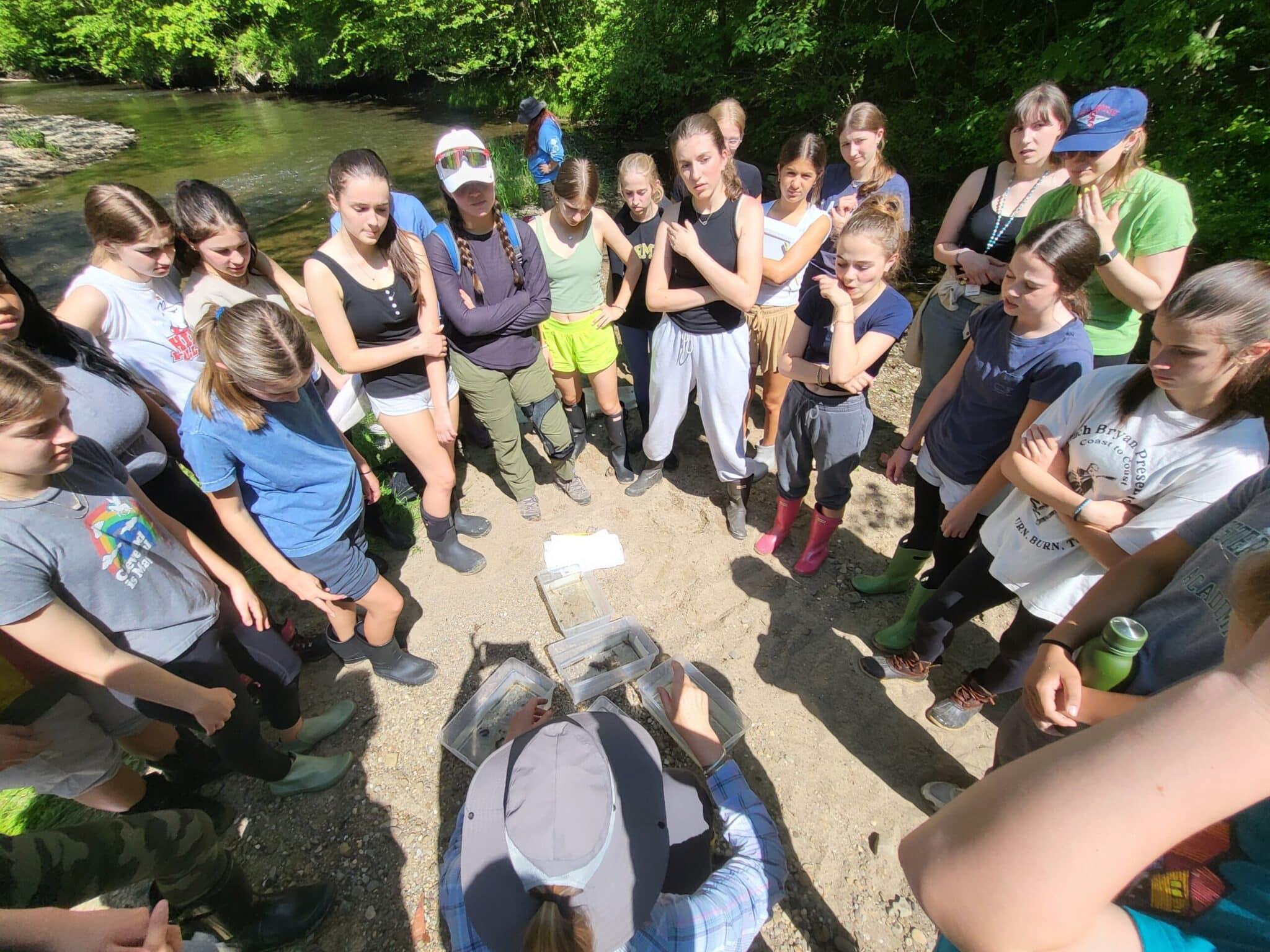
Gathering around at the end of the day, students and Donaldson reviewed what creatures had been collected. Students’ findings ranged from crane fly larvae to fish and crayfish, as well as a large amount of mayfly larvae. Once examined, the creatures were then returned to the water, and students packed up and prepared to make the trek back to the bus.
In a follow-up email May 28, Ruhrkraut said the students’ water samples from Griswold were similar to those from Chagrin, suggesting a consistent water quality in the surrounding area.
“These hands-on experiences not only deepened the students’ understanding of water and soil quality but also equipped them with valuable insights for their upcoming task: developing land-use proposals back in the classroom,” she said. “Armed with newfound knowledge, they are ready to make informed decisions to preserve and enhance the health of our watershed.”


Allison Wilson/KMG
Laurel students gather around Department of Natural Resources representative Rebecca Donaldson to review their findings.
Allison Wilson/KMG
Students Nixon P., Darryn H., Katie S., and Keegan M. kick rocks into a net as part of their survey.


