


On a clear evening a little bit off the beaten-path from the heart of Burton, pilots are putting more than a little bit of their…
On a clear evening a little bit off the beaten-path from the heart of Burton, pilots are putting more than a little bit of their hearts into a high flying hobby and sport they clearly enjoy.
“Yes, I am pretty obsessed,” said Tom Brandes, president of Geauga Radio Controlaires. “We fly all winter long, too. Three feet of snow doesn’t stop us. You either get the bug or you don’t.”
Geauga Radio Controlaires radio controlled flying club flies Sundays, Tuesdays and Thursdays, weather permitting, at a flying field at the corner of Fisher and Osmond roads.
It is one of the largest RC flying fields in the region with about 70 acres of open farmland.
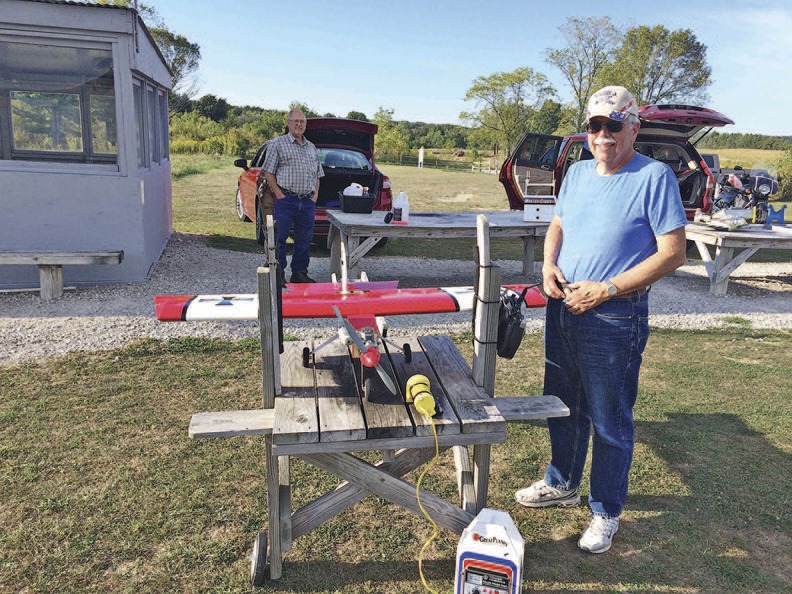
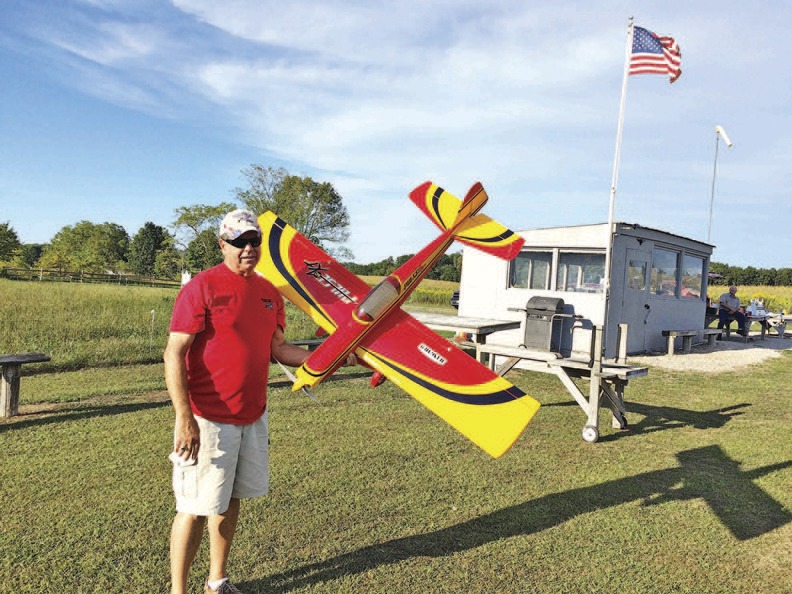
The roar of a gas-powered RC plane filled the area last Thursday with another day of flying for the GRCs.
“Taking off is the easy part,” said Brandes, of Chardon, as fellow member John Reseigh watched his plane taxi down the grassy 100-by-550-foot runway. “Landing is mandatory.”
“Our club membership is 90 members and we have maintained that membership for more than a decade, adding about six to 10 members every year,” Brandes said.
Sometimes there’s even a waiting list, he said.
“Our youngest member is 16 and about half of our members are retired,” Brandes said.
Most members fly piston engine planes, but they have an increasing number of members flying electric planes, quadcopters, helicopters and large turbine engine jets.
The club was founded in 1955 in Cleveland and called the Cleveland Radio Controlaires. A group of modelers had wished to share their knowledge and experiences with the then new field of RC model aircraft,
The club, in 1961, was granted a charter by the state as a not-for-profit corporation with purposes to promote and provide for the building and flying of model airplanes to further interest in model aviation and provide a meeting place where those interested in model airplanes could convene.
“I first became interested in airplanes when I was about 8 years old,” Reseigh said. “I was, and still am, fascinated by the idea of flying.”
Reseigh’s plane zoomed by and soon became a dot in a nearly uninterrupted vista.
“My first planes were the Balsa gliders that could be bought for twenty five cents,” he added. “They never lasted more than a few days in the hands of a child, but I kept buying them.”
Brandes said visitor flyers and spectators are welcome at their Geauga County flying field.
A roar of a motorcycle came to a halt as Gil Gross, of Mantua, sauntered to a seat on a picnic table to watch small sized unmanned aircraft soar.
“I like airplanes,” said Gross, an avid austringer active in the hobby of falconry. “I fly hawks.”
Gross watched as Brandes set his electric Pulse XT-60, a low-wing plane, on the wooden starting stand.
“I do a loop and a roll,” Brandes said of his maneuvers. “I don’t get too fancy.”
“It’s a tad windy,” Reseigh added, as he squinted to the skies marked with a condensation trail from a manned plane. “Winds are from the north to northeast.”
“You can’t move the landing field,” Brandes said. “In Northeast Ohio, you absolutely have to learn to fly in wind or you won’t fly much at all. A wind speed below 15 mph, that’s when the flags stay straight out in the wind, is manageable, but most of us newer flyers prefer gentle winds below 6 to 8 mph.”
Brandes said club members adhere to a strict set of rules and regulations set by the FAA and Academy of Model Aeronautics dictating when and where they can fly.
“‘Safety first’ is more than a slogan; it’s a requirement for our members,” Brandes added.
“A very good RC pilot needs to understand the dynamics of flying and have excellent hand-eye coordination,” Reseigh said. “This comes only with practice. Excellent pilots fly as often as they can. Of course, young people have an advantage having grown up with video games.”
GRC has an introductory pilot program that allows first-time flyers to take a test flight with an instructor. They are encouraged to spend time learning on a computer flight simulator first.
“One of the greatest things about this hobby is that any day at the flying field is a great day, even if you don’t fly,” Brandes said, considering himself an intermediate level pilot. “Just watching those more skilled flyers with their planes through their routines is exhilarating.”
Reseigh added, “After I retired, I discovered that a friend of mine was flying RC planes and this rekindled my desire to fly. I brought my first RC plane and promptly crashed it. I finally joined an RC flying club and got invaluable instruction. I am still learning, a process that does not stop in both RC flying and in life.”


