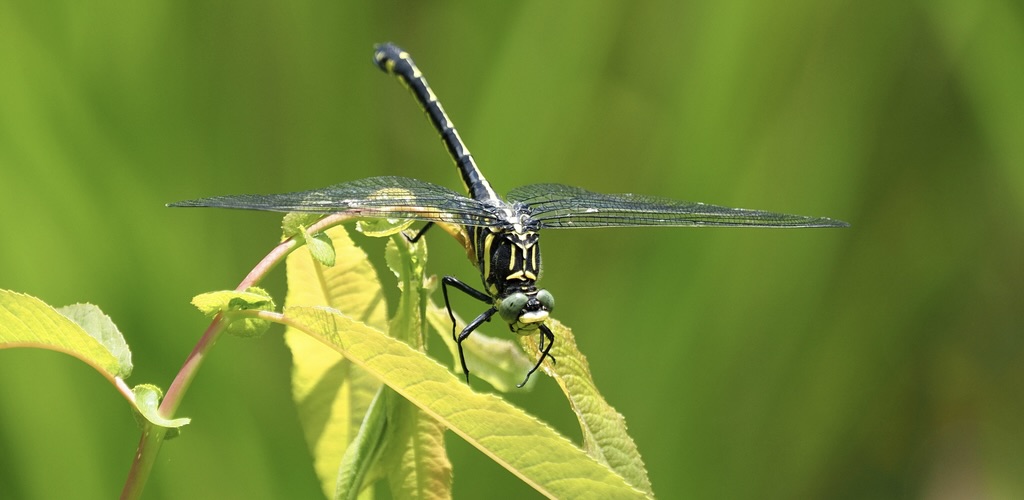
While the recent heat wave may have chased many people indoors with the air conditioning on, it was a welcome change for insects, particularly of the winged type.
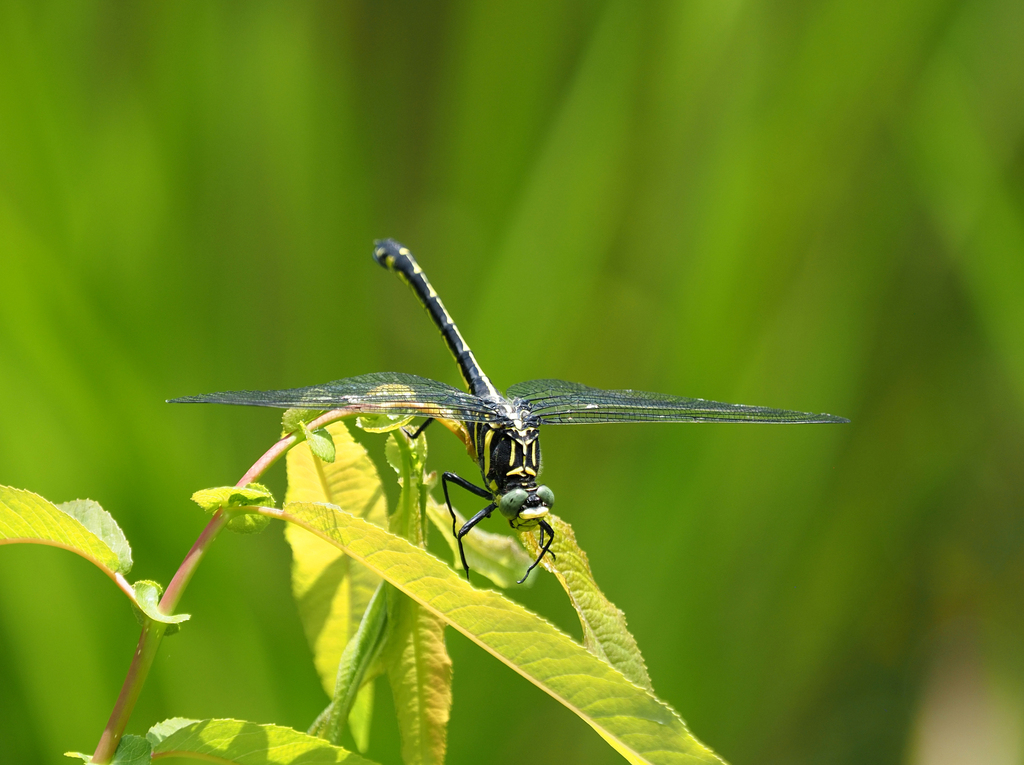
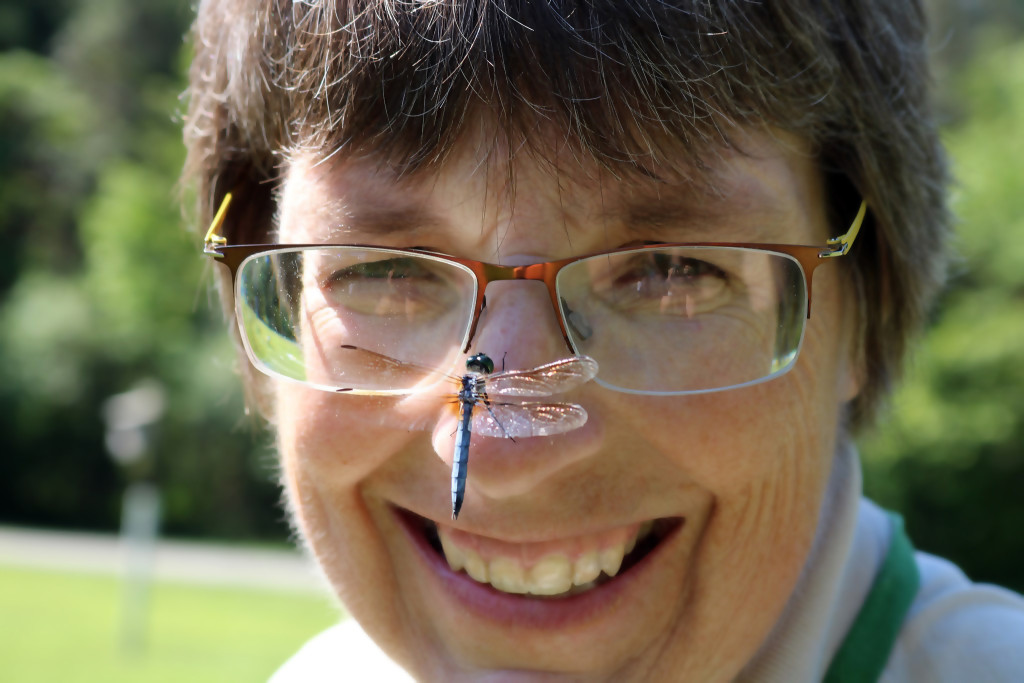
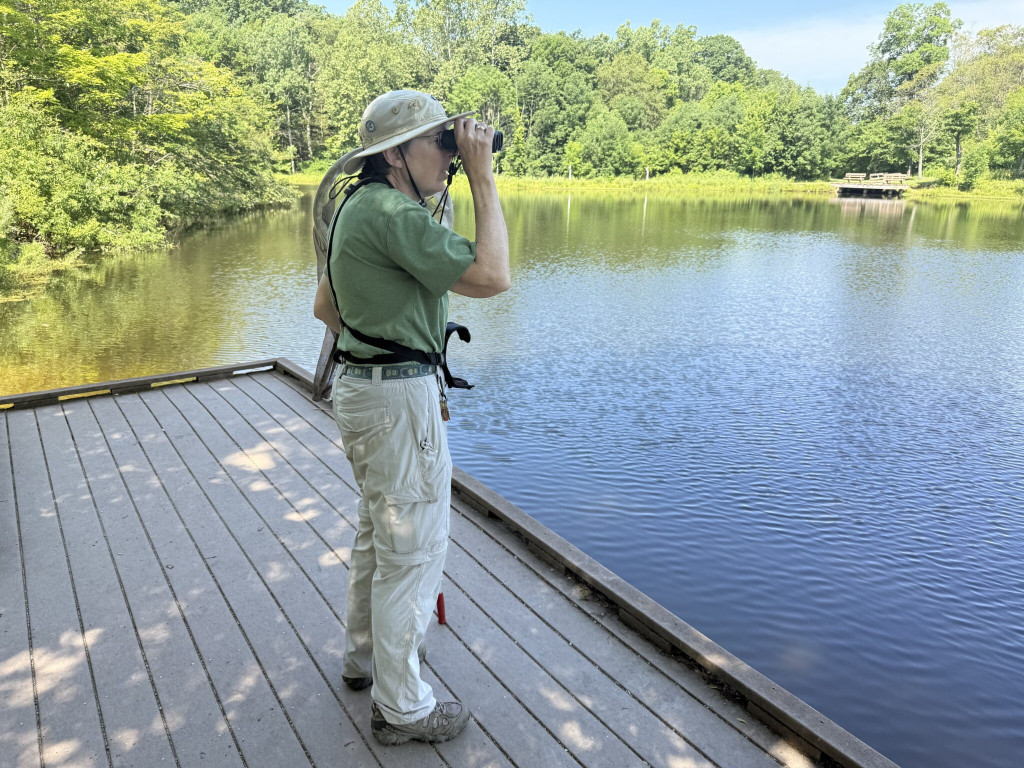
While the recent heat wave may have chased many people indoors with the air conditioning on, it was a welcome change for insects, particularly of the winged type.
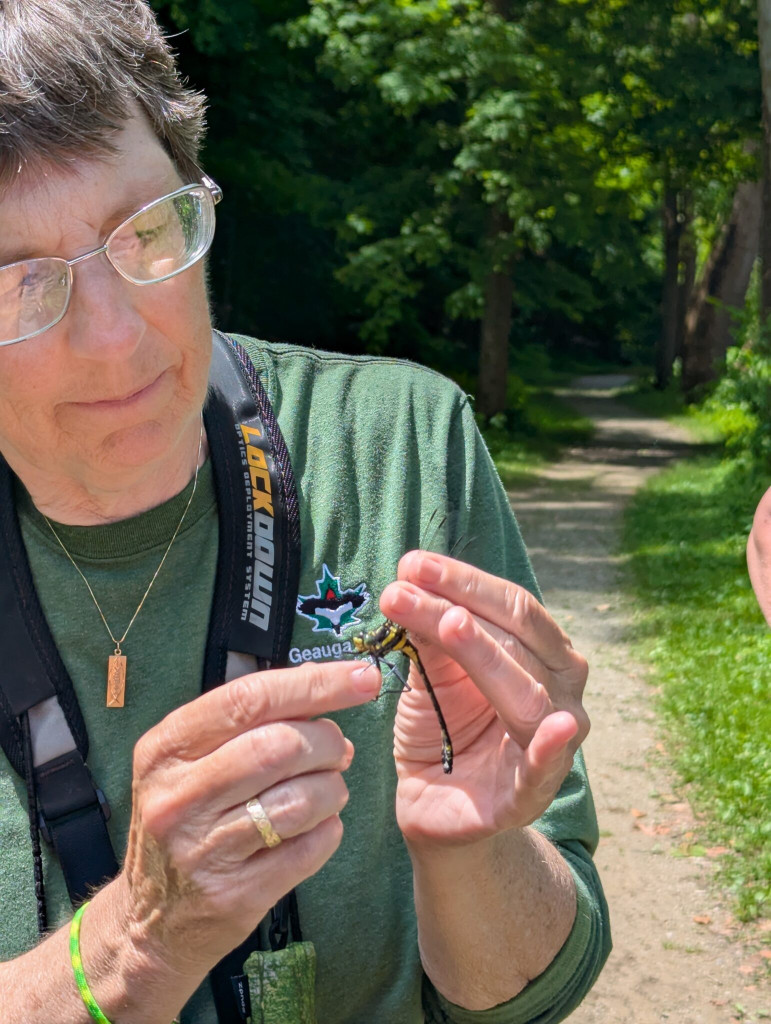
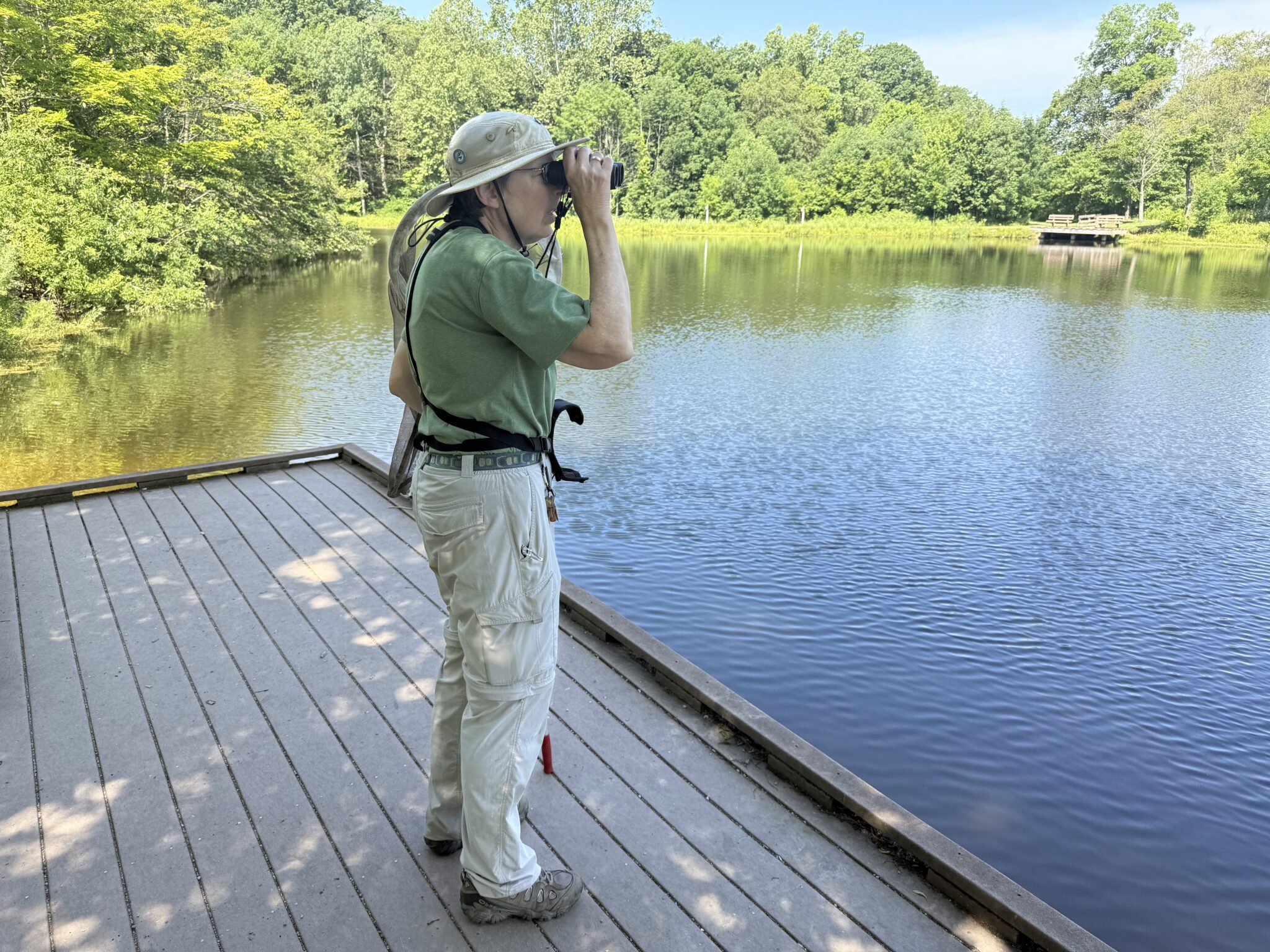
As part of Geauga Park District’s new “Kicking It in the Park” series, Naturalist Linda Gilbert took to Orchard Hills Park in Chester Township June 24 to showcase her favorite insects — dragonflies and damselflies.
“The cold, rainy May this year was not to a dragonfly’s liking,” Gilbert said. ”They like it warm and sunny.”
Upon entering this northwestern park, former home to Orchard Hills Golf Course, habitat restoration efforts abound with the rebirth of tall lush vibrant green forests, valuable wetland habitat and water — making it ideal for dragonflies and damselflies.
With the onset of more traditional summer weather, these masters of aerial acrobatics seem to be thriving, resting on sunlit windows, hovering mid-air and dancing across ponds.
As she stepped onto the trail leading to the park’s glistening pond, Gilbert focused her binoculars on a host of these wetland insects and began rattling off different species.
“Dragonflies and damselflies are my favorite insects … but I’m also interested in singing insects (crickets and katydids), as well as tiger beetles, butterflies and moths, fireflies and birds,” Gilbert said.
Each month, the “Kicking It in the Park” program will feature one of GPD’s staff and what they love about the parks, highlighting special plants and animals, favorite trails, recreational opportunities and more.
For Gilbert, it’s all things dragonflies. In fact, many people refer to her as the “Dragonfly Queen” for her extensive knowledge, adoration, excitement and empathy for nature’s small wonders — and it is contagious.

“I don’t know how I became fascinated with dragonflies and damselflies,” Gilbert said. “It probably stemmed from their flashy colors and interesting behaviors and flight antics.”
GPD Chief Naturalist John Kolar called Gilbert a “great ambassador for nature.”
Former GPD Park Board Commissioner Robert McCullough had sensed Gilbert’s keen interest in natural history early on, after a state record bird flew to her home’s bird feeder. He encouraged her to become a park volunteer.
After a year or two of volunteering, Gilbert became a seasonal naturalist and then settled into her current role as a full-time naturalist.
She is also a professional musician, holding degrees in music from Baldwin-Wallace Conservatory of Music and Cleveland State University, and has gained notoriety for her fieldwork as a co-author of the second edition of the “Dragonflies and Damselflies of Northeast Ohio” field guide and as the Northeast Ohio regional coordinator for the Ohio Odonata Society’s dragonfly survey project.
As for birds, Gilbert has headed up the annual Audubon Christmas Bird Count for the Burton area and continues to be active in other significant bird survey events staged by the Audubon Society of Greater Cleveland’s Chagrin River Watershed Important Bird Area.
However, dragonflies continue to steal Gilbert’s heart, as she praised GPD’s commitment to conserving habitats where they can thrive.
“Dragonflies and damselflies are beneficial insects and play an important role as predators of other insects,” Gilbert said. “They are nature’s ‘bug zappers.’ They are predators in all stages of their lives, spending the majority of their life underwater as a nymph for up to six years depending on the species.”
They are stunningly diverse, according to Smithsonian Magazine, with more than 3,000 known species of dragonflies.
“In the underwater stage of life, they eat aquatic vertebrates and invertebrates like water fleas, mosquito larva, midge larva, tadpoles and small fish,” Gilbert said. “As adults, they capture insect prey as they fly.”
But, dragonflies and damselflies do not bite or sting, she added.
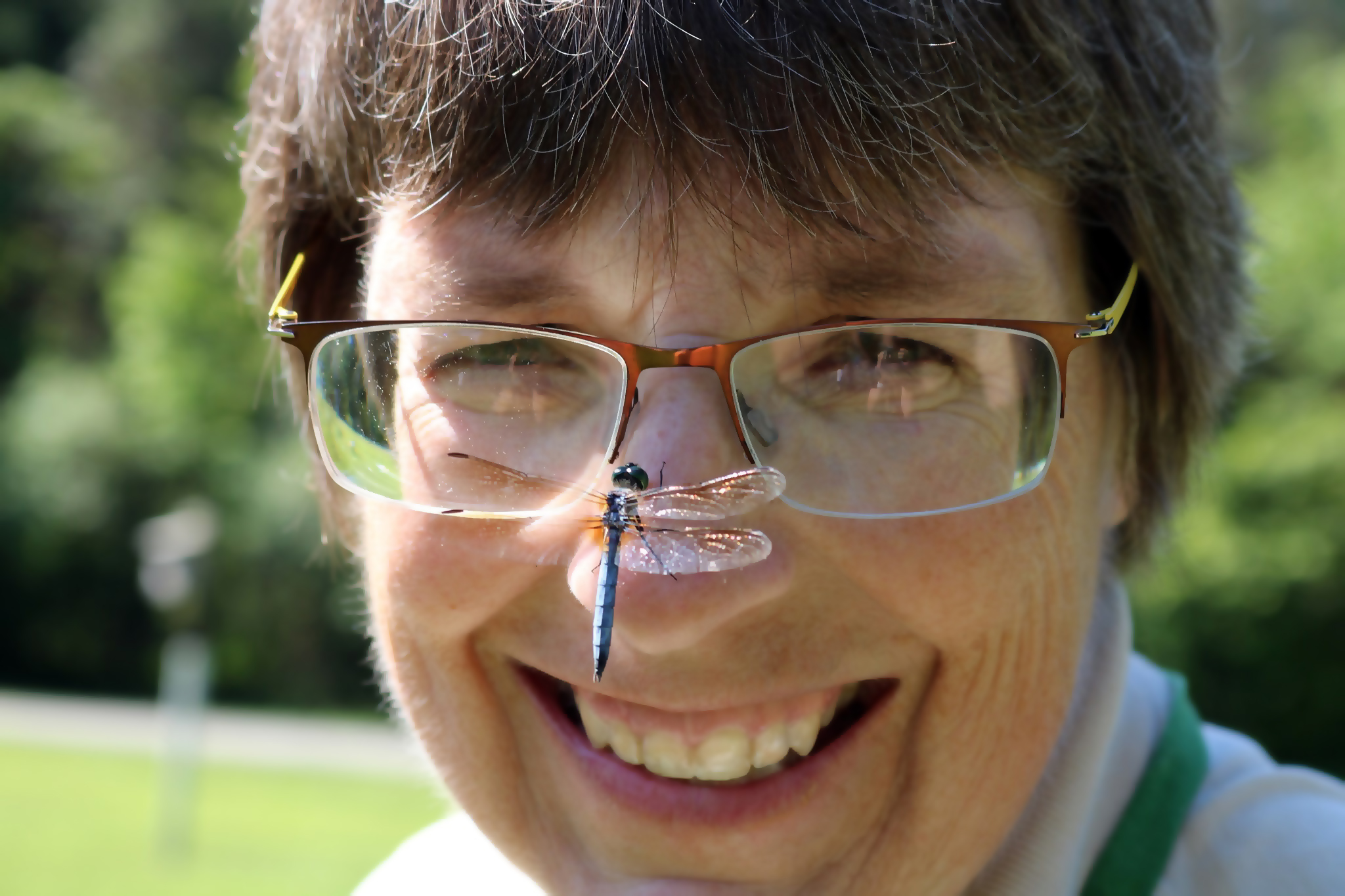
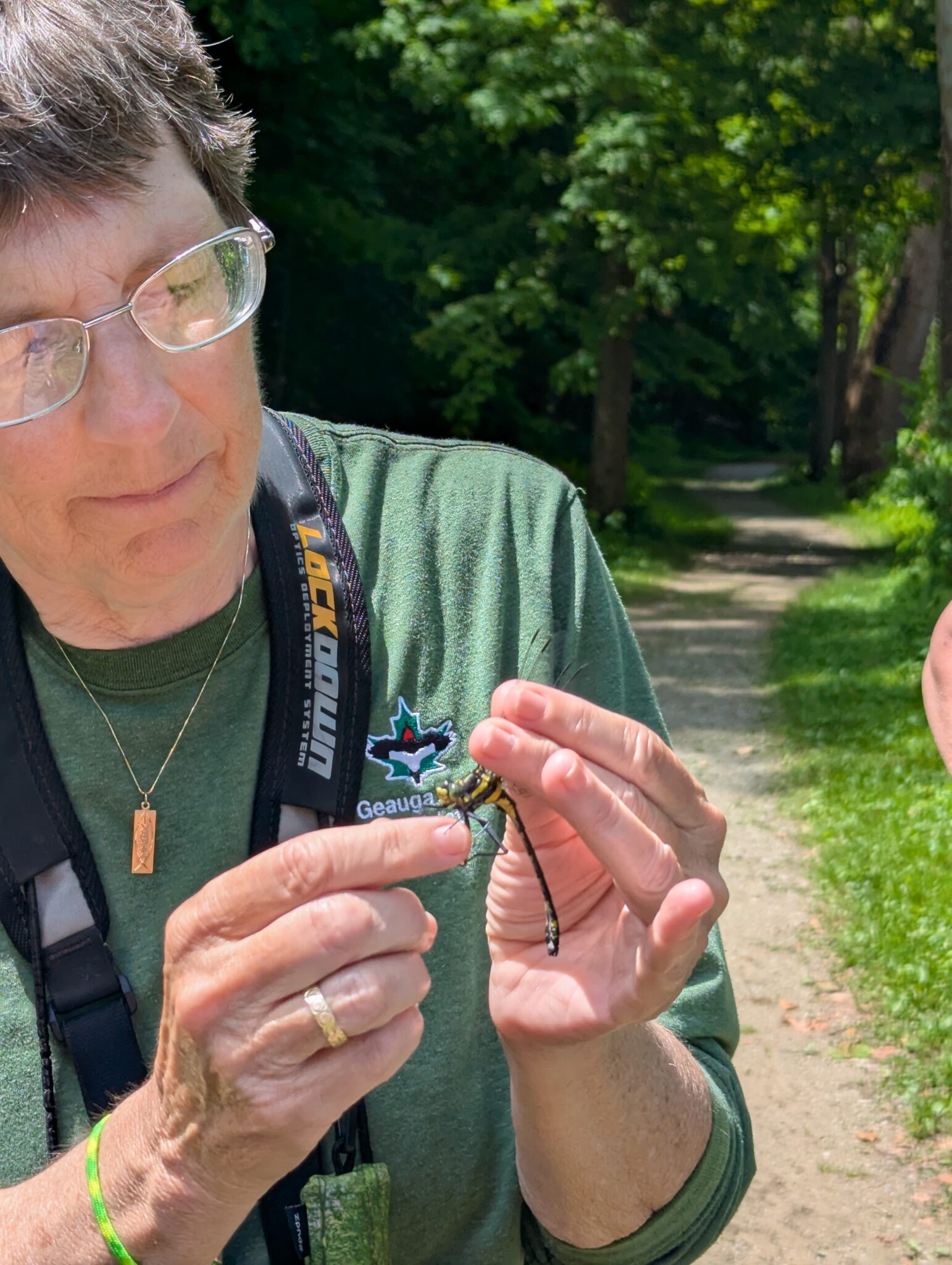
“Can they bite? Yes, but they do that only if you hold them by their legs — ask me how I know, I’ve been chewed on many times,” she joked. “If a dragonfly or damselfly lands on you, however, you have nothing to worry about.”
They seem to be attracted to her as much as she is drawn to them.
Gilbert led a dragonfly van trip to the Grand River a few weeks ago, where a dragonhunter dragonfly landed on her hat as participants snapped photos.
She said Orchard Hills pond has been great for her public dragonfly programs and 12-15 species can be tallied on a good day.
She began her dragonfly surveys at the park shortly after GDP acquired it in 2007, with the total Odonata (dragonfly) species currently listed at 35.
“The transformation from the golf course to a more natural habitat has been beneficial to all wildlife and will be in the future as fairways revert back to forest,” Gilbert said, adding a perfect day for her in the field includes warmth, sunshine and being somewhere in a wetland habitat with a lot of dragonfly activity.
“To top it off, finding a rare, threatened or endangered species on a park property would really make my day,” Gilbert said.
She has been with GPD for 20 years, passionately doing a job that comes natural to her.
“Where did the time go?” she said. “I love working for the park and am proud to serve as one of a very talented staff of naturalists. GPD provides wonderful habitats to explore and programming for all ages, so come out and visit. See you ’round the parks.”
Gilbert will be leading a dragonfly hunting hike Aug. 3 at Claridon Woodlands, helping people explore wetland habitats, discover which dragonflies inhabit the area, learn more about these insects, observe their behaviors and try their hands at catching some.