


"Geauga County should be making decisions, not Columbus or D.C." – Dick Howard
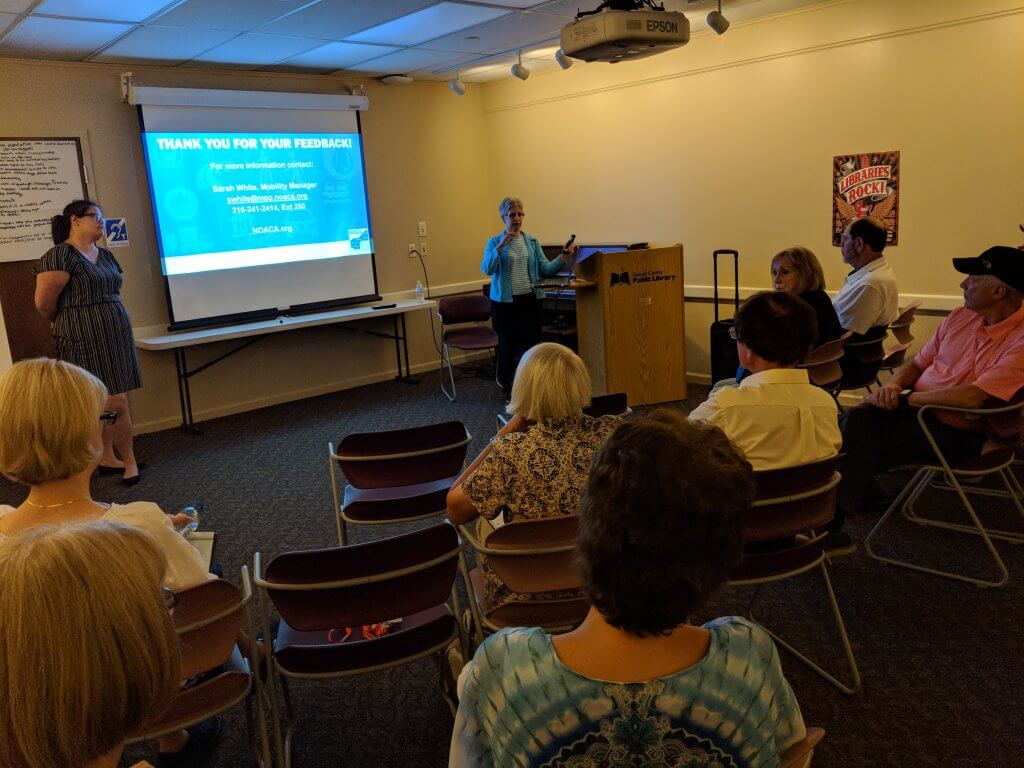
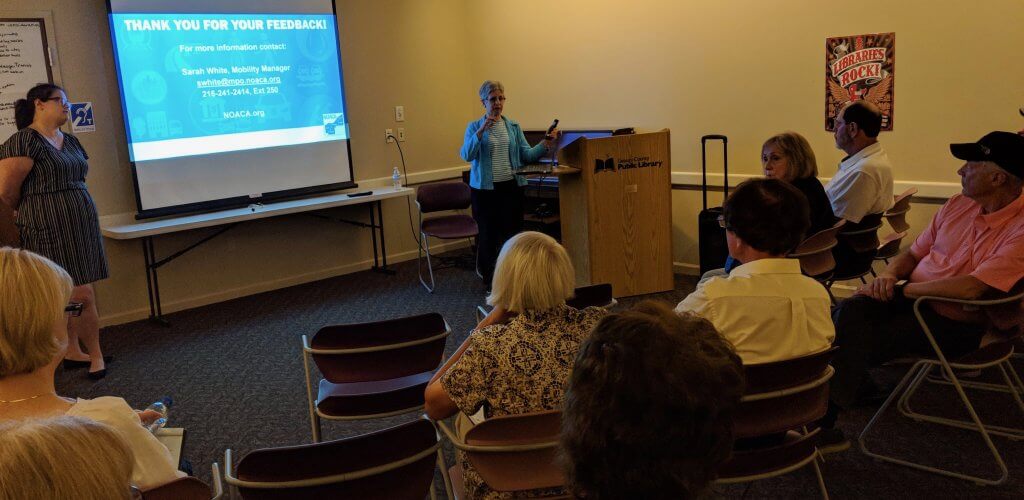
Representatives from the Northeast Ohio Areawide Coordinating Agency held at July 19 meeting at Chardon Public Library to solicit community input as the metropolitan planning organization develops its next four-year transportation plan.
Gayle Godek, senior communications specialist at NOACA, told the audience their answers would help determine if Geauga County has any public transit needs, especially for seniors or those with disabilities.
NOACA serves as the transportation and environmental planning agency for Cuyahoga, Geauga, Lake, Lorain and Medina counties, according to the agency’s website.
About a dozen residents attended the meeting, with most indicating they heard about it through the Geauga County Tea Party. Geauga County Commissioner Walter “Skip” Claypool was among the audience members.
“The answer is, all my needs are met,” Claypool told Godek.
Many in the audience agreed and parts of the meeting were given over to complaints about the scope of NOACA’s study.
“You’re not collecting proper data,” Claypool said. “(NOACA has) no real appreciation for what the issues are, and we can see that through the survey.”
Godek said respondents in other counties have complained that their transit options do not take them to appointments across county lines, they are not available at all times of day or in all parts of the county, and that, in some cases, they cannot be relied upon for last-minute service.
Geauga County Transportation Driver Supervisor JoAnna Santilli also attended the July 19 meeting and said transport services are available to the entire county from 6 a.m. to 9 p.m., and do cross county lines.
The department also prefers to schedule pick-ups and drop-offs a week in advance, but will accommodate last-minute appointments, she added.
“You might get there a little early and have to sit,” Santilli said, but drivers will do their best to get everyone where they need to be.
Godek pushed for suggestions that would improve transit service in the county, but the audience was adamant there was no need for improvement. She then suggested their feedback would allow Geauga County to set the example for other counties to learn from as they craft transportation plans.
“They have to set an example for themselves,” said Village of South Russell resident Dick Howard. “We shouldn’t have to.”
Diane and Tom Jones, of Auburn Township, also complained about the format of NOACA board meetings, which take place at the agency’s downtown Cleveland office at 1299 Superior Ave.
Diane said people who attend the meetings have to take off an entire day in order to deal with getting to the building and finding parking.
What is worse, she said, is that the public is then given only two minutes to make comments to the board, while most members do not pay attention.
Howard added the board meetings are difficult to hear and closed captions are not made available on screens broadcasting a live feed of the meeting.
In addition, Claypool told Godek the City of Cleveland is in control of the NOACA board, an argument he repeatedly has made during his tenure as commissioner.
When the board was formed 50 years ago, Claypool said, there were six representatives from each county, with one added to Cuyahoga County to represent Cleveland.
Later, the composition of the board was changed to reflect the population of each member county, he told the audience.
The parts of the law that establish metropolitan planning organizations like NOACA do not specify the board must be proportional by population, explained Claypool.
His experience is the NOACA board underappreciates Geauga County’s true needs, like Amish buggy lanes.
Troy Township resident James MacNeal complained NOACA’s board is a tyranny of the majority, where the concerns of rural counties are ignored. He used the example of the United States Congress, pointing out there are two houses in order to ensure equality of law to areas with low populations.
Howard also complained that NOACA’s decisions are not made transparent to Geauga County residents, whose gas-tax dollars are used to fund the agency.
“They should start telling us what’s going on out here,” he said. “Geauga County should be making decisions, not Columbus or D.C.”
Bill Winans, of Newbury Township, told Godek there is outrage here over what he said is NOACA using the county as a cash cow.
Asking Geauga residents, who are happy to drive their own vehicles, for opinions about buses appeared misguided, he said.
“I worked hard so I didn’t have to (use buses), to see all this money go out and not come back,” added Winans.
Godek said input from the session will go toward a final draft of the survey, which will be available to all residents of the five counties it represents in the coming weeks.


