Parkman Township Trustees are dealing with yet another environmental hazard, but this one is even closer to home than the contaminating Ohio Department of Transportation salt dome on state Route 168 north of the town center.
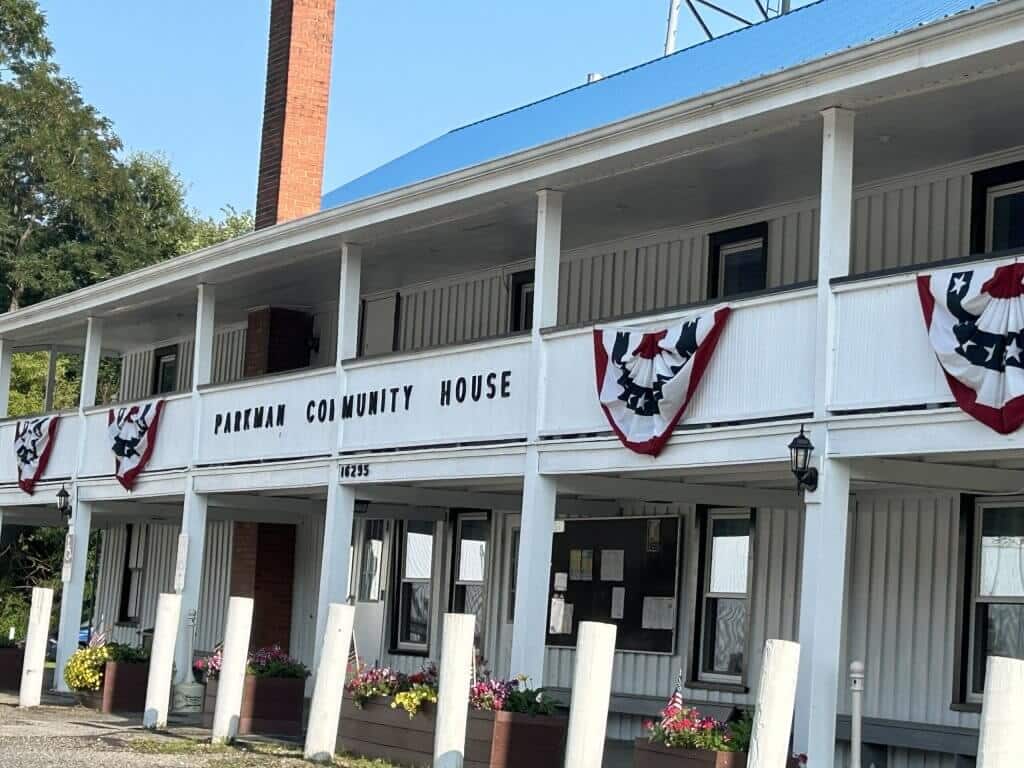
Parkman Township Trustees are dealing with yet another environmental hazard, but this one is even closer to home than the contaminating Ohio Department of Transportation salt dome on state Route 168 north of the town center.
Last year, it was discovered the well water in the Parkman Township Community House could be set on fire.
Subsequent investigation determined there was methane in the water, trustees said in several meetings.
In short order, trustees had a water treatment system installed to remove the methane at a cost of about $10,000, said Trustee Henry Duchscherer in a phone interview Aug. 4.
During the Aug. 1 trustees meeting, he said it is possible the source of the methane is the tons of trash used to fill in the ravine in front of the community house at 16295 Main Market Road (U.S. Route 422).
“There are six tractor trailer loads of old tires under the parking lot,” Duchscherer said, adding Geauga Public Health personnel said the landfill may be the source of the methane.
Parkman Fire Chief Mike Komandt said cars, appliances and garbage also were buried there in the 1980s.
“I think we should try to find a solution — vent it or dig it up. It’s bad stuff, bad for the environment,” Duchscherer said.
Tests showed the methane level in the well water at 9.7 milligrams per liter, he said Friday.

According to the Pennsylvania State University Cooperative Extension Office website, methane is a colorless, odorless, tasteless and combustible gas. Mercaptan, a chemical odorant, is added to methane by gas companies before distribution to help in leak detection.
“Methane gas alone is not toxic and does not cause health problems in drinking water, but at elevated concentrations, it can escape quickly from water causing an explosive hazard in poorly ventilated or confined areas. Escaping gas may seep into confined areas of your home, where it may reach dangerous concentrations. There have been cases in Pennsylvania where houses, camps or wells have exploded due to methane accumulation,” according to the site.
The Illinois Department of Public Health website reports: “No drinking water standard exists for methane in drinking water. The U.S. Department of Interior has established a warning level of 10 milligrams of methane per liter of water. Levels of dissolved methane greater than 28 (milligrams of methane per liter) could release potentially flammable amounts of methane inside a confined space.”
Duchscherer said he has been in touch with the Ohio Environmental Protection Agency about the best approach to eliminating the methane and hopes to hear back in a few weeks. When more is known about the problem, it might be wise for surrounding properties to have their water tested.
“We’ll wait and see what the EPA says. We’ve got the ball rolling,” he said.
One solution would be to drill a new water well for the building, an expensive project, but first, trustees need to know how deep the current well is and if it has a casing around it.
If venting the methane is the best solution, it also presents a problem.
“What do you do with it?” he asked, noting one solution would be to burn it, but that could release pollutants into the atmosphere, as well.
Trustees worked with the OEPA and GPH to have the salt dome removed and Duchscherer said the site has been cleaned up. The county is testing residential wells farther and farther from the dome and has drilled at least seven wells 300 feet deep with more to come. He said no one knows how many decades it may be before the salt leaches out of the aquifer 100 feet below the surface.
Meanwhile, township, county and state officials will evaluate the methane problem and trustees will keep an eye open for any other contamination in Parkman that has its root in the past.
“I hope our forefathers haven’t done anything else around here,” Duchscherer said.