


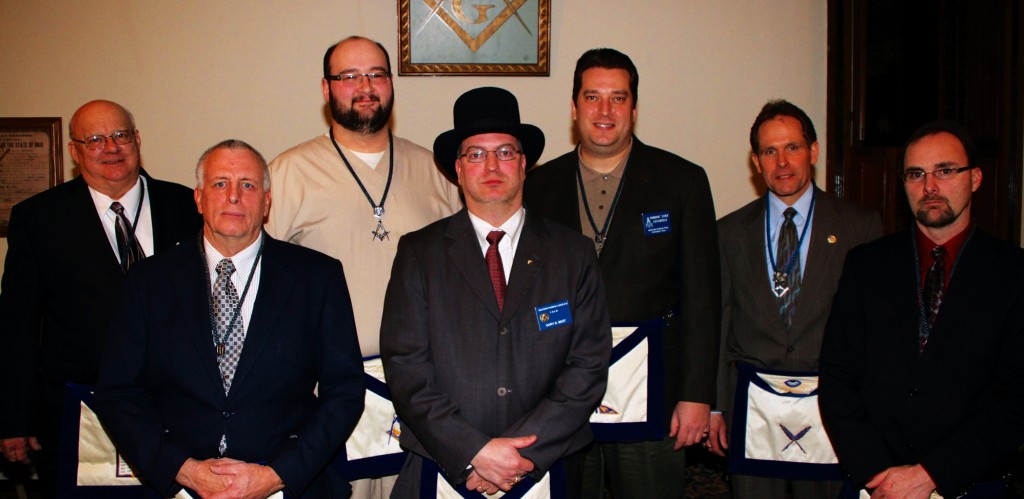
Tucked away in rural Parkman Township is a place that tethers resident Dale Komandt to the likes of Benjamin Franklin, John Wayne, Clark Gable, Winston Churchill and George Washington.
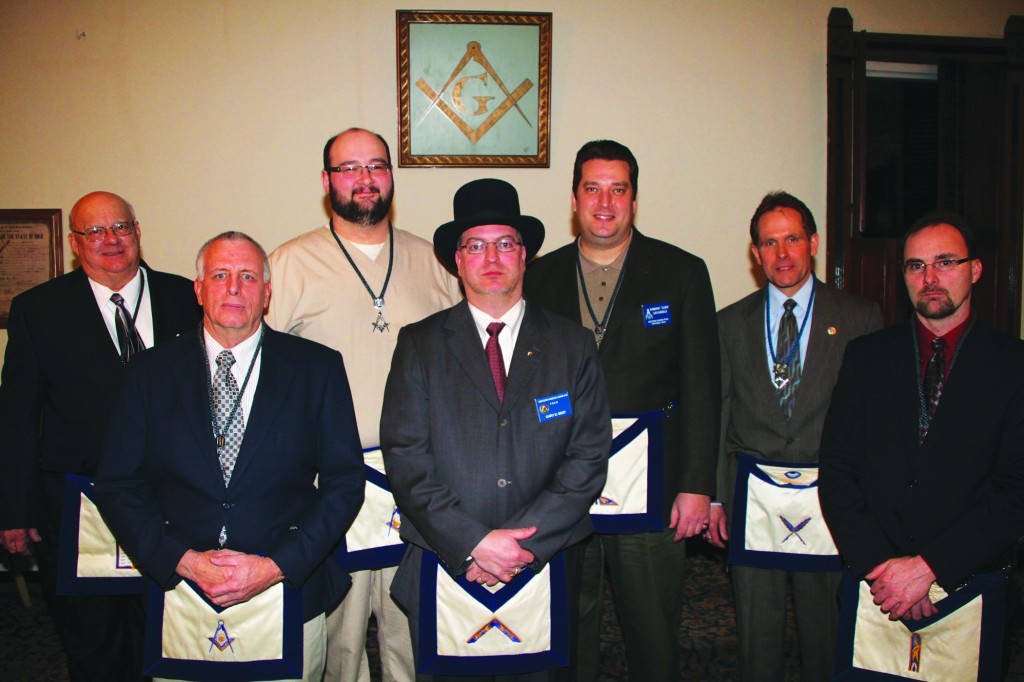
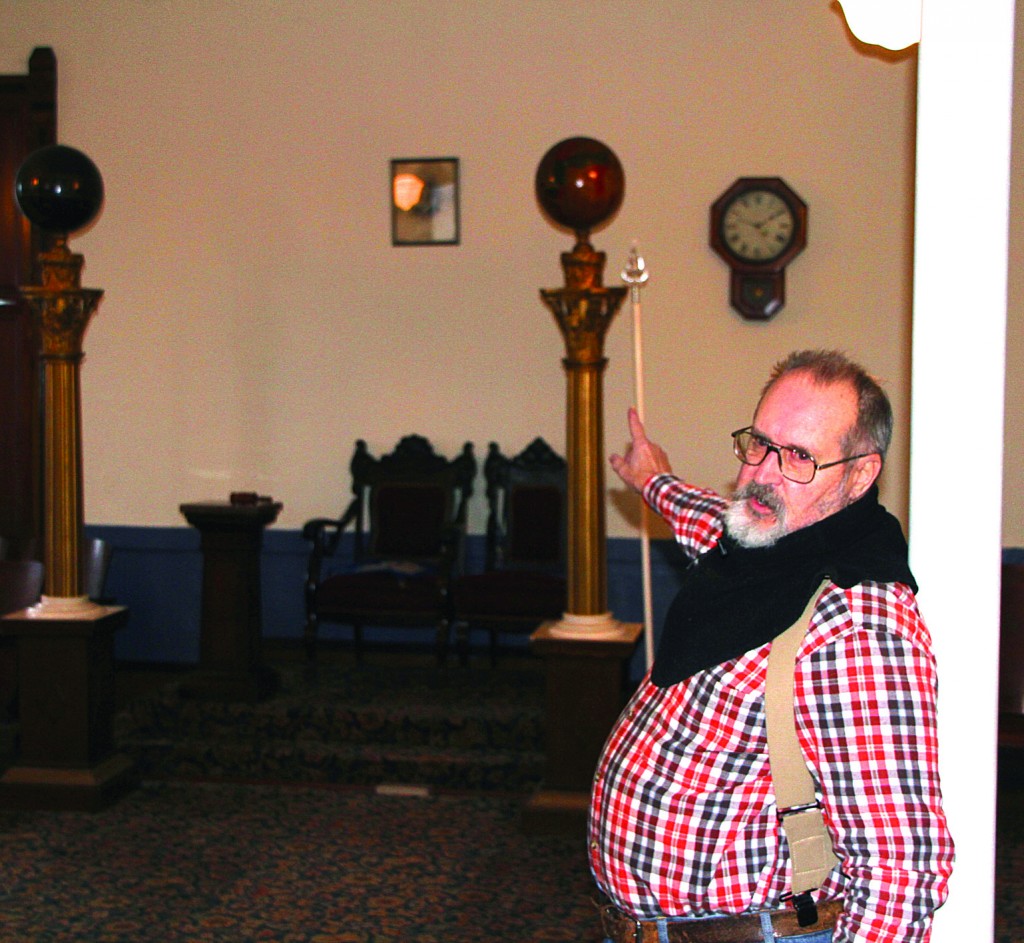
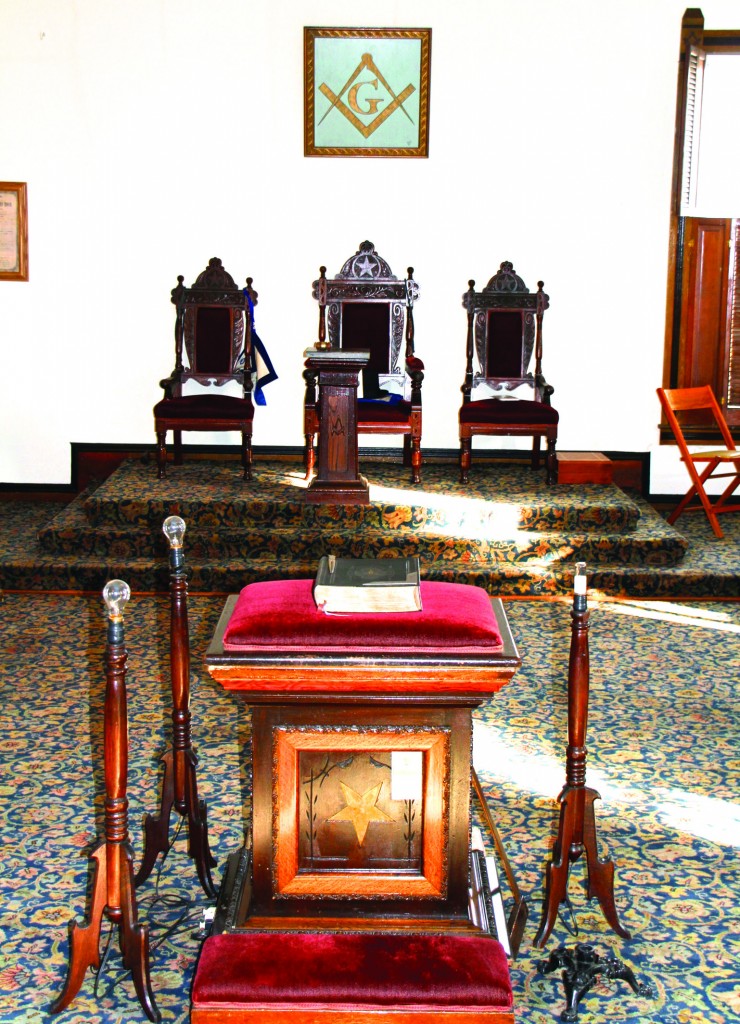
Tucked away in rural Parkman Township is a place that tethers resident Dale Komandt to the likes of Benjamin Franklin, John Wayne, Clark Gable, Winston Churchill and George Washington.
The place is called Western Phoenix Lodge #42.
And it’s tied to the oldest, largest and most widely known fraternal organization in the world — the Freemasonry.
Following his father’s, uncles’ and grandfather’s footsteps, Komandt, 75, and his brother, Gerald, were sworn into the Fraternity of Free and Accepted Masons in 1964.
“My brother and I were made Master Masons by our father. I don’t know of any other time that’s happened,” he said, referring to the Western Phoenix Lodge’s history.
Sitting down in the dining hall of the fraternity — located on the third floor of a 19th-century building on Main Market Road — Komandt, the lodge historian, pulled out a hand-typed book filled with milestones.
Surrounding him were walls donning plaques, old photographs of past Worshipful Masters and a bookshelf of encyclopedias living and breathing the history of an organization which is said to date back to the 10th century B.C., during the building of King Solomon’s Temple.
What makes Parkman’s lodge unique is it is the second smallest lodge in the state, yet its roots trace back to 1817.
“That’s when a dispensation was given to some gentlemen here for the Western Phoenix Lodge,” Komandt said. “In 1818, they got the charter.”
People familiar with Freemasonry might also know women were and still are not allowed into masonic lodge meetings, unless there is an open meeting, Komandt said.
However, the women created their own, essentially counterpart group in 1912, called the Eastern Stars, which also met in the same room as the masons, he said, adding both his first and second wives were members of the Eastern Stars.
In 1886, lodge members A.A. Jones and R.L. Blackmarr erected a business block on the north side of U.S. Route 422 and they wanted to know if the Western Phoenix Lodge wanted to have a third story added onto one of their buildings.
“It cost $1,300,” Komandt said, with a chuckle.
At that time, the lodge had met wherever they could find a place big enough to conduct business in, he said, adding they jumped on the idea of their own place.
“And we’ve been here ever since,” he said. “We had our dedication on June 24, 1887.”
In 1897, H.F. Burgess gave the Western Phoenix Lodge a Tyler Sword, which signified guarding the lodge, Komandt said.
Not only has the building withstood many years of history, it also survived the fire of 1899.
“That fire destroyed the business block. This was the only building left. It had $93.25 of damage,” Komandt said, laughing.
In 1903, the lodge’s mortgage was paid off and the masons voted to have no smoking inside, he said, joking they had a lot of spittoons back then.
A throwback to its origins — which tie into actual stonemasons who built cathedrals in the Middle Ages — W.M. Davis gave marble slabs to the Western Phoenix Lodge to put on their pedestals in 1907.
“He was a stonecutter,” Komandt said. “We still use them today.”
Komandt said once all the major cathedrals were built in Europe in the 17th century, the stonemasons — known as “Operative Masons” or “Free Masons” — began accepting members who were not of the masons’ craft, calling them “Speculative Masons” or “Accepted Masons.”
“They wanted to keep that history going as a social club of men,” he said.
In 1923, the Western Phoenix Lodge drew up a resolution of respect and sent it to the family of President Warren G. Harding, who was also a mason, upon his death.
“It was a document that we give out on a death of one of our members,” Komandt explained. “It states our brother has passed and we pay our respects.”
Another quirk of the Parkman lodge is that it technically has two numbers.
“At one time, the lodge disbanded because … of an anti-Mason who raised hell with anyone who was a Mason” he said.
When they reconvened in 1856, they were given the number 296, he said.
“In 1927, we requested our old number back,” Komandt said. “They had to go through a whole rigamarole to get it back.”
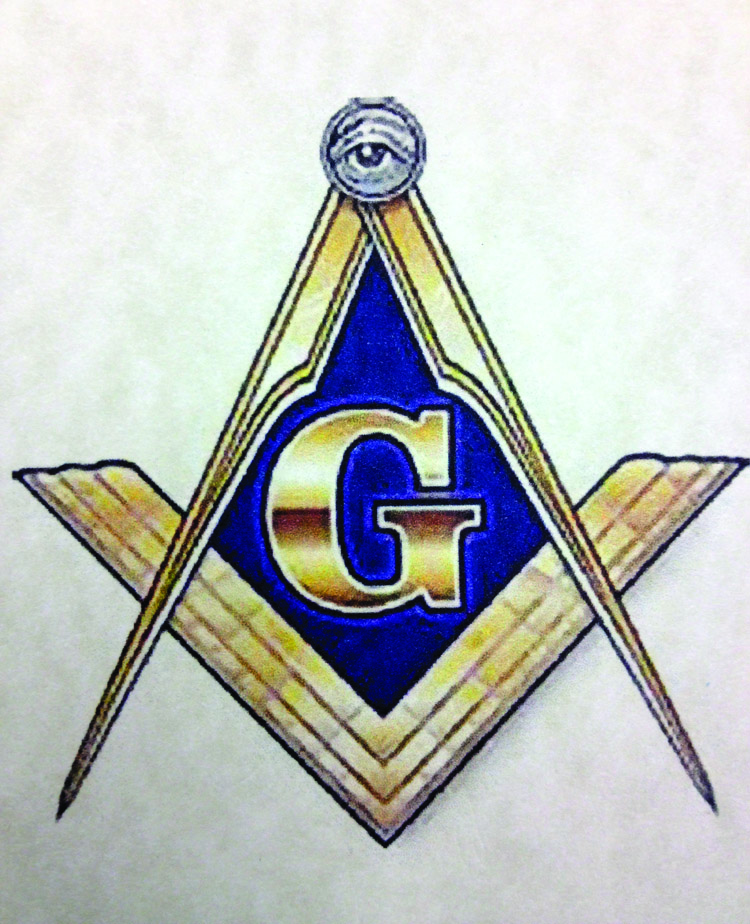
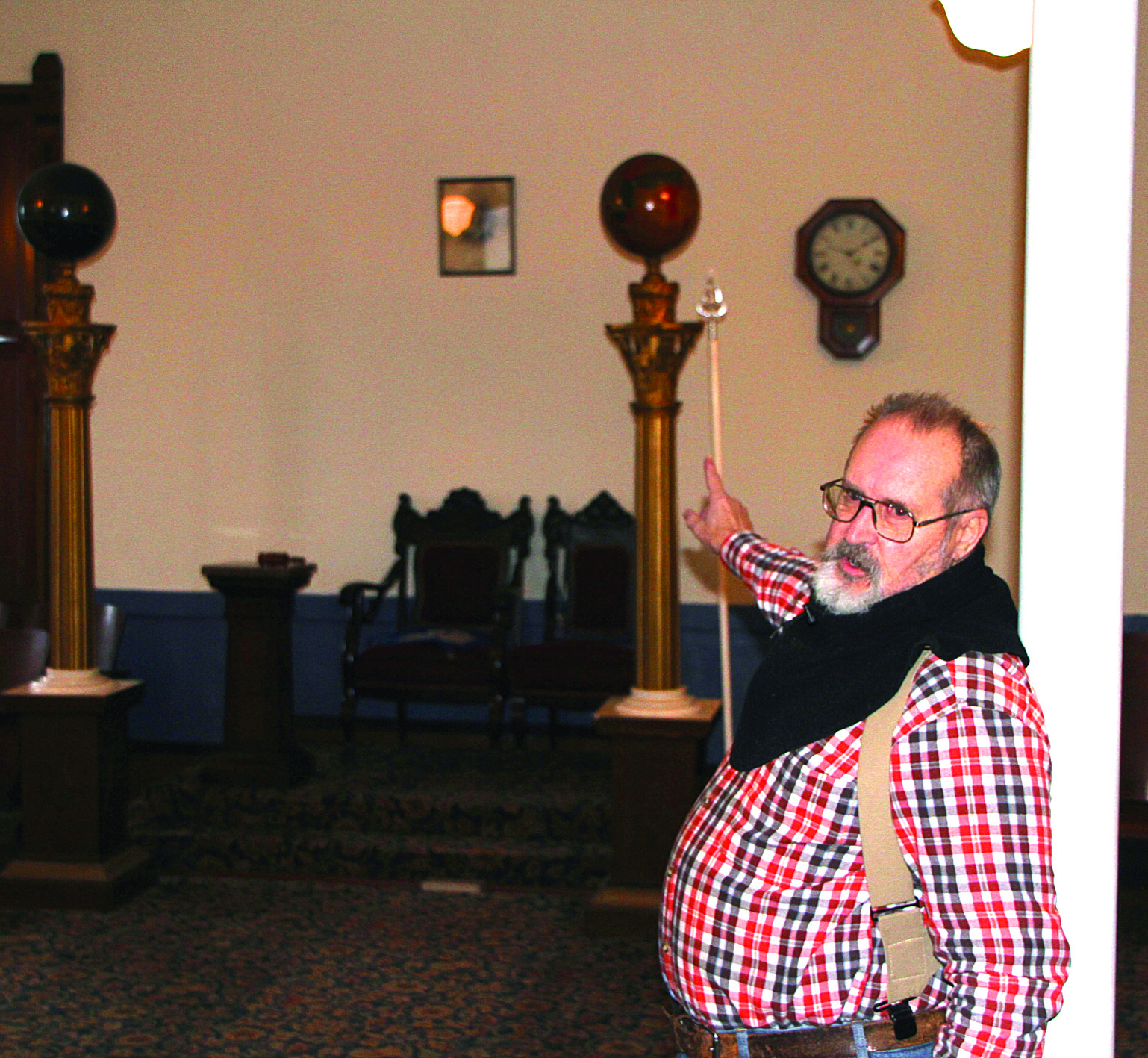
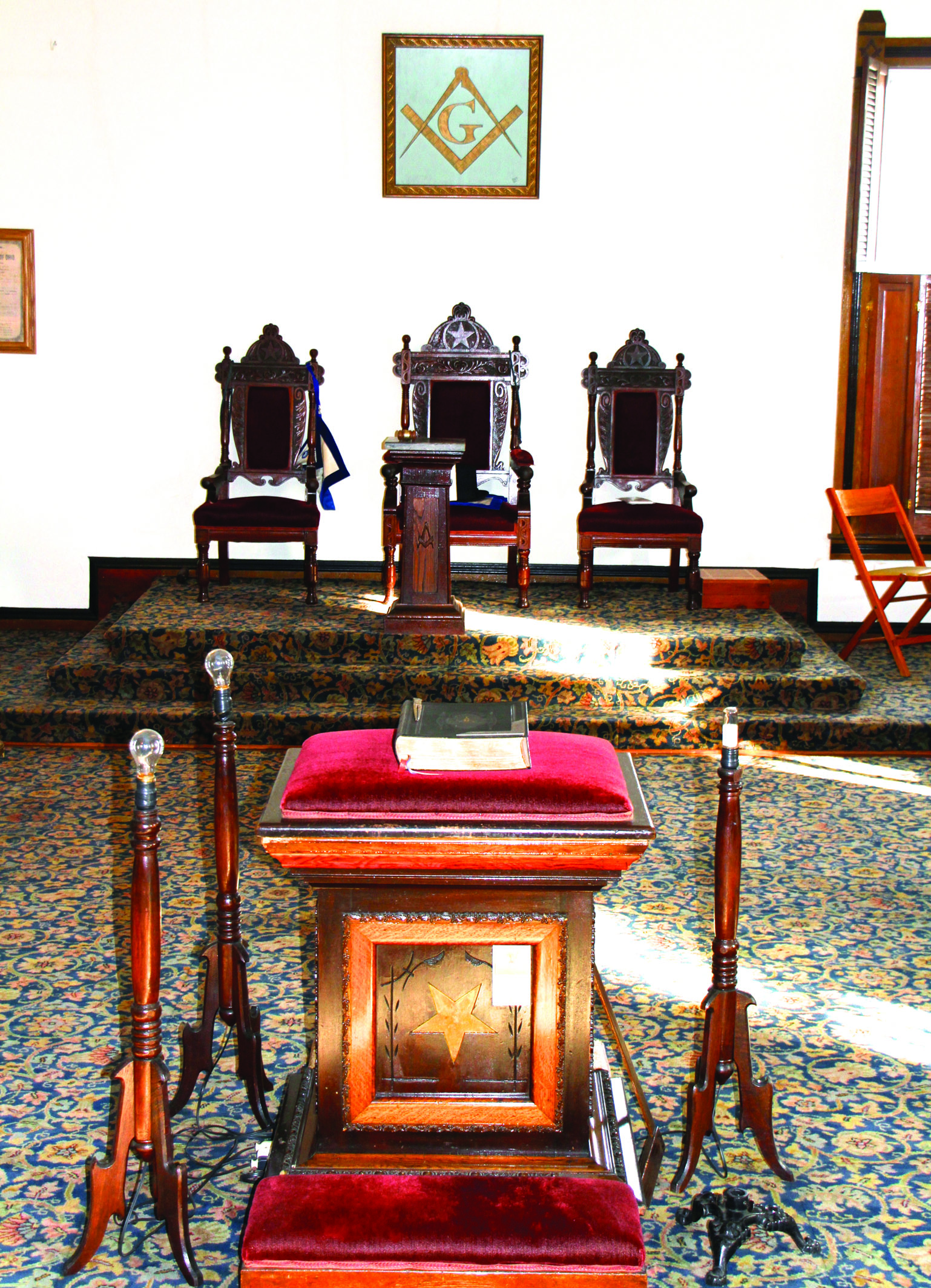
As Komandt walked through the meeting room of the lodge — set up east to west with the north always dark to mimic King Solomon’s Temple — he pointed out several historical pieces and symbols, including the official Masonic symbol with the letter “G” in the middle.
Every inch of the room was filled with original dark woodwork, the marble pedestals surrounding a wooden alter in the center of the room with the Holy Bible on top as Komandt highlighted a significant wall tapestry.
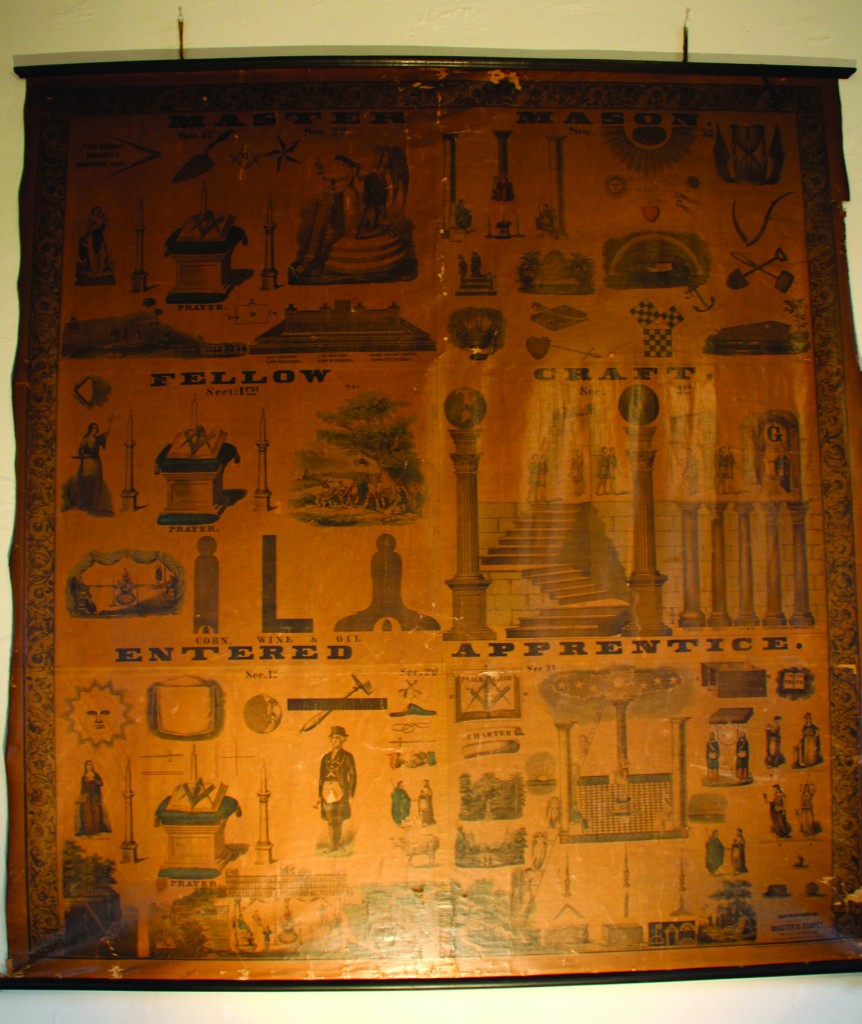
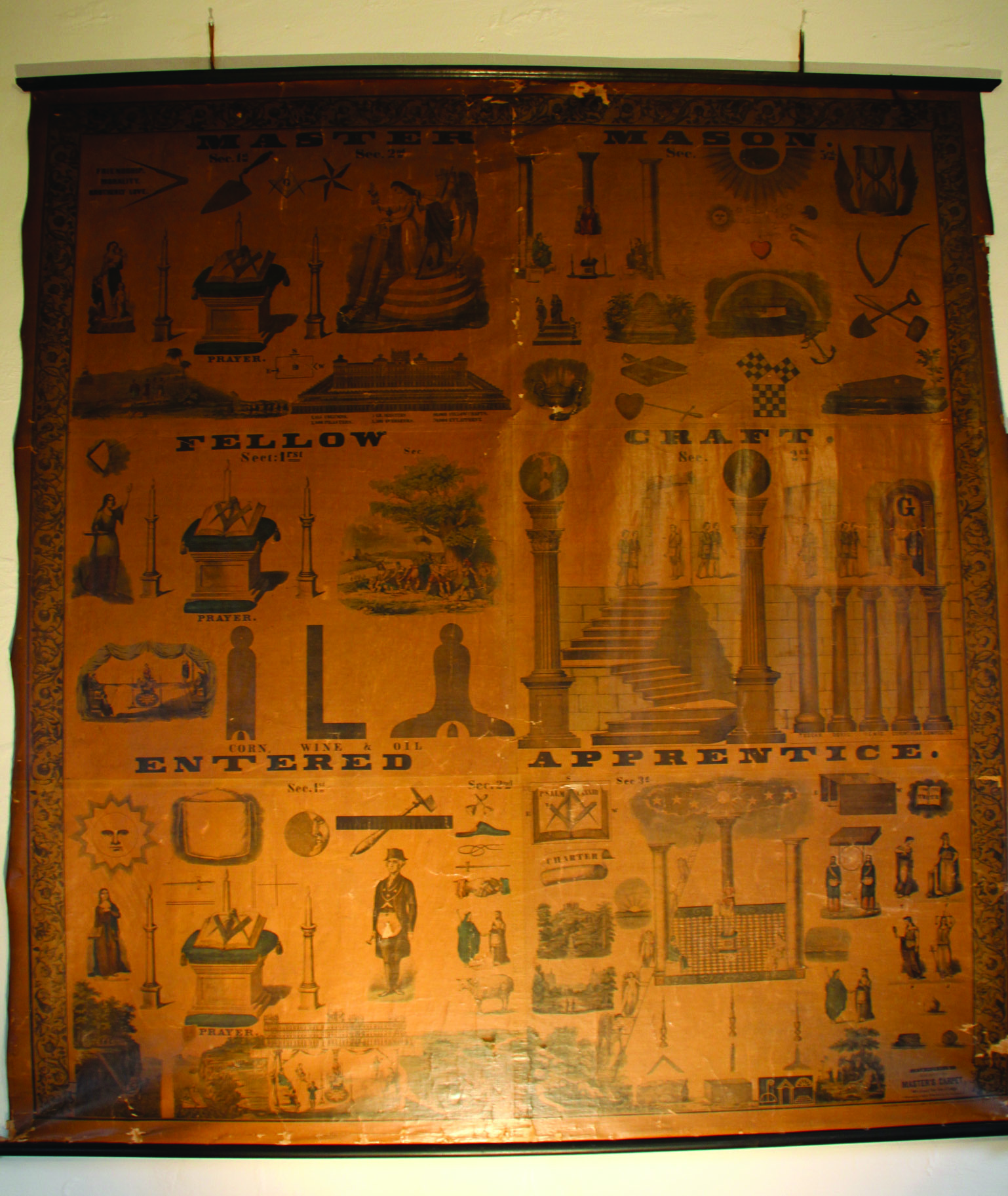
A lecture chart called “Master’s Carpet,” which was sold to the lodge in 1894 by Brother L. D. Hitchcock for $2.40.
It is believed to be the only one of its kind, he said.
Each part of the chart depicts the first three degrees of Freemasonry — an Entered Apprentice, a Fellow Craft and a Master Mason.
There is also a lecture that goes with each of those degrees.
“We don’t change too much here at this lodge. When we get something, we hold onto it,” Komandt said, chuckling.
When asked about their Masonic rituals, the fact many of their passages are written in code and the often believed notion they are a “secret society,” Komandt said, “We’re an organization with secrets, but not a secret organization.”
“We don’t do anything here that we couldn’t do right out on 422,” he said. “Nothing to upset anyone.”
Contrary to popular belief, the Freemasonry does not hide its existence, purpose, aims, principles or its member-ship, Komandt said.
“It’s the golden rule. Brotherly love, relief and truth,” he said. “Do unto others as you would have them do unto you.”
And while Freemasonry has included many members of the church, it is not a religion, Komandt said.
“We don’t believe in one God, but a God. So any denomination can join as long as you believe in a Supreme Being,” he said, adding people get out of Freemasonry what they put into it.
“We have dues, money that goes into a treasury,” Komandt said, adding they help out with charities, such as the Red Cross.
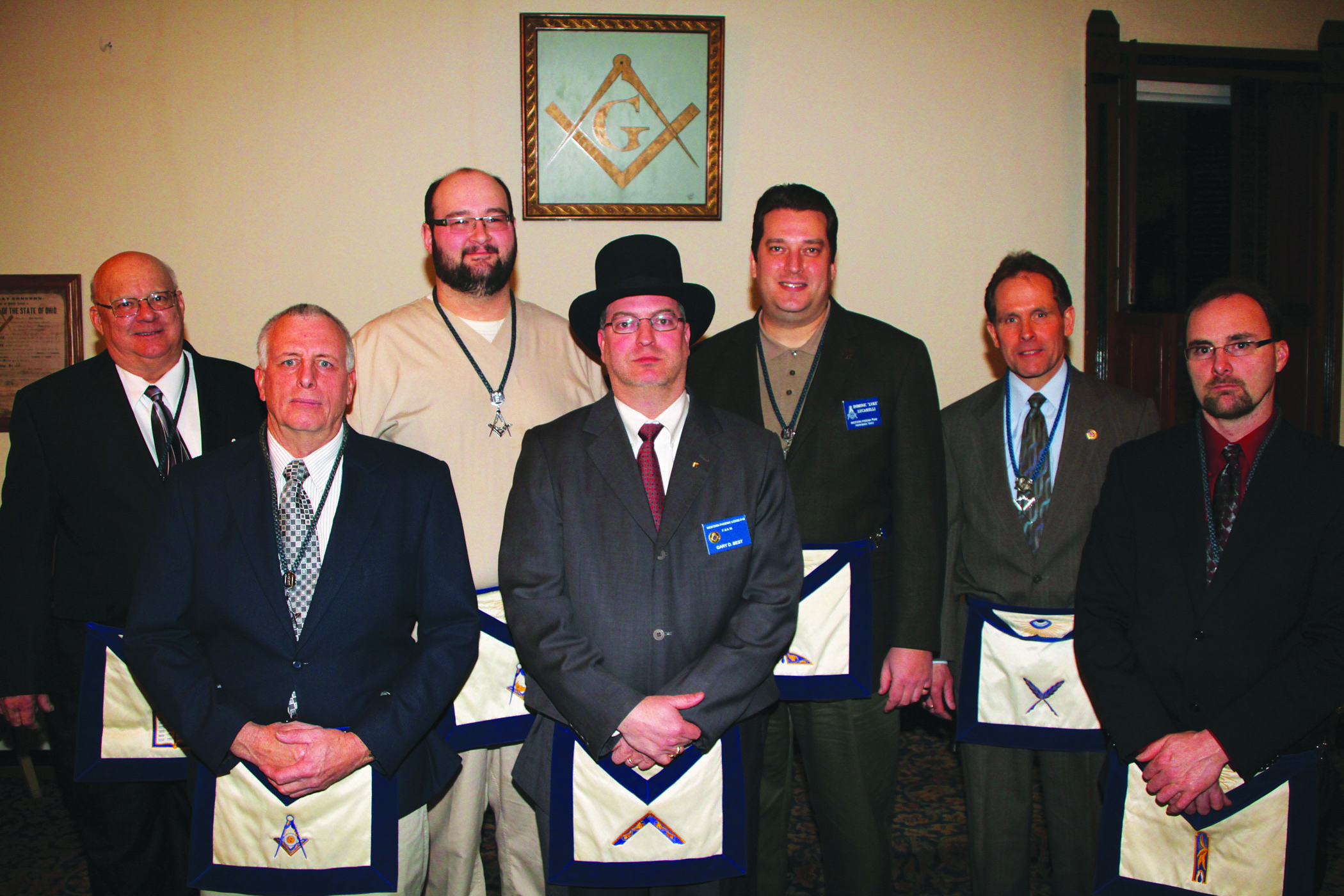
Their lodge also has to pay dues to the Grand Lodge of Ohio, which is the highest in their heirarchy, said Worshipful Master Gary Best, who is the top officer of the Western Phoenix Lodge.
The next step down are districts and then individual lodges, he explained.
“There are 25 districts in Ohio. We are in the 25th district and there are four district deputies in our district,” he said, adding two District Deputy Grand Masters were elected from their specific lodge.
Best, who joined the lodge four years ago, worked his way up the ranks from Junior Deacon to Senior Deacon, Junior Warden to Senior Warden and then Worshipful Master.
“I’ve always wanted to do it,” he said, adding he is the first in his family to become a Free Mason.
“We don’t ask people to join, people ask us to join,” he said. “We’re here to do good work. I love it. It’s a great group of guys. We’re very close and there’s a lot of good connections.”
Best said they meet every second and fourth Thursday of the month.
However, every lodge is different, he said.
Komandt mentioned an old tradition Best said some lodge’s still do, where they only meet on the night of a full moon because back before electricity was invented, they could only travel when the road was lit.
“The brotherhood is great,” Best said. “We’re a group of gentlemen that bind together to make better gentlemen and we do a lot of charity work to help society.”
Komandt added, “You can go to a lodge anywhere in the world and walk in and be accepted.”
Best said he has visited the lodge in Cleveland and they treated him as though he’d been there forever.
“Other groups and associations, you don’t get that,” he said, before showing some of the code they write in.
“I like the history, the community and the brotherhood,” he said. “Everything here has meaning to it, has symbolism.”
Anyone interested in learning more about Western Phoenix Lodge #42 or becoming a candidate for admission should call Gary Best at 440-632-0818.


