


Michael Wagner’s earlier life decisions could have easily cost him the loss of someone else’s life — or that of his own.
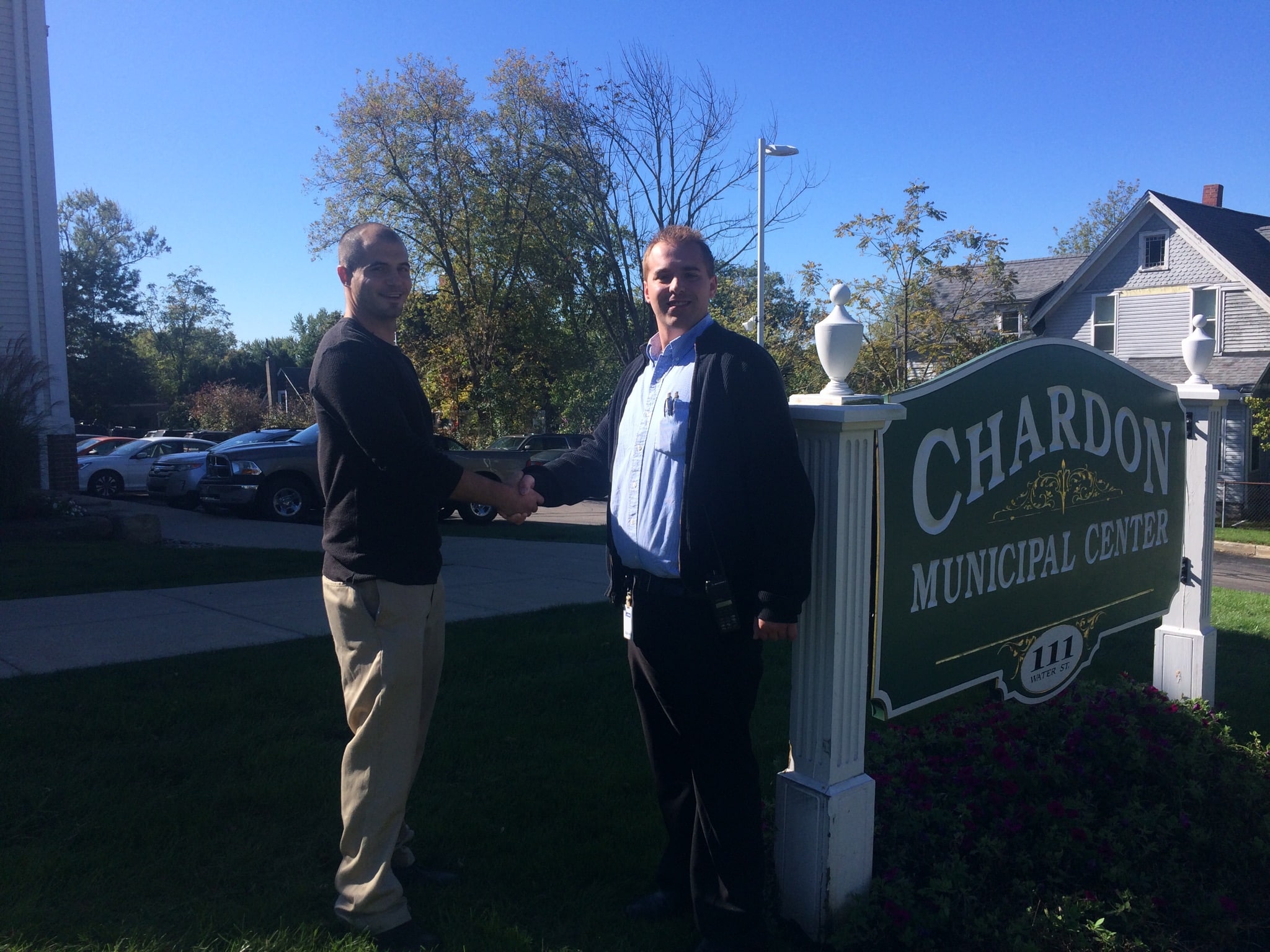
Michael Wagner’s earlier life decisions could have easily cost him the loss of someone else’s life — or that of his own.
Instead, Wagner ended up incarcerated and on the wrong side of the criminal justice system. However, his experience there made him determined and driven to get back on the right side and stay there.
Wagner took part in the Geauga County Reentry Program, which started in January 2017 by the Geauga County Reentry Collaborative — a partnership of many community agencies, including the Geauga County Sheriff’s Office, United Way Services of Geauga County, Family Pride of Northeast Ohio and Ravenwood Mental Health Center.
“People should know that we are helping the people incarcerated to return to society and not return to jail,” Geauga County Sheriff Scott Hildenbrand said. “Some of them have never been taught the skills needed to succeed in life. The Geauga County jail inmate programs help them with that.”
Lt. Kathy Rose is the jail administrator in charge of the corrections division at the Geauga County Safety Center and said the jail is a community unto itself.
“The people in the jail are people from our community who will eventually be returning to our community,” Rose said. “It is important that we (look) towards giving these people the tools that they will need to succeed. By having various programs in the jail, we bring resources to them, we bring people from the community who have the knowledge and expertise in various areas such as drug and alcohol treatment, the church community, mental health, social services, etc.”
Rose said when a person is incarcerated, it affects many.
“There is an entire family involved and often time, children,” Rose said. “Sometimes they are with the other parent who is trying to raise them alone, sometimes they are with the grandparents who are now thrust back into the parental role and sometimes the children go into foster care.”
Wagner’s mom gave him up to foster care when he was 12 following an altercation with his stepfather, and he became labeled an “unruly child.”
“He called the cops,” Robinson said.
Wagner was then placed into the Portage-Geauga Detention Center.
He attended Martin Luther King Jr. High School in Cleveland and during that time, he said he stayed on the right side of the law.
He then paused.
“After that I’ve been in and out of multiple places for a long time,” Wagner said, including about one year in Georgia’s Muscogee County Jail and two months in prison.
“It was insane there,” Wagner said.
After that release, he had nothing. He went straight to a homeless shelter.
Wagner thankfully met a man who provided him work for a week and earned just the money he needed to come back home to Ohio.
“I believe in God wholeheartedly,” Wagner said. “You’re lost and you need guidance. Prayers get answered.”
Wagner, who was raised Catholic, said he has read the Bible front to back four times.. “You have nothing to do, but think in jail,” he said.
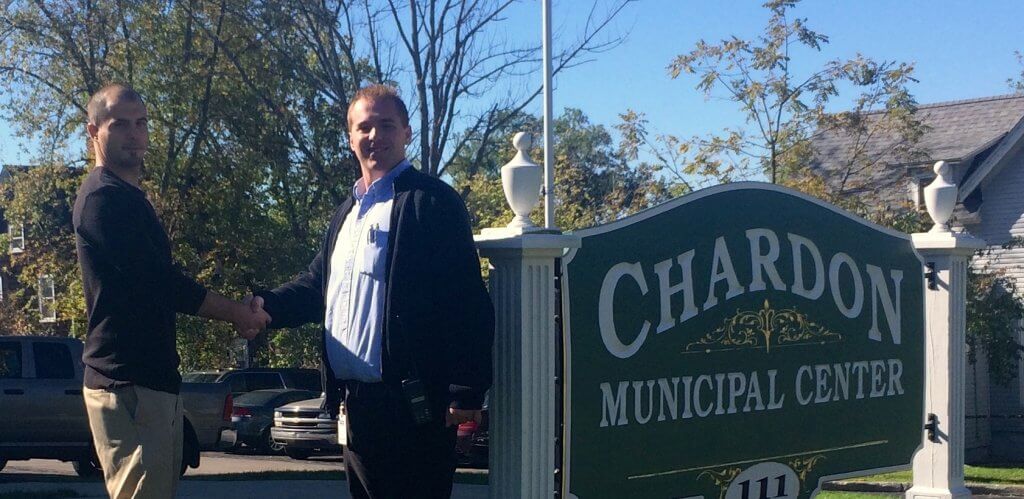
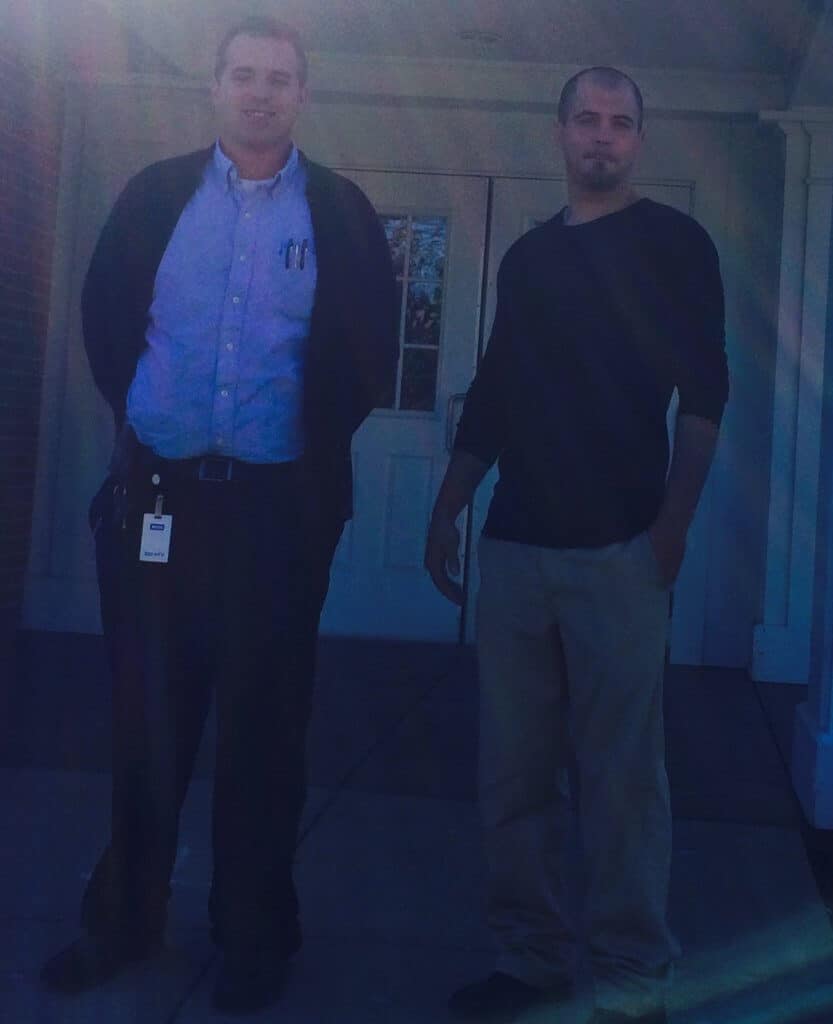
Wagner soon met Joe Robinson, transitional care coordinator at the safety center, through Family Pride of Northeast Ohio.
Robinson works with the reentry program and provides case management services to inmates who are being released from the jail back into the community.
“He had no support,” Robinson said of Wagner, aside from his strong faith. “We are trying to eliminate barriers.”
Robinson said he has children and he doesn’t “have time to be in and out of jail.”
“I don’t want my kids to think I’m a piece of garbage.”
Caring Collaboration
“We need to work towards giving these people the tools and connections they need in order to have a better chance to succeed when they are released,” Rose said.
The Lake-Geauga Fund of the Cleveland Foundation and United Way partnered to fund the development of the reentry program and the Geauga County Reentry Collaborative was awarded a grant.
The team conducted research through surveys, focus groups and interviews of inmates, their families and many community partners that provide services to inmates in the jail. They also identified specific needs, challenges and strengths of the current programming and inmate population.
After looking at the information and feedback given, the reentry team developed a program to help reduce barriers for inmates being released from jail — such as housing, employment, transportation and education.
The program offers both onsite (education, life skills, transition planning, etc.) and post-release (housing and case management) services.
“Providing effective rehabilitation and skill development for those incarcerated and formerly incarcerated is critical to strengthening households and the economy,” according to the Brookings Institution research group.
“We all have a vested interest in our community and want it to be great place to live and bring up our children so we need to work together to ensure that we are making it better everywhere we can,” Rose said.
In addition to Robinson’s position, the program also provided Niki Brafford, United Way’s resource navigation specialist, a role onsite in September connecting with inmates prior to release to identify needs and barriers, and determine solutions to those challenges.
Kimm Leininger, executive director of United Way Services of Geauga County, said this program has proven to be successful and also credited Rose.
“One of the challenges identified by Lt. Kathy Rose is the lack of ability for individuals to connect to required services or to secure a job after release, which results in a probation violation and, in turn, re-incarceration,” Leininger said. “We are able to connect individuals with housing, jobs, transportation and much more and in turn, reduce recidivism rates and guide individuals toward self sufficiency.”
She added, “We could not do this without the partnership of Lt. Rose. She sees potential in the individuals that come into the jail, she understands the challenges they have had in life and she believes in building a strong community. This is one way she is helping to do this in Geauga County.”
A Helping Hand
Robinson started at University Hospitals Geauga Medical Center as a mental health worker on the behavioral health unit. He then went to Lake Erie Correctional Institution and worked as a corrections officer.
“I was really interested in the mental health and chemical dependency field, and I have always had a compassion for helping others,” Robinson said. “I have always enjoyed being an advocate for my clients.”
Robinson left that position and became a dual diagnosis case manager at Signature Health.
“I have always been interested in the mental health and criminal justice field ever since my aunt started at the sheriff’s office,” Robinson said. “I saw her as a mentor and role model and I wanted to follow her footsteps.”
A photocopied letter signed by Wagner sits above Robinson’s desk.
An excerpt reads: “Thank you so much for offering the case manager Joe Robinson at the Geauga County jail. When being released, it’s scary to know that you don’t have any help or anyone to talk to. It’s hard to see a good future when you have no resources.”
Robinson said he loves his job.
“I call him our case manager,” Rose said. “I was blessed to work with fantastic people who believed that we needed this position.”
Robinson works with inmates to see what their needs are and goes over what he can help with. While they are in jail, he helps them to get enrolled in healthcare if they don’t have it, gets them enrolled in a GED program if needed and other various programs.
He works on a case plan for when they are released and will work with someone up to six months post release from jail.
“I think this program is essential because I think that many of the men and women that are getting released from jail can be overwhelmed with what is required of them and what their needs are (as they) go back to many of the places and people that brought them to the jail in the first place,” Rose said.
Robinson added, “As individuals leave the jail, I meet with them in the community or at their homes to continue to help them progress through their transition plan so that they do not return to jail.”
Many ex-offenders struggle with employment and housing, Robinson said.
“In these situations, I link them to services to conduct career assessments as well as local businesses that are willing to work with individuals who have a record,” he said.
“For housing, I work with the individual to identify potential options, such as family, reduced-fee housing, or the Geauga County Reentry House, which is funded by the reentry program and managed by Ravenwood Health.”
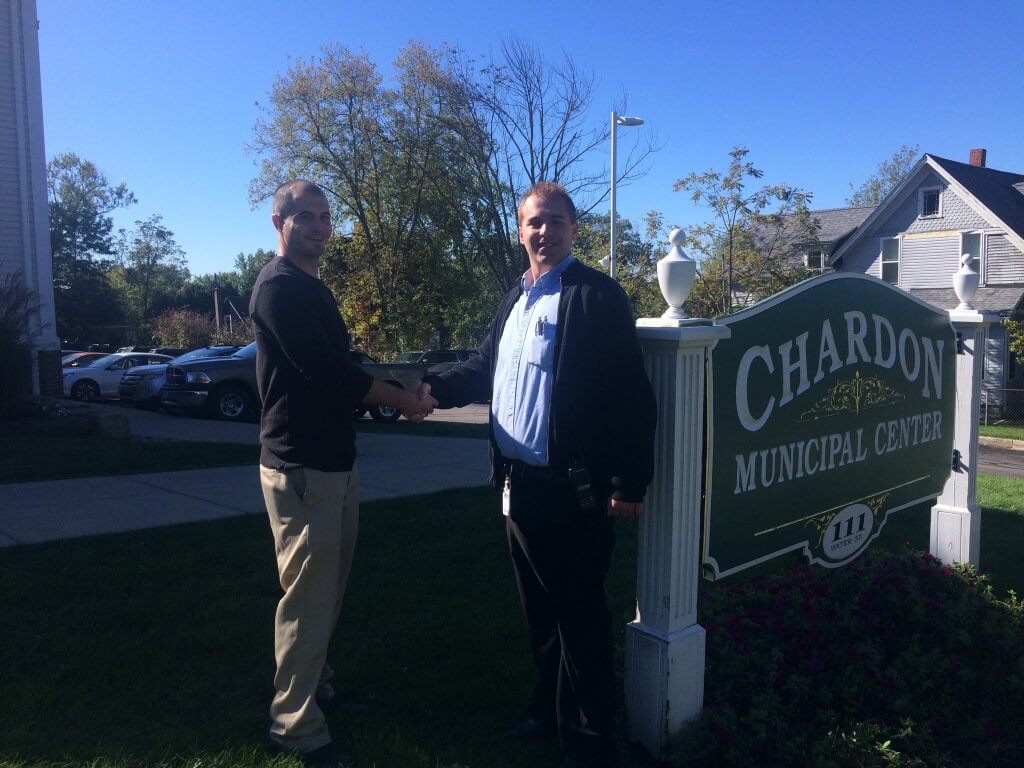
Wagner recently moved into the reentry house and has a full-time job he enjoys.
He used to walk a half an hour back and forth to work. Now, a coworker drives him.
“This is why I chose this career path,” Robinson said. “I love seeing success, and knowing that I could do something to positively impact the life of a certain individual and see them be so successful.”
En Route to a New Start
Robinson said it takes a lot of patience and work on both ends for the program to be successful.
“Things do not happen overnight and I know at times, the inmates are feeling like they are making no progress, but really they are,” Robinson said. “Everything takes time. If we want there to be success, both myself and the inmate have to go in with a positive approach.”
He said the key to rehabilitation is the individual must want the help and the individual must be willing to participate.
Wagner added you have to want to save yourself and not everybody wants to.
“But truthfully, without him, I would be in a bad spot,” Wagner said. “I would like to thank you again and I hope that some other people may benefit from this program as I have.”
He said there are “so many people truly in need.”
“Help them. You never know what difference you can make,” he said. “You may be the thing that saves them.”
Wagner was released in July. No family was waiting outside the jail doors. Instead, he walked to Windsor to visit some of his children.
With help and hope, he now has a place to live and a steady job.
“Joe, he tries to help you man,” Wagner said. “He goes above and beyond. Because of this, I have a greater opportunity to better my life.”
Wagner said when you have nothing, you go back to your vice, which emphasizes the need for more programs like this one.
“You lose everything and have to start your life over,” Wagner said. “Truthfully, there should be more programs to stop (people) from being repeat offenders. I didn’t have anyone. (Robinson) helped me out and into the reentry house, and to find a job. He’s gone above and beyond what he needed to.
“I’m not going back to jail and worry about where I am going to lay my head. I’m not going back. I have children that depend on me. There’s a God, (that’s) one thing I know. We pray and your prayers get answered.”


