


Kent State University is going green as part of a university-wide initiative.
Kent State University is going green as part of a university-wide initiative.
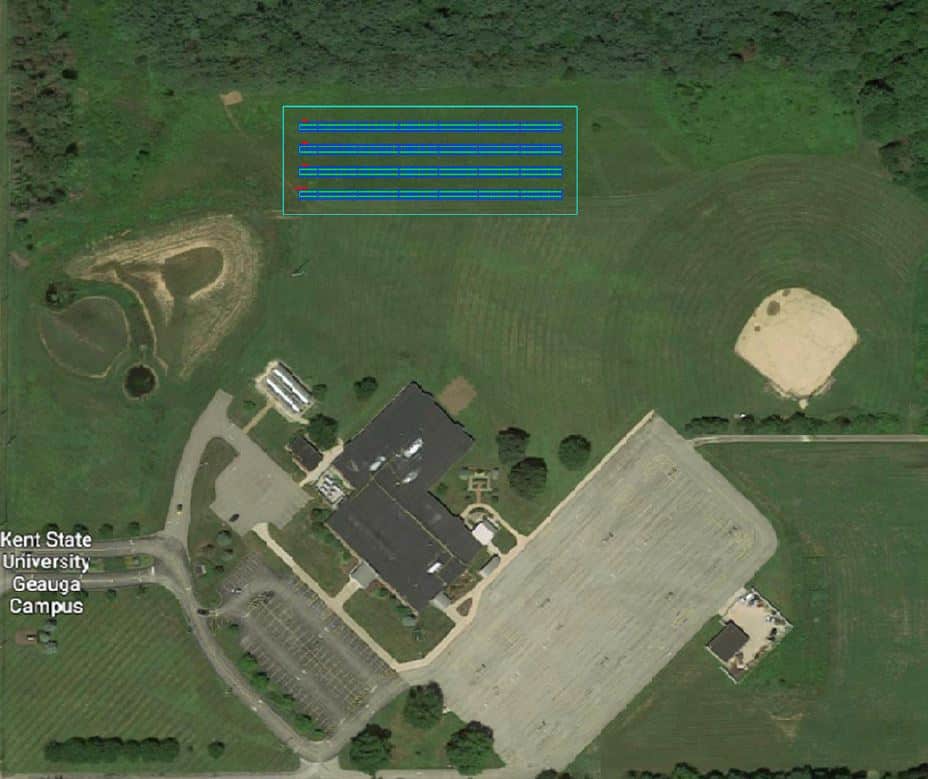
Ground-mounted solar photovoltaic panels are being installed at the KSU–Geauga campus in Burton Township to provide 322 kilowatts of clean solar energy every year (392,489-kilowatt hours), which amounts to 67% of the campus’ energy use.
Solar panel structure posts were set in early November and panels are now being installed. The solar panel array will cover 1.27 acres along Claridon-Troy Road, connected to the KSU–Geauga classroom building.
When the project is completed by Youngstown developer TEN-NINE Energy in Spring 2021, the solar panels will generate the energy equivalent to powering 47 homes while eliminating 306 tons of carbon dioxide, the main contributor to global warming, according to the university.
Cost savings the first year are estimated to be $3,200, said Robert Misbrener, project manager II of sustainability, energy conservation and commissioning in the Office of the University Architect at the Kent campus. He also estimates cost savings over the next 25 years should be $138,682-$242,339.
Misbrener said this innovative Power Purchase Contract requires $0 out-of-pocket cost to KSU.
“We are required to purchase all solar power produced at a negotiated rate over the next 25 years,” he said, adding the negotiated rate includes a minimum savings of 1.5 cents per kilowatt hour throughout the contract.

“For Geauga campus, that translates to minimum savings of $140,000. Total savings at all six participating regional campuses (is) $1,570,000,” Misbrener said.
The cost of solar energy has dropped by nearly 70% in the past decade, he said.
“Solar panel efficiency is also always improving, along with battery storage,” Misbrener added.
The Geauga solar array represents about 9% of the total amount of solar panels being installed at all six KSU campuses. Similar projects are underway at Ashtabula (68% campus use, eliminating 905 tons of CO2); East Liverpool (12% campus, 89 tons of CO2); Salem (73% campus use, 617 tons CO2); Stark (7% campus use, 252 tons CO2); and Trumbull (65% campus use,1,284 tons CO2).
They’re all set to be completed by next spring.
Contrary to popular assumptions that cloudy Northeast Ohio is a poor locale for solar power, Misbrener explained solar energy collection is actually quite effective here.
“Our area approximates a similar latitude as Germany, which has been among the world’s top PV installers for several years,” he said. “Actual experience with clean solar energy on our Kent Campus Field House roof since July 2012 has proven the effectiveness. That project developer predicted 500,000 (kilowatt hour) production per year. The system has slightly exceeded that amount every year. Kent State purchased that system from the developer early this year with payback expected within about seven years. In addition, since we do normally receive adequate rain, the panels stay relatively clean, which also positively affects production.”
Since KSU–Geauga and the other regional campus projects do not include battery storage, they must stay connected to the utility grid for the foreseeable future.
“However, on an annual basis, the Geauga solar array will produce about 67% of the total electricity needed,” Misbrener said. “In my opinion, that is quite exciting.”
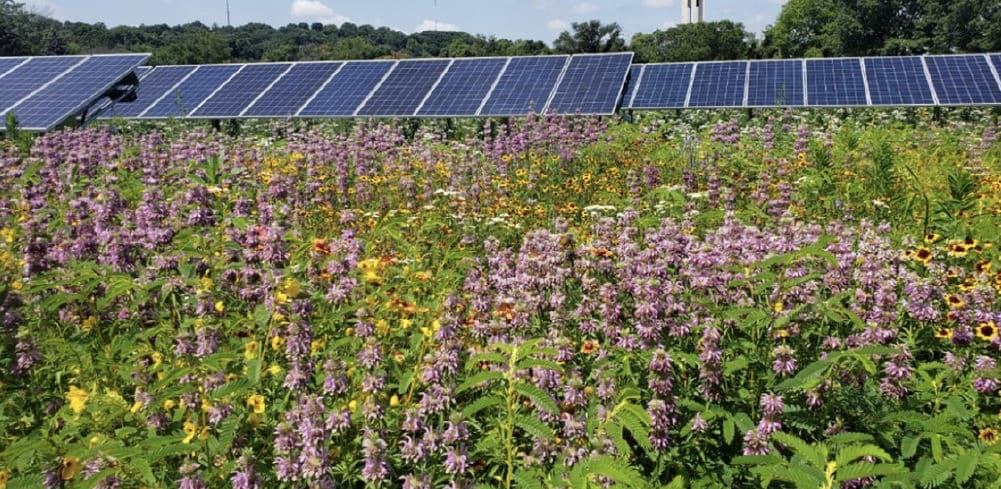
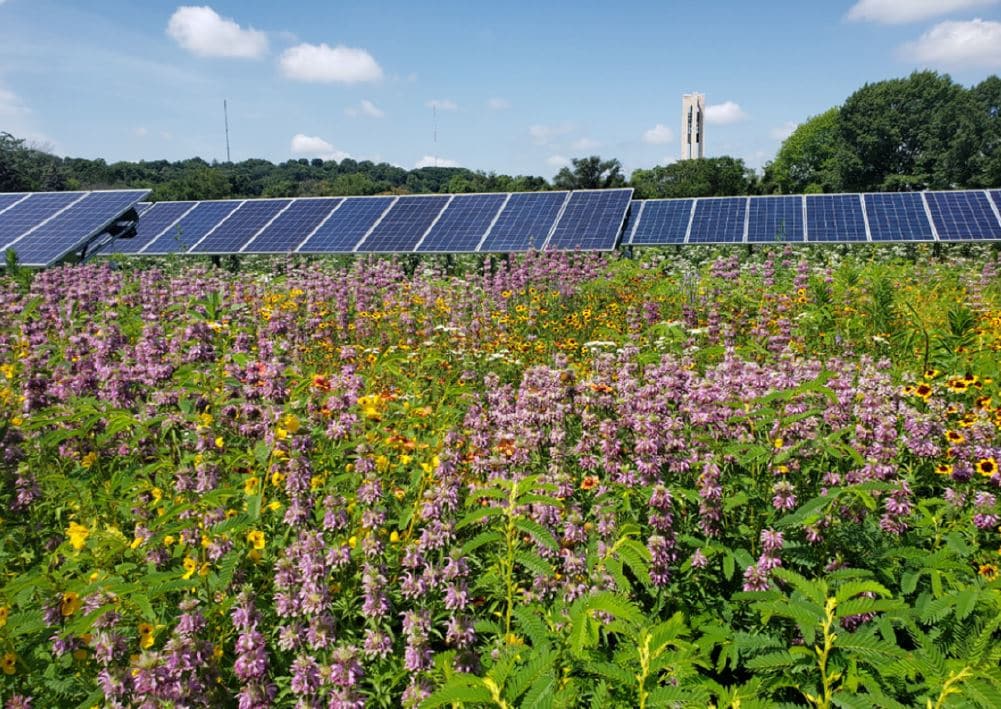
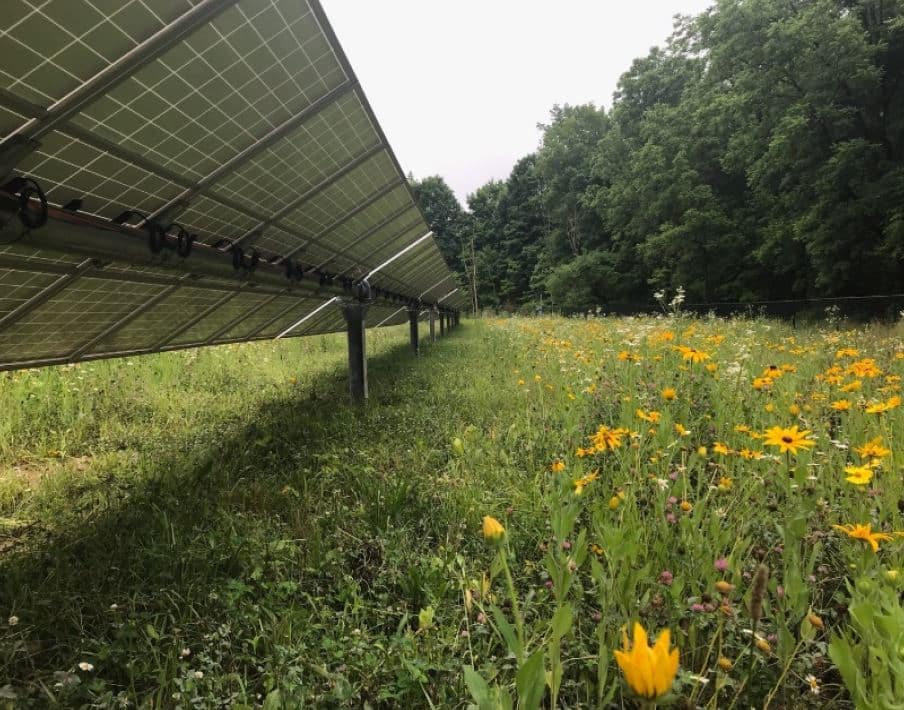
As a complementary enhancement, pollinator prairie flowers will be planted throughout the solar array, yielding both a natural beauty and a refuge for native honeybees, butterflies and other pollinators that will help restore balance to the ecosystem, according the KSU, which added this area of native perennial plants has the potential to become a living laboratory for further environmental, biological and botanical study.

With 81 prairie plant species available, they also offer sustainability benefits to help the solar system operate optimally. The deep roots of prairie plants promote adsorption of rainwater and cool the ground, helping the solar panels to run more efficiently, according to KSU.
Overall, Misbrenner said adopting solar energy is a growing trend among college campuses, but KSU has distinguished itself as a leader.
“The 2012 Field House array was believed to be the largest at an Ohio university at 463 kWdc at that time,” Misbrener said. ”We are in very good company — University of Akron, University of Dayton, Ohio Northern University, Case Western Reserve University, to name just a few.”
The KSU–Geauga campus also operates a small wind turbine that has provided enough power to light the LED parking lot and driveway for the past eight years.
“Kent campus is fortunate to have forward-thinking and climate-conscious leadership to support cost-effective renewable energy and efficiency projects,” Misbrener said. “Solar arrays are a very effective and visible means to demonstrate our commitment to the environment. The reduction in power plant emissions will certainly improve air quality and minimize some health issues from the air we all breathe.”


