

Opioid Addiction Being Managed as a Chronic Disease
I think our (success is) competitive with anybody. We’d like to get to the point where (addiction) is accepted as a disease. – Vicki Clark
If opioid addiction is viewed as a chronic disease, managing its many facets is the only way for an addict to survive.
Teaching the body and the brain to exist without heroin or other opioid-related substances is the first step in the process.
The second step is for the recovering addict to adjust to a different culture, from daily habits to social life to regaining the trust of family and friends.
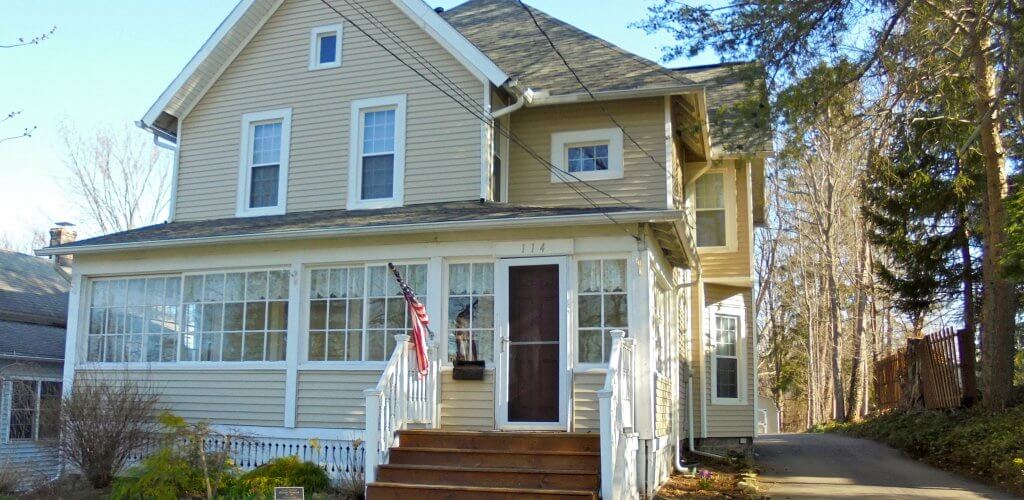
Two organizations dedicated to helping a recovering addict build a bulwark against the incessant pull back to using drugs are Ravenwood Mental Health Center and Lake-Geauga Recovery Centers, both with addresses in the Chardon area.
Ravenwood
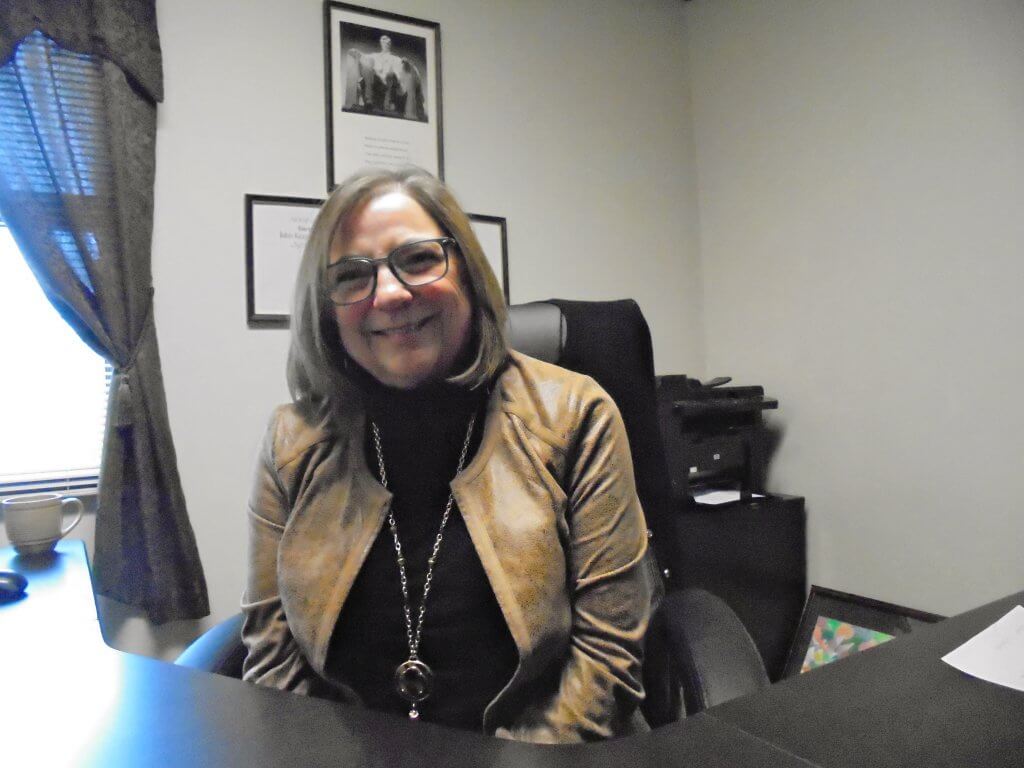
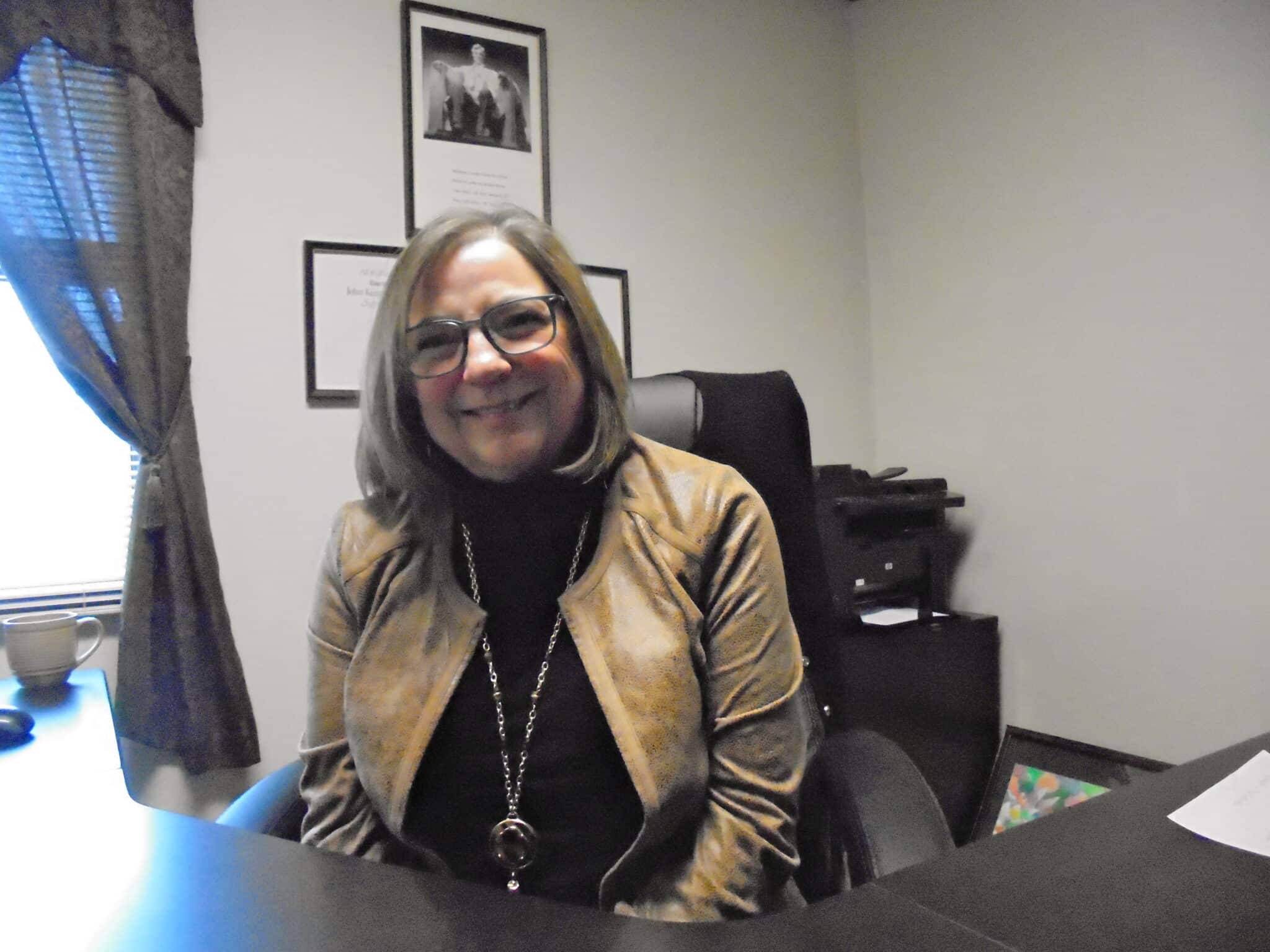
Vicki Clark, CEO at Ravenwood Mental Health Center, said counselors there see clients with a wide spectrum of disorders. She estimated the center has about 20 clients on any given day who are also abusing drugs, with an increasing number on opioids.
“People come to us in all different phases,” she said of addicts. “We have expanded so we can provide them with a variety of services.”
If patients are in active addiction, the RMHC program begins at the hospital with detoxification under the care of a doctor, said Brittain Paul, chief operating officer of the center.
Addicts are prescribed Suboxone or VIVITROL, which stops the brain from demanding an opioid boost and gives the addict a chance to regain control of his or her life.
“Some (health) providers think Suboxone is just a substitute,” Clark said, adding the chemical dependency is so strong, will power alone is not enough to achieve long-term sobriety. “They need a continuum of care. For some people, (Suboxone or VIVITROL) is the only way to get clean and functioning.”
To enter the program, an addict has to sign a contract agreeing to the treatment, she said.
There are no timelines for treatment, Paul said, adding, however, the client has to start ongoing treatment immediately, participate in group or individual therapy and agree to regular drug testing.
“We will not provide the program without those,” she said.
The first phase consists of weekly visits to the center for therapy and Suboxone, Clark said.
“We keep them in phase one as long as we think necessary,” she said.
As signs of stabilization are seen, the client comes in every two weeks and, in phase three, he or she comes in once a month, usually after at least six months of treatment and visits.
“The program is individually based,” Paul said. “We do have requirements for each person.”
Most of the clients at RMHC have co-existing mental health issues, either disorders that led them to self-medicate with drugs or problems that resulted from the abuse, Clark said.
that reason, the center treats each case holistically.
“If we don’t treat for both, we are doing the client a disservice,” she said.
Many of their clients qualify for Medicaid and there can be financial assistance through the Geauga County Board of Mental Health and Recovery Services, although those resources are limited, Clark said.
If the individual is still employed, his or her insurance may cover treatment, as well, she said.
The opioid crisis in Geauga County only became apparent in the last five or six years, so statistics on the success of the RMHC program are not available, Clark said.
“I think our (success is) competitive with anybody,” she said. “We’d like to get to the point where (addiction) is accepted as a disease.”
As more people are affected by opioid addiction and information on the affliction gets out, that is happening.
“As sad as that is, it helps people understand it is a disease,” Paul said.
Lake-Geauga Recovery Centers
In its last fiscal year, Lake-Geauga Recovery Centers saw nearly 2,000 patients at its facilities in Lake and Geauga counties, said Director Melanie Blasko.
Of that number, about 40 percent claimed opioids as their primary drug of choice, she said, adding 40 percent listed alcohol and 20 percent chose some other substance.
Six years ago, when the numbers of patients coming in due to opioid addiction began to ramp up, the center had an abstinence-based philosophy.
“We didn’t advocate replacement drugs,” she said.
However, due to the difficulties patients faced depending strictly on self-control for sobriety and the increasing numbers of addicts the center has seen, LGRC has shifted its philosophy, Blasko said.
“Early on, we prescribed Suboxone. Suboxone is very good for some, but not for all patients. We have hitched our wagon to VIVITROL. It’s not a narcotic or addictive and there is no potential for abuse,” she said.
The center provides ambulatory treatment in connection with its outpatient program that usually lasts 12 to 24 months.
“The longer we can keep people in treatment, the better their chances (of recovery) are,” she said, adding the staff at the center encourages its patients to try abstinence without medication, but recognizes it is not for everyone.
“The treatment for each person is different,” Blasko said, adding the reason they started using opioids is often the same — pain.
“A large number of our clients at our residential facilities started with some kind of prescription medication,” she said, adding oftentimes addicts trace their introduction to opioids and heroin back to medication prescribed for sports injuries. However, she knows of one addict who had been on pain medication since he was 10.
“We hear all kinds of stories,” she said.
Over the last three years, the number of opioid addiction cases at LGRC has started to decrease, possibly due to doctors and dentists becoming more attuned to the dangers of opioid drugs and their access to the Ohio Automated Rx Reporting System that tracks the dispensing of prescription drugs, she said.
It stops addicts from “doctor shopping” for drugs.
“We have done some really positive things,” Blasko said, adding the prediction that the crisis would peak in 2017, though horrifying in 2014, proved to be fairly accurate.
The same Columbia University study also predicts the epidemic won’t decline to pre-epidemic levels until 2035.
Which means the need for more recovery houses for addicts who want to reclaim their lives is likely to increase, Blasko said.
The center’s first two houses, Oak House and Lake House on Oak Street in Mentor, are busy and the men’s recovery home in Chardon has been operating successfully for two years, she said.
Nevaeh Ridge House, established for pregnant addicts, focuses on helping mothers stay off drugs so their babies are not born addicted. The staff recently celebrated the birth of the 15th baby born drug-free, Blasko said.
Other live-in facilities are in the planning stages, some of which, like Nevaeh Ridge, will allow toddlers to live with their recovering parent.
“I have been really, really pleased with the whole recovery house concept,” she said. “The patient’s length of stay is self-determined. That’s great. When they go on their own, they need to be ready.”
Patients at the recovery houses receive a lot of very strong support and encouragement from the staff and each other to stay sober. They work, pay rent and are accountable to a house manager who lives on site, Blasko said.
The average stay is nine months and it gives the addict time to get used to being sober and to try to rebuild the bridges he or she may have burned with family, friends and co-workers, she said.
“We know the entire family is affected. Treating the individual is just getting him halfway there,” Blasko said.
Educating family that is willing to participate is vital to the patient’s success, but it is not easy.
“The family is up to their eyeballs with resentment. They are tired and hurt,” she said, so reconnecting can be a challenge for everyone.
It helps that process that the center works closely with Ravenwood Mental Health Center and connects patients with Alcoholics Anonymous, Narcotics Anonymous, SMART Recovery and other organizations that offer support for individuals with addictive disorders.
But, just as every family is different, solutions differ in every case.
“We hear people asking ‘What works?’ There is no silver bullet for this and no one thing works for everybody,” she said.
Ravenwood Mental Health Center is located at 12557 Ravenwood Drive in Claridon Township and the home numbers are (440) 285-3568 or 877-285-3568 or contact: Elise Aitken, clinical director www.ravenwoodmhc.org. There is a sliding fee scale for Geauga residents.
To learn more about Lake-Geauga Recovery Centers, please call (440) 255-0678 or go to http://www.lgrc.us/contact-us/.


