


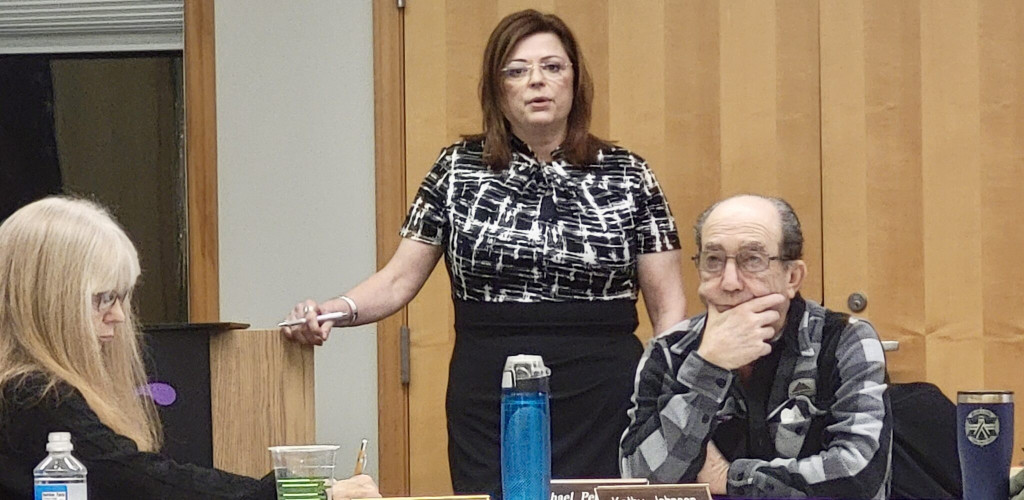
Despite some delays due to the cold and snow, progress on the Transitional Living Center expansion has been steadily underway since its groundbreaking in November, said Christine Lakomiak Jan. 15.
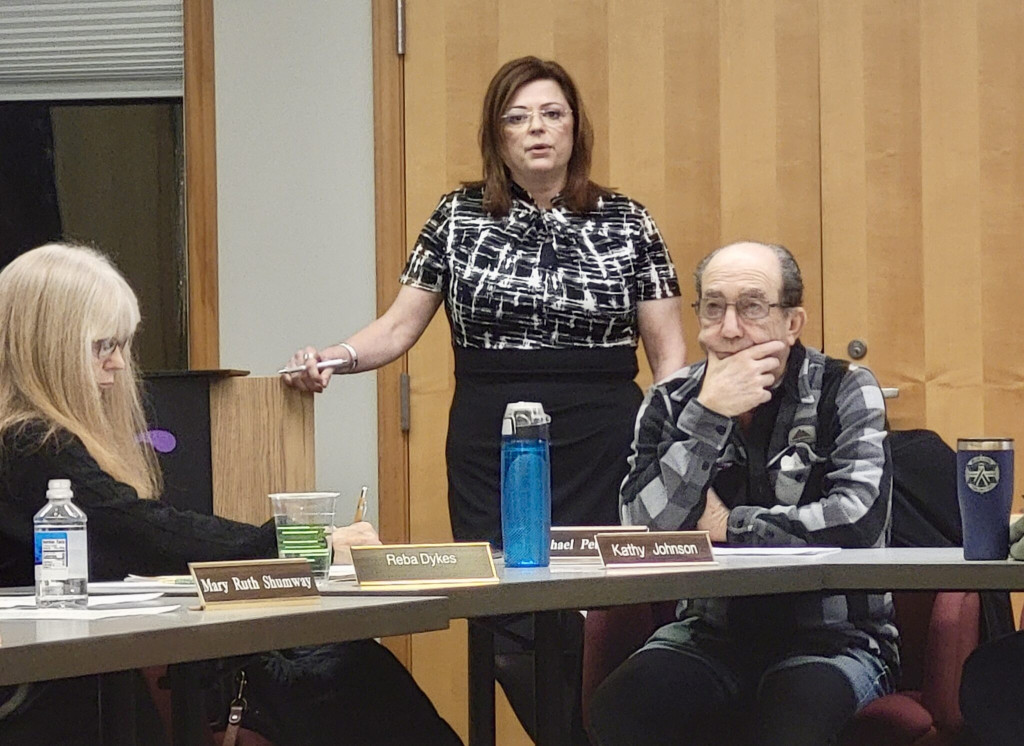
Despite some delays due to the cold and snow, progress on the Transitional Living Center expansion has been steadily underway since its groundbreaking in November, said Christine Lakomiak Jan. 15.
“The TLC provides stabilization and restorative services to persons needing a diversion or transition from a psychiatric hospital or to prevent psychiatric admission,” Lakomiak, executive director of the Geauga County Board of Mental Health and Recovery Services, explained in a followup email Jan. 17.
Board members have been putting in an enormous amount of time, Lakomiak said during last Wednesday’s meeting, expressing gratitude for their work.
“The last couple of weeks, we have been postponed because of the weather. However, we are making progress, they have been able to continue to do work even though it’s been cold,” she said. “We were hoping to be done by Nov. 6, but it may be pushed to December.”
The TLC’s existing building is approximately 3,600 square feet, Lakomiak said in her email.
“We expect the expansion to be an additional 4,000 square feet to accommodate the increased number of beds, from nine to 16, and also increase the required support spaces to bring the building up to current standards and compliance,” she said, adding it will also provide a kitchen and multipurpose group room.
“Other new spaces to be provided by the expansion include a new family visitation room, new staff respite room, new quiet/sensory room, basement storage for resident possessions and bulk foods, and a new exterior covered deck area for resident use,” she said.

The TLC provides a safe and supervised alternative to hospitalization and focuses on restoring necessary skills for success with a lower level of care, she said.
“The program offers a 24/7 supervised living environment with services that include counseling, medication management, case management, peer support and also linkage to community support,” she said. “The TLC also provides linkage to clinical services, resource navigation assistance and on-site support services as residents move through three program levels to restore or enhance the living skills needed to maintain long-term independence in their community.”
The project, being contracted through Millstone Management, costs approximately $2,850,000 and was made possible through a partnership between the GCBMRC and Ohio Department of Mental Health and Addiction Services, she said.
The board also passed a resolution allocating funds to Ravenwood Health.
“As everyone knows, the (State Opioid and Stimulant Response Grant) was handled differently this year,” Lakomiak said to the board. “Agencies apply directly for the funding. The agencies last time we had a meeting, I think they hadn’t found out how much money they had received, yet. We’ve since learned the amount of the money. None of them were fully funded.”
Ravenwood Health did a lot of work to figure out how to continue various services, but they do not have funding for everything, so they will be minimizing or eliminating some services for a period of time, she said.
The organization received approximately $482,000 less than they asked for and are asking the board, among other places, for help in funding certain services, Lakomiak said.
“What they are asking us for is an additional $122,500,” she said. “And that would go towards medication. So, if a person does not have the medication, we will be billed only for that, it goes up to that. And then also for peer support during one of their groups.”
Treasurer Michael Petruziello warned against agencies relying on grant money.
“This goes back to a couple of years ago, I said sooner or later, this grant money’s gonna be going away,” he said. “So, the agencies ought to be taking a look at that because the grant dollars are going to be diminishing, I would think, over the next four years.”
The board discussed a significant increase in inpatient hospitalizations for adults.
“Inpatient hospitalizations for adults has really increased a lot, skyrocketed, and I have looked at the numbers in Geauga County and I don’t — from the history of when records are still kept, I don’t believe there’s ever been an amount this high,” Lakomiak said.
Last fiscal year, the board used all of its state funding for inpatient hospitalizations, she said, adding this fiscal year, the funding has already been depleted, despite the fiscal year only being halfway through.

In her Jan. 17 email, Lakomiak said in fiscal year 2024, they paid for the inpatient psychiatric care of 13 individuals. They’re only five months into fiscal year 2025 and have already hit that number.
“So, we have to make a recommendation to bring some of our local money in to help pay for hospital inpatient,” she said during the meeting. “It’s our requirement as a board. However, we have asked for additional funding in the hospital assistance program line item and I know that other boards have, too.”
While the state has not given an answer on additional funding on the line item, Lakomiak said the board heard from someone at the state working to see if they can provide more funding for hospital access.
“If that happens, we would use that funding rather than the levy dollars,” she said.
Board member Mary Ruth Shumway asked if the determination of what requires hospitalization had changed, to which Lakomiak said no.
This is a problem across the state, Lakomiak said, noting inpatient numbers have been brought up at a variety of boards she has met with.
The board passed a resolution allocating an additional $60,000 for state fiscal year 2025 crisis stabilization and hospitalization inpatient expenses.


