


In less than an hour, Paul Hinchey explained to Geauga County businesspeople the issues facing University Hospitals and what its leadership is doing to resolve them.
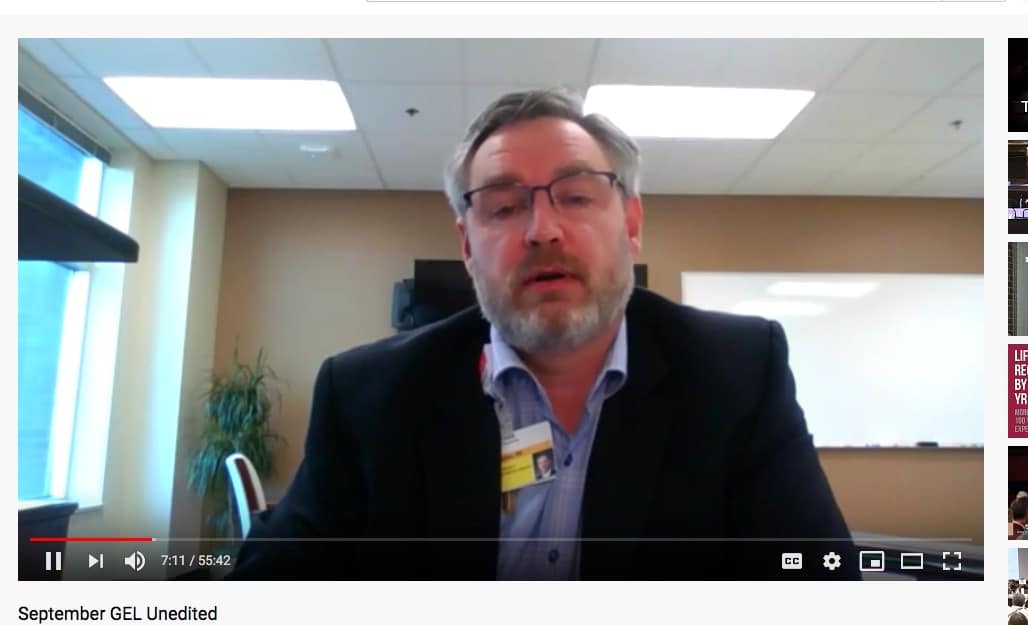
In less than an hour, Paul Hinchey explained to Geauga County businesspeople the issues facing University Hospitals and what its leadership is doing to resolve them.
The president of the UH Community Delivery Network spoke virtually at the Sept. 3 breakfast meeting of Geauga Growth Partnership.
He outlined the struggle hospitals in Northeast Ohio have faced to treat the second wave of COVID-19 delta variant patients while helping residents suffering from other conditions.
Many of those conditions have worsened over the last year while people put off treatment due to the pandemic, so they need more care now than they would have if treated earlier, he said.
“COVID-19 fundamentally changed the healthcare landscape,” Hinchey said.
Not only have hospitals and practices been overwhelmed with COVID-19 patients, many come to the hospitals with no insurance coverage due to unemployment caused by the pandemic and other social issues, he said.
That has led to many hospitals treading close to negative territory and 50% of smaller hospitals are already in the red, Hinchey said, adding the cost of Medicare and Medicaid continue to increase and finding solutions to the financial squeeze is being pushed downstream.
“It’s becoming a focus of the federal government,” he said. “They are looking to shift the burden of innovation onto doctors and hospitals.”
Financial pressures are not new to nonprofit hospitals, but they have intensified and will get worse without a serious change of course, Hinchey said.
UH is navigating the rapidly changing healthcare environment across all its many venues through “systemness.”
Having acquired independent hospitals over the last 10 years, UH is working to put in place better use of their systems, expertise and personnel to make the entire organization more efficient and effective for patients, he said.

Solutions underway include five components: Organizational redesign of the leadership structures; reducing inter-organization competition by standardizing job descriptions and incentives; developing roles and groups to create rapid cycle improvement networks; installing data capabilities to improve performance and resource availability across the UH system; and supporting culture integration without erasing valuable local identities.
“There are opportunities for partnerships,” Hinchey said.
He noted the medical community also is looking at a more holistic approach to back pain management and other ways to control costs while still engaging consumers.
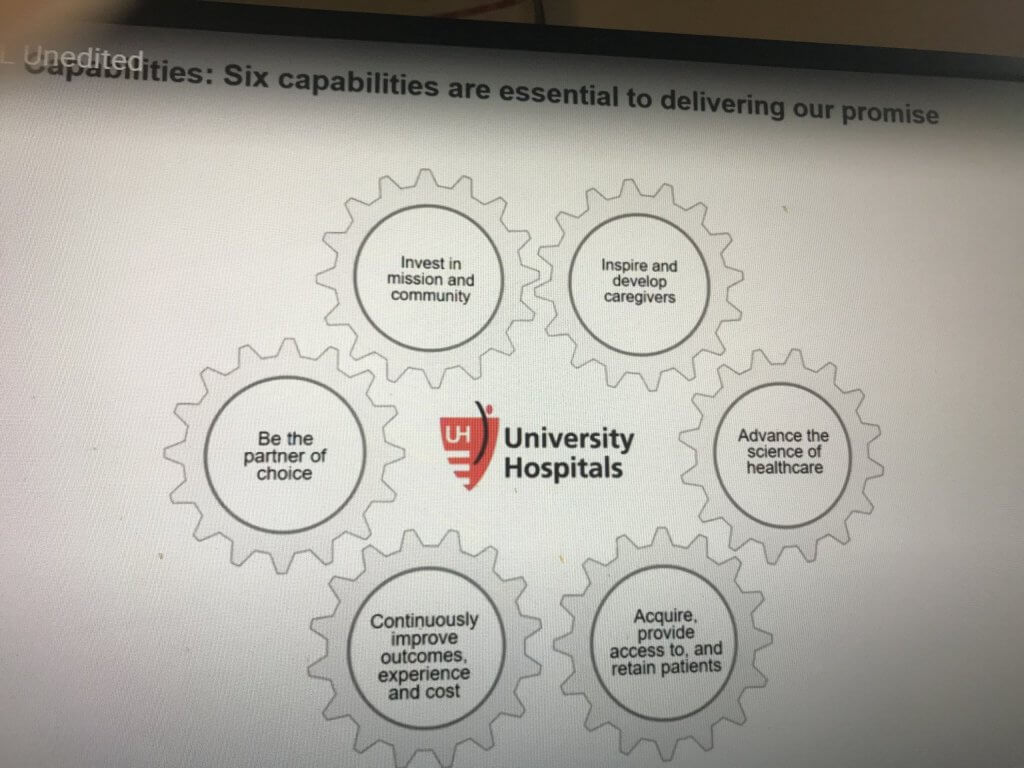
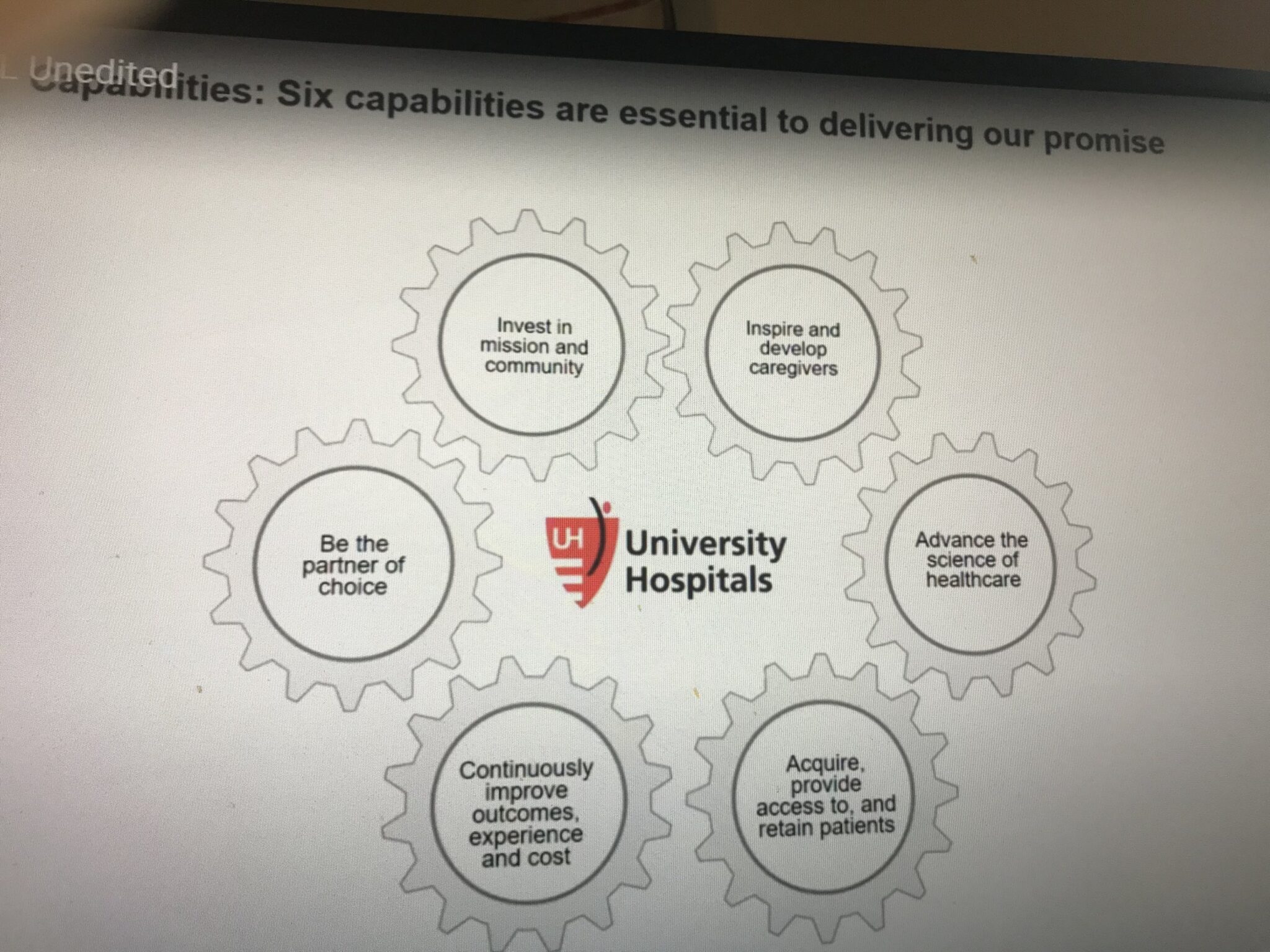
The goal is to improve access to care, become the preferred provider and be the partner of choice in the community, Hinchey said.
Tele-medicine evolved because of COVID-19, but is now a “massively popular” alternative to office visits, he said.
“Everyone is looking to drive to low cost-high quality care,” he said. “UH has a very strong commitment to advancing the science of healthcare.”
The three main players in the process include community hospitals like UH Geauga Medical Center, provider practices of doctors and the UH Academic Medical Center, Hinchey said.
For systemness to succeed, people at all three need to understand and support the nonprofit’s strategies, service line growth, finances, quality expectations and expenses, according to a slide in his presentation.
He answered several questions from viewers including the possibility of healthcare controlled by the federal government.
The U.S. has undergone a cultural change since COVID-19 and cost issues with insurance and big pharma are moving the medical industry closer to socialized medicine. It would cost the taxpayer “a little more,” but would create uniform access to healthcare for everyone, he said.
“The single-payer system is a looming possibility,” Hinchey said.
Meanwhile, UH is putting its efforts into redesigning how healthcare is provided to its 500,000 consumers in Northeast Ohio
“We are trying to find as many ways as we can to engage the patient where and how they want to receive care,” Hinchey said.


