


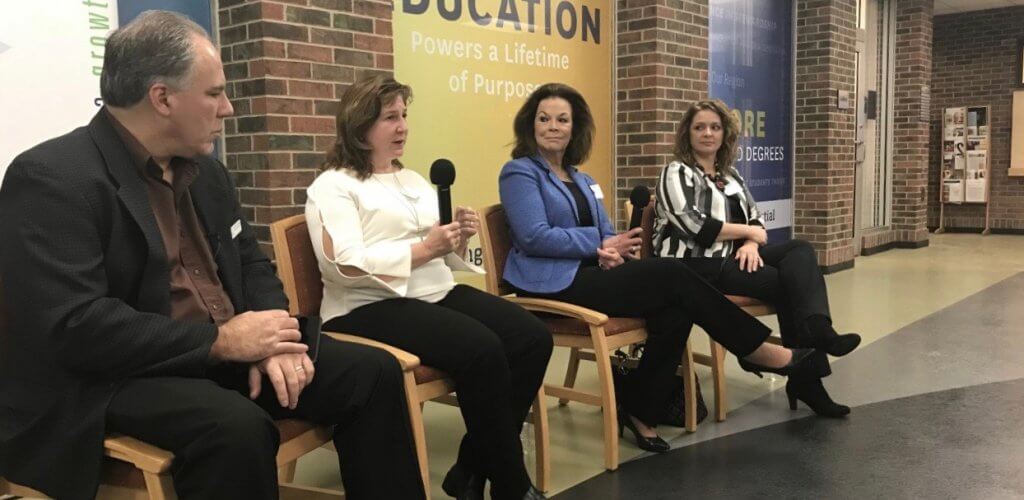
There are countless opportunities for women to succeed in manufacturing, but those already in the industry said preparation is key.
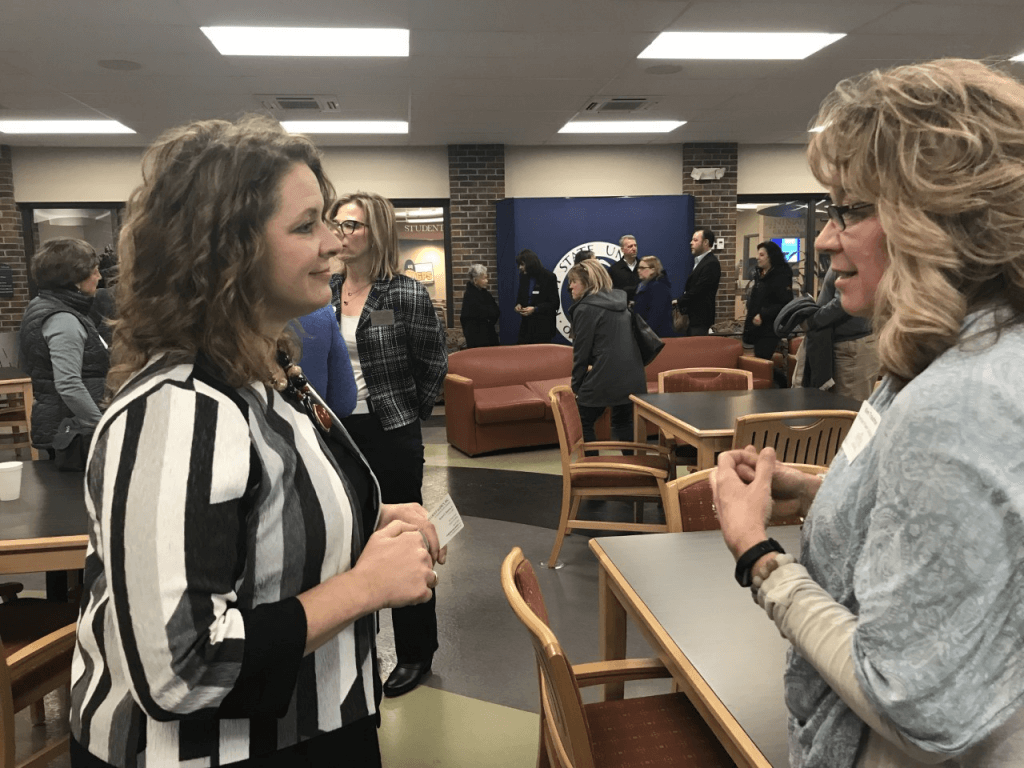
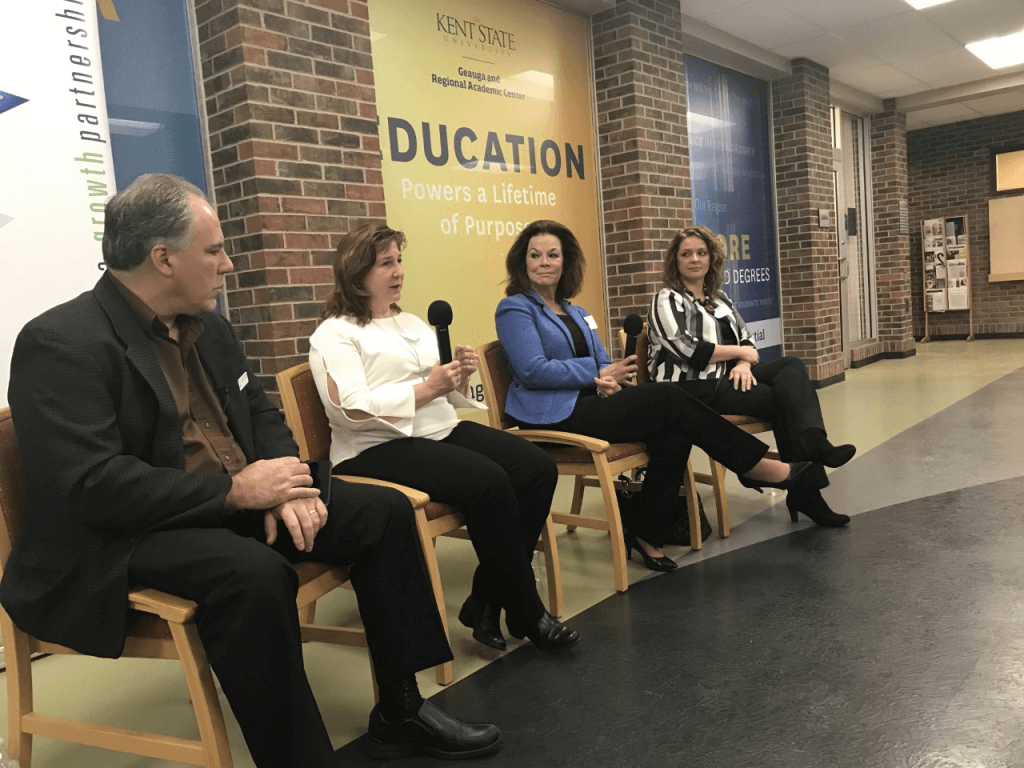
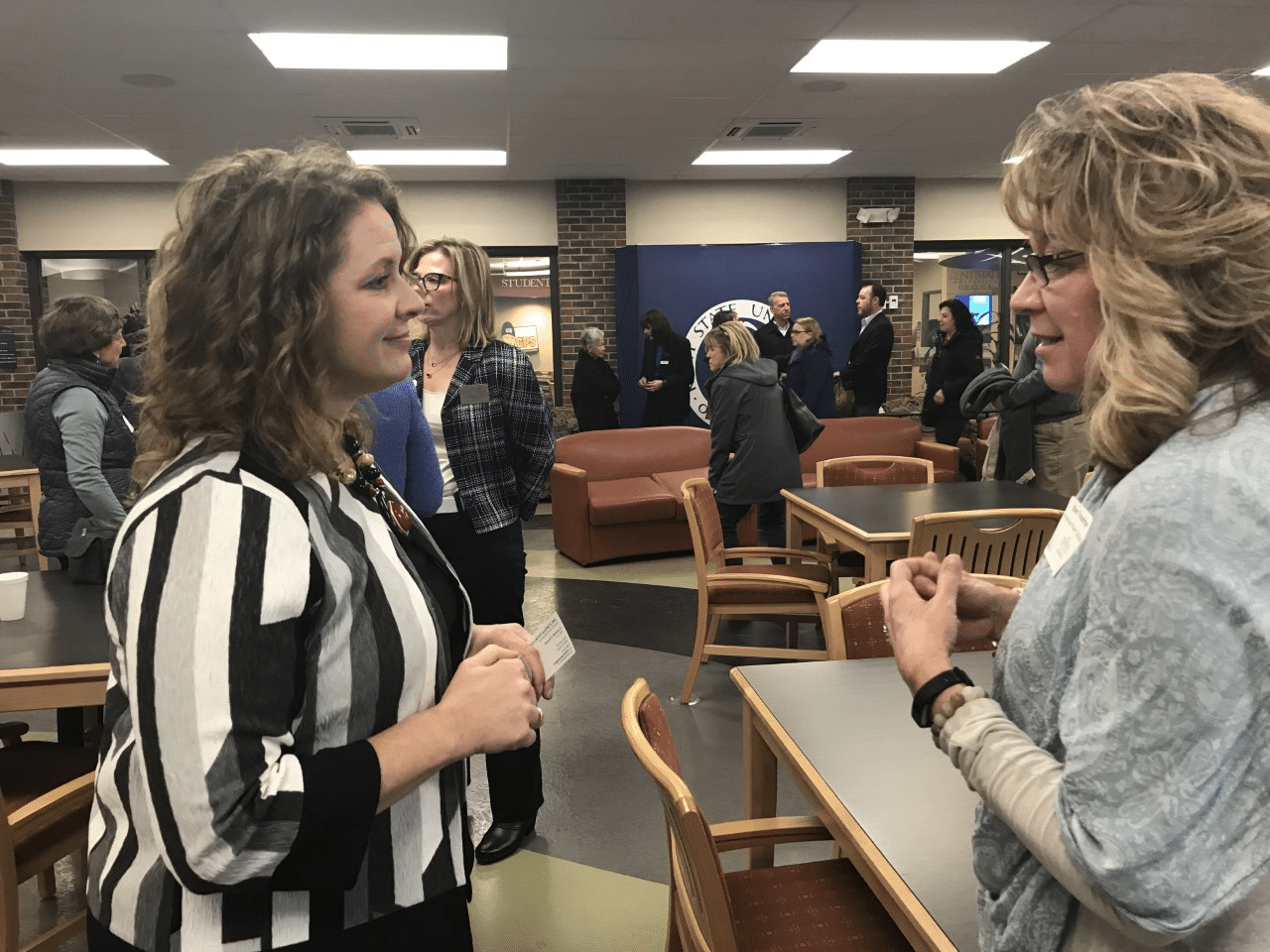
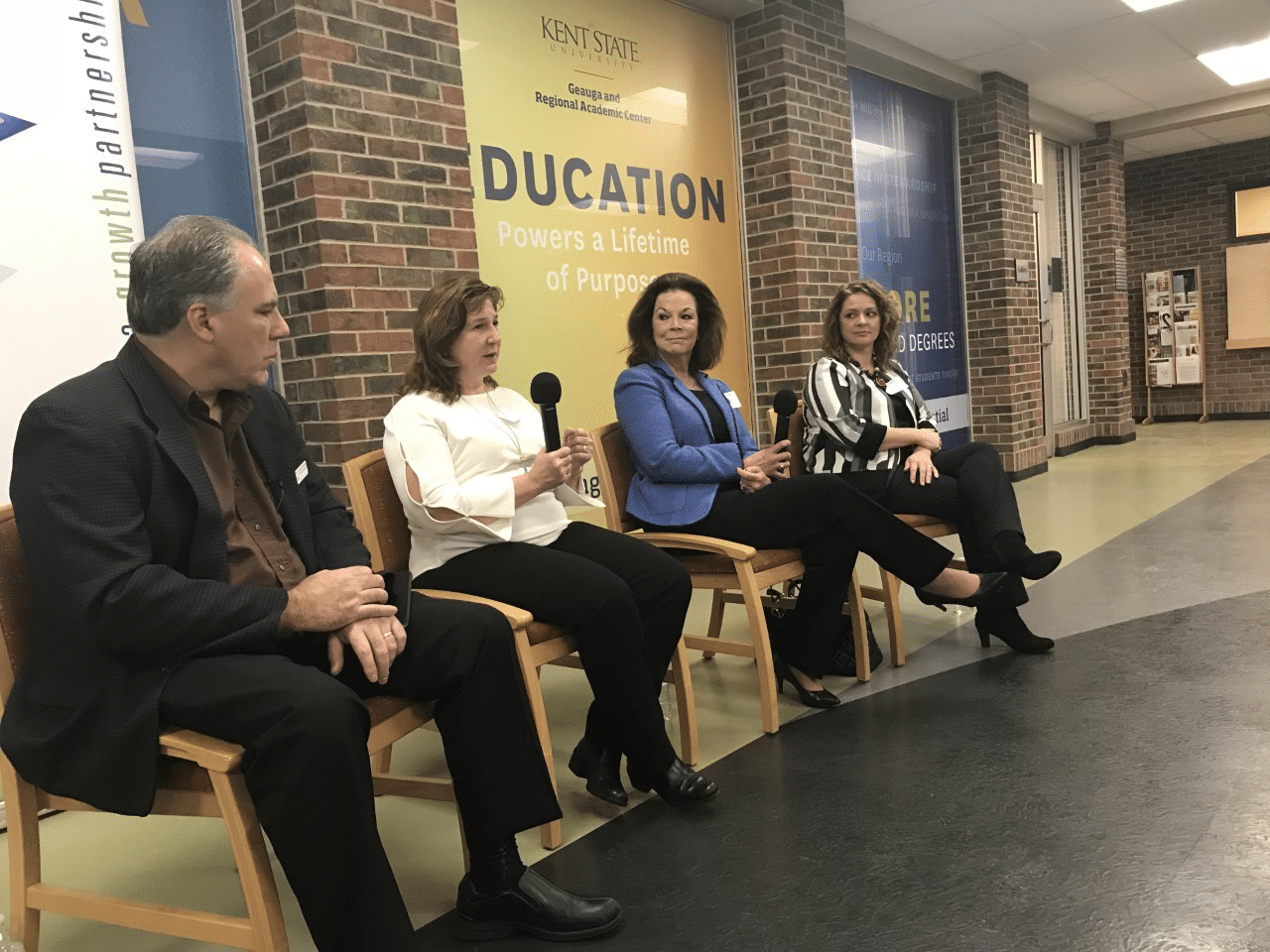
There are countless opportunities for women to succeed in manufacturing, but those already in the industry said preparation is key.
Younger women can start by choosing a manufacturing-oriented career path in a vocational school or college while still in high school, said Ann Kelley, Marian DeVoe and Tracie Roberts.
All three women sat on a panel at the Geauga Economic Leadership breakfast Dec. 7 at Kent State University – Geauga to talk about women in manufacturing.
Once in the workforce, women need to have a positive work ethic, seek out mentors, collaborate as good team members and understand the goals of the company they work for so they can contribute ideas, they said.
Kelley is owner and vice president of IntelliPak Ltd. in Newbury Township, which provides a specialty packaging service for a wide range of industrial chemicals.
DeVoe is president of Chardon Custom Polymers in Chardon, a polymer and rubber custom mixing and manufacturing operation.

Roberts is partner and vice president of Montville Plastics and Rubber Inc., a plastic injection molding and extrusion company.
As business leaders, the three face many of the same challenges their male counterparts do — finding, training and retaining good workers, juggling finances and meeting production and safety standards established by their industries and the government.
But there are issues that discourage women from entering fields that lead to positions in manufacturing.
Roberts said she became co-owner of Montville Plastics about five years ago and, while she has not encountered many gender-related issues, she is aware there are discrepancies between men and women working in manufacturing.
“Women hold only 20 percent of upper management positions and make only 75 percent of what males do,” she told the full room. At Montville Plastics, she has each employee fill out a self-review once a year and encourages all employees to list their accomplishments.
Women are less likely to put their successes forward in an annual review, she said, which may be one reason women are paid less than men.
“I’ve had no trouble being a woman in manufacturing,” Kelley said, adding she has two very supportive business partners and she maintains a professional manner at all times.
DeVoe, the daughter of a large business owner, said she started after college in the family business near the bottom rung and worked all areas. Early on, she wondered if she got the job because of her father’s position.
“After a while, you have to turn your back on that (concern),” she said.
The product is the important thing and teamwork is what makes it happen. Moving through the departments was good experience, she said.
“I had the opportunity to develop teams and see things to fruition,” she said.
During her career in manufacturing, DeVoe has seen changes in the culture and women’s roles.
“You don’t have the silos like 30 years ago. Today (the industry) is much faster, more fun. You can break down walls and make things happen more quickly for your customers,” DeVoe said. “That’s why we are here — to create value.”
Approaching management and problems from different points of view is a plus and is more likely if there is diversity among people making those decisions.
“There is a great advantage to having different personalities in leadership roles. Manufacturers who have women in leadership positions have a better growth rate,” she said.

Career paths are important and, if the way seems unclear, Roberts, who started with a degree in information technology, said a woman should look for an experienced mentor to help her.
“Decide where you want to go, go find someone who is successful. Most people are receptive (to being asked). Spend a year or two with them, then set a new goal,” she said.
If secondary schools would urge more female students to attend trade schools, the business community would benefit, as would young women’s careers, Roberts said. Skilled individuals with potential can move up the rungs and they don’t have to have a college degree to do that.
“It’s hard to find people in the maintenance field,” DeVoe said.
Companies like Chardon Custom Polymers can develop apprenticeship programs. DeVoe said her company has three people going to Auburn Community College and the trade school in Trumbull County to learn skills her business needs, she said.
“They are appreciative (of the education) and we are reaping terrific benefits from it,” DeVoe said.
There also is a high demand for individuals with college degrees in STEM — science, technology, engineering and mathematics — but only about 12 percent of people in those fields are female, Roberts said.
“We’d love to see young women come in on the chemistry side,” DeVoe said, adding chemists in the polymer industry are at an age where retirement is around the corner. “The young ones are in their 50s,” she said.
Single mothers or women with infirm parents are provided with the resources they need to maintain a good attendance record with help from the county Bridges@Work program, Kelley said.
“(Bridges@Work) has saved our lives at work. It has kept a lot of employees focused and on track,” she said.
The teamwork it takes to train and retain good employees, then help them solve some of their home problems, is an example of the collaboration that comes naturally to women, DeVoe said.
“The big thing is to find people to become part of our team,” she said, adding women seem less likely to be lone wolves.
“We are only as good as what we are together,” she said. “If they can’t be a team player in this world, there’s really no space for them.”
Middle-sized companies poised to grow cannot do so without knowing they can expand. Whether they want to add a third shift or start a new department, technology is only so helpful, Kelley said.
Cooperative, reliable and capable employees are essential for growth. Without those employees, businesses are unable to grow.
“I would say that stands in our way more than any other single thing. We have all sorts of growth opportunities, but we have to manage according to staffing,” Kelley said.


