Students in all levels of biology courses at Berkshire studied photosynthesis in plant cells by observing leaf tissue disks...
Photosynthesis Exploration
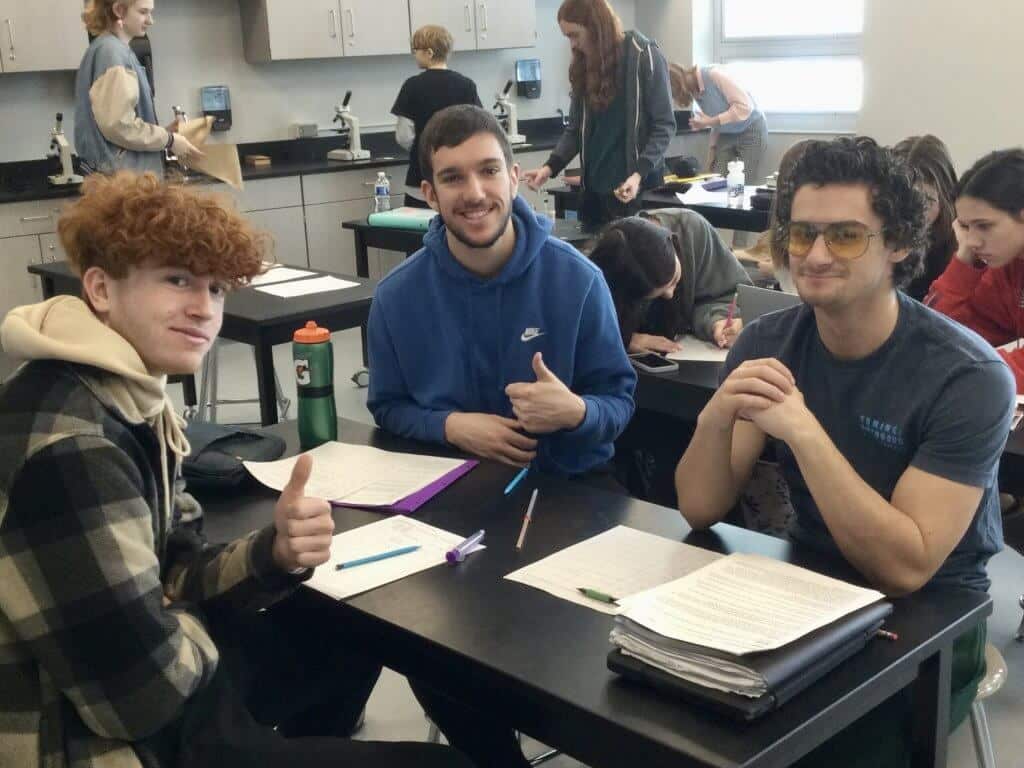
Students in all levels of biology courses at Berkshire studied photosynthesis in plant cells by observing leaf tissue disks. Photosynthesis is the process of plants making their own food and creating oxygen gas as a byproduct.
During the experiment, the disks are placed in a sodium bicarbonate solution that produces the carbon dioxide needed for photosynthesis to occur. The air is removed from the disks by creating a vacuum using a syringe. The disks sink to the bottom of the solution and over time, with a light source, create oxygen bubbles that allow the disks to rise to the surface according to the photosynthesis chemical equation: sunlight plus carbon dioxide plus water produces sugars plus oxygen gas.”
Mr. Keller’s AP biology students had to create and conduct experimental procedures using different variables to test the rate of photosynthesis. Variables include, but are not limited to, the effects of different plant types, temperature and other solutions. The leaf disk experiment is not only an engaging exploration of the process that makes life on Earth possible, but has also gained popularity on social media.
Blood Typing Activity
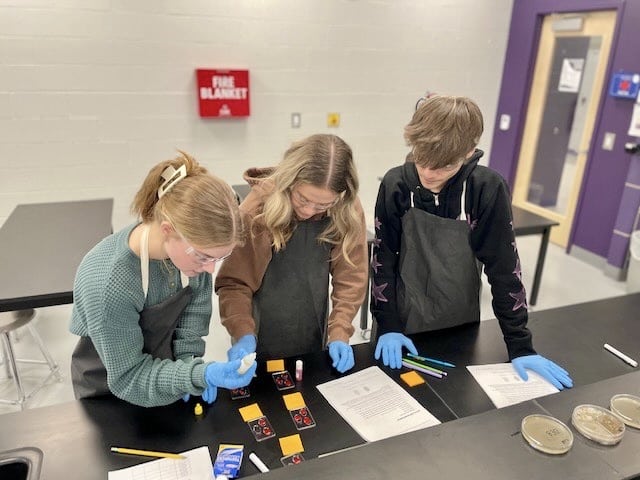
Berkshire High School students in anatomy and physiology recently completed a simulated blood typing activity. Students used fake blood to determine the blood type of the class’s accident victim, John Phranks, and compared it to four individuals who were “blood donors” at the American Red Cross. The students determined that the victim needed a transfusion and identified the two possible donors that exhibited blood compatibility.
Blood typing is completed by observing the agglutination or non-agglutination of the known antiserum with the unknown blood sample. Participating students did an excellent job completing the simulated lab test which is used to save countless lives each day.