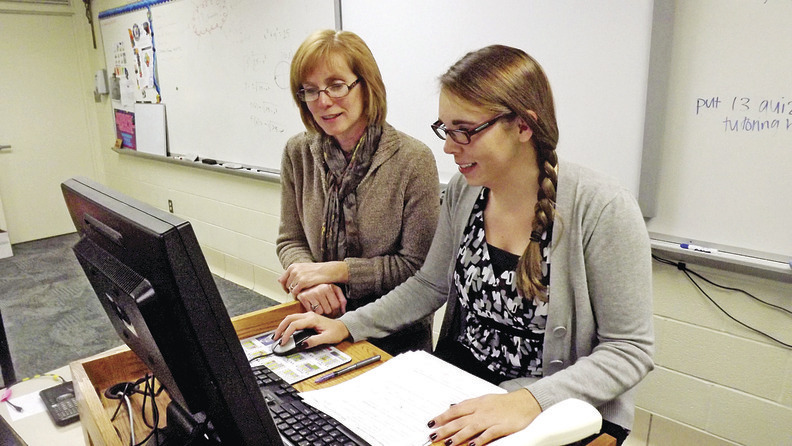
NDCL Principal Joseph Waler and math teachers Ericka Bella and Marcia Pecek will present timely topics to thousands of educators…
Faculty to Speak at National Conference
NDCL Principal Joseph Waler and math teachers Ericka Bella and Marcia Pecek will present timely topics to thousands of educators in Orlando, Fla., at the National Catholic Education Association (NCEA) Convention & Expo in April 2015.
With hundreds of sessions on various topics, the NCEA Convention & Expo is the largest private-education association gathering in the nation. Attendees are educators from preschool through college as well as all those who engage in faith-based education at the parish and diocesan level.
Math teachers Ericka Bella and Marcia Pecek will explain the benefits of “flipped learning” as they share techniques and experience in the session titled, “Don’t Flip Out! Flipping It’s Easier Than You Think!”
Miss Bella and Mrs. Pecek are team teaching the Algebra 2 class this year at NDCL using the flipped mastery model. The flipped mastery class allows students to work at their own pace with a target goal in mind. Students get to interact with teacher-made videos and then have the opportunity to learn through peer collaboration and discussion with their two teachers in the classroom.
Mr. Waler will present a brief overview of the history of grading practices in U.S. schools and offer critique of the current standards in “The Gradebook It’sn’t Supposed to be a Mystery Story: Bringing Excellence, Integrity, and Sanity to Your School’s Grading Policies.”
NDCL recently modified its grading policy to level the playing field by requiring that each student’s quarter grade will consist of 80 percent academic achievement and 20 percent academic practice. Academic achievement is a measure of what a student actually knows and is able to do after instruction, while academic practice includes activities like homework and classwork that help students refine their understanding and skills in the learning process.
“Before, our students were working with different and sometimes contradictory sets of academic expectations from eight different teachers in eight individual classes. Now everyone is focused on the same consistently high standards throughout the school,” Waler says.