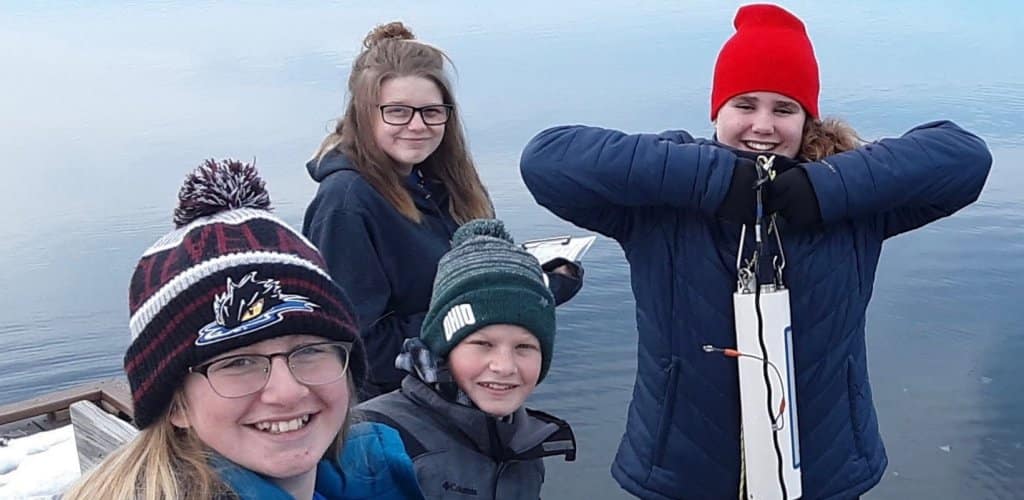
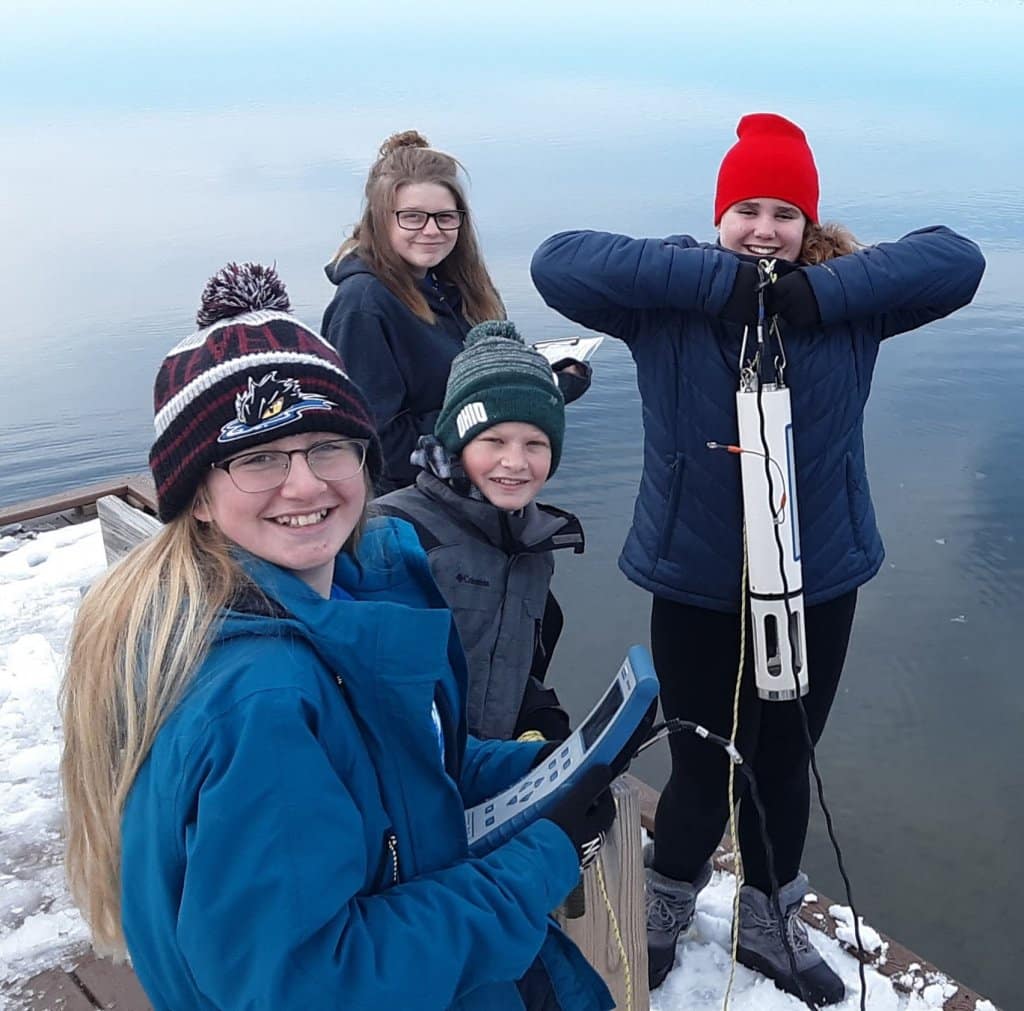
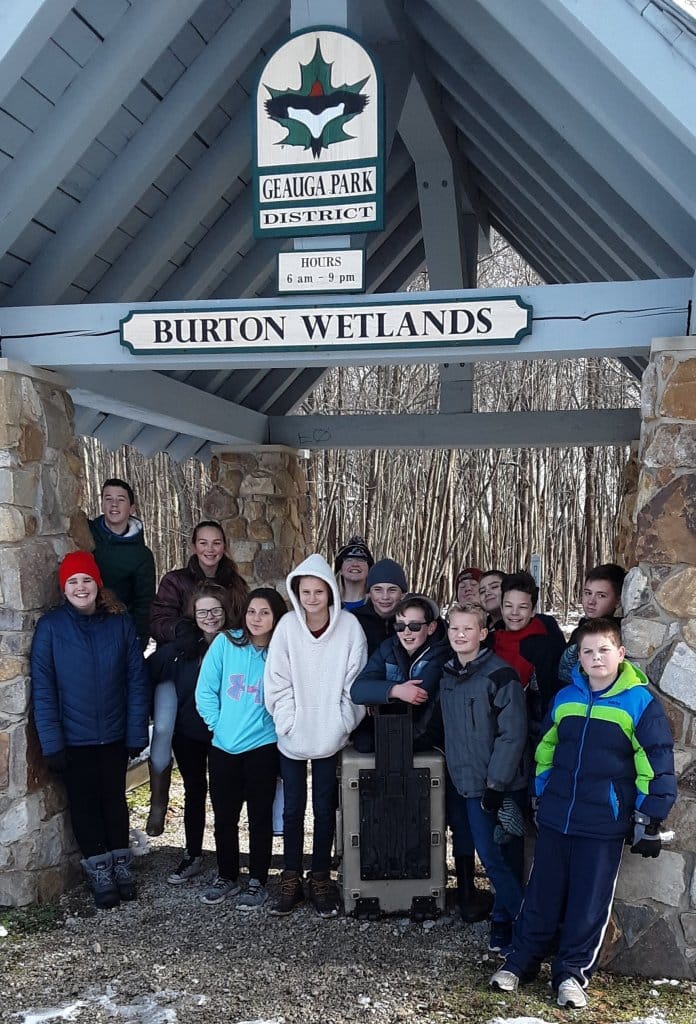
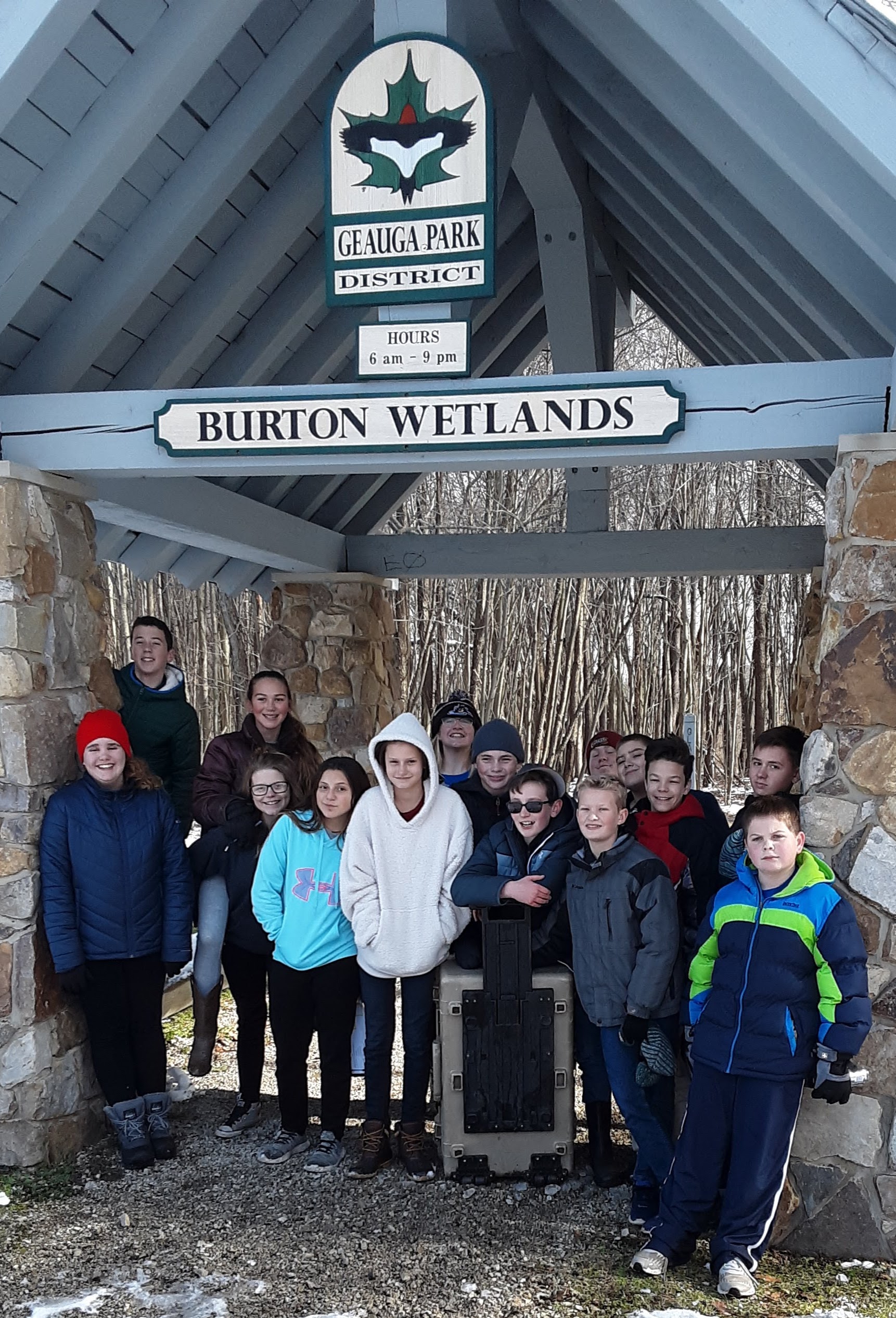
Seventh-graders braved the cold and lingering snow on Nov. 18 to study water chemistry at three different area parks: Walter C. Best Wildlife Preserve in Chardon, Burton Wetlands Nature Preserve in Burton and Punderson State Park in Newbury Township.
Real World Connections
Seventh-graders braved the cold and lingering snow on Nov. 18 to study water chemistry at three different area parks: Walter C. Best Wildlife Preserve in Chardon, Burton Wetlands Nature Preserve in Burton and Punderson State Park in Newbury Township.
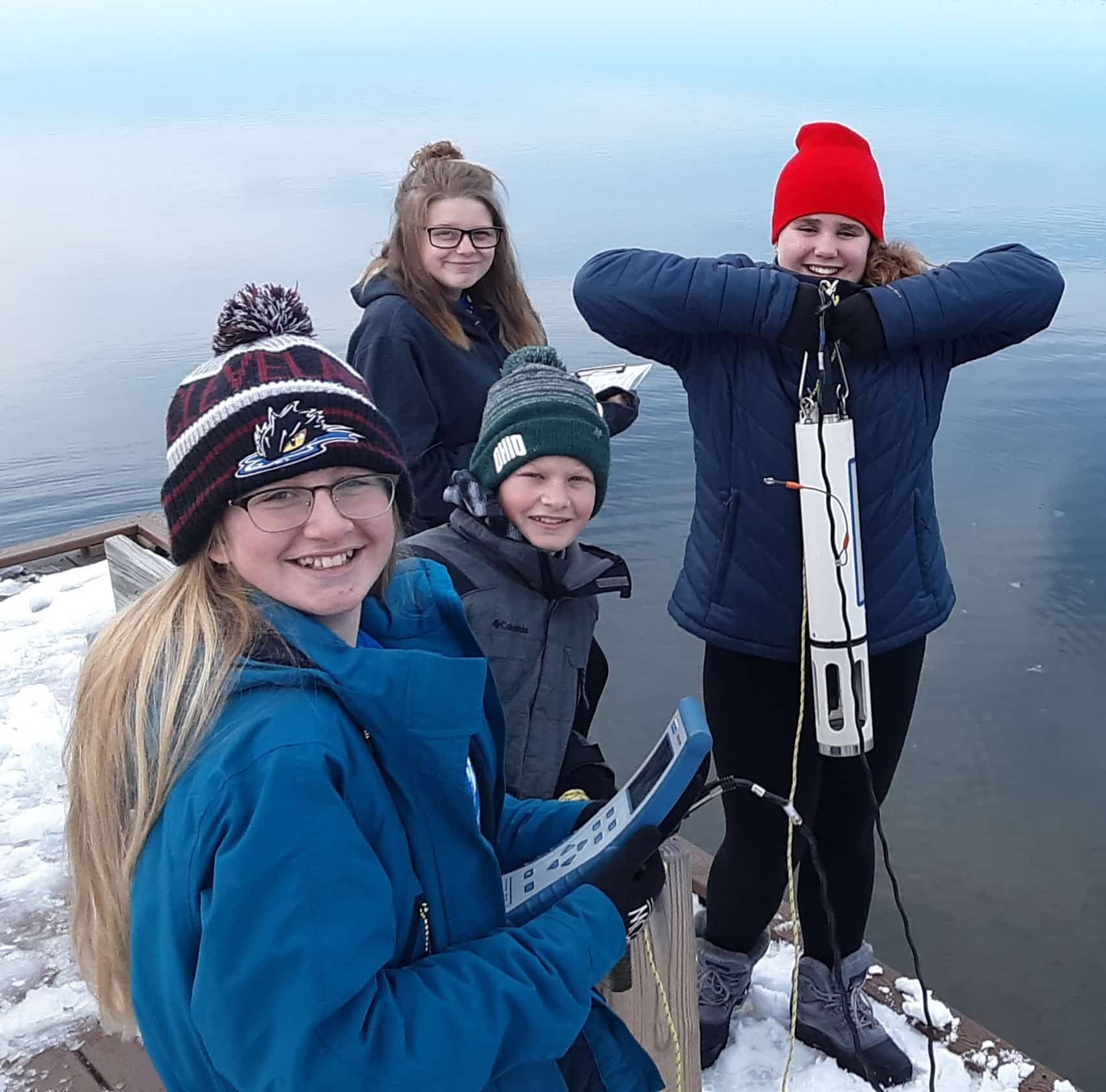
At each site, students were broken into three study groups. One group used a scientific tool known as a hydrolab, which has a variety of sensors for measuring properties of water such as temperature, pH, dissolved oxygen content and chlorophyll levels.
A second group assessed land use and vegetation in the surrounding area, and they also deployed a Secchi disk to measure the turbidity, or clarity of the water. The third group used a chemical test kit to determine the amounts of dissolved substances, such as nitrates, phosphates and dissolved oxygen in each sample. Using these measures, students were able to make connections regarding how factors within an ecosystem all impact each other.
Science teacher Natalie Hudak was excited to bring the opportunity to her students with materials and tools supplied through the EPA’s Great Lakes National Program Office and Ohio SeaGrant.
She commented, “Students may forget about a lecture on chemistry and solutions in a few weeks’ time, but taking learning beyond the classroom is something that students will remember years into the future.”