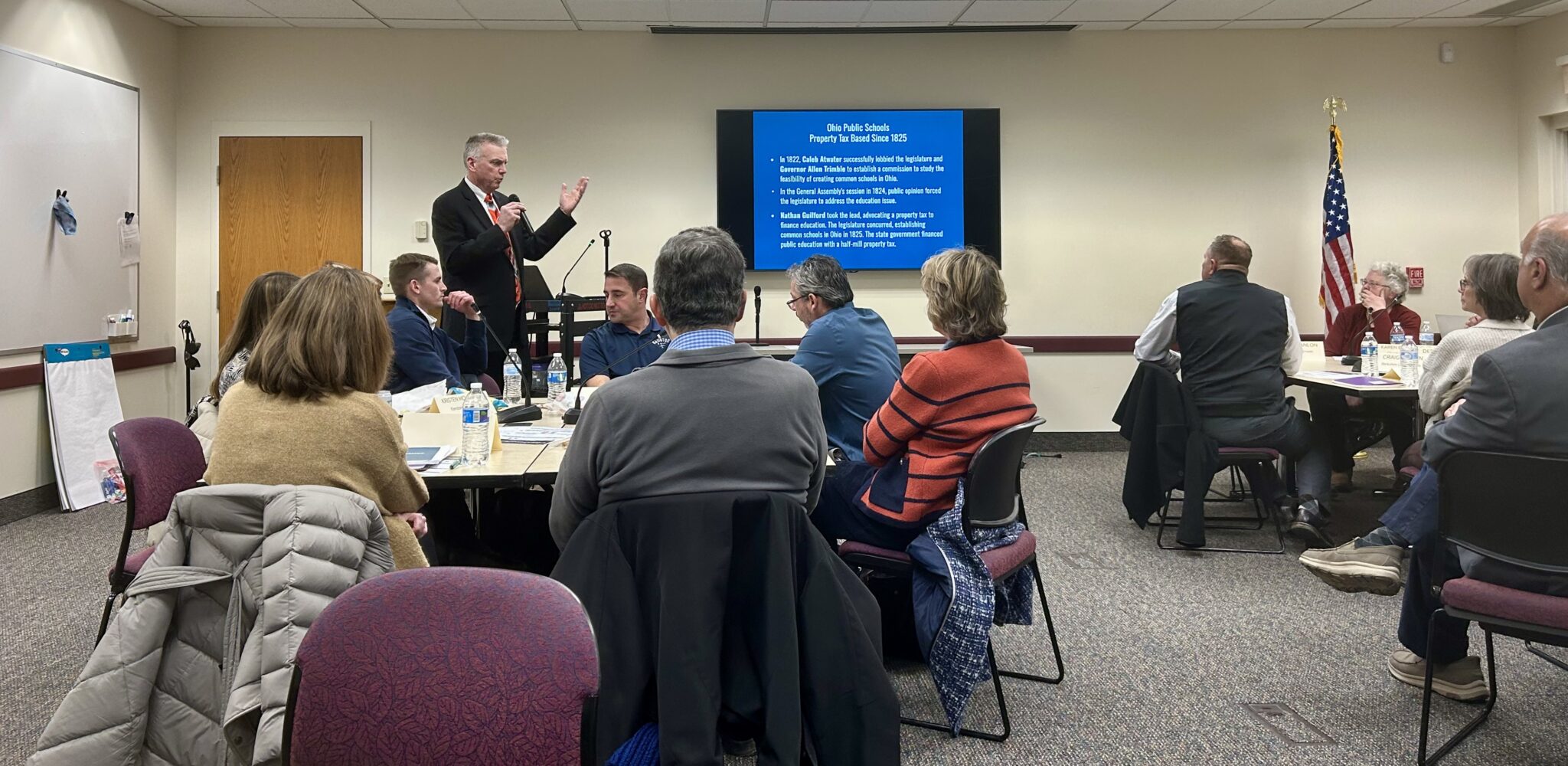
If a proposed amendment to the Ohio Constitution abolishing property taxes is placed on the November 2026 ballot and approved by voters, Geauga County school districts would run out of money in 2027, according to Chardon Schools Superintendent Mike Hanlon.
If a proposed amendment to the Ohio Constitution abolishing property taxes is placed on the November 2026 ballot and approved by voters, Geauga County school districts would run out of money in 2027, according to Chardon Schools Superintendent Mike Hanlon.
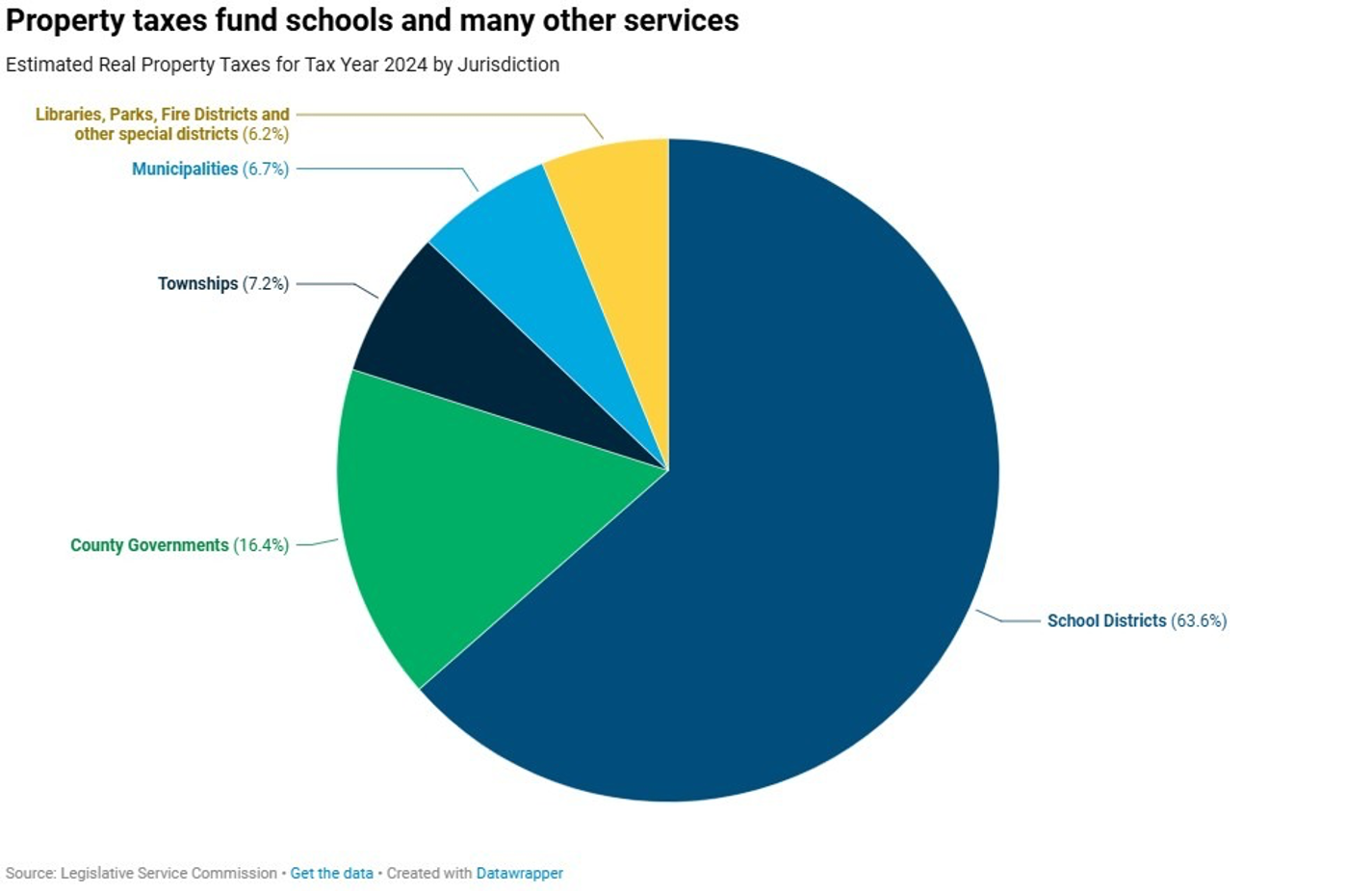
Without an alternative funding source to replace the roughly 75% of school revenue generated through property taxes, districts would be forced to shut down, Hanlon said.
Officials from Geauga County’s five school districts, including the Auburn Career Center, met Feb. 2 at the Geauga County Library headquarters in Claridon Township to strategize an information campaign aimed at persuading residents to oppose the amendment.
A statewide petition is circulating to place the issue on the November ballot. During the meeting, officials discussed ways to inform voters about the potential consequences for public education in Geauga County if the amendment passes and to urge residents not to sign the petition.
During a 51-slide presentation titled, “The Future of Public Education: Geauga County,” Hanlon outlined the long-term decline in state funding for Ohio public schools, which he said has driven an increased reliance on property taxes over the past century.
Hanlon said most school officials are not opposed to property tax reform but stressed it must be done responsibly. He also noted four bills passed by the state legislature in December further weaken school district funding.
If the state fully funded the Fair School Funding Plan, districts would be on more stable financial footing, Hanlon said.
After reviewing the state’s funding history, Hanlon invited district officials to describe their financial situations. The figures presented included substitute teachers and coaches.

Chardon Schools
Chardon Schools Treasurer Deb Armbruster projected the district would be out of cash by June 15, 2027, without property tax revenue.
The district serves 2,307 students and employs 597 people, with an operating budget of $41.8 million and approximately $2 million in outstanding loans. Without property taxes, Chardon Schools would lose about 74% of its operating budget, putting $32.2 million of its annual budget at risk, she said.
Berkshire Schools
Berkshire Schools Superintendent John Stoddard said the district would run out of cash by April 2027.
“It would not quite get us to graduate our seniors,” he said.
The district has 1,358 students and 324 employees, with an operating budget of $23.5 million. Local revenue is 69%. Construction of a new school has left the district with $30.3 million in outstanding obligations. Property taxes account for about 50% of the district’s operating budget, he said.
Cardinal Schools
Cardinal Schools Superintendent Jack Cunningham said the district would be out of cash by Oct. 11, 2027.
The district serves 701 students and employs 128 people, with a $14.7 million operating budget and approximately $3.5 million in financial obligations. Property taxes account for 71.6% of the district’s revenue, he said.

Kenston Schools
Kenston Schools Treasurer Seth Cales said the district would be out of cash by April 25, 2027, if property taxes are eliminated without an alternative funding plan. He said property tax reform must be carefully considered.
“It would be catastrophic to eliminate property taxes,” he said, noting voters would lose local control of schools without the ability to approve levies.
According to presentation slides, Kenston serves 2,354 students and employs 598 people, with a $43.7 million operating budget and $23.18 million in obligations. Property taxes make up 75% of the district’s revenue, putting $33.2 million at risk.
West Geauga Schools
West Geauga Schools Superintendent Nancy Benincasa said the district would be out of cash by April 2027 if property taxes are abolished.
“Unfortunately, we would not be able to have a graduation,” she said.
The district has 1,952 students and 542 employees, with an operating budget of $38.2 million. Property taxes account for about 71% of the budget, and the district has no outstanding financial obligations.
After the presentations, Hanlon asked officials and community members seated at round tables by district to discuss possible options and share observations.
Armbruster said the cost of educating a child is far less than paying for child care at $15 per hour.
“What a deal, right?” she said.
A resident asked why voters would ever choose to “get rid of something without knowing the solution” and suggested an income tax could be an alternative.
Joe Mann, of Kenston, agreed, recommending officials present a tangible alternative, such as a sales tax, when speaking with residents.
“What does it all look like? Everyone’s saying the same thing – there’s no plan,” he said.
Mann said convincing the roughly 50% of voters who are undecided about eliminating property taxes will require a strong, simple message.
Cardinal Treasurer Dan Wilson said school funding is complex, so messaging must be clear and personalized.
School districts are not the only entities that would be affected by the elimination of property taxes, Mann said.
“The townships are going to get hit,” he said, adding that fire, emergency medical services, road maintenance and police coverage would also suffer.
“People relate more to that if they don’t have a kid in school,” he said. “A lot of this message has to come from other entities than us.”
Stoddard highlighted the role schools play beyond academics, including providing socialization, meals and mental health services.
“If public schools aren’t around, where are the 88% of kids served in Ohio going to go?” he asked.
Schools could shift to tuition-based models, but that could force many students into online learning, which proved challenging during the COVID-19 pandemic, he said.
Hanlon concluded the meeting by urging officials to craft short, powerful messages to communicate the stakes to residents.

Countywide Snapshot:
- – Total Student Enrollment (ADM): 8,672
- – Number of School Districts: 5
- – Combined Annual Operating Budgets ($): 162,020,343
- – Combined Assessed Property Valuation ($): 4,442,212,114
- Property Tax Reliance (Range Across Districts):
- – Lowest % of Operating Revenue from Property Taxes: 68% Chardon Local Schools
- – Highest % of Operating Revenue from Property Taxes: 75% Kenston Local Schools
- – Countywide Average (%): 71%
- Estimated Countywide School District Property Tax Revenue at Risk ($): 120,168,848
- Key Countywide Considerations:
- – Impacts vary significantly by district
- – Long-term debt and voter-approved obligations remain
- – No constitutionally guaranteed replacement revenue mechanism
This summary is provided for educational purposes only and does not represent advocacy for or against any ballot issue.