


Public Speaks Out Against Allowing Dispensary
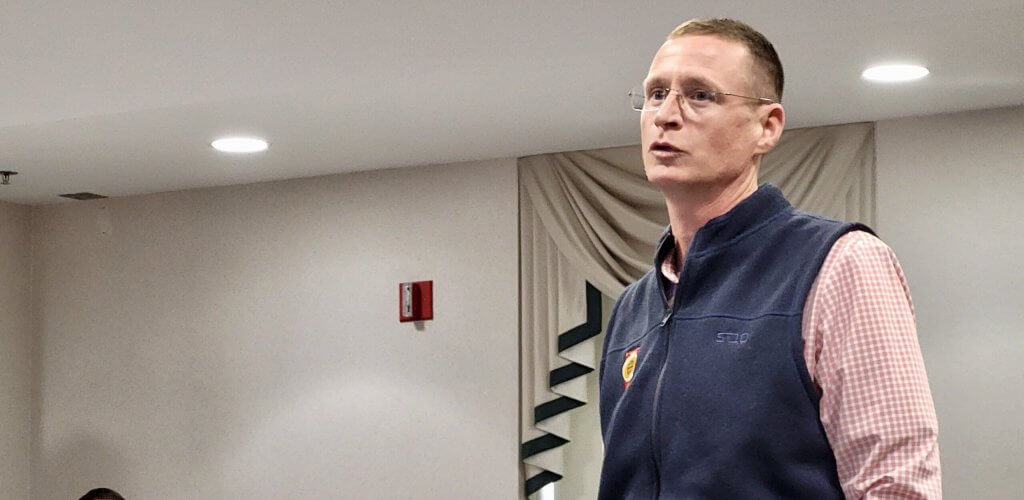
Despite a temporary moratorium still in place on issuing zoning certificates for cannabis and marijuana production, Scott Halloran, of Buckeye Relief, appeared before Chardon City Council March 14 to ask them to consider allowing his dispensaries in the future.
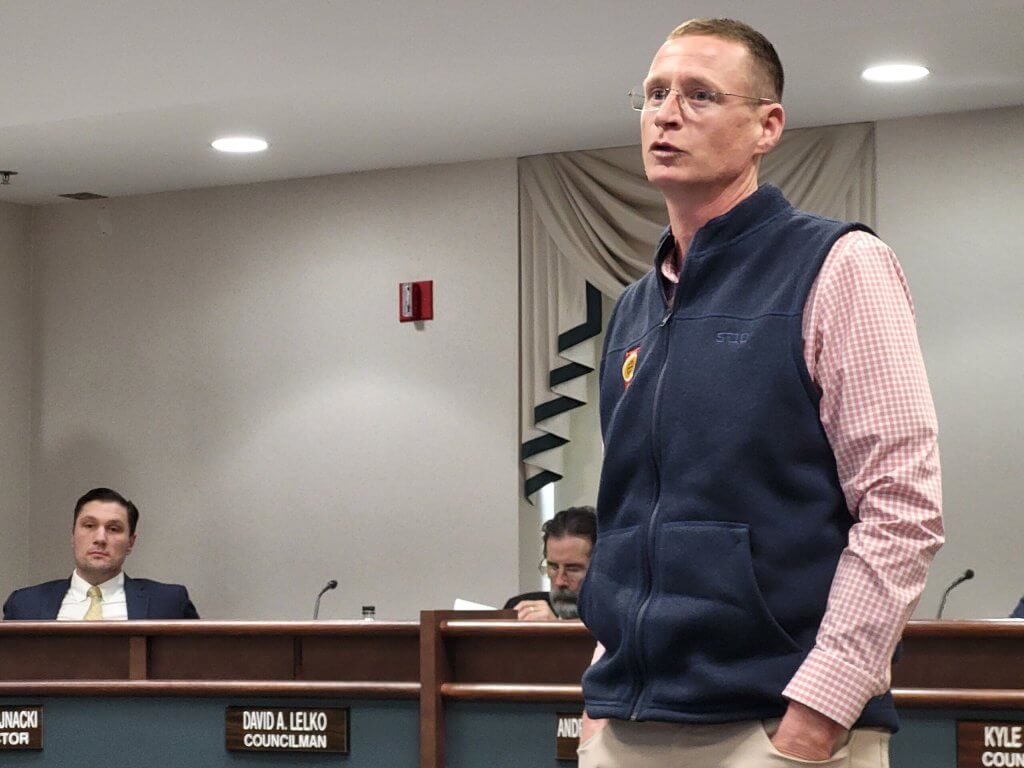
Despite a temporary moratorium still in place on issuing zoning certificates for cannabis and marijuana production, Scott Halloran, of Buckeye Relief, appeared before Chardon City Council March 14 to ask them to consider allowing his dispensaries in the future.
Buckeye Relief is an Ohio-owned and operated cannabis cultivator and processor based outside of Cleveland, according to its website.
Halloran emphasized the locality of the business, noting he is a Geauga resident.
“We are the largest medical marijuana company in Ohio, by volume and by product distribution,” Halloran said, noting they have dispensaries in Columbus, Bedford and Cleveland Heights.
Ohio’s Division of Cannabis Control is aiming to have applications for dual-use licenses — allowing medical marijuana dispensaries to also sell recreational marijuana — open by June 7 with licenses granted by Sept. 7.
“On June 7, the adult-use marijuana application window opens for existing operators such as Buckeye Relief to find three additional dispensary locations,” Halloran told council. “So, we are looking around Northeast Ohio into communities that we live in to put retail locations.”
Halloran also provided council with some background on the agency regulating adult-use marijuana in Ohio, noting it is being overseen by the Department of Commerce, with Jim Canepa, the previous superintendent of the Ohio Division of Liquor Control, acting as superintendent.
“We expected, like the Ohio Liquor Program, to be extremely tightly controlled,” Halloran said, adding Buckeye Relief is supportive of this decision.

Halloran provided images of Buckeye Relief’s dispensaries for reference, saying their vision for their locations is high-end retail.
He noted restrictions dispensaries are under already, including not being allowed within 500 feet of a school, church, park, playground, daycare or library. Their packaging must be child resistant and must not be appealing to children, and marijuana must not be consumed on dispensary premises.
Halloran’s presentation added that loitering around the dispensary is also prohibited and their signage does not include flashing marijuana leaves.
“Our goal is to be upstanding members of the community in the adult-use program, just like we are in the medical program,” he said
While there is a marijuana production and growth facility in Middlefield Village, there are currently no dispensaries in Geauga County.
“There are 2,000 people in Geauga County that pay $250 a year for a medical marijuana card. The closest dispensaries to them are in Ashtabula, in Bedford and Willoughby Hills,” Halloran said, adding almost 550 Chardon residents have medical marijuana cards.
He projected as the only dispensary in the county, a dispensary in Chardon would generate about $15 million in revenue annually.
“The way the tax structure is set up in the state of Ohio, there’s a 10% tax on adult use,” he said, adding 36% percent of that gets remitted back to the host city.
Halloran also refuted the notion a dispensary would increase crime, referencing a 2019 study published in volume 78 of “Regional Science and Urban Economics.”
“We have 110 security cameras at each one of our dispensaries. We’re actually partners with the police when they’re investigating crimes in the neighborhood,” Halloran said, saying they’ve previously handed over video their cameras caught of crimes, such as muggings or break ins.
Halloran expects to create around 39 jobs at each dispensary. All employees would be background checked, with pay starting at $20 an hour, he said.

Mayor Questions Revenue
When it came time for questions, Mayor Chris Grau brought up an issue with the potential revenue generation.
“After consulting with our county prosecutor and also with one of our state senators, and having them do the research into what I believe is House Bill 86 — that is going back and forth between … the House and the Senate — the provision of this 36% or 3.6% of annual sales is very much in question, speaking with a limited number of people,” Grau said.
He also emphasized the city is still under a moratorium on issuing zoning certificates for marijuana and cannabis production, and asked Law Director Ben Chojnacki to explain their options.
“You can do nothing and your moratorium will lapse in May, at which point you don’t have any regulations on the books that regulate adult-use cannabis. But, you do have business prohibitions on medical marijuana within the community,” Chojnacki said. “The second option is to continue the moratorium. If you continue the moratorium, you can pick a timeframe. I would probably recommend another six months, during which time the state legislature and the governor may sign some changes to the law to give you some clarity on what might happen.”
A law could also be passed either prohibiting or limiting the number of facilities within the jurisdiction, Chojnacki said.
Though no action was taken, Grau noted his intent to engage more on the issue of recreational marijuana, as well as to keep the public updated.

Public Speaks Out
During the public input portion of the meeting, a large number of people stepped forward with objections to the idea of a dispensary in Chardon.
Resident Dean Carlo asked council to heed previous conversations about drug use in the county.
“In 2012, in this building, there was a meeting called for with the leaders of Geauga County,” Carlo said. “In that meeting, undercover law enforcement officers expressed their concern that there were many Geauga County license plates driving out to their Cuyahoga County parking lots to buy drugs.”
The officers had said if the dealers in question set up shop in Geauga, they would be impossible to get rid of, Carlo said.
“I can’t tell you how gut wrenching it is to officiate a Chardon-raised young person’s funeral,” Carlo said, recalling the deceased’s friend saying everything started with smoking weed when they were young.
Resident Bob Landies expressed concern about a potential secondary market being created by the presence of a dispensary.
“Depending on how you roll with this, I think you’re going to have to consider the additional law enforcement it’s gonna take for the secondary market, which (Halloran) is going to create” he said.
Another Chardon resident, Bill Hess, said while he can see the use for medical marijuana, he doesn’t see a use or need for non-medical marijuana in the city.
Geauga resident Heather Copper expressed her worries about THC levels, noting they’re higher in marijuana today than they were in the 1960s.
“Whenever you have anybody that’s looking for an altered state, anything can happen,” she said.


