Community Engagement Necessary Before Bond Decision
Even after spending millions of dollars on significant improvements to its facilities, Chardon Schools’ buildings still fall far below state standards.
Even after spending millions of dollars on significant improvements to its facilities, Chardon Schools’ buildings still fall far below state standards.
But, before potentially pursuing a bond issue to address the needs, the district plans to engage the community in conversation over the general state of its structures.
In 2019, voters rejected a 5.3-mill bond issue to generate $76 million toward a new high school campus. In 2021, a 0.7-mill, $7.2 million bond to repair district facilities also failed.
In response, the district produced a five-year capital improvement plan the Chardon Schools Board of Education approved in late 2023, which includes construction and renovation projects to bring the district’s buildings up to standards. Capital improvement costs have grown from about $5.4 million in 2022 to close to $9 million in 2025. Necessary projects not yet done will cost around $14 million, according to the district’s plan.
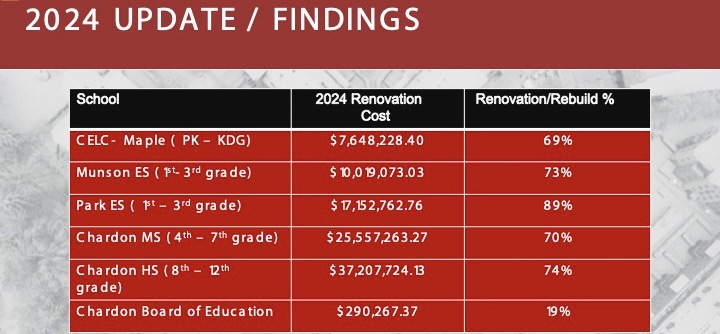
In an interview Sept. 20, Superintendent Michael Hanlon said despite all the upgrades, every school building in the district needs repairs that total over two-thirds of the cost to instead build a new facility.
At that point, Hanlon said the Ohio Facilities Construction Commission recommends replacement.
He outlined an additional challenge in asking the public to invest in the district’s buildings.
“Every day, every month, every year that goes by, right now in the environment that we’re in, construction costs are dramatically increasing,” he said. “You can’t disregard the fact that, just since 2019 to now, the costs have gone up significantly. And the longer we kick this can down the road, the more those costs are likely to increase.”

But, Hanlon said the district and the board are not currently planning to place a bond issue on the ballot. Instead, they plan to engage the community in order to build understanding of the critical issues facing the district’s infrastructure
“The board has not contemplated a bond issue or anything to put before the community at this point, so the focus here is on determining what the vision of the community is for its physical school buildings in the near term and long term, and what does the road look like to get to that destination?” he said. “We need to take that time to gather that feedback and to gather that input and determine what approach is in the best interests of our students and something that our community can support in the future.”
Hanlon said there is no intention to “dust off” the plan presented to the public in 2019, which envisioned a single campus near the existing high school and middle school.
“If there is a different configuration or different way to look at this, again, that meets all of these competing needs and is kind of the best line through all the competing needs, then it may look differently than the plan that was presented to the community in 2019,” he said.
In recent renovations, Hanlon said the district spent significantly to bring the buildings closer to the state’s standards, as outlined by the OFCC.
Spending on maintenance is ongoing, he said, as the buildings must be up to standard safety codes.
The district was faced with conditions that required action to be taken, including roofs and windows at the end of their life cycles.
“We’re not, right now, getting at the quality of the instructional setting and the long-term needs for the type of learning environment that would be beneficial to the students of our community. So, those investments that we’re making are taking care of short-term, immediate needs, but the long-term need of rethinking educational spaces and how those spaces serve the community, that needs still exists,” he said. “We need to engage the community around that discussion.”
At the Sept. 16 school board meeting, Hanlon and Treasurer Deb Armbruster said the district is projecting the need for an operational levy in 2027. Much of the cost of recent renovations has been paid out of the district’s operating fund, or through a loan leveraged against its permanent improvement fund.
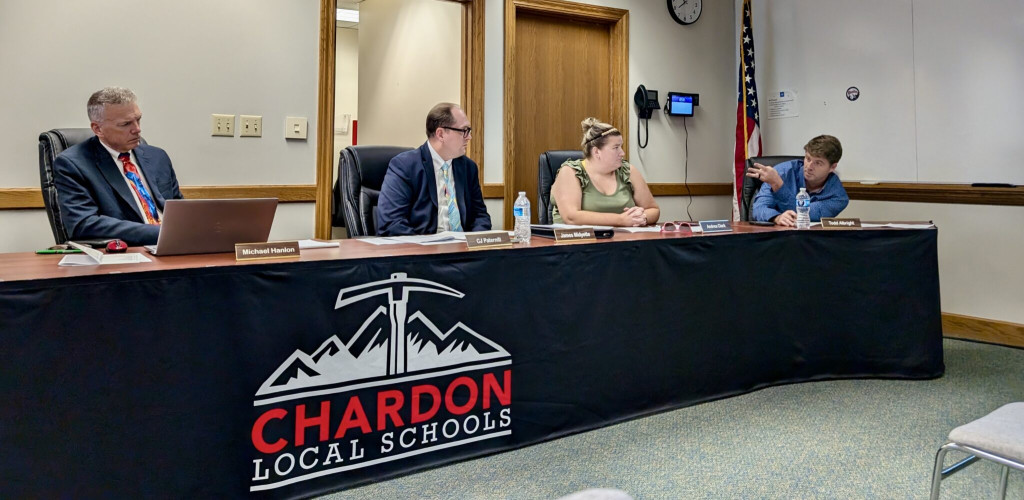
During that meeting, the board heard from representatives of ThenDesign Architecture, who said priority projects, including $3 million in immediate needs at Park Elementary School, currently total about $6.8 million.
When added together with longer-term projects, the total spending needed to keep district buildings up to code in the next decade is projected at almost $98 million.
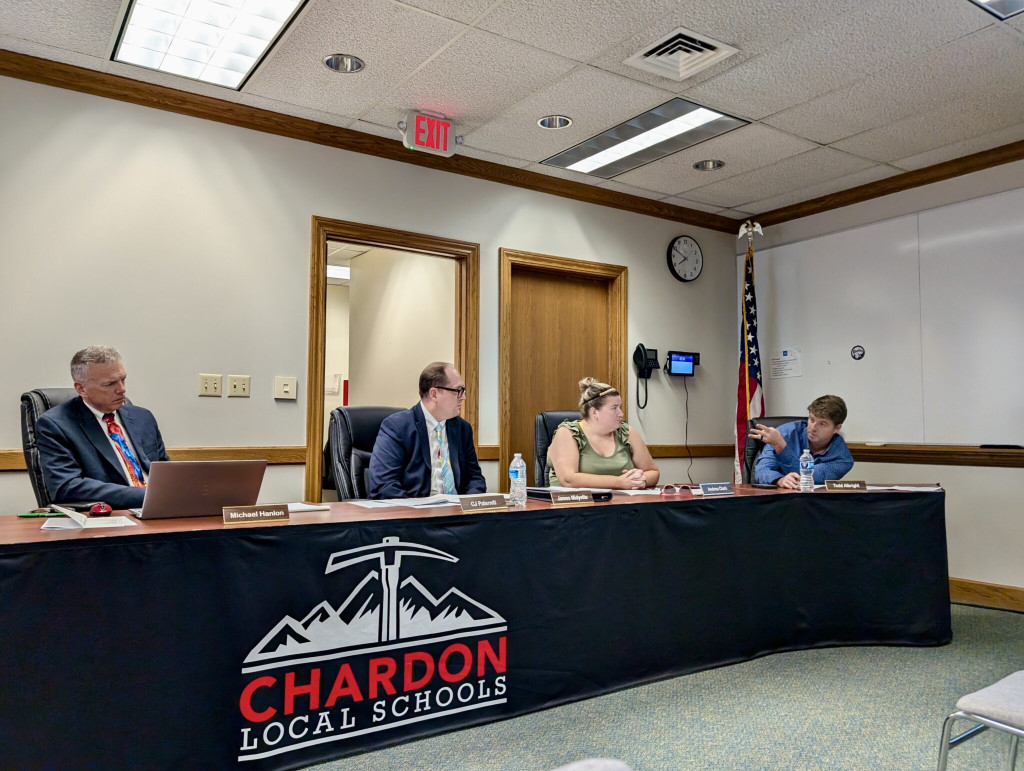
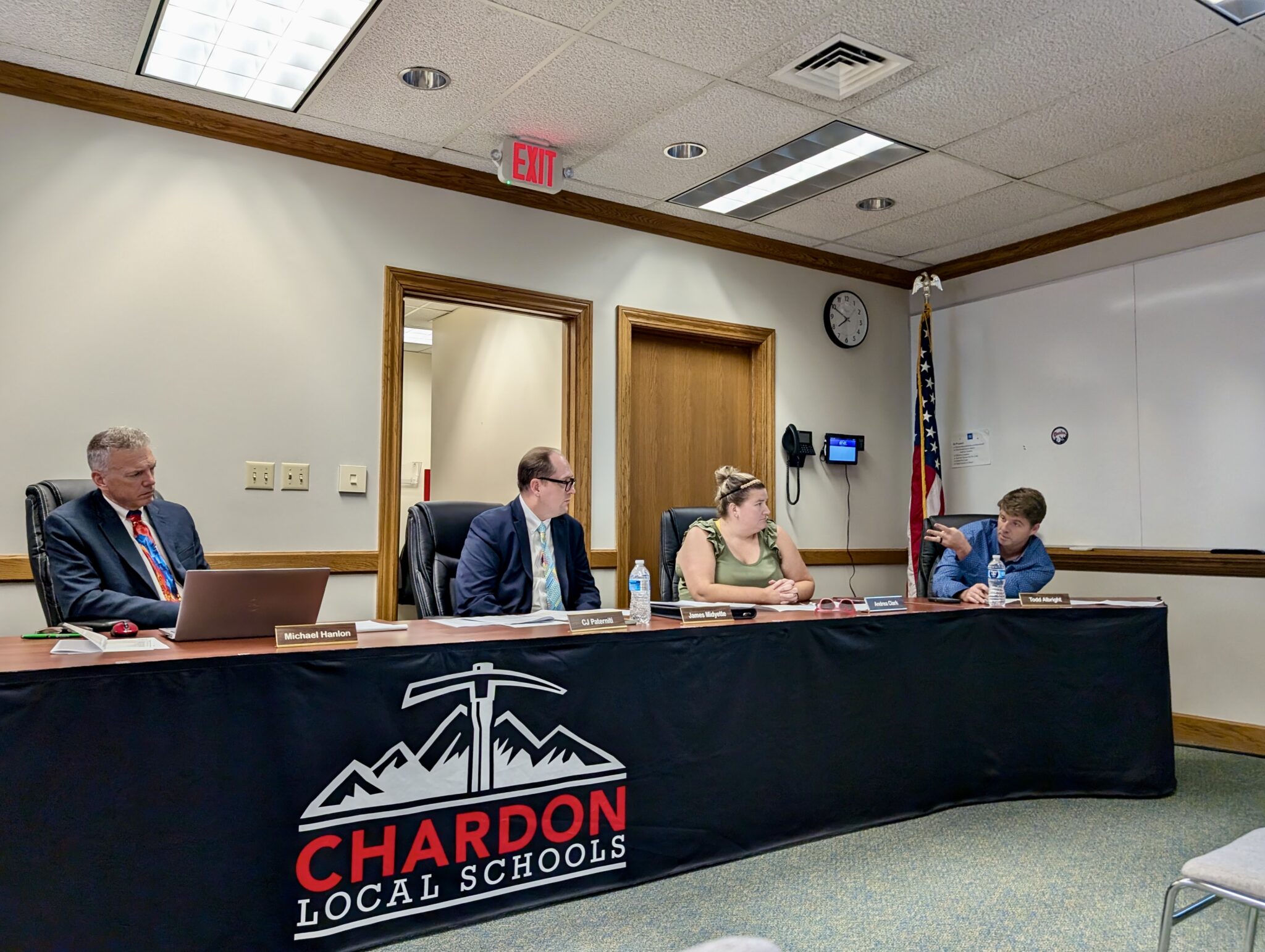
In response to board member Todd Albright’s question whether new buildings would lower the district’s maintenance costs, Assistant Superintendent for Business Affairs Steve Kofol said even with some higher-cost maintenance items, new buildings would mean the district could stop spending on abatements and replacement materials.
“Those costs go away, obviously,” Kofol said.
Albright also emphasized the need to bring the community into the process and highlight the potential for better academic outcomes for students in modern school buildings.
Board member Andrea Clark said as a parent, she doesn’t need to see outcomes to know her children will be better off in new buildings.

“I know new school buildings are going to help my children, period,” Clark said.
In his interview Sept. 20, Hanlon said it’s important for the community to understand that, in the context of the five-year financial forecast and projected need for a levy, the district does not have the capacity to take on more capital improvement spending.
After the recent spending on buildings and with other financial priorities the district must address in the next five years, there is not an “endless pot of money” for building and repair projects, he said.
“We can’t continue to dip into the general fund to do capital projects and further accelerate an operating levy ask. So, really, we’re going to be constrained to maintenance and highest-of-the-highest priority improvements to continue to maintain ‘warm, safe and dry.’ New projects are probably going to be very few and far between at this point,” he said.
Even with the challenges facing the district, Hanlon said the people who work in the district — Chardon’s teachers, administrators, maintenance staff, food service personnel and bus drivers — go above and beyond to achieve an outstanding educational experience for students on a daily basis.
“Our vision for the school district is to be a model school district for other districts in the state of Ohio,” he said. “The results that we’ve generated and the quality of education that our staff members create for our students every day is indicative of the effort that they put in to work with the facilities and settings that they have available to them today, knowing that we could accomplish yet so much more with our students in the types of facilities that are available to students today in other school districts.”