


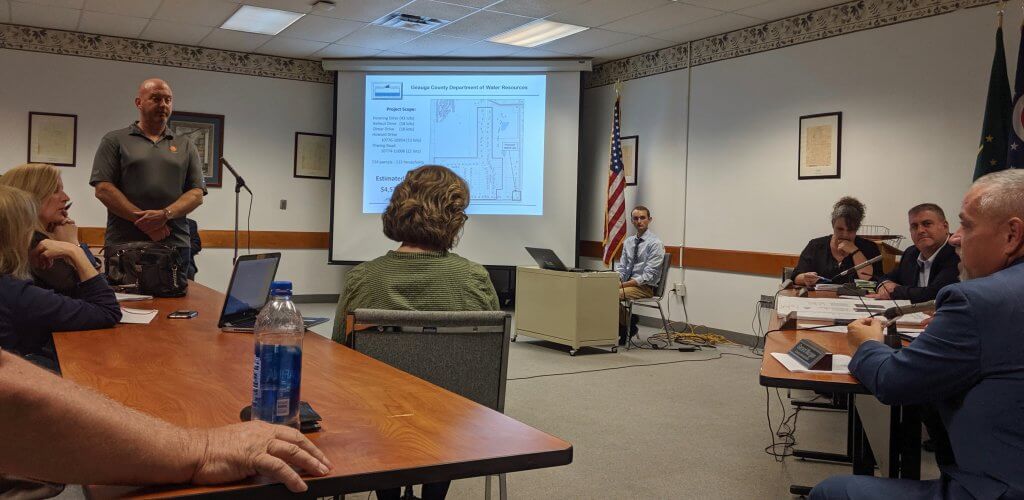
The Geauga County Department of Water Resources received over 80 objections to an Ohio Environmental Protection Agency-drawn assessment showing all residents of the Berkshire Heights subdivision must tie in to a new sewer system — a $4.5 million project at a total cost of over $30,000 per home.
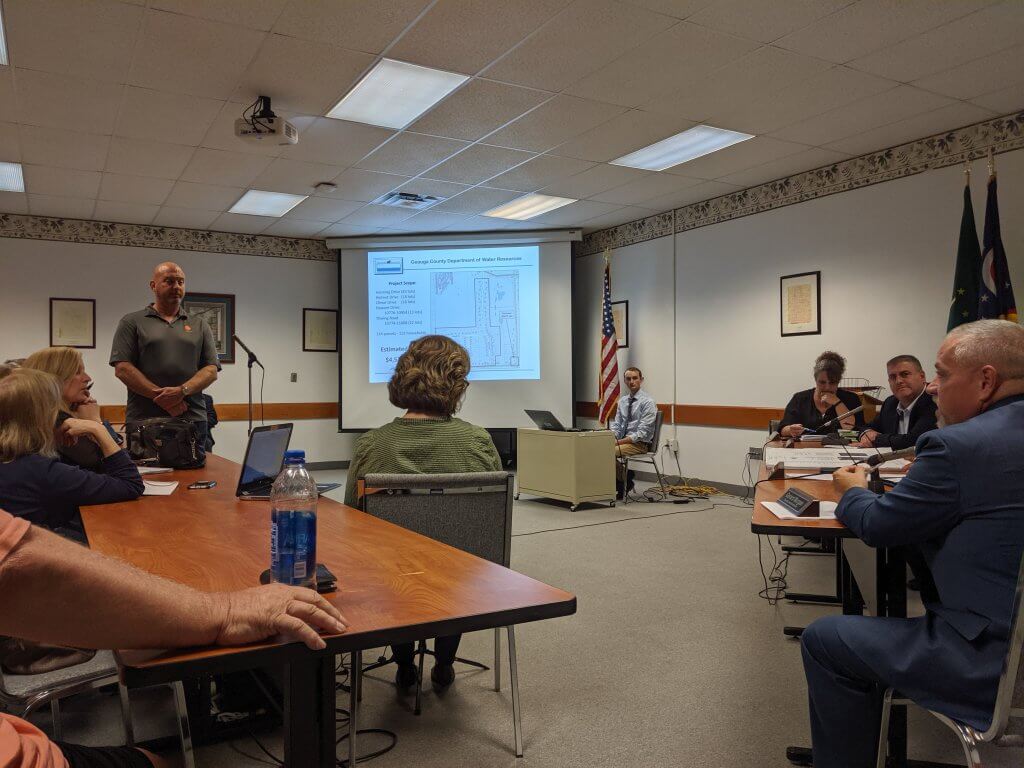
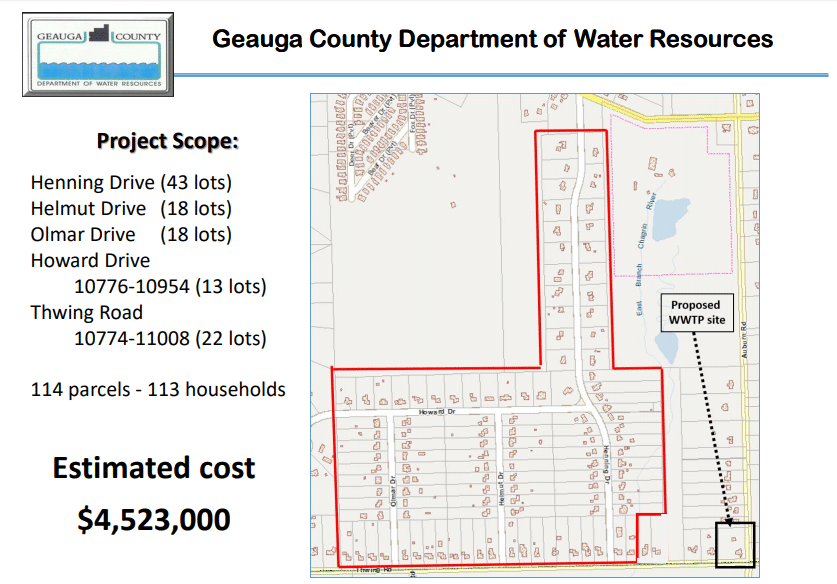
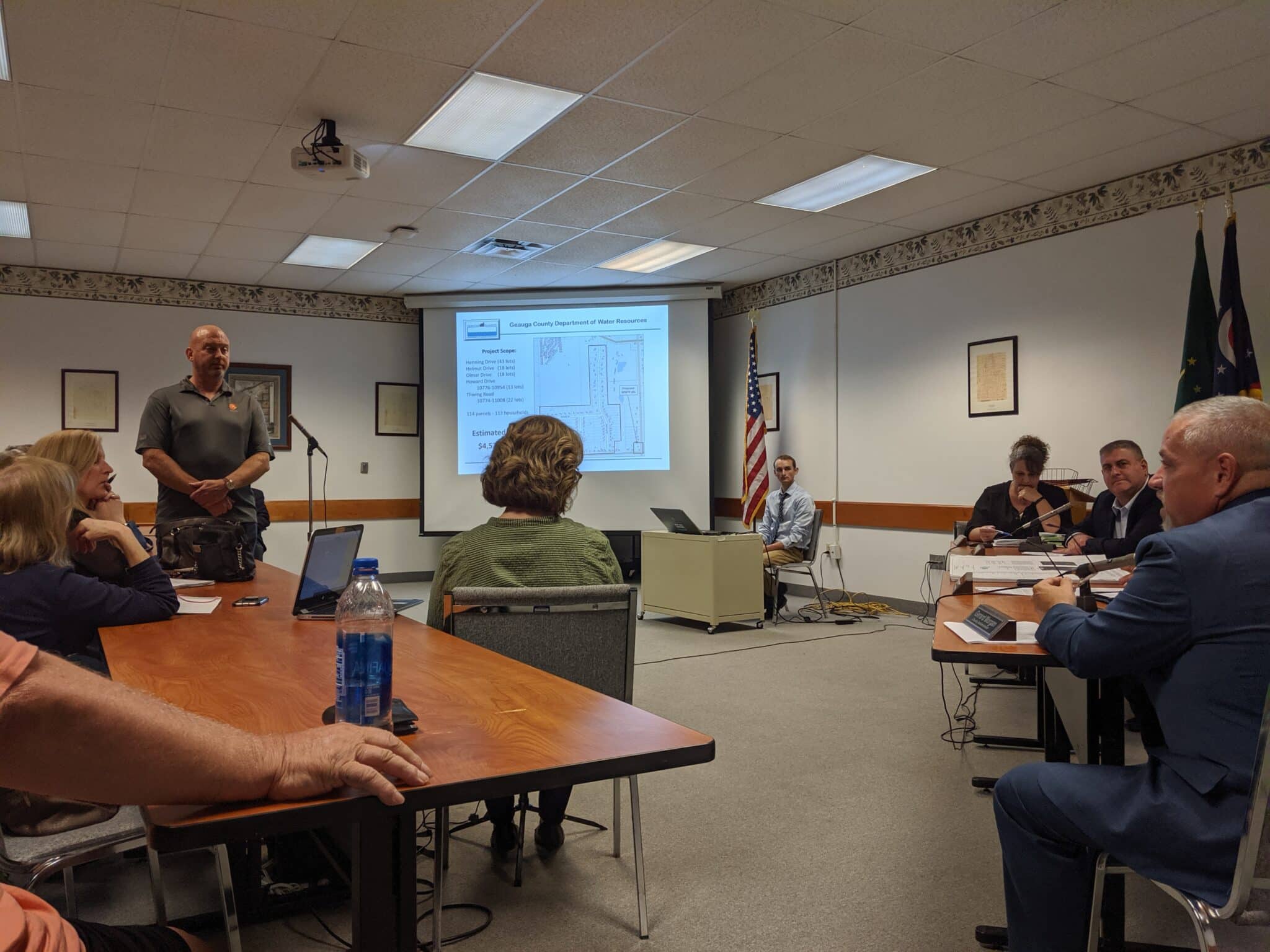
The Geauga County Department of Water Resources received over 80 objections to an Ohio Environmental Protection Agency-drawn assessment showing all residents of the Berkshire Heights subdivision must tie in to a new sewer system — a $4.5 million project at a total cost of over $30,000 per home.
The Ohio EPA found the development — bordered by Thwing Road and Howard Drive on the north and south, and Henning Drive and Olmar Drive east and west — to be out of compliance for wastewater management over five years ago.
County Administrator Gerry Morgan said most of the objections were to the project itself, rather than to the assessment GCDWR presented at a meeting Sep. 24.
However, the county will package the objections and send them to the EPA, although the agency has in the past not been willing to back down from the project, he said.
A new wastewater treatment plant has been planned for the corner of Thwing and Auburn roads, with construction planned for December of 2020.
At the Sep. 24 Geauga County Commissioners meeting, Steve Oluic, GCDWR director, and commissioners presented an updated cost summary to dozens of residents who voiced anger and concern over the price of the project.

Oluic said his department had managed to get the cost of the tax assessment that would pay for the plant down from $30,000 to $28,000 per household, but homeowners must pay between $4,000 and $7,500 to tie into the sewer system.
A sewer maintenance fee of $109 per every two months would also be billed to each home.
The system would cost the county about $40,000 per household, Oluic added, but his department slashed areas of its budget to find $25,000 they can kick in to the project.
“We’re gonna be helping to subsidize this to a certain degree,” Oluic told the crowd.
Some residents spoke against the EPA’s findings, but Morgan — who was previously director of GCDWR — explained the issue.
“What is allowed to come out of a septic system is 600 parts per billion of E. coli,” he said. “What they were finding was a million parts per billion.”
In addition, he added, some residents were pumping out septic waste directly into a creek adjacent to the development.
Dan Green, who purchased a house in the area two years ago, said the problem could be coming from only a few homes, so the entire development shouldn’t have to pay for sewers. He suggested further testing to identify the specific homes causing the problem.
“I’m willing to take the hit if it’s my problem,” Green said about paying for more in-depth testing. “I’d rather risk spending $1,000 for this test than spending $30,000.”
Commissioner Ralph Spidalieri repeatedly defended the county’s work on controlling the project’s cost and scope, and reminded residents the county would also be paying for the project.
“This isn’t just you guys paying,” he explained. “This is hundreds of thousands of dollars water resources is paying, too.”
Spidalieri added it would not be feasible to test every home, and the county was told by the Ohio EPA to “dig in your pocket and find this money.”
Chuck DiCillo, a Berkshire Heights resident, promised to produce a form letter for his neighbors to fill out and send to Oluic by the Sep. 30 deadline.
“(The Ohio EPA) writes orders, but they’re not paying for it, we’re paying for it,” DiCillo told commissioners. “We’re never going to get our money out of our houses. Ever. Never. We could live there for 100 years and we’ll never get this money back.”
After reviewing the objections received Monday, Morgan said the county will return to the Ohio EPA, but he is not sure what other recourse it has.
“We’ll give it another shot,” he said.
Information on funding, including grants available for low-income residents, can be found at gcdwr.org.


