


Pre-Trial Hearing Set for June 24
A hearing to review two motions to drop sexual battery charges against former Chester Police Officer Nick Iacampo stretched into a fourth session June 10, with testimony from a final expert witness for the defense.
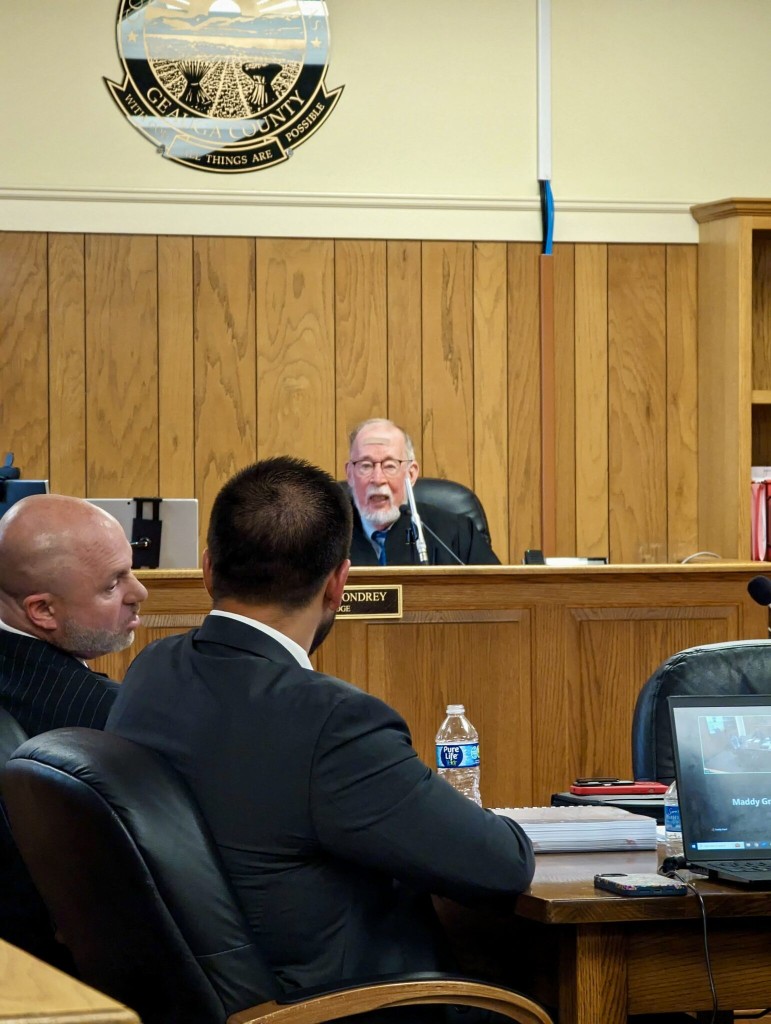
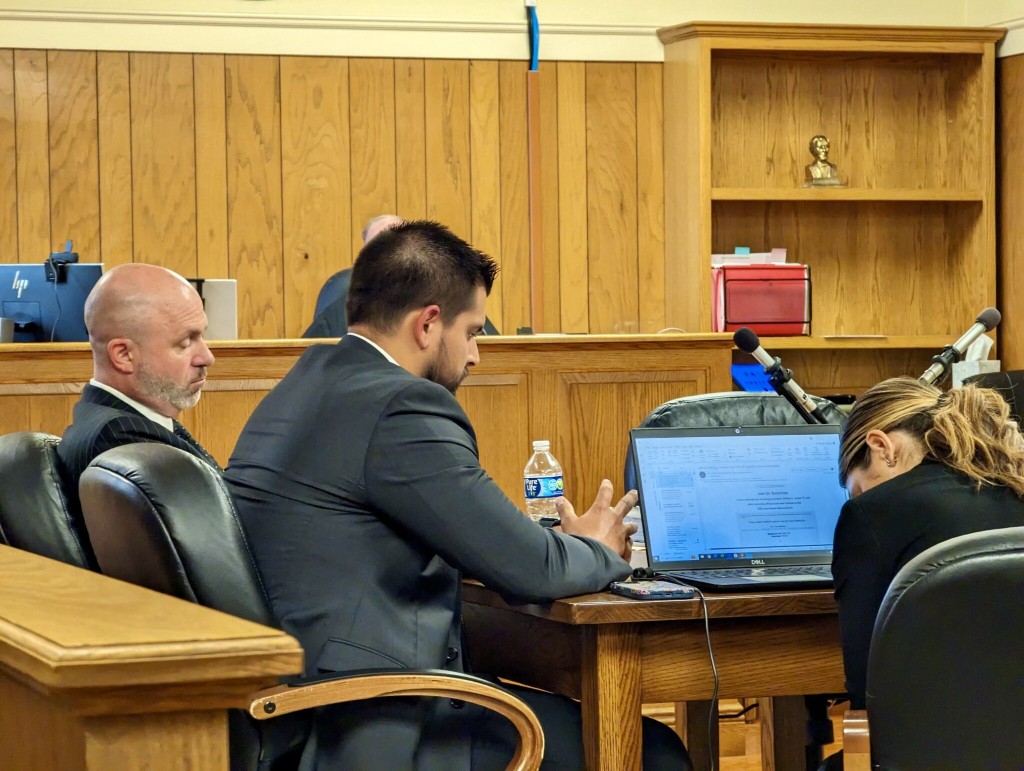
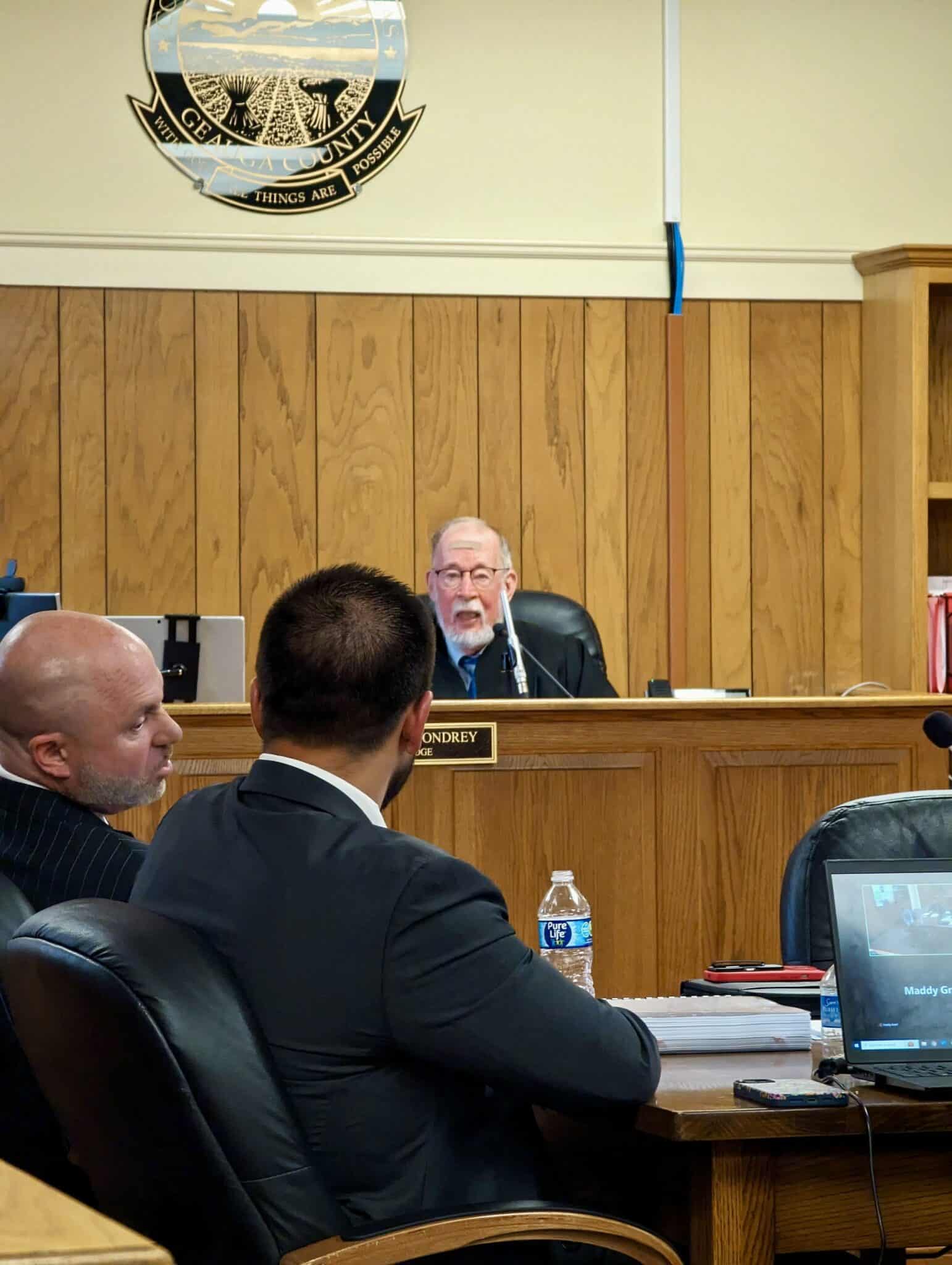
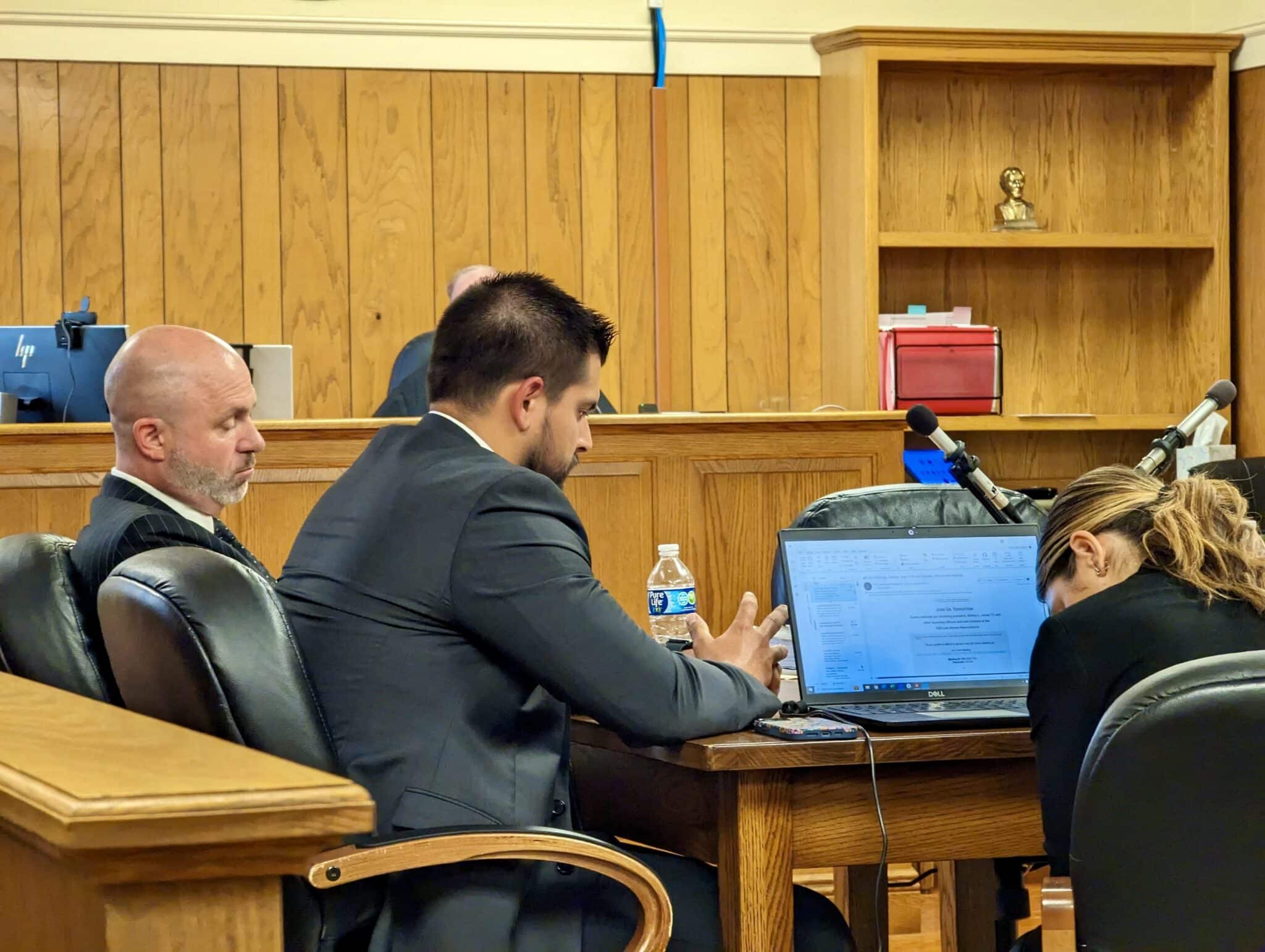
A hearing to review two motions to drop sexual battery charges against former Chester Police Officer Nick Iacampo stretched into a fourth session June 10, with testimony from a final expert witness for the defense.
Kobie Flowers, a Washington, D.C. civil rights lawyer who previously worked for the U.S. Department of Justice, joined the hearing virtually after two previous attempts to have a local expert witness failed to pan out. That witness was not able to appear either May 28 or June 4 due to medical reasons.
Iacampo’s defense attorney, Ian Friedman, asked Flowers to lay out his credentials, including his work at the DOJ and any cases involving rights under a 1967 U.S. Supreme Court ruling in Garrity v. New Jersey, which said employees of the state cannot be compelled to incriminate themselves under threat of termination.
While he had not been asked to testify as an expert on Garrity in the past, Flowers said the law came into play in almost every case involving police.
“Certainly, over 100 times when I was a federal prosecutor with the justice department,” he said.
Friedman earlier filed two motions asking visiting Portage County Court of Common Pleas Judge John Enlow to drop charges against Iacampo, who previously served as a school resource officer at West Geauga High School from January to June 2023.
He was accused of sexual battery against a 16-year-old WGHS student in a local church parking lot.
One asked for charges related to Iacampo’s SRO role to be dropped, as Friedman argued Iacampo, who was temporarily appointed SRO in January 2023, was not in that role in August of last year, when the alleged offense occurred.
Friedman’s other motion said investigators violated Iacampo’s rights under Garrity.

Lake County Assistant Prosecutor Adam Downing objected to Flowers’ introduction as an expert witness. After a brief conference in chambers — during which Enlow could be heard raising his voice to attorneys — Enlow said Flowers could be introduced as an expert on federal law, but not on Ohio law.
Flowers said, after reviewing transcripts of earlier testimony, he felt an incomplete Miranda warning given by Lake County Sheriff’s Detective Dominic Hren — who admitted May 28 he neglected to explicitly tell Iacampo he had the right to remain silent — was a “red flag” that Iacampo’s Garrity rights may also have been violated.
Hren’s interview occurred around 3:45 a.m. Aug. 7, hours after Iacampo’s alleged sexual contact with the victim. In a May 28 hearing, Hren said he did not fully Mirandize Iacampo before questioning him that night. He was also questioned over a statement made during the Aug. 7 interview that Iacampo’s presence was “no longer voluntary.”
Flowers said Garrity should always be read prior to questioning a police officer, regardless of whether the questioning is administrative or criminal.
In his testimony, Iacampo said he felt pressured to give a statement after Chester Township Police Department Capt. Jeff Sherwood ordered him to enter the room in which Hren’s interview occurred. Flowers said Iacampo’s awareness of the department’s policy manual, which states insubordination could result in termination, made Iacampo feel compelled to incriminate himself.
Downing objected, telling the judge Flowers could not testify to what Iacampo believed at the time of the interview.
“The policies are very clear that if he doesn’t follow what his chief says, if he doesn’t follow the policy — particularly the policy on insubordination — he can lose his job,” Flowers said. “So, before he even entered into the room, it should have been made very clear to him (that) the criminal investigation has nothing to do with (his) job.”
Flowers said police departments are often advised, when investigating criminal offenses by officers, not to interview them at all to avoid Garrity violations.
“If you don’t interview them, you don’t have a Garrity problem,” he said.
In his cross-examination, Downing said Iacampo had a documented history of insubordination with four separate disciplinary complaints in his file.
He asked Flowers whether that history would change his reasoning.
“It cuts both ways,” Flowers said. “You could think that this final time is going to be the final time, and so I better … go ahead and give a statement because I’ve got this history … of being insubordinate.”
Downing also pushed back on Flowers’ assertion Garrity should be read before every investigation. If that were the case, there would be no reason to probe whether Iacampo believed he was under threat of termination, he said.
Both attorneys were given five minutes to present their closing arguments on each motion to dismiss. Enlow scheduled a pre-trial conference June 24, at which time he said he hoped to have a ruling on both of Friedman’s motions.
If charges against Iacampo are not dismissed, dates for a jury trial will be set at that time.


