A future Meijer may join the shops lining Water Street, with representatives from both the shopping supercenter and architecture firm Woolpert Inc., of Dover, appearing before Chardon Planning Commission May 28 to discuss their ideas.
A future Meijer may join the shops lining Water Street, with representatives from both the shopping supercenter and architecture firm Woolpert Inc., of Dover, appearing before Chardon Planning Commission May 28 to discuss their ideas.
The talks were strictly informal, with no action or request for action taken.
Meijer is considering a piece of land on the southwest corner of the intersection between Loreto Way, Meadowlands Drive and Water Street for their project, said Community Development Administrator Steve Yaney.
“Meijer is proposing an approximately 160,000-square-foot store with a separate, detached gas station in front of the corner,” Yaney said.
Based out of Grand Rapids, Mich., Meijer is family owned and a typical supercenter includes groceries, a pharmacy, health, beauty, general merchandise, soft goods and shoes, said Meijer Senior Real Estate Manager Cris Jones.
“We really pride ourselves on the grocery side of our business, since we started out as a grocery store 90 years ago,” he said, adding Meijer differentiates itself from its competitors through philanthropy.
“We donate 6% of our net income to charity. We just opened two new stores in Ohio, our 55th and 56th store in Ohio on May 14, so just a week or so ago. Both of those stores donated $25,000 to local charities at the grand opening,” he said, adding each store has a charitable giving budget.
“I think we support about 200 youth athletic programs in the state of Ohio,” he said.
The Site Plan
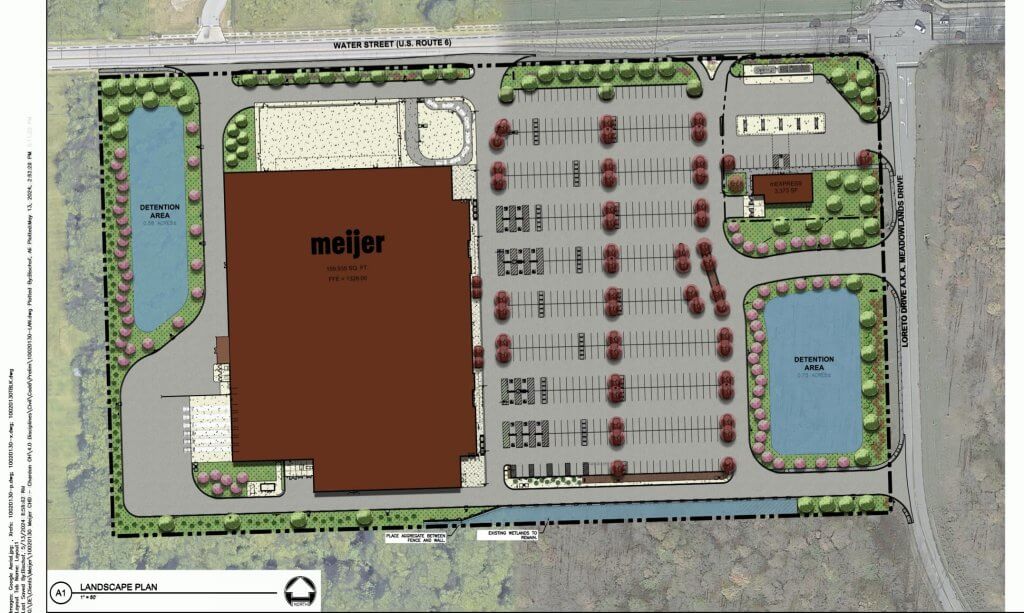
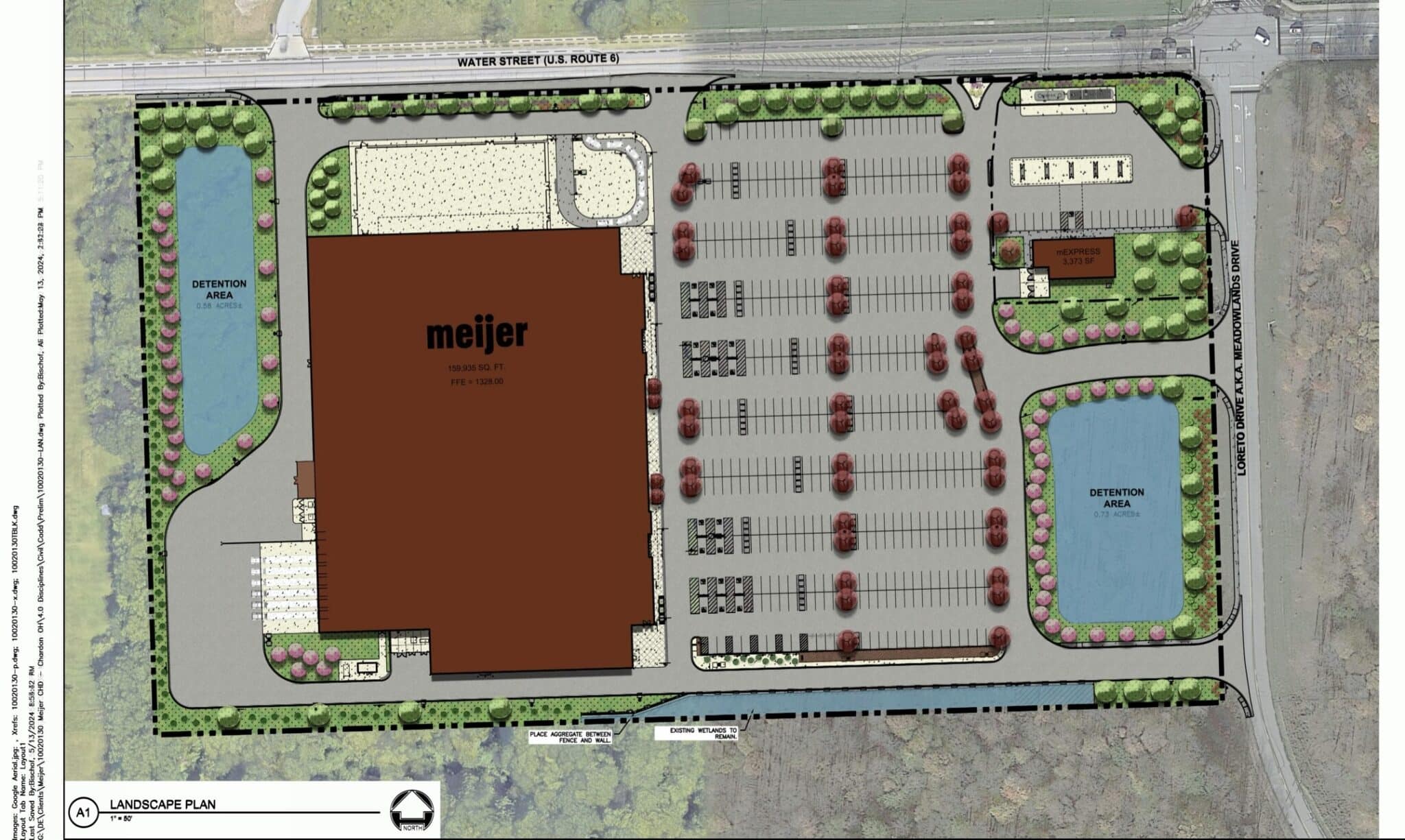
Engineer Abby Jacobs went over the site plan. Using a concept plan on the overhead screen, she pointed out a garden center on the north end of the building, alongside a drive-through for the pharmacy.
The front would be split into two entrances, one for grocery and one for home goods, and there would be parking spaces dedicated for digital pickup for online ordering, she said.
Truck docks would be placed behind the store, along with a screen wall along Water Street on the north side. Landscape screening is also proposed along the south and west sides of the dock, Jacob said.
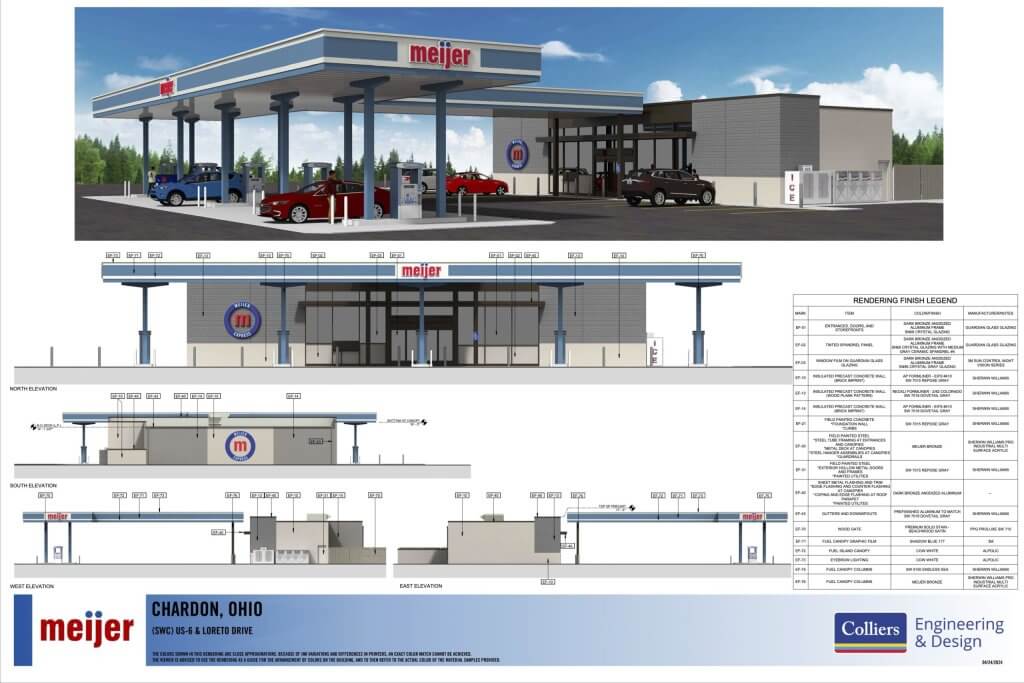
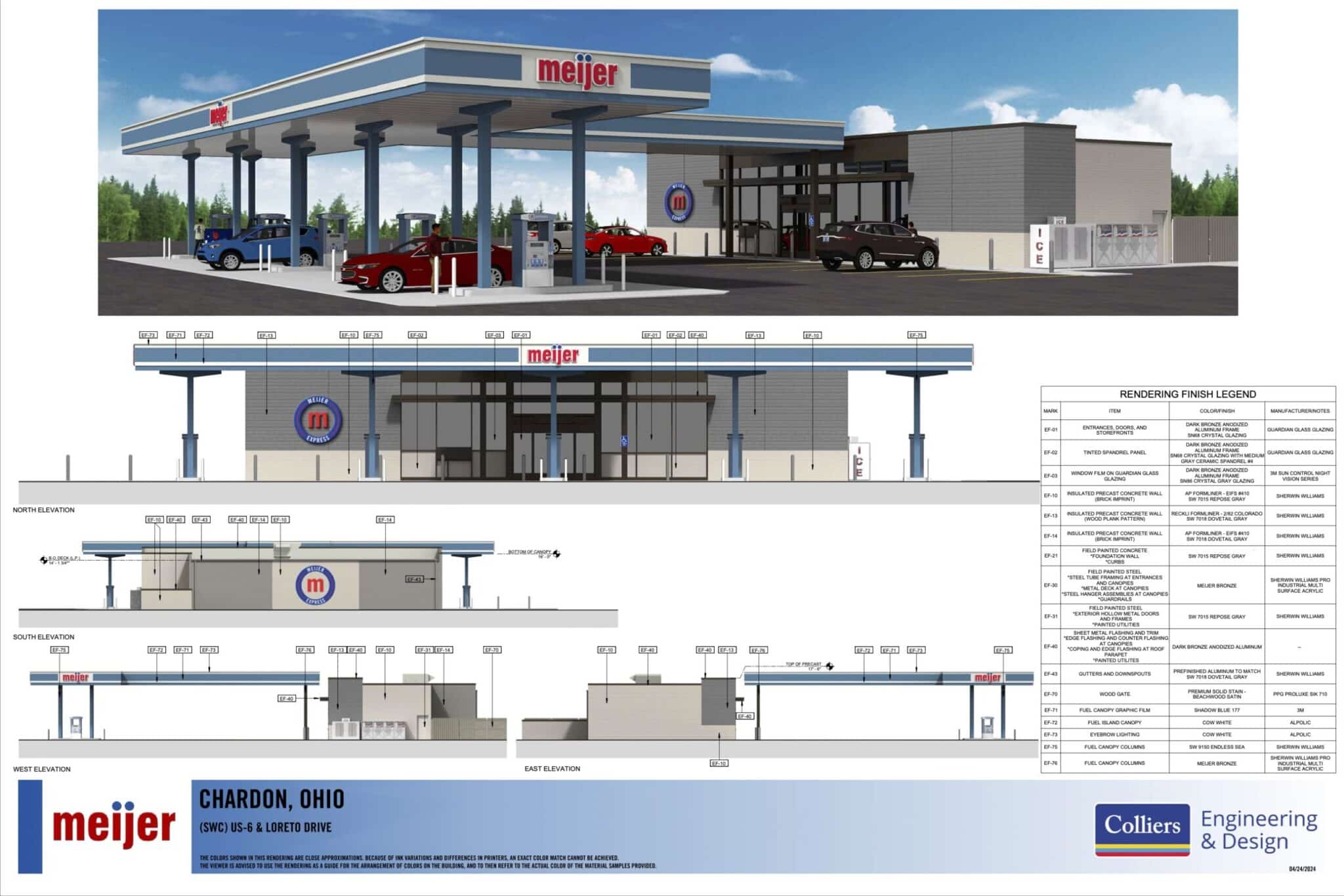
The front of the building would be a gas station, about 33,000 square feet, with a convenience store. While the plan showed five double-sided fuel pumps, Jacobs noted they would actually have six.
The plan also showed two water detention areas, one on the west and one on the east. A retaining wall would run the south side of the property to maintain existing wetlands.
Landscaping proved slightly more incomplete.
“The majority of the landscaping that we will propose on this site, we’re still working through the final detailing as we work through the site plans,” Jacobs noted. “But we showed the screening along the west and south, and then straight trees along the north and east. Trees throughout the detention areas. And parking lot islands within the parking lot.”
Commission Chair Andrew Blackley asked if the firm has provisions — given the large parking lot and gas station — for trash separation and fuel and oil contamination in drainage.
“Within the fuel center parking lot specifically, Meijer prototypically uses what we call an ‘environmental catch basin,’” Jacobs replied, explaining the basin has a 3-foot sump, hood and snout structure to provide what she referred to as a “safety blanket.”
There is also a secondary catchment and monitoring system, said engineer Brian Smallwood, adding drive entrances are requested to be wider to better accommodate truck traffic.
“The primary goal here was to have the trucks be able to cycle from Water to the rear and back out through Loreto, or vice versa,” Smallwood explained.
The primary truck access points would have a minimum 50-foot radius, he said.
The drives don’t just help truck traffic to cycle through, but should also help to prevent damage by lost truck drivers who aren’t sure which entrance to use, Jones added.
Smallwood noted a traffic impact study is currently in preparation.

Architecture
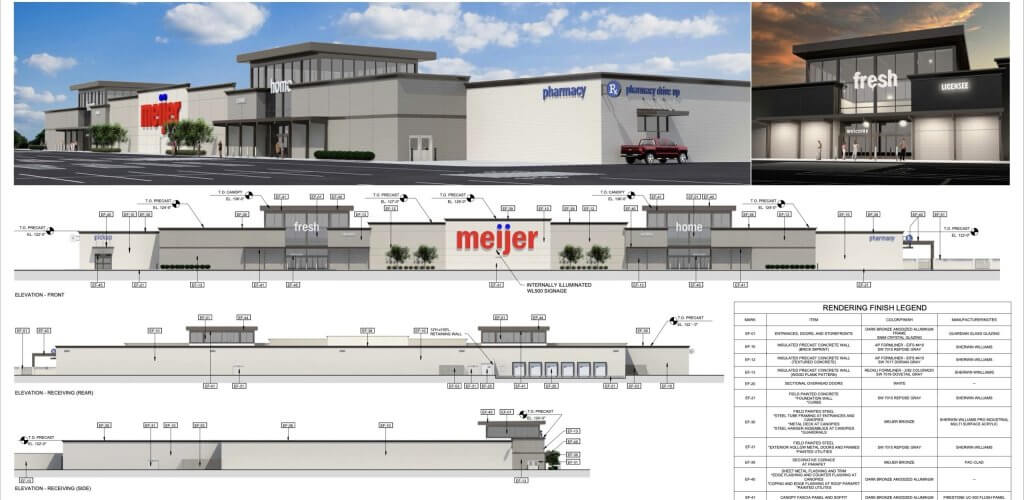
Smallwood explained the appearance of Chardon’s hypothetical store.
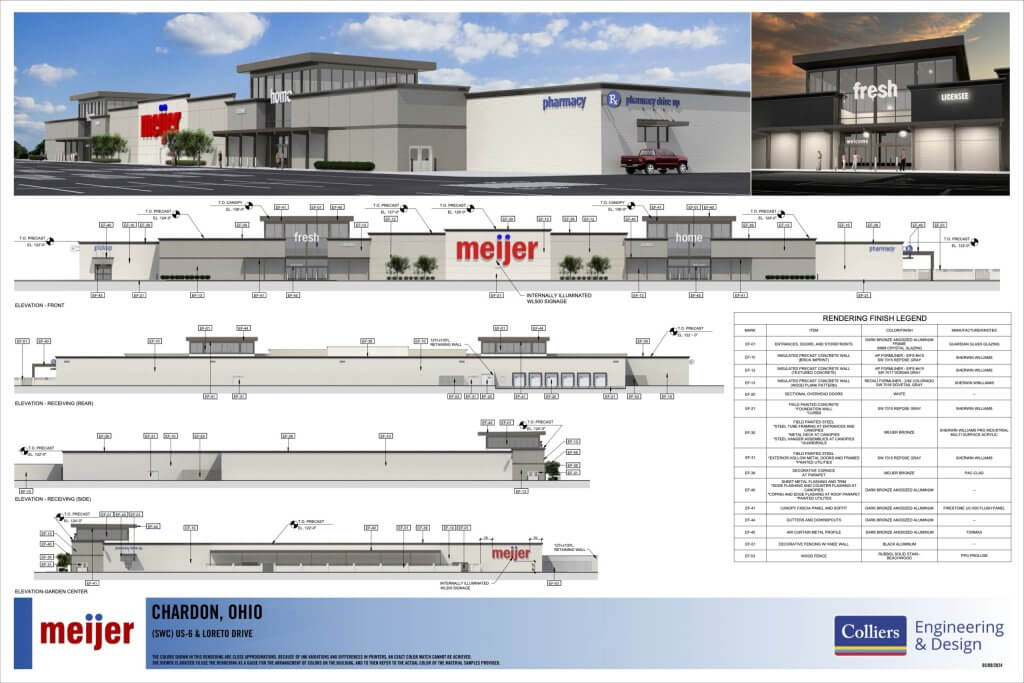
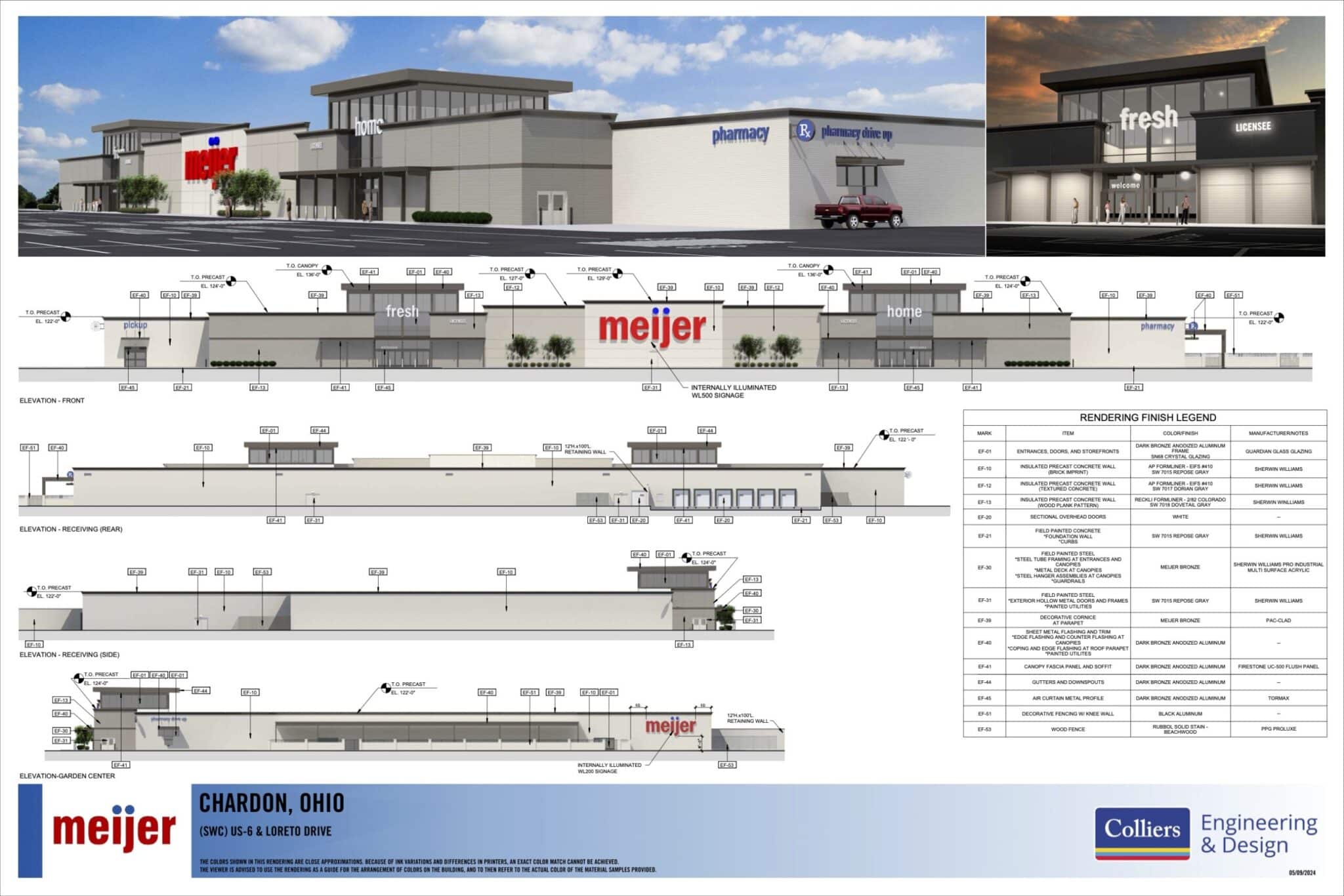
“Most of this material you see that is not at the front vestibules itself, it’s all brick imprint. So, it has the look of masonry all the way around,” he said of the building’s facade. “Also, the parapets have been varied higher, (with) more variation than you would see in a normal Meijer store.”
The main entrances, composed of glass, extend the front vestibules back farther than normal as well, he said, allowing natural light through most of the floor. To either side of the entrances would be concrete panels formed to give both the appearance and feel of a wood texture.
The building also features vertical and horizontal articulation along the front, Smallwood noted, with the entrances and canopies protruding out.
He described a knee wall surrounding the garden center, also with a masonry look to it.
“While that normally is a decorative fencing type material, we elected to go ahead and show a small masonry screen wall with some decorative or ornamental stuff at the top of that,” he said. “If you’ve ever been to the Mentor store, it’s similar to that in nature, in that it provides additional screening.”
Blackley, noting the amount of gray on the building, asked if it was a corporate color.
Jones said it isn’t and other stores feature sand and taupe.
“Let’s think about something that’s maybe not quite as bland as gray,” Blackley said, later adding the city has received negative feedback on recent developments that predominantly feature gray tones.