


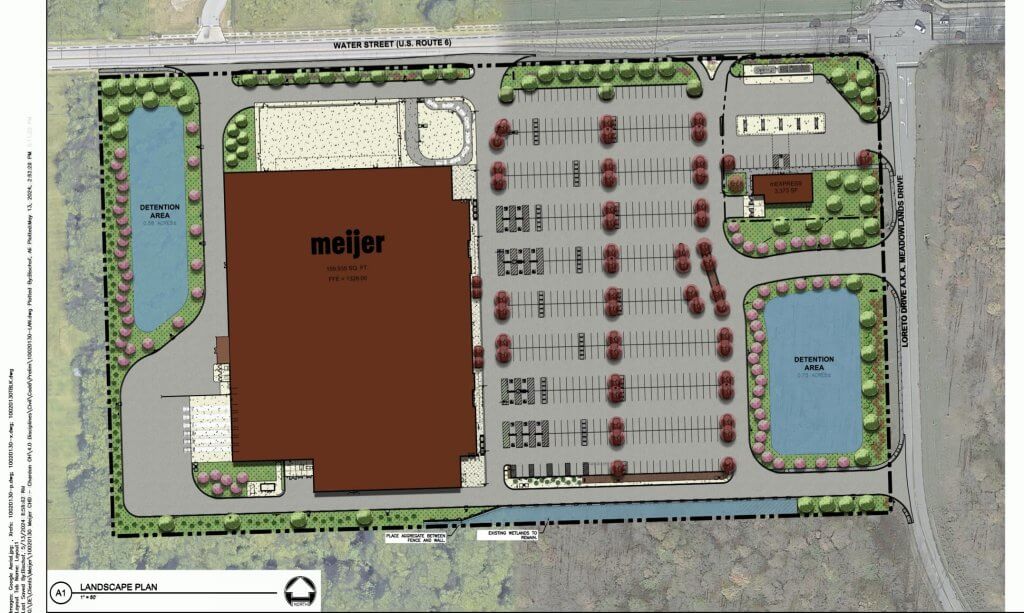
While Woolpert Inc. engineers did their best to work within city ordinances designing a potential Meijer supercenter for Chardon, landscape and local laws posed issues for both parties to resolve.
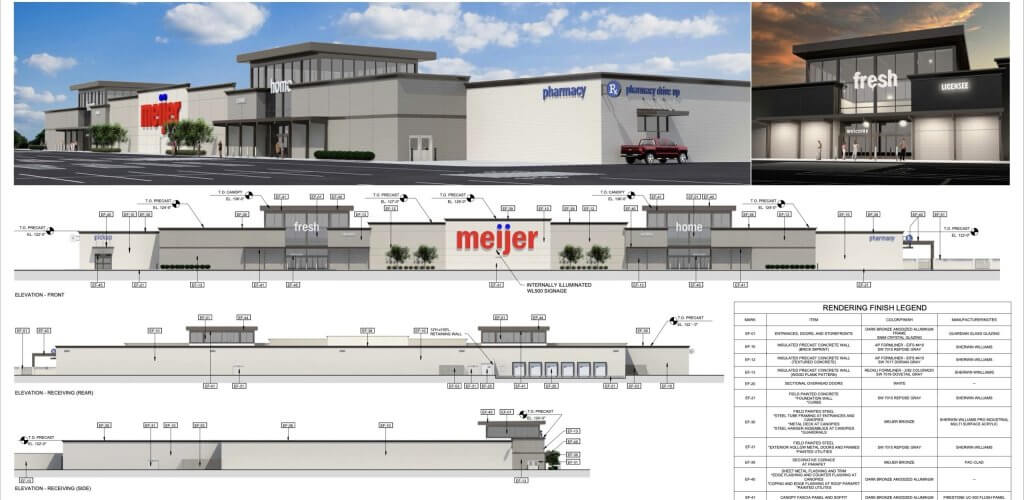
While Woolpert Inc. engineers did their best to work within city ordinances designing a potential Meijer supercenter for Chardon, landscape and local laws posed issues for both parties to resolve.
Although Meijer is considering a Chardon location, the discussion with the Chardon Planning Commission May 28 was strictly informal, held only for feedback and ideas.
Wetlands
The commission asked the engineers about wetlands on the property.
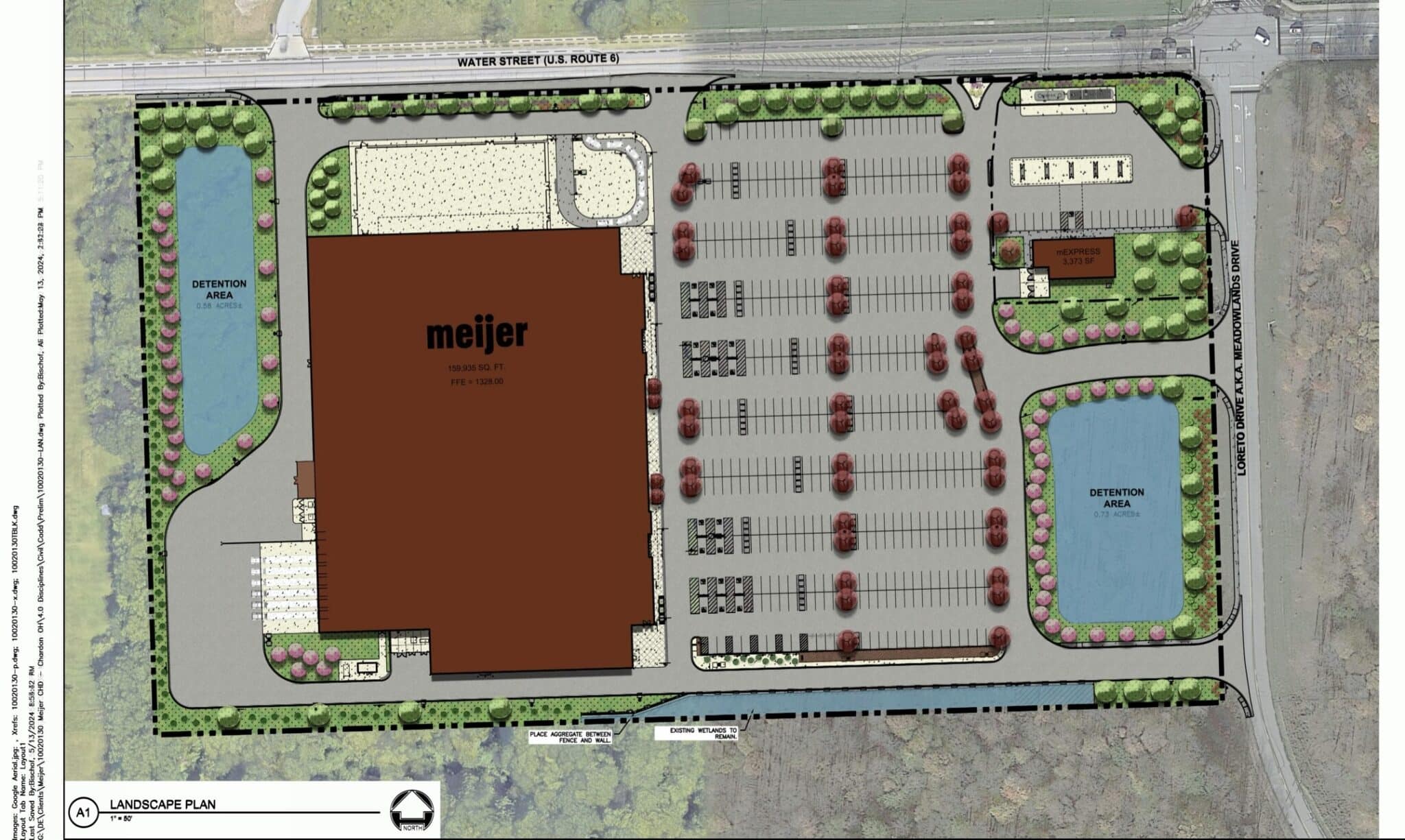
“You said there were some wetlands on the property, but looking at the site plan, it looks like the property is fairly extensively developed,” commission Chair Andrew Blackley said.
Engineer Brian Smallwood said a little less than 0.5 acres of the property’s wetlands would be impacted.
“There are pretty extensive wetlands mostly to the south of our south property line,” said engineer Abby Jacobs, explaining some of the wetlands crossed the border onto their property. “We are doing what we can with some retaining walls to try to minimize the impacts to those wetlands.”

Signage
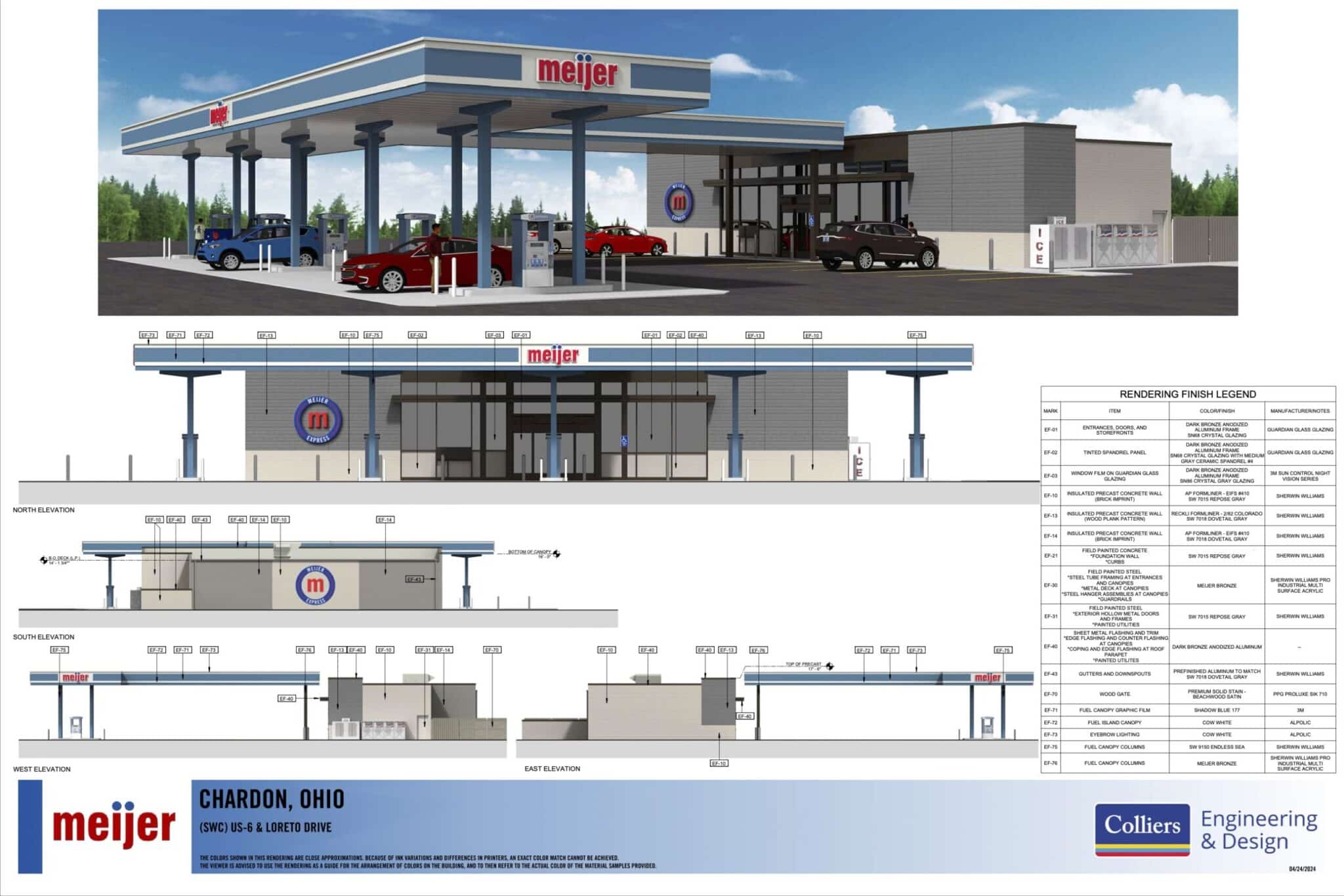
The size of the Meijer sign across the building’s front came into question. The M alone is around 10 feet high, said commission member Colin Wantz.
“That, to me, might be a little bit excessive and size 7-to-8 feet probably isn’t on this size of a building,” Yaney said.
While not a fan of the massive sign, a small sign on a large building can also look awkward, he added.
“Does it need to be a 17-foot tall letter J? That probably doesn’t need to be there that big. But there’s somewhere in the middle there that we can probably meet to make it work for everybody,” he said.
Despite his issues with the main Meijer sign, Yaney didn’t think the amount of signs on the building would look outlandish, noting there were a minimal number of them across the facade.
“They’re putting pretty much all, the majority of their signage into the Meijer logo, and then the ‘home’ and the ‘fresh,’” he said.
While the building has signs projecting outward, the commission did not take issue with them, Blackley said, adding they were important for wayfinding on a large site.
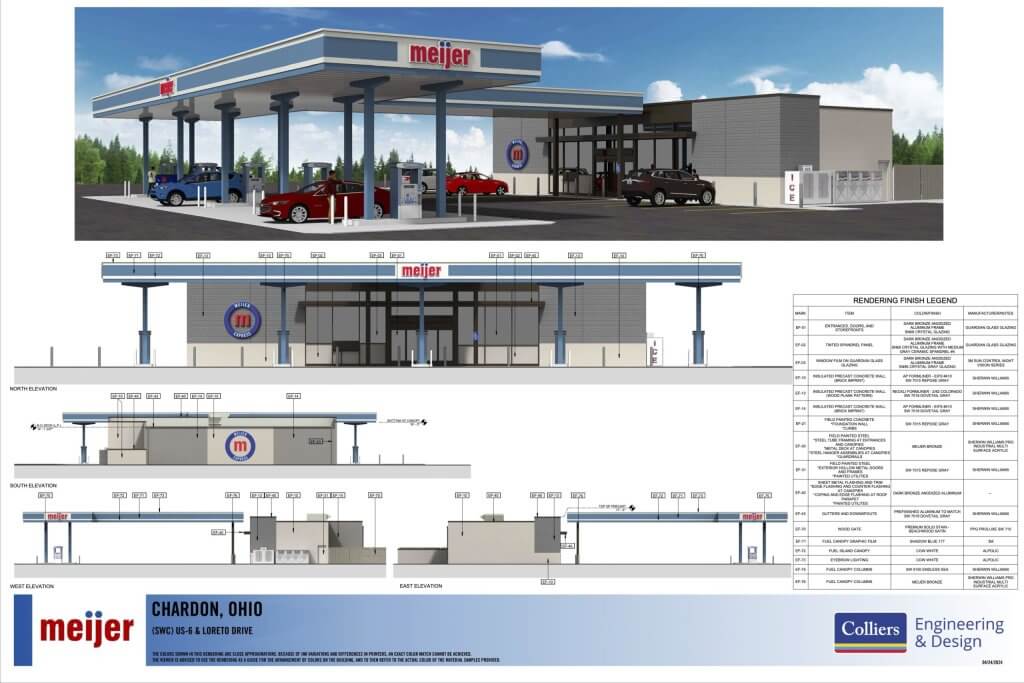
Yaney had concerns about the ground sign for the gas station.
“It’s got a 9-foot height on it,” he said. “Which exceeds our 6-foot height limit for ground signs.”
Meijer could instead install multiple ground signs, Yaney said.
Jones said they had reduced four signs along Water Street to two.
“I think when we did that, we’re asking for a little bit more height on those signs. Instead of asking for four signs that meet the criteria, we’re asking for two that are a little bit over your standards,” he said.

Trees
The city’s rules regarding street trees, specifically a requirement of three trees per every 100 feet, also posed a complication for the supercenter.
“I think we’ll be able to meet the number of street trees, but I don’t know if we have enough length in certain places to place all the street trees,” Smallwood said, adding while the number could be maintained, it would not be done in a linear fashion.
“Maybe they’re double stacked,” he said.
Wantz said he would prefer to have the trees even if they aren’t spaced exactly per the city’s code (33 feet apart).
“I’m sure there’s trees actually closer than 33,” he said. “I don’t think that’s the intent of the requirement, is that they have to be exactly spaced over 100 feet.”
Jones noted they had doubled layered trees in several locations of the lot.
Smallwood said Meijer is willing to work with the city on the exact placement of trees.
“We’ll plant however many trees will fit on the site,” Jones said. “We want them to live, to flourish and to grow.”
The commission concluded the spacing requirement could be flexible.

Lights
While the store will not be open 24-hours a day, the supercenter would like to leave some lighting on in the parking lot overnight for their third shift staff.
“We think about where the employees park and make sure they can safely walk to their cars,” Jones explained. “We typically choose some lights to leave on.”
Jones said the company has control of their lights from their home office.
Street lighting on Meijer’s section of Loretto Way would also be the developer’s responsibility, Blackley said, something Jones noted they were unaware of.
“The power’s going to run off the existing street lighting power system that’s on Water Street, it’d be part of that circuit and the city will be paying for the cost of lighting,” Blackley said.


