


"Who are we to say that one species is more than another here on Earth. It really boils down to that.” – GPD Naturalist Paul Pira
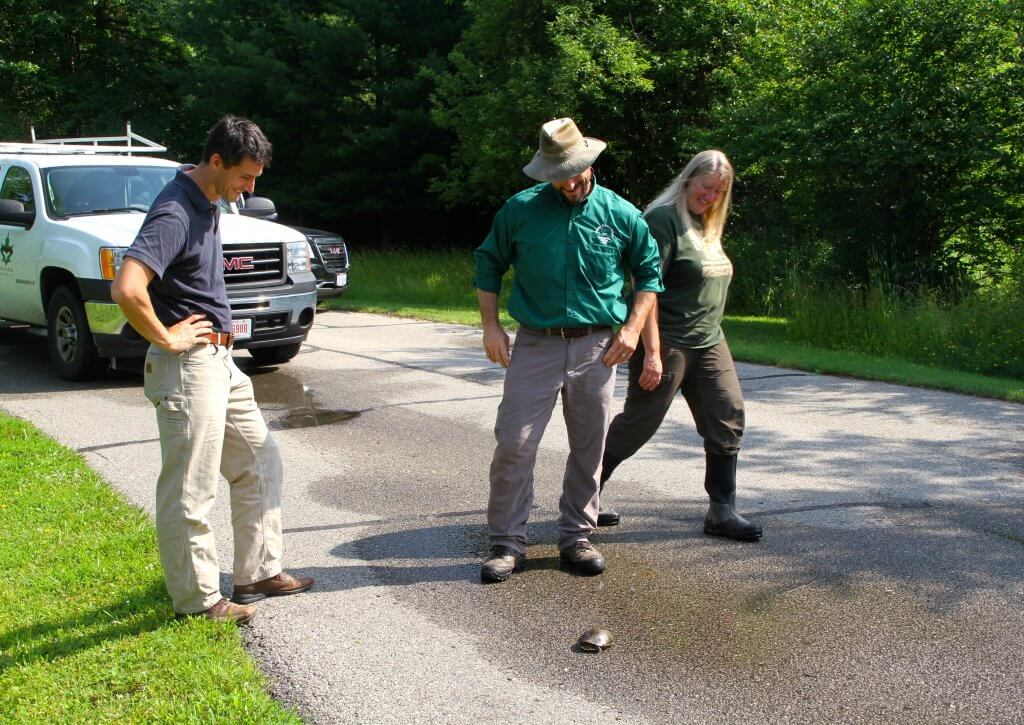
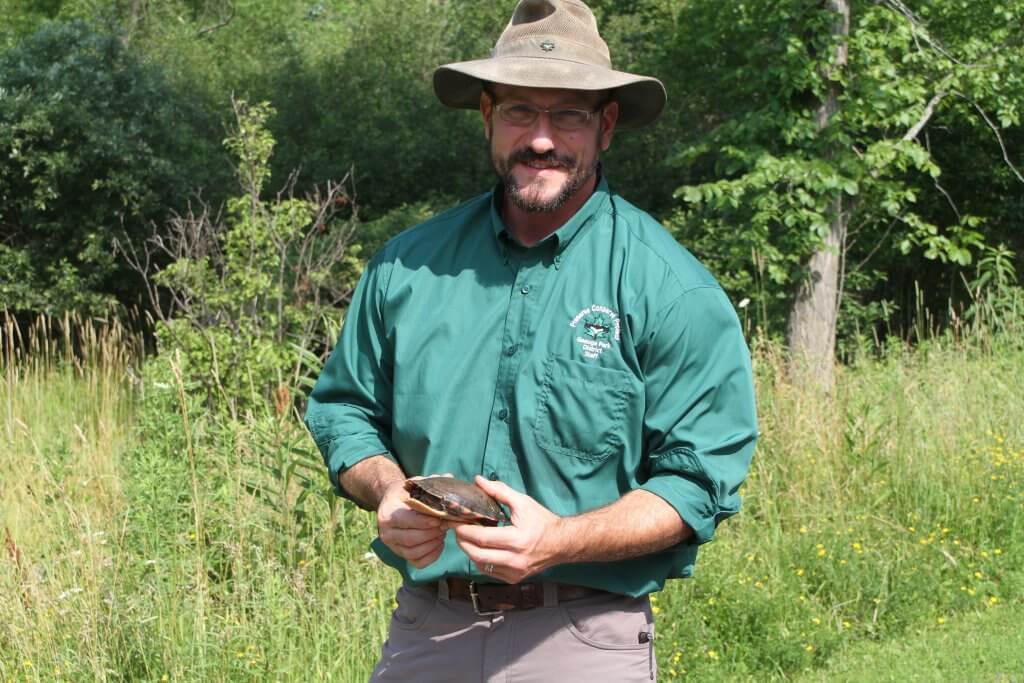
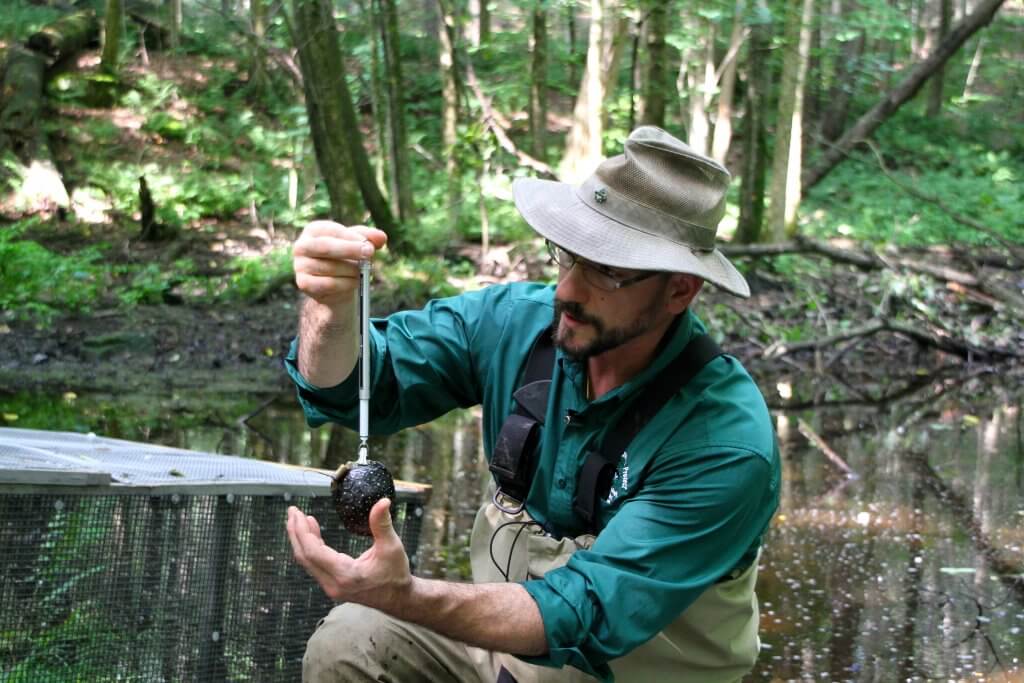
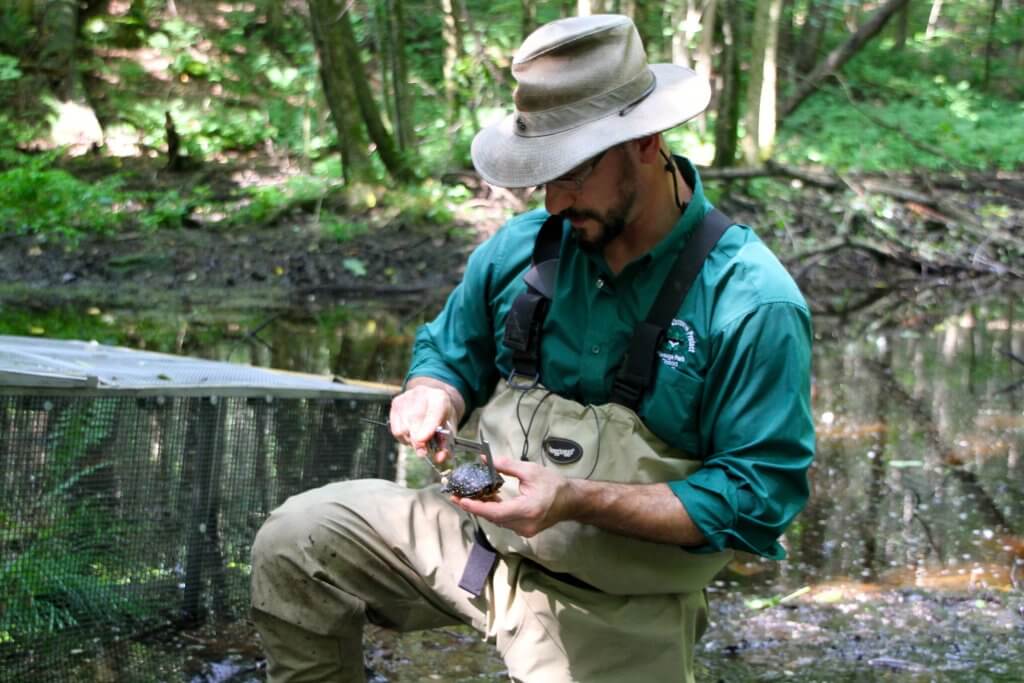
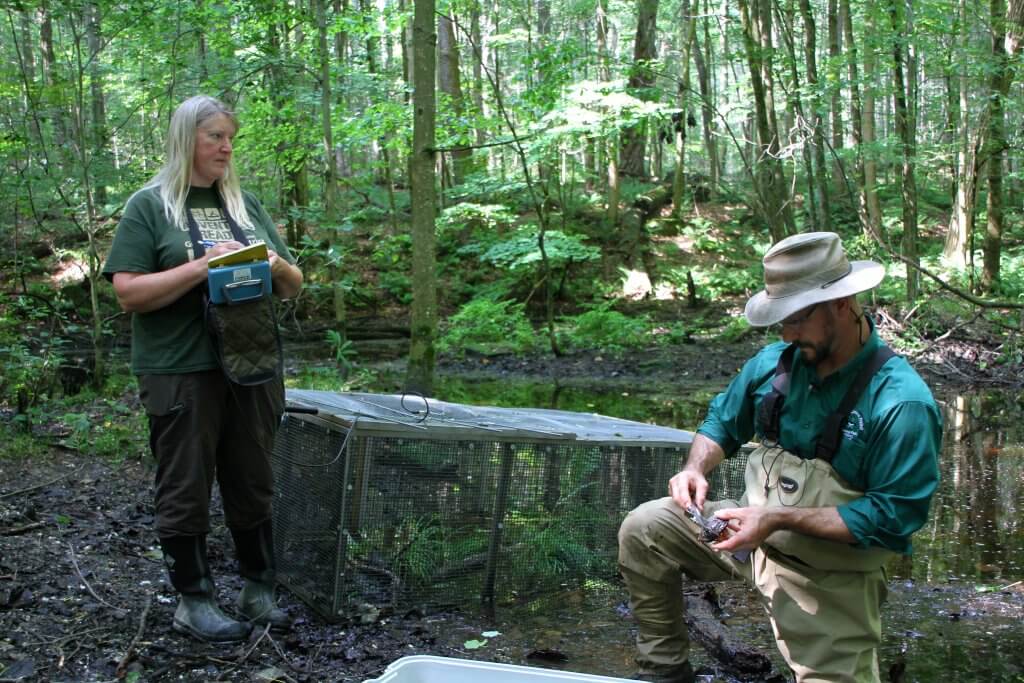
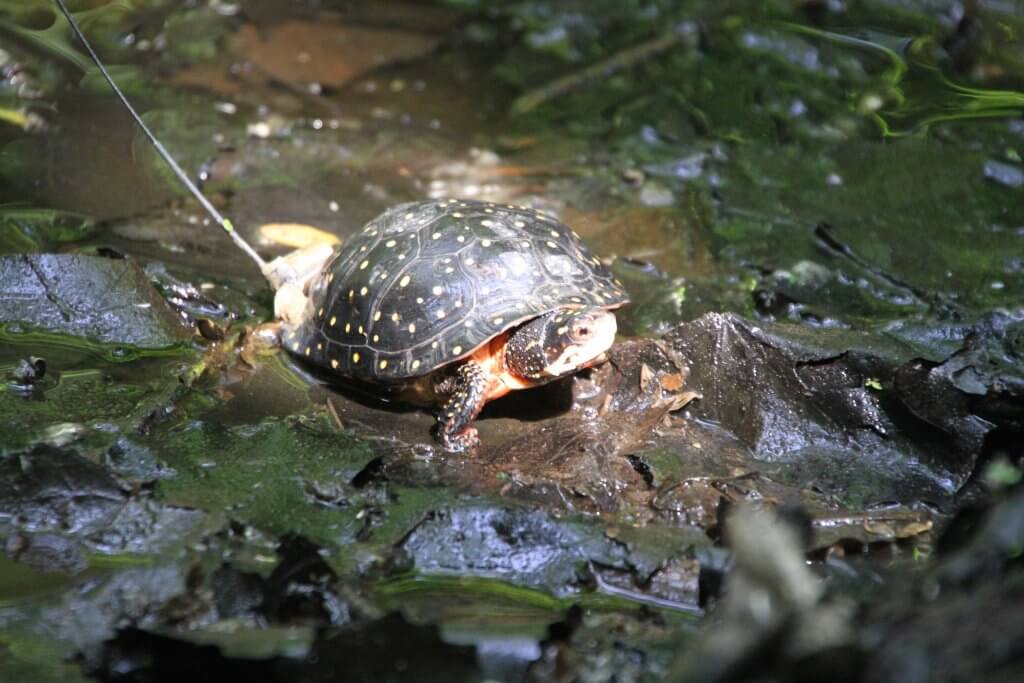
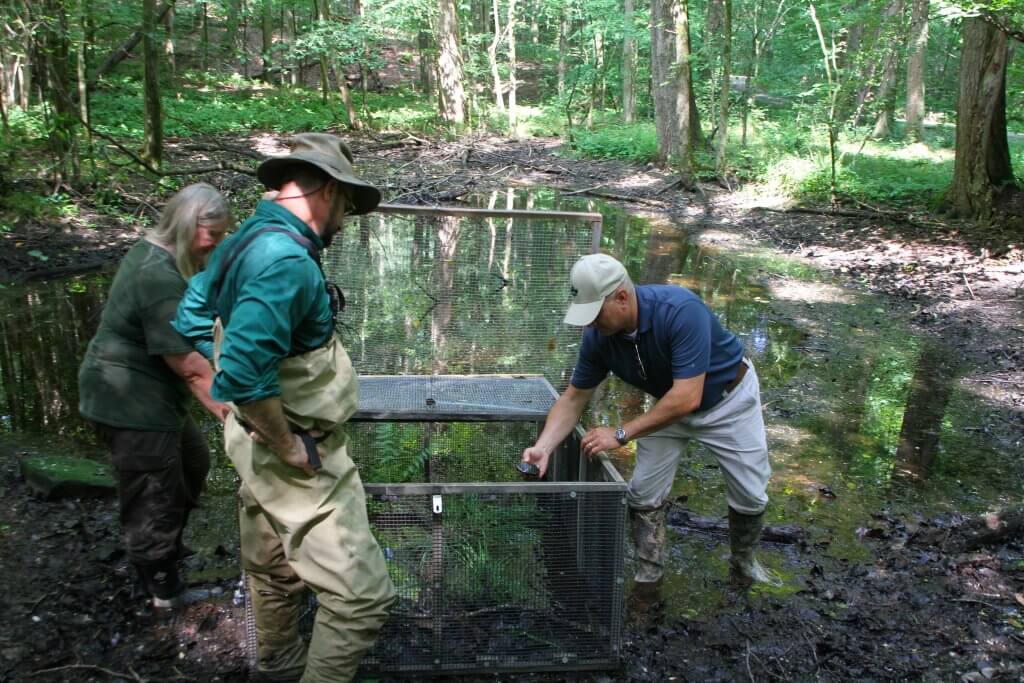
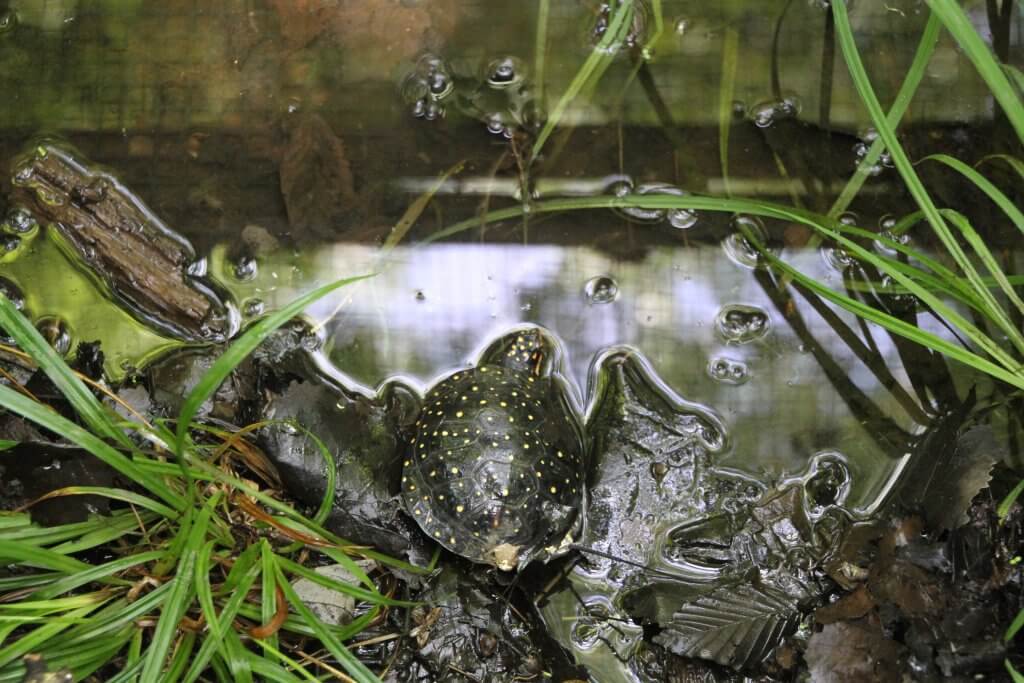
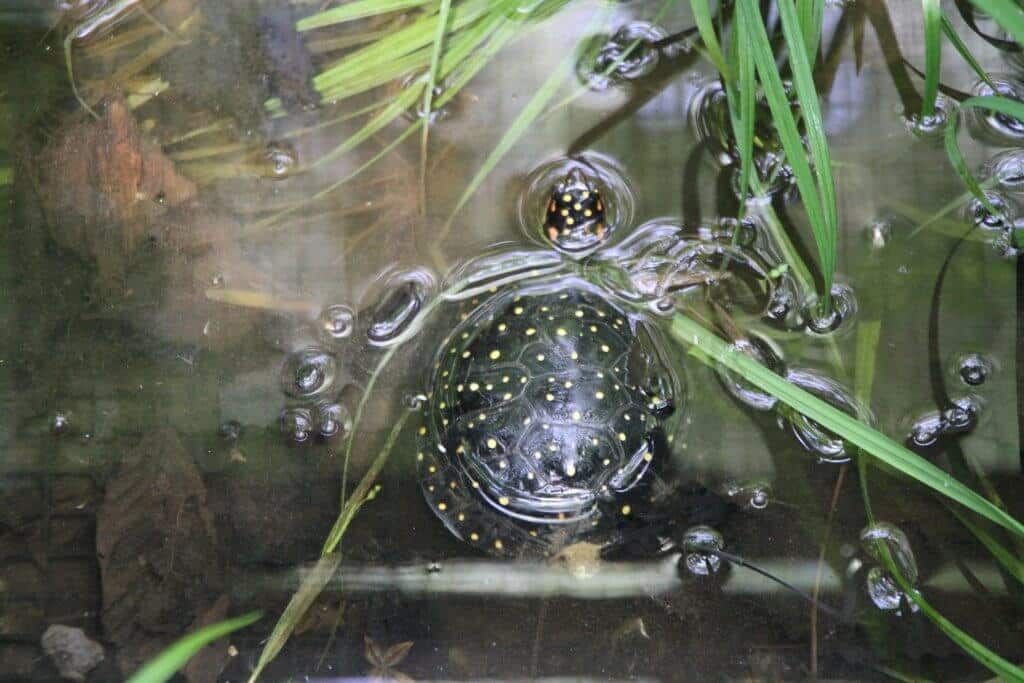
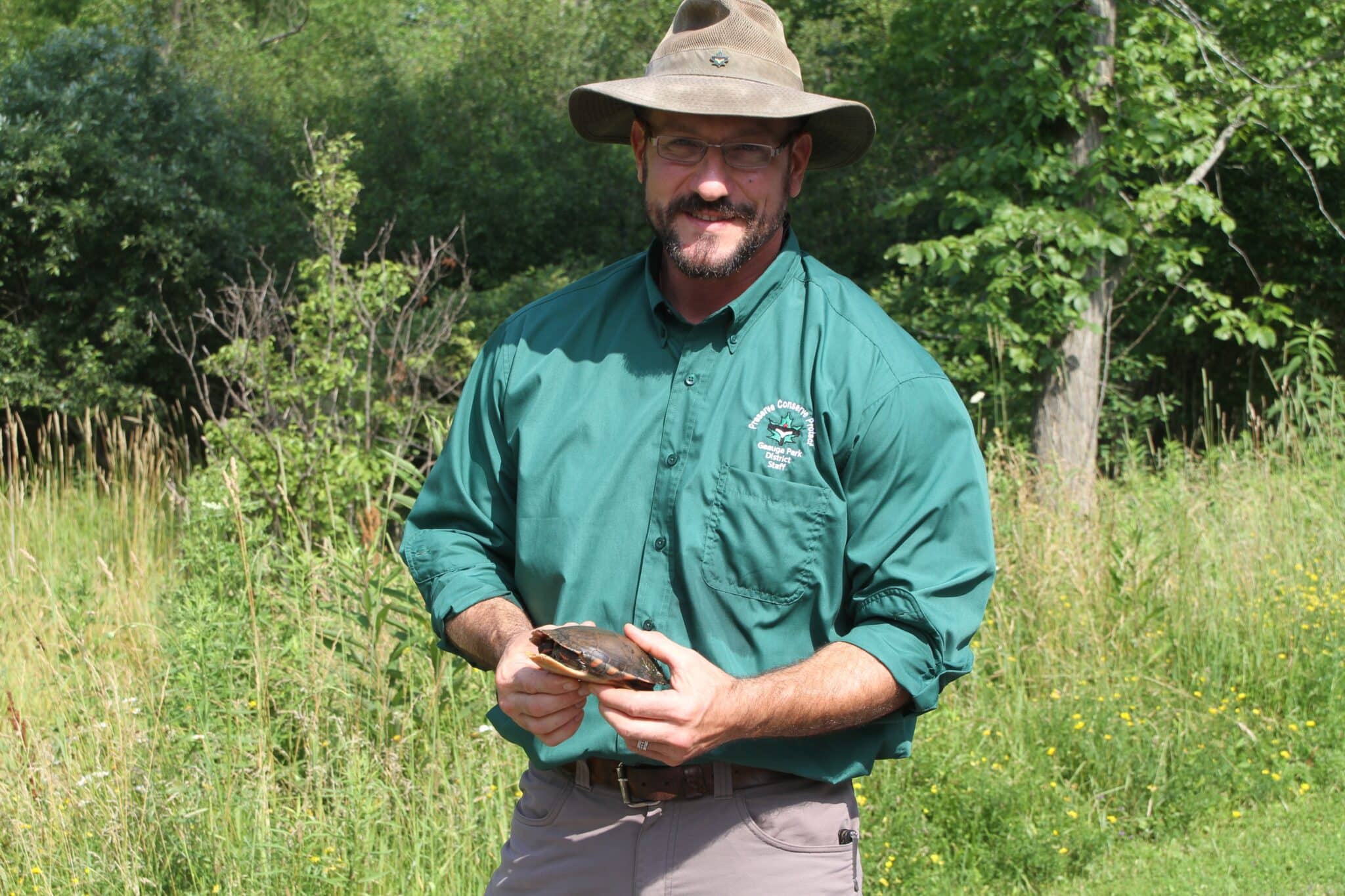
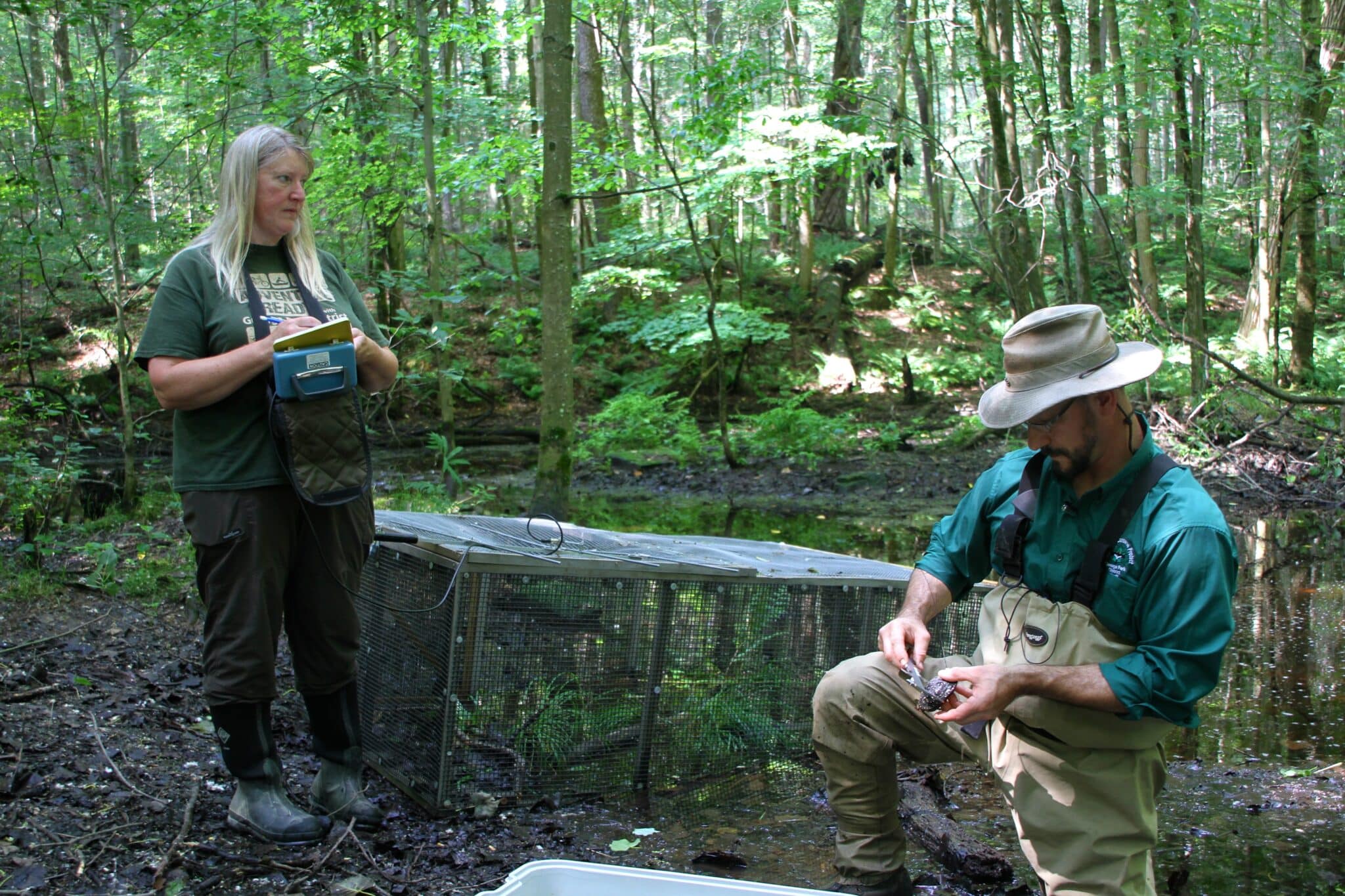
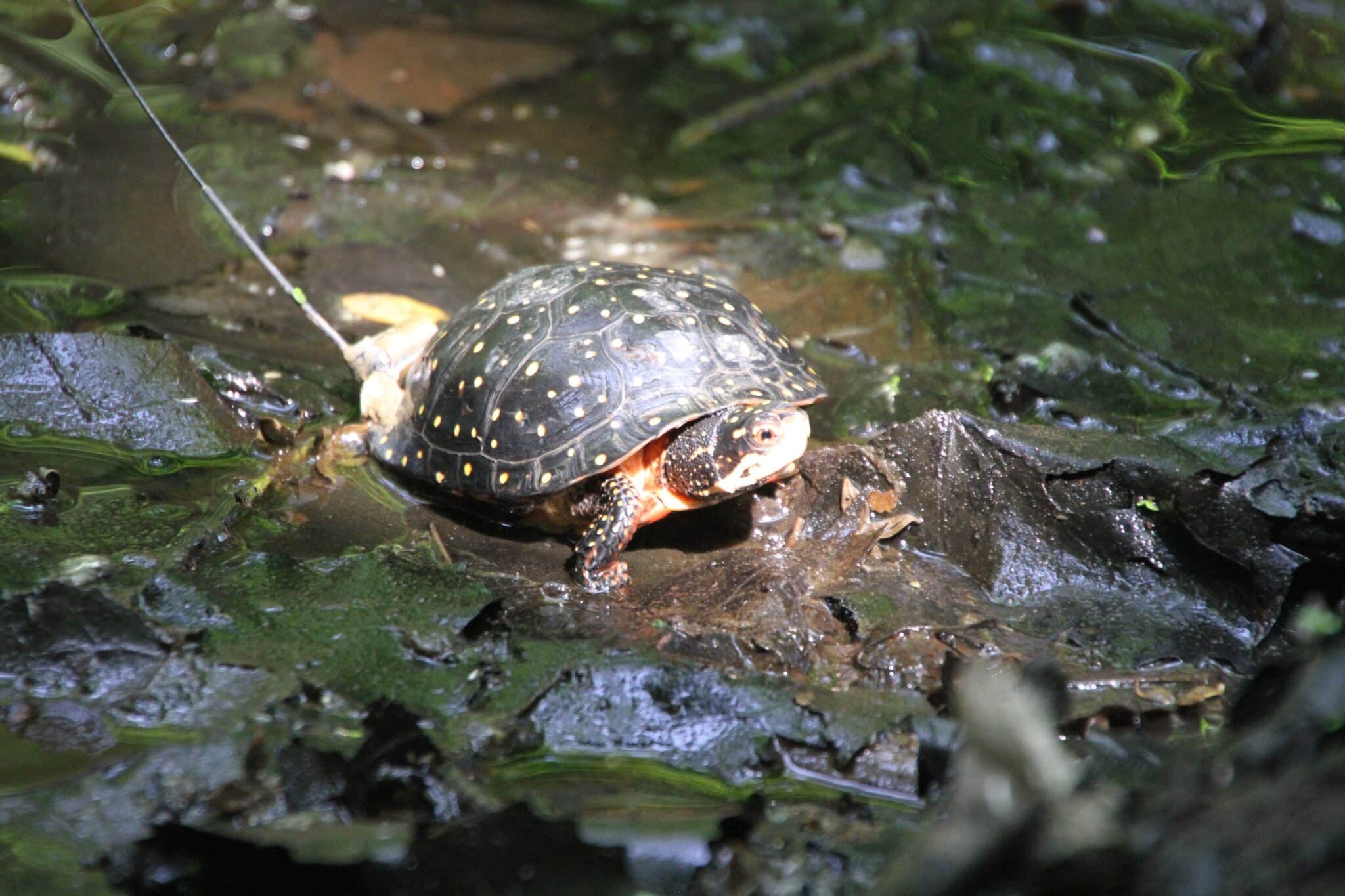
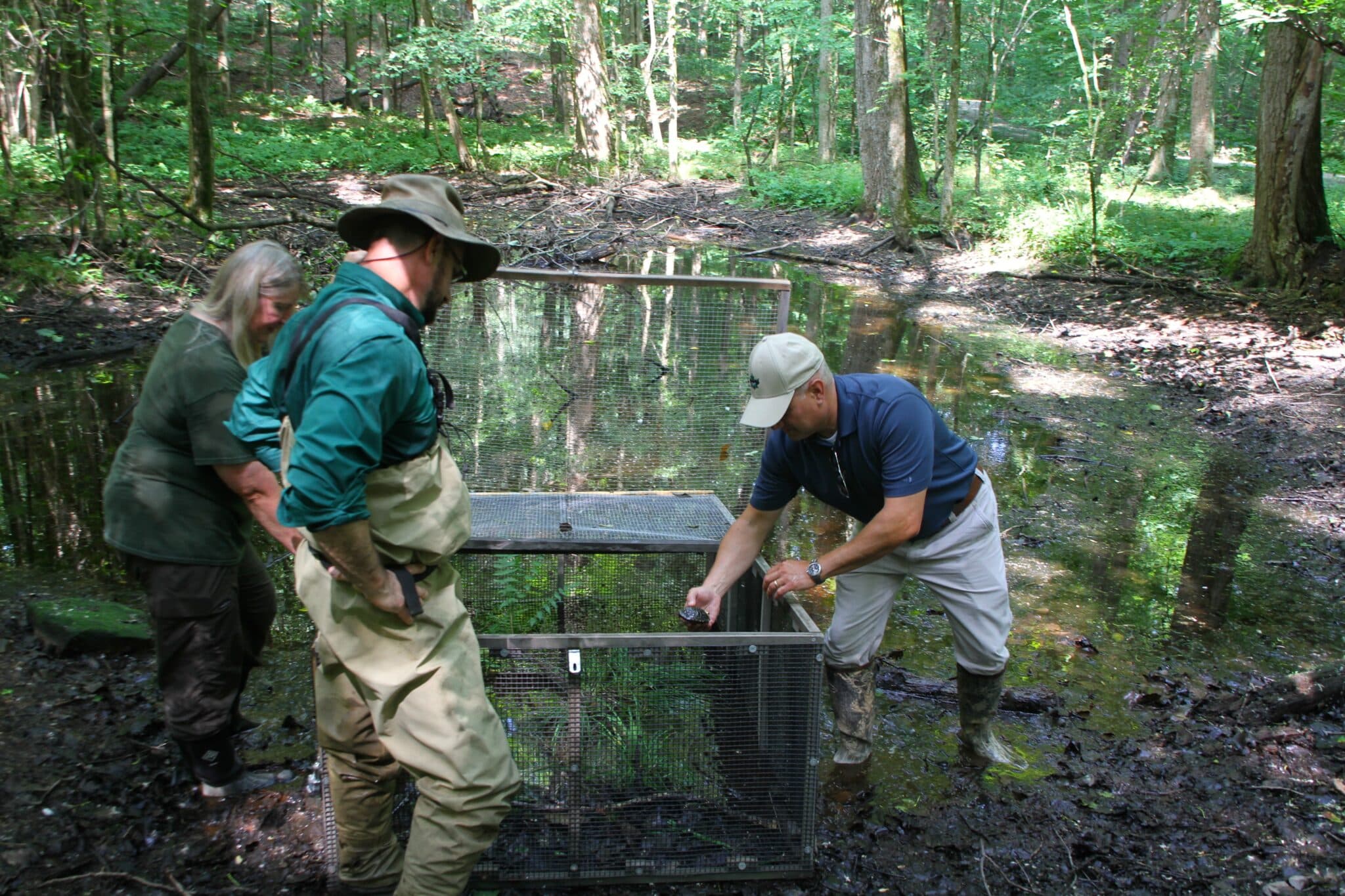
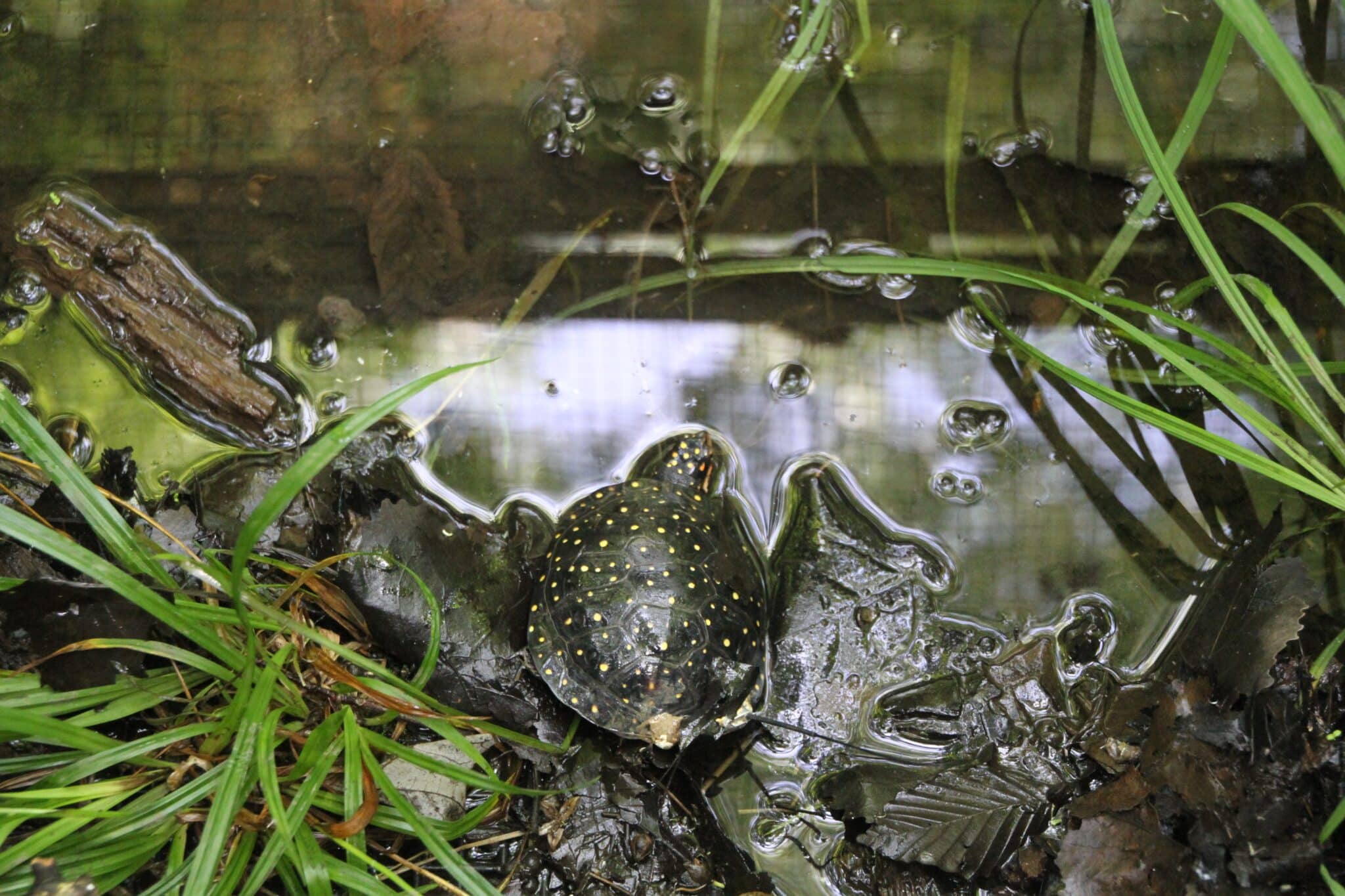
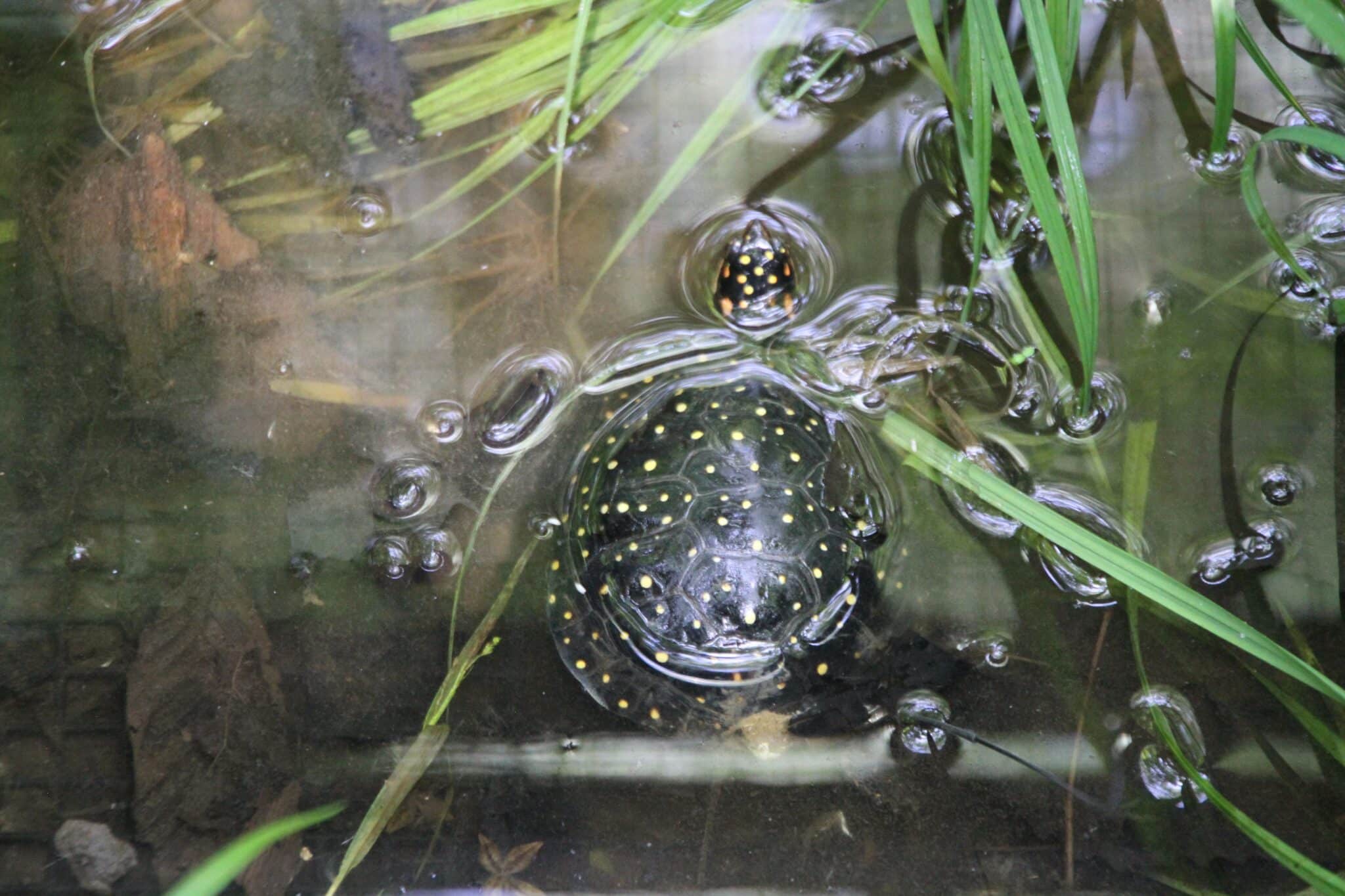
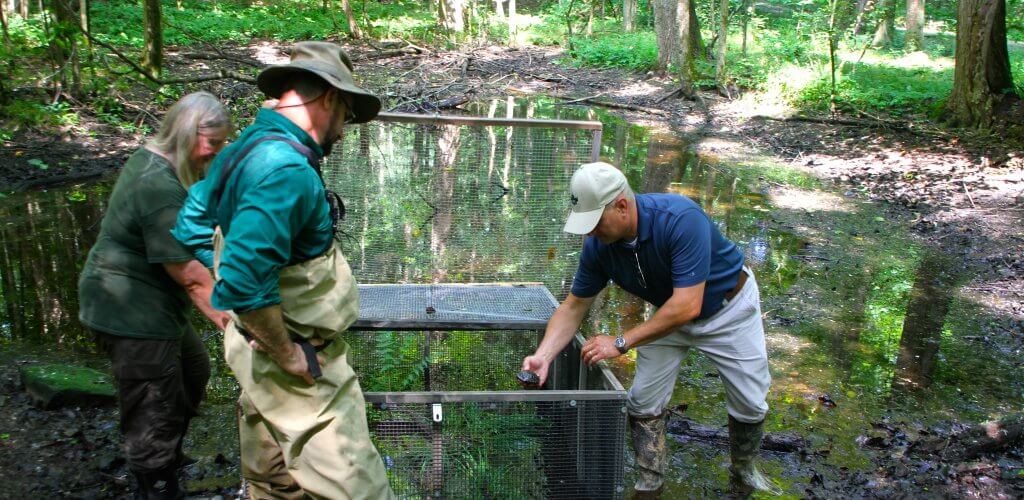
For the first time since 2015, a female spotted turtle was safely released Tuesday in one of Geauga Park District’s properties.
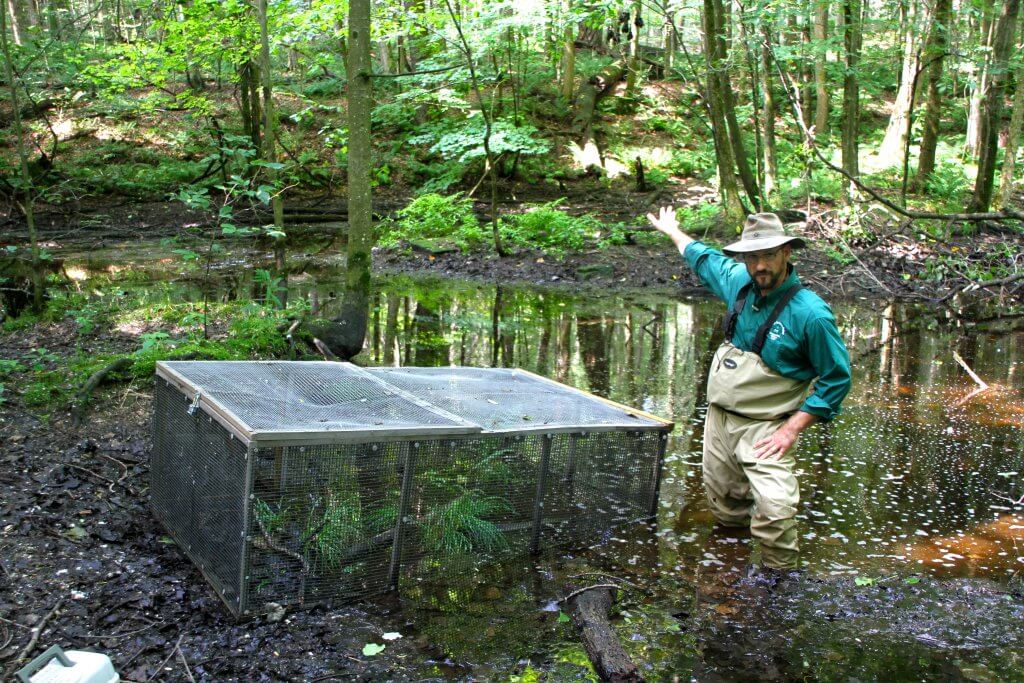
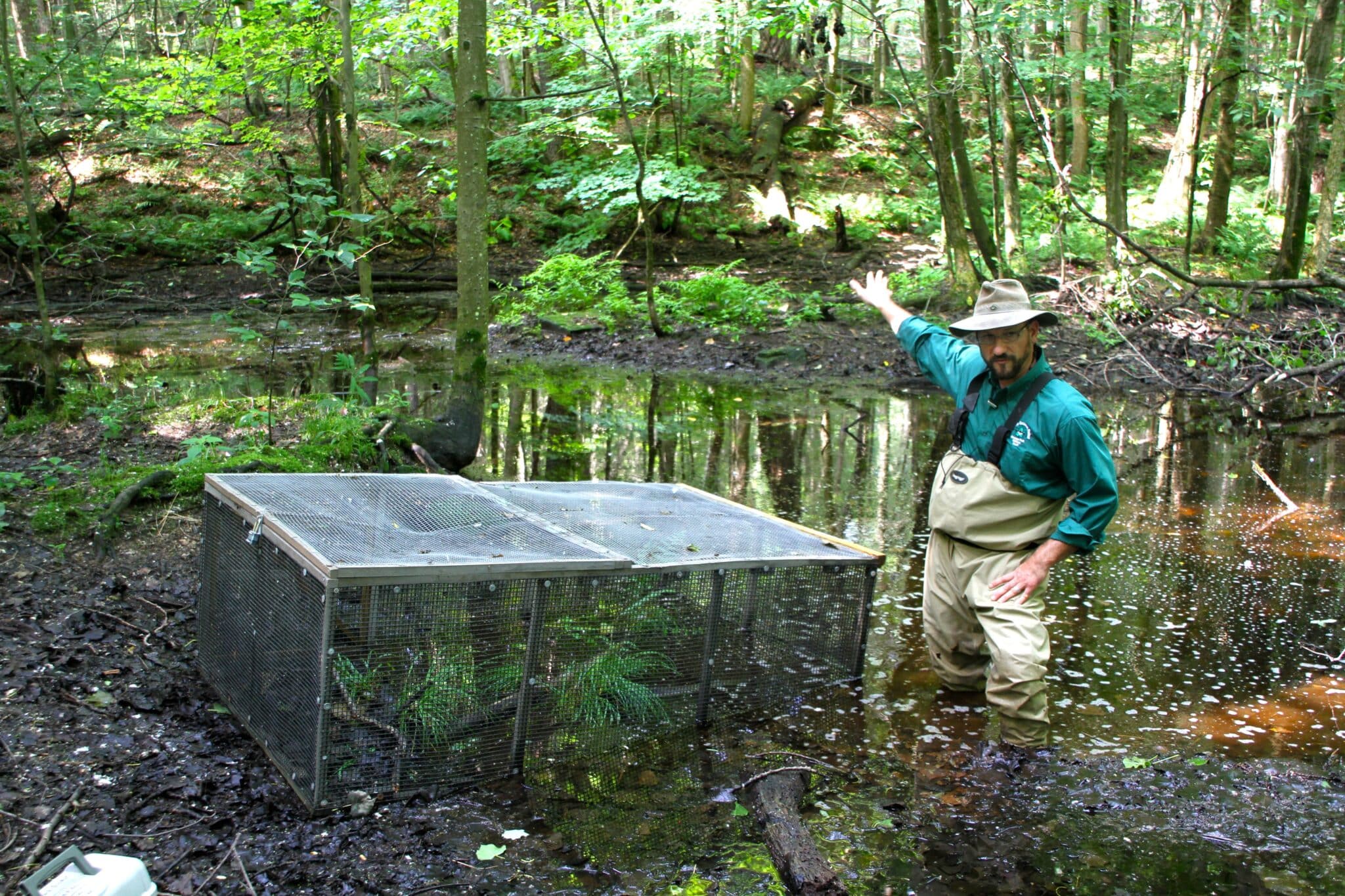
The small, threatened reptile will live in an enclosure — stocked with leaves and other microorganisms, and food sources found in vernal pools — for about three weeks so she can learn what it takes to be wild. Considering she has been raised and given a head start in a controlled (bio-secure) facility at Cleveland Metroparks Zoo for three years this supervised time will prove important to her survival.
Her survival is critical because park district biologist Paul Pira now estimates there are maybe eight turtles left in Geauga County parks, down from a population of 12-14 just three years ago.
“We have a strong history with what I like to call comeback critters,” park district Executive Director John Oros said, explaining GPD staff has help reintroduce species such as bald eagles, brook trout, wild turkeys and river otters to county parks. “They all need homes. If we didn’t have the habitats, if we didn’t have the ecosystems to support these types of species, then we wouldn’t have these comeback critters.”
He added, “We’re proud of the 10,000 acres and the role those habitats and those ecosystems play in providing these animals home — and plants, too.”

Spotted Turtle Program
In 2011, GPD approached several local conservation agencies with the idea of cooperatively headstarting the spotted turtle, which is listed by the Ohio Division of Wildlife as an Ohio “threatened” species, meaning its survival in Ohio is not in immediate jeopardy, but a threat exists.
Populations of the small — less than six inches — black turtle with distinctive yellow spots on its carapace have declined throughout Ohio as humans continue to destroy its natural habitat by altering wetlands.
These handsome turtles are also rare, making them “hot commodities” on the black market for endangered species, Pira said, adding they often fetch up to $400 per turtle.
The following year, in 2012, GPD and Cleveland Metroparks Zoo led a consortium of regional park districts and conservation organizations and began such a program.
Every spring, GPD Field Naturalist Tami Gingrich ventures out into the wetlands of one of the county parks in search of these turtles. This year, however, out of 60-70 traps they only collected two animals — one male and one female, Pira said.
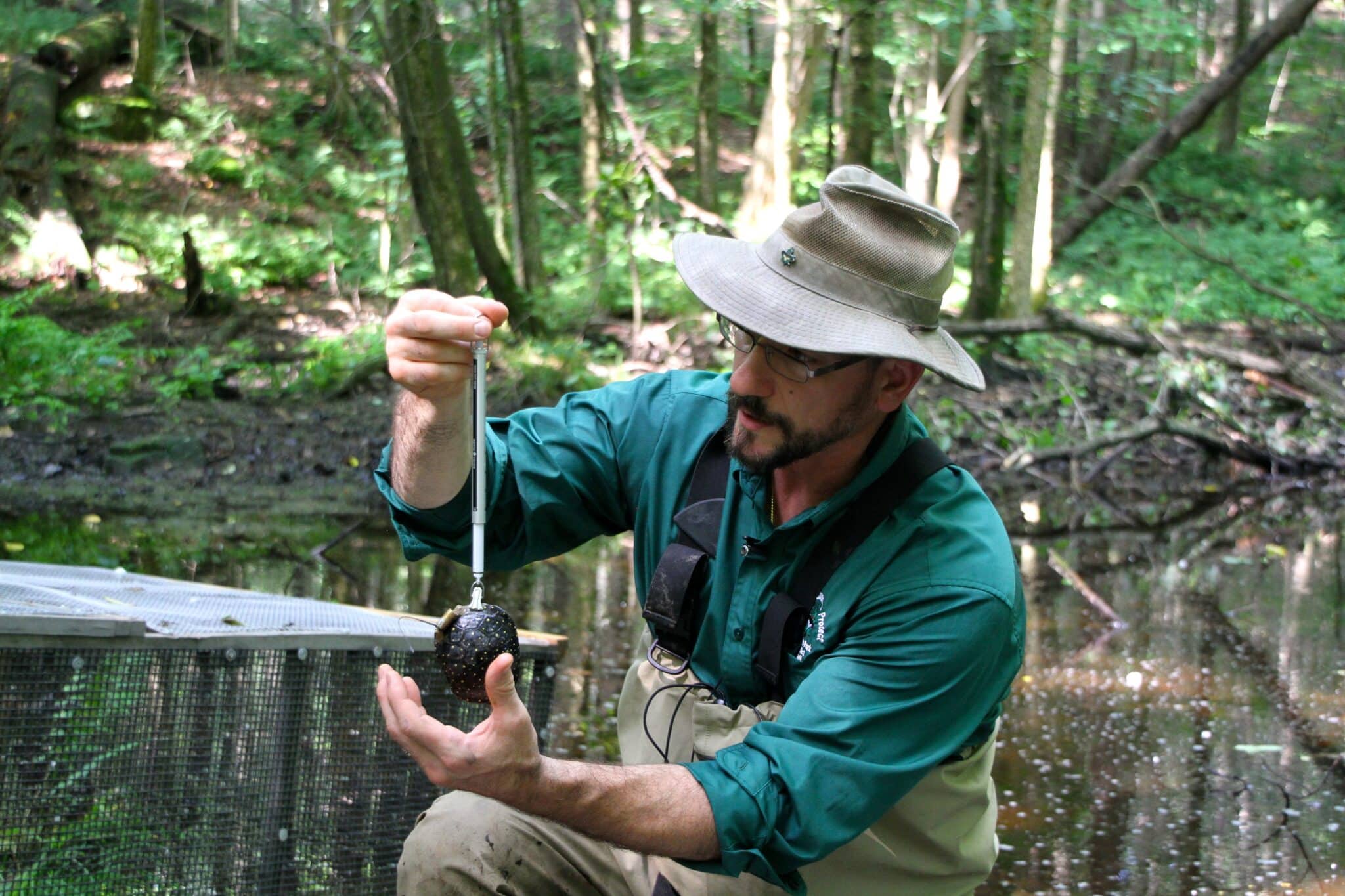
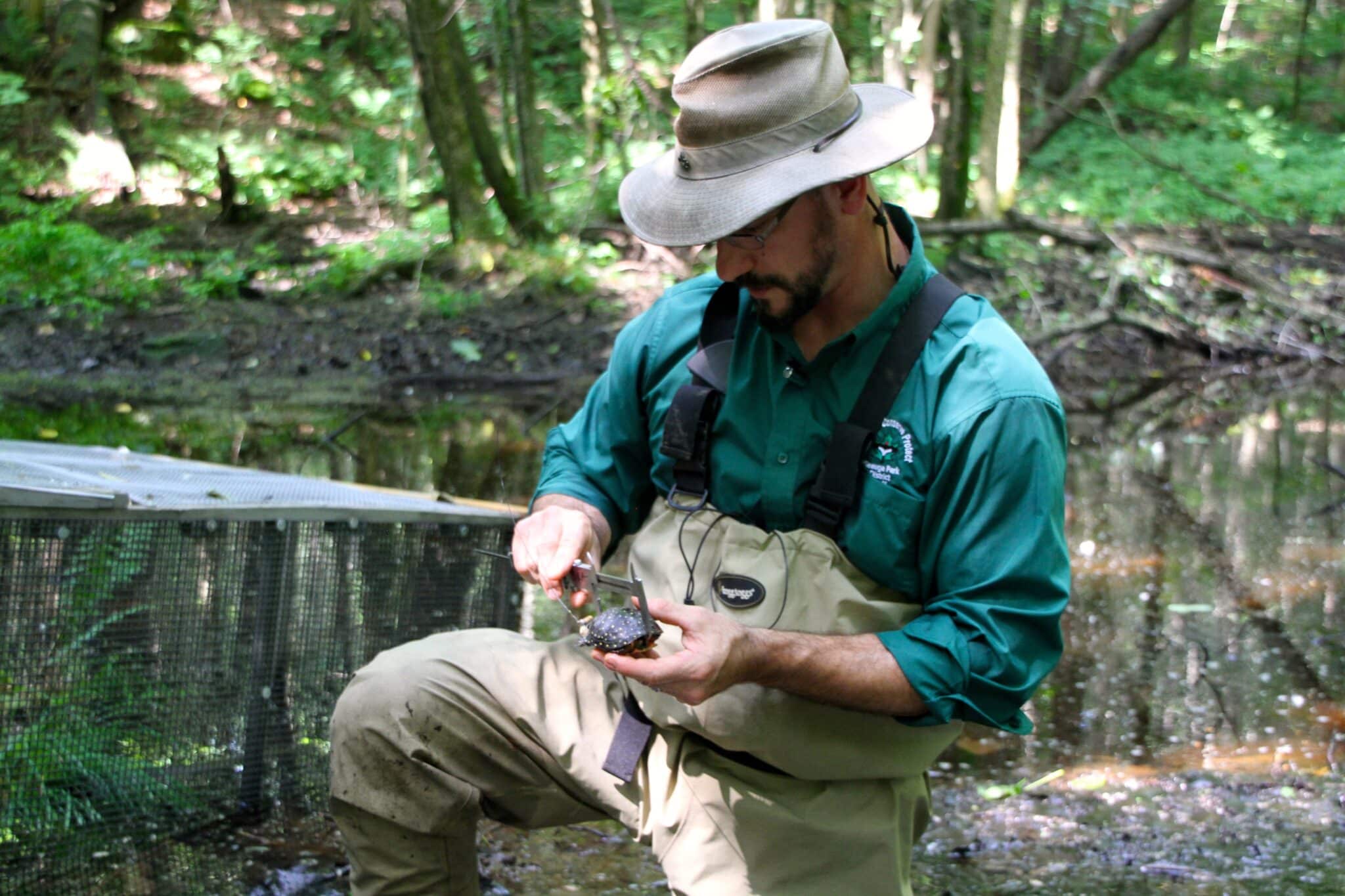
If Gingerich finds a female, she attaches a transmitter to its carapace, or top shell. That way, when the turtle is ready for egg laying they can locate her, bring her to the zoo and have her X-rayed for eggs.
In the wild, spotted turtle females lay very few eggs, she noted.
Mike Selig, head of veterinary programs at Cleveland Metroparks Zoo, said a reproductive female typically produces three to four eggs.
“That’s what makes them so susceptible to their population diving down,” said Gingerich.
They also are victims of predators, especially raccoons, which mostly feast on the eggs. For about six years now, Pira said the park district has been working with the U.S. Department of Agriculture to reduce raccoon populations.
One of the fascinating things about the reproductive biology of turtles is the sex is dependent on the temperature at which the eggs develop in the wild or are incubated in captivity.

The goal of the program, therefore, is to reproduce more females.
“They are the linchpins of trying to increase the population,” Selig said. “We are selectively incubating the temperatures at a higher incubation temperature so that we produce females. Right now we currently have four fertile eggs in the incubator at the Cleveland Zoo, so hopefully those will all hatch.”
Notably, those four eggs were harvested from the female turtle GPD collected this spring, he added.
The program’s first release of captively bred turtles — two females hatched in 2012 — took place in July 2015. Those turtles, which are microchipped with a unique identification number, are radio tracked and monitored by GPD’s Natural Resource Management staff.
Pira explained the Ohio Division of Wildlife, which has authority over all wild animals in the state, requires any hatchlings must be returned to the habitat from which the adult female was taken.
With that said, Pira added the park district is member of a cooperative advisory group — Saving & Protecting Ohio’s Turtle Diversity (SPOTD) — that has been discussing introducing offspring from other “good populations” in the state into areas where the program has not been as successful.
The advisory group meets four times per year, each member expressing a commitment to some aspect of the project, such as collection of gravid females, raising juveniles, providing sites for collection/release of the turtles, scientific research/expertise, management and public education.
Those involved include GPD, Cleveland Metroparks, Cleveland Metroparks Zoo, The Cleveland Museum of Natural History, The Greater Cleveland Aquarium, Wild4Ever, Summit County Metroparks, Lake Metroparks, Medina County Park District, John Carroll University, Cleveland State University, Gregory Lipps LLC, USDA Wildlife Services and Cuyahoga Valley National Park.
“The point of the whole program is to bolster the population here with naturally occurring genetics and the same material that’s here,” Pira said.
GPD has learned a lot about these turtles over the years, including that they are more terrestrial than previously thought.
“You think of a spotted turtle as a wetlands turtle,” Gingerich said. “Once I started tracking them they are way more terrestrial and they’re always out and about.”
The turtles are also more active in the spring than in the summer and fall, when they tend to hibernate, Selig added.

‘Canaries in a Coal Mine’
Humans are the primary cause for wildlife population declines, especially so with turtles, Pira said.
“They’re good indicators, what I call I guess kind of canaries in the coal mine, of the health of the habitat that they’re in,” he explained. “They need high quality wetlands, they need forested areas, they need sedge meadows, things like that.”
Residential and commercial development is the primary cause of habitat destruction.
Said Pira, “Unfortunately, we have an appetite for those.”
A second cause is over collection and the illegal pet trade.
“Even if folks are out taking a walk in a park, I want to stress it is not the right thing to take wild animals out of the park setting and take them home,” he said.
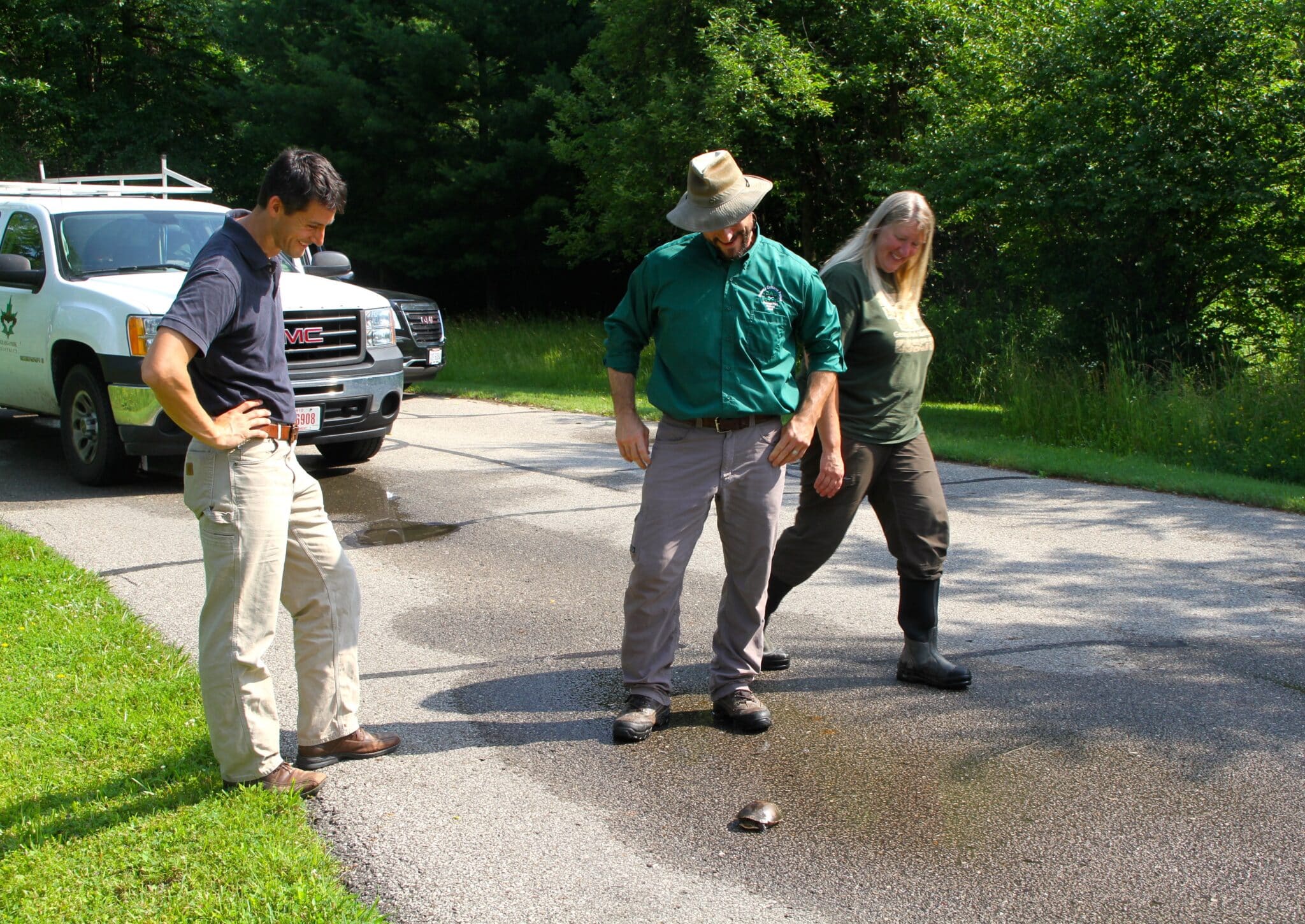
Roadway mortality is another problem. Pira said anyone removing a turtle from the road should always place the animal safely off the roadway in the direction it was headed.
“The other thing is they take a long time to reach maturity, they don’t lay very many eggs . . . and survival rate of those eggs is extremely low in the wild,” Pira said. “So that is kind of why we’re doing the head-starting program, trying to give these animals a jump start.”
How to Help
“Does it really matter if these animals go away?” Pira said. “They are part of the ecosystem, they are part of the food web, and you can tell people that. But, I think more and more these days . . . it really comes down to a moral obligation to future generations.”
He added, “I want my children to be able to come out to this park and see a spotted turtle. Who are we to say that one species is more than another here on Earth. It really boils down to that.”
People interested in helping the spotted turtle program financially have several avenues available, including donating to the park district, Cleveland Metroparks Zoo’s “Future for Wildlife Fund” or Wild4Ever, a non-profit wildlife conservation foundation based in Norton, Ohio.


