


Grendell’s Testimony Strays from Facts
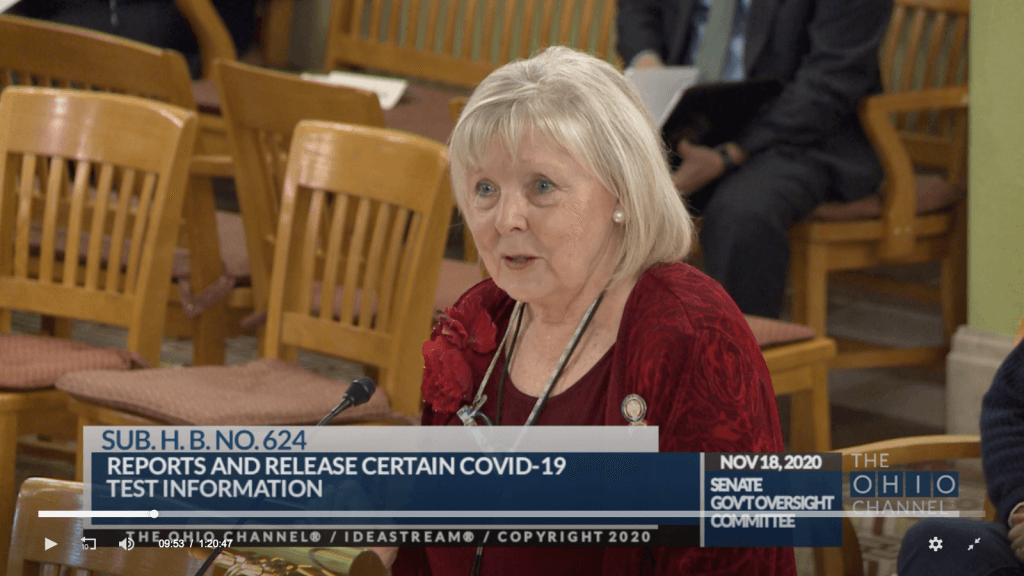
On Nov. 18, State Rep. Diane Grendell (R-Chester Township) avidly argued Ohio is one of three states in which the U.S. Centers for Disease Control is investigating “corrupted” COVID-19 statistics, Ohio residents are more likely to die from the flu than the novel coronavirus raging through their state, and the Ohio Department of Health is hiding information, including the number of deaths from non-COVID causes.
On Nov. 18, state Rep. Diane Grendell (R-Chester Township) avidly argued Ohio is one of three states in which the U.S. Centers for Disease Control is investigating “corrupted” COVID-19 statistics, Ohio residents are more likely to die from the flu than the novel coronavirus raging through their state, and the Ohio Department of Health is hiding information, including the number of deaths from non-COVID causes.
The state representative made these claims during testimony in front of the Ohio Senate Government Oversight and Reform Committee. Grendell was there to speak in support of House Bill 624, which passed the house in June.
ODH Spokeswoman Melanie Amato did not respond to a request for comment by press time. However, while Grendell’s bill bears the moniker “Truth in COVID Statistics,” Amato told the Ohio Capital Journal Grendell’s claim the CDC is investigating her department is false.
“The Ohio Department of Health remains committed to transparency when it comes to providing data and has consistently followed the CDC guidance on how that data is and should be reported,” Amato said.
In her testimony, Grendell said ODH has “created an atmosphere of fear” over the virus, which Grendell asserted has a 99.9% survivability rate.
Dividing Ohio’s 5,955 total deaths by its total cases — clocked at 335,423 as of Nov. 20 — gives a fatality rate of about 1.8%. This would translate to a 98.2% survivability rate.

ODH data shows 5,474 — or 92% — of the state’s COVID deaths were in people over the age of 60. Just over half of those who died were over 80.
“The people don’t know that, if you catch it, except if you’re vulnerable over 70 or over 60 … most every doctor will tell you that you’re going to survive this, like the flu,” Grendell said. “One of the head people in the hospital said you’re far more – of our local hospital – said you’re far more likely to die of flu than you are from COVID.”
However, data from the CDC shows the state with only 1,701 influenza deaths in 2020, making a COVID death over three times more likely for an Ohioan.
One of Grendell’s main reasons for pursuing this legislation is to make available data more transparent, she said.
While many of the items she would like ODH to report are already available through the ODH Coronavirus Dashboard, Grendell said the format is a problem for Ohioans who are struggling to find work, pay their rent and struggling with their mental health.
“How are they to find the time to conduct this research on their own?” she asked. “True transparency is not dumping all COVID case data into an Excel spreadsheet for Ohioans to sort through. True transparency is not categorizing datasets relating to COVID mortalities, hospitalizations and demographics in different systems, on different webpages, and asking Ohioans to search it on their own accord.”
The bill would require ODH daily figures to include the number of tests conducted each day, number of positive tests, negative tests and uncertain tests, presented in a chart or table and classified by ZIP code, she said.
Grendell’s bill would also require ODH to report rates for congregate settings such as nursing homes, residential care facilities, hospitals, prisons and college campuses.
The Ohio Public Health Advisory System, under which counties are classified at one of four emergency levels based on current COVID metrics, shows Geauga County with between 80% and 100% of cases in non-congregate settings since late October. About 15% of the county’s available ICU space was taken up by COVID cases on Nov. 17, the day before Grendell’s testimony, with about 20% overall ICU capacity available.
Grendell did not respond to a request for comment by press time.


