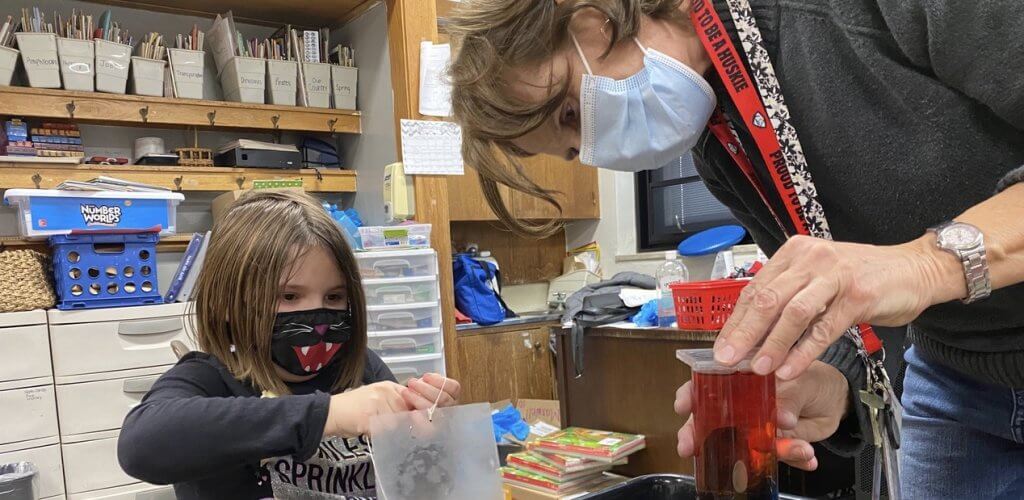
Science consultant Claire Zurbuch (aka Mr. Z.) visited students and provided a lesson on liquid density in Mrs. Jan Maxwell's class...
First-Graders Discover Liquid Density
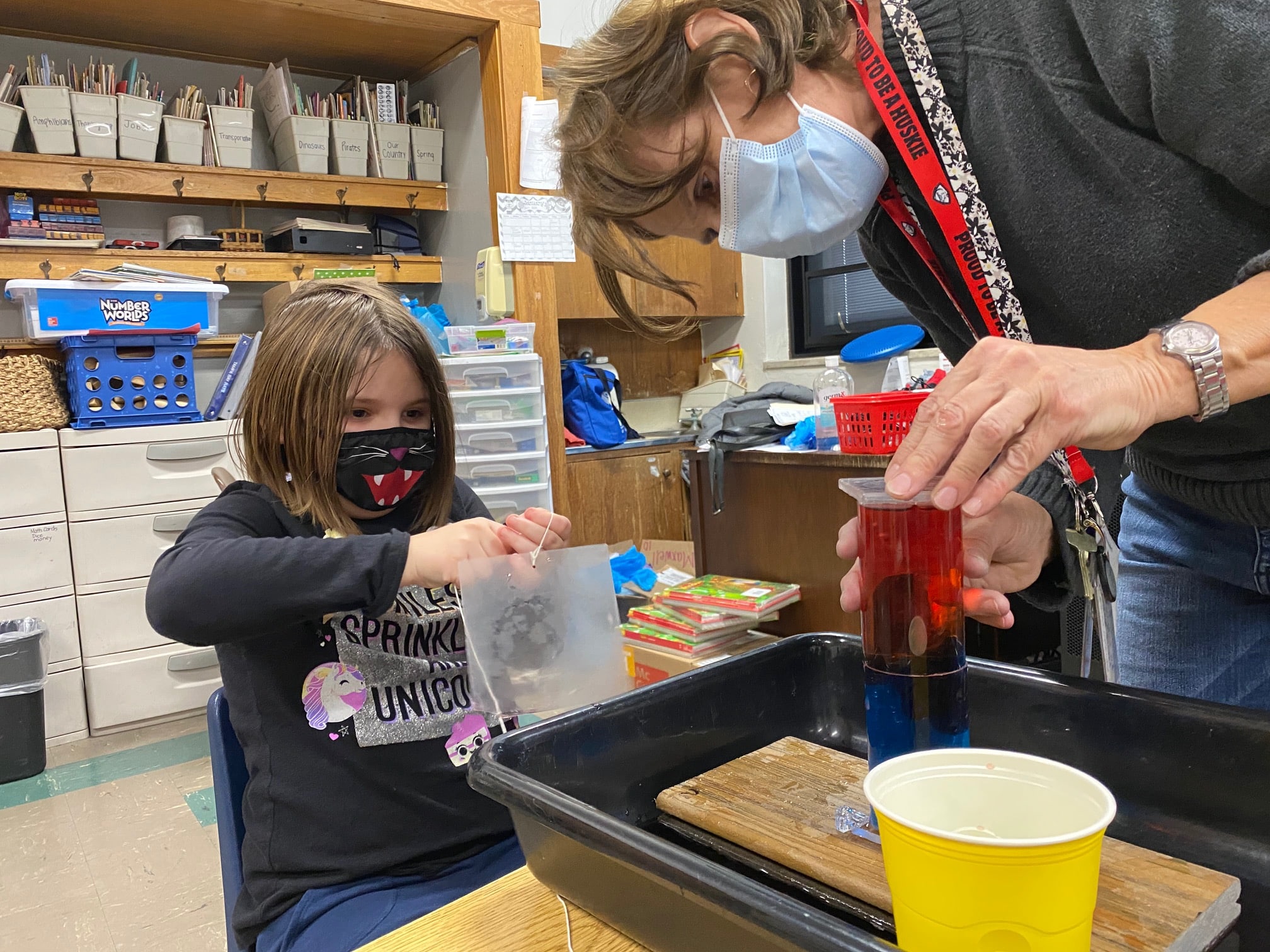
Science consultant Claire Zurbuch (aka Mr. Z.) visited students and provided a lesson on liquid density in Mrs. Jan Maxwell’s class. The underlying idea is that liquids that are less dense will rise, or float to the top, since students are working with liquid.
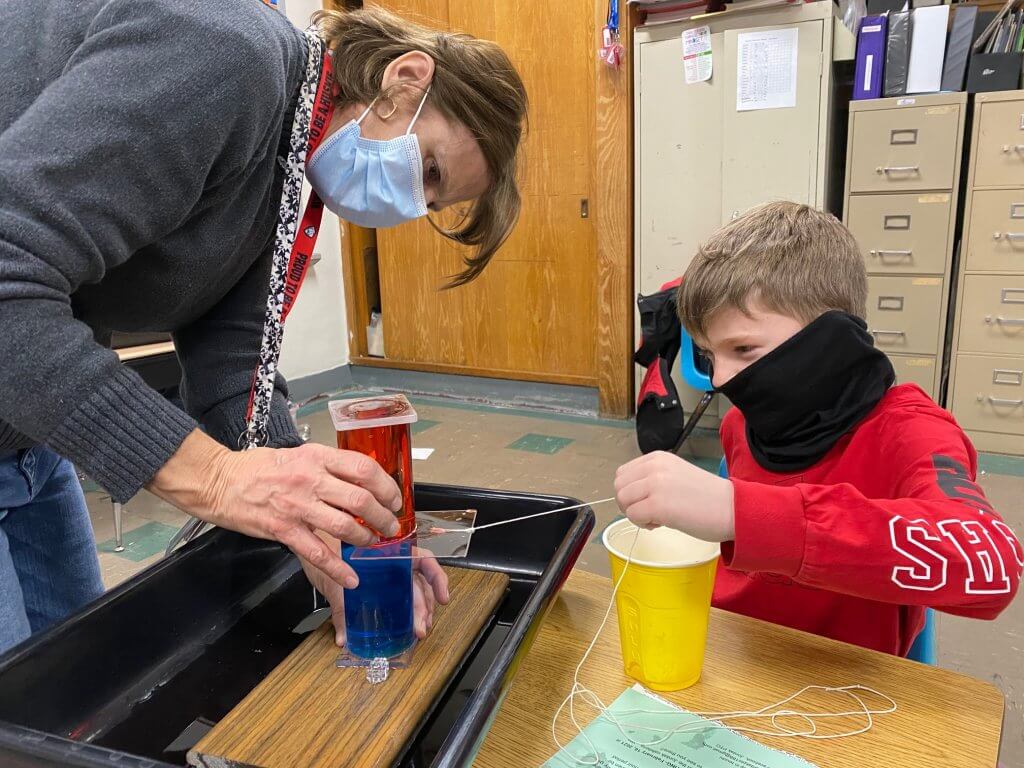
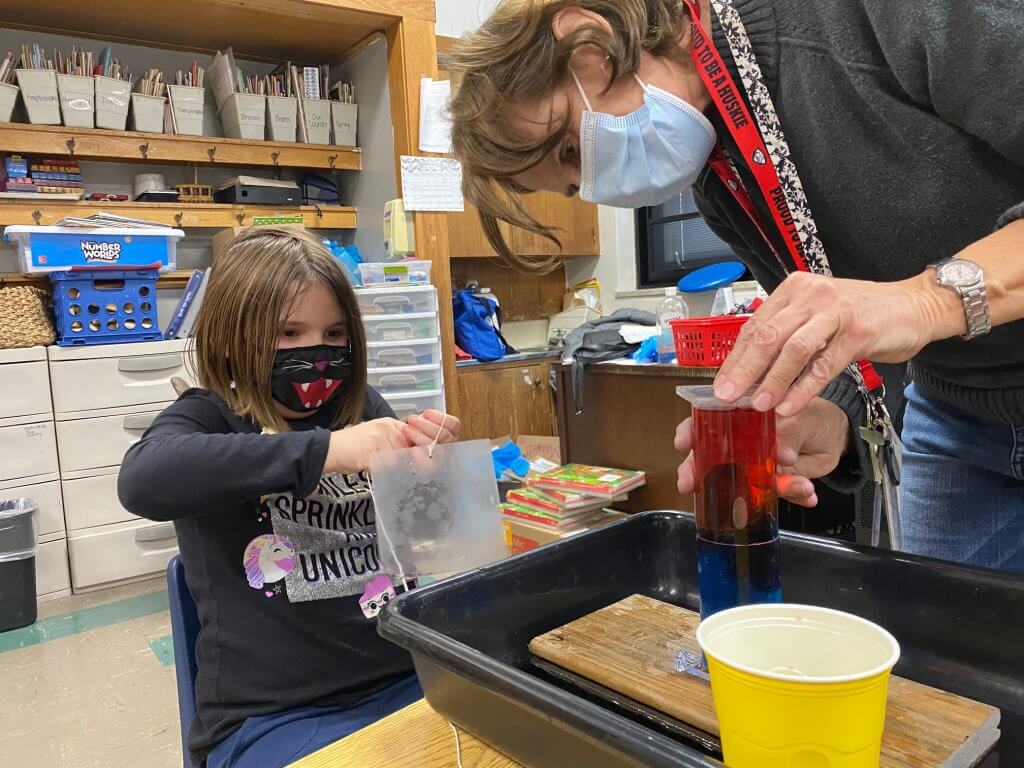
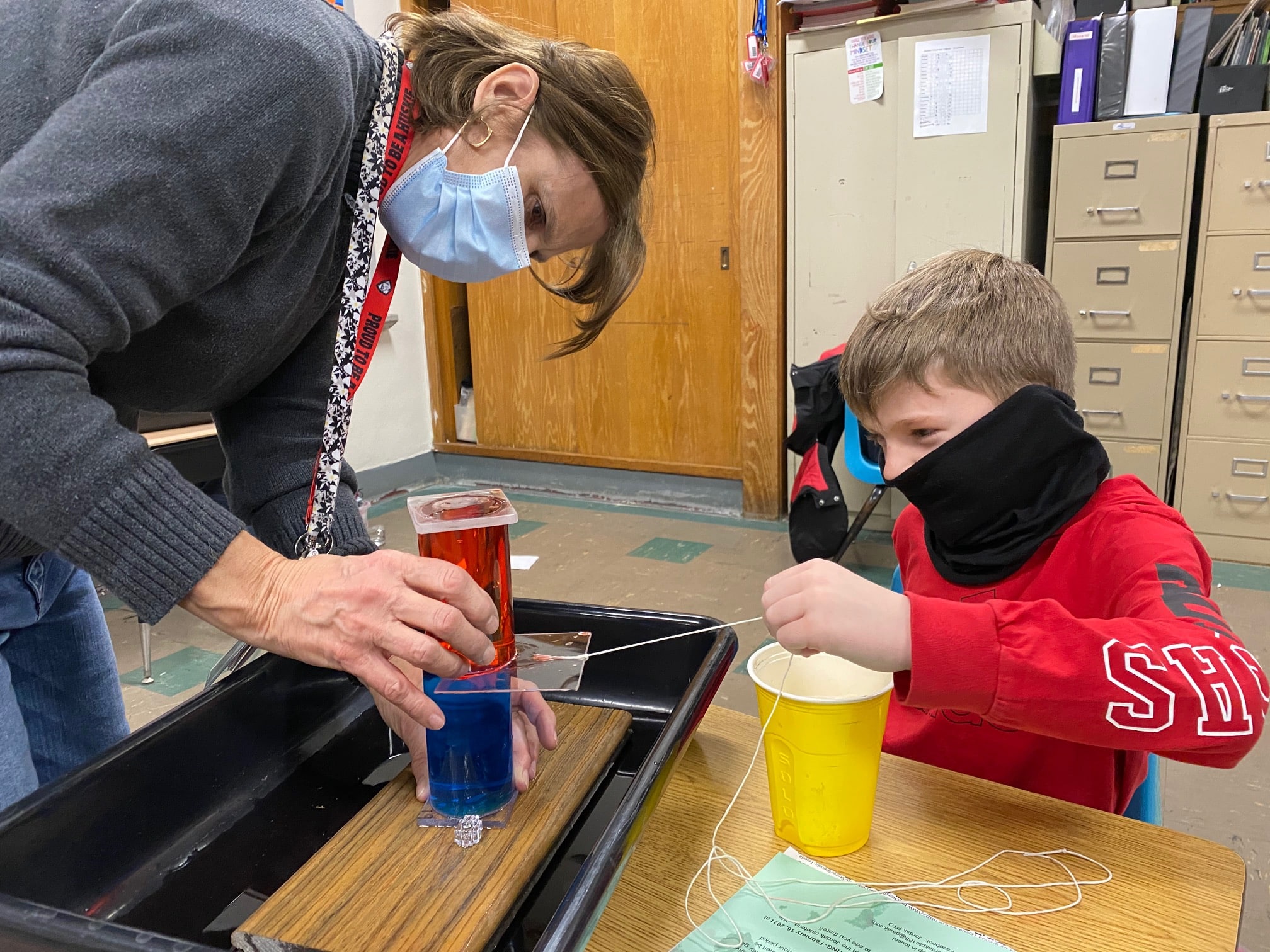
Each student was given a beaker of warm water that was colored red and a beaker of cold water that was colored blue. A clear, thin plexiglass square with a string attached was placed on top of the water beaker that was not anchored. The beaker and the plexiglass were then flipped over to rest on top of the other beaker that was anchored to a piece of wood. Mr. Z. and Mrs. Maxwell then walked around to each student’s desk holding the water beakers while the students pulled out the plexiglass, separating the two containers of water.
Students conducted the experiment twice, once with the cold water on top and the second time with the cold water on the bottom. They discovered that when the cold water was on the top, the warm water on the bottom quickly mixed in, thus turning all of the water purple. However, when the cold water was on the bottom, the two colors of water stayed separated with the red staying on the top and the blue staying on the bottom. Since students know that lighter, less dense elements rise, they can conclude that hot water is far lighter than cold water.
Cardinal teachers always enjoy this experiment and seeing the look of wonder on the students’ faces when they discover that water can “stand” on top of each other.