


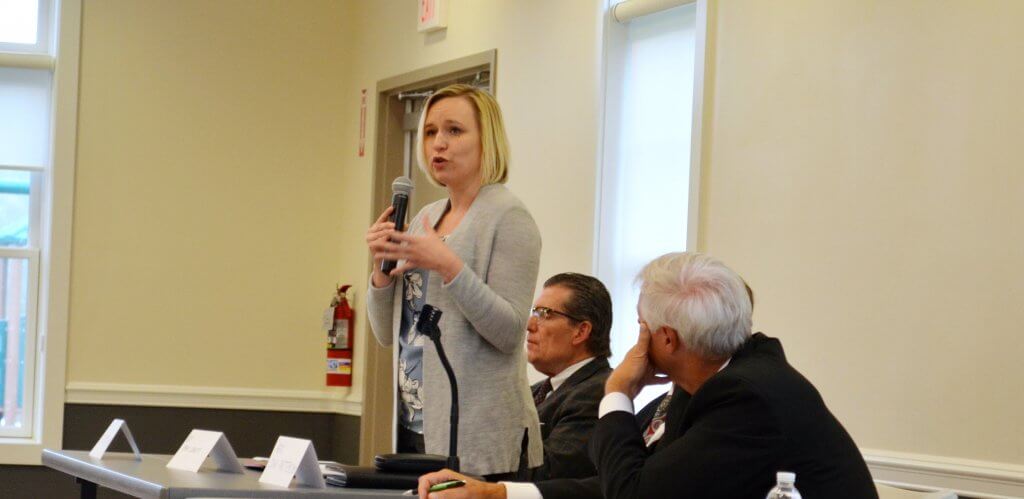
"Maybe it’s time to remove that (power) and give it to people who are more accountable." – John Patterson
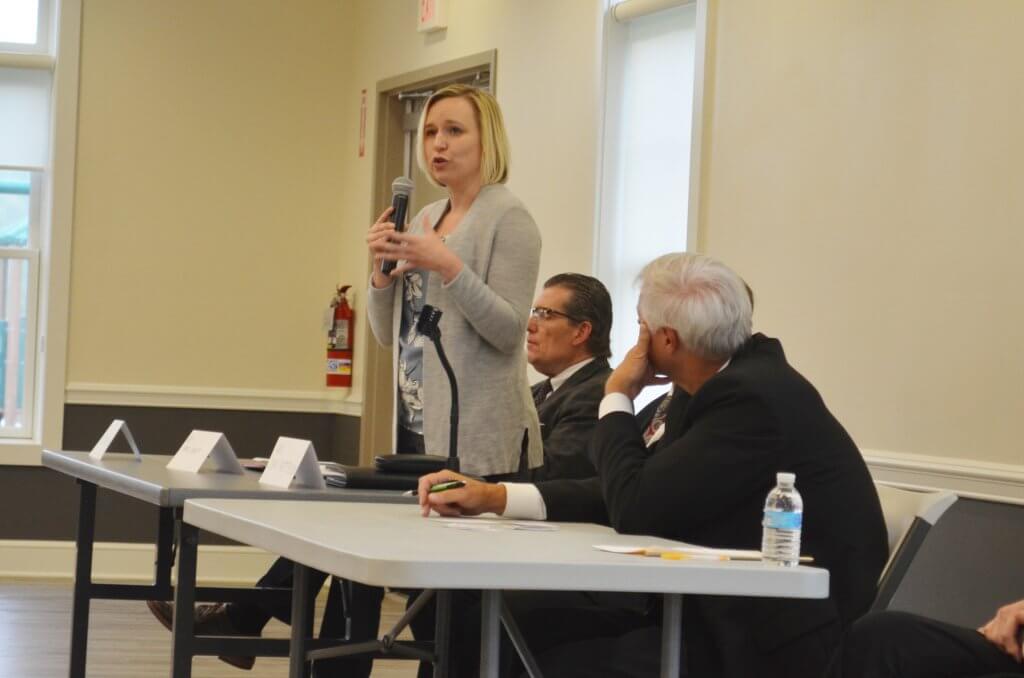


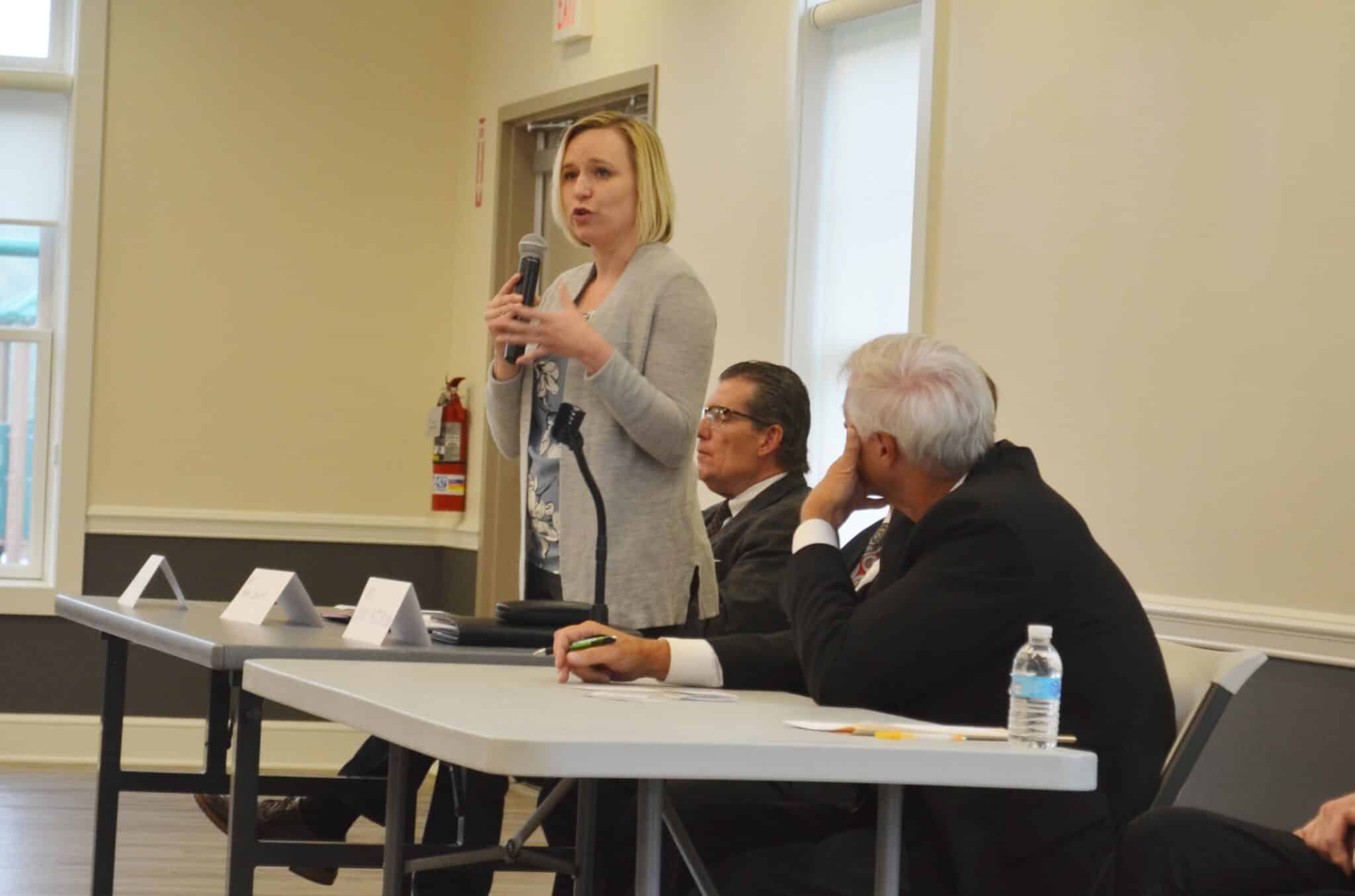


The State of Ohio’s budget for 2018, approved by the House of Representatives last week, is like the brussels sprouts you have to eat as a child before you can go outside and play, one lawmaker told a group of about 100 Geauga County residents at Munson Township Hall Friday afternoon.
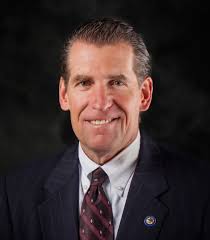
“We did the best we could with what we had,” explained State Rep. John Patterson (D-Jefferson), who represents Ashtabula County plus Chardon and the northeast townships of Geauga. He was one of four Democrats to vote for approval. The $63.7 budget passed by a vote of 58 to 37.
“It was like the dinner of meatloaf and brussels sprouts you had as a child,” Patterson explained. “You love the meatloaf, but you have to eat the brussels sprouts, too, so you can go outside. The budget’s like that.”
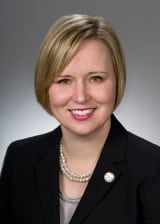
The Geauga County League of Women Voters invited three legislators—State Sen. John Eklund (R-18th District), State Rep. Sarah LaTourette (R-Chester Township) and Patterson to a forum on the State of the State, focusing on the budget bill and other issues affecting the area. Each speaker had 10 minutes, followed by a lengthy question-and-answer period.
During the program, oblivious to his mother’s discussion, LaTourette’s one-year-old son Matthew toddled through the crowd under the watchful eye of friends, charming the audience as he clutched a toy truck and his bottle of milk.
“He already knows how to work a crowd,” one woman quipped.

Eklund explained time is running short on passing the budget bill and getting it signed into law by the deadline of July 1, which is the beginning of the next fiscal year.
“The House had it in January and passed it after making changes,” Eklund said. “We in the Senate are now trying to digest the changes. It will go to the conference committee and the differences reconciled. It is required by law to be a balanced budget.
“When that is done, the governor can veto it or sign it,” he concluded. “When we’re done, everyone will be equally miserable. We’ll know that we’ve done our job.”
LaTourette, who serves as assistant majority floor leader in the House, serves on six committees, including the rules and finance committees. She said the House version of the budget provides an additional $170 million for opiate treatment and prevention.
All three lawmakers said the opiate problem in Ohio impacts many departments besides health and human services. With drug users in jail or otherwise incapacitated, the demand on child protective services and foster care increases dramatically.
“We put in an additional $15 million for foster care,” LaTourette said. “The system is overloaded, with nowhere to send the children. The piece that I worked on will add $10 million for kinship child care. Sometimes grandparents can’t afford to take their grandchildren in. The children tend to be better off with a family member. This will save money, take some of the burden off the foster system and will be a huge win.”
She explained lawmakers took out of the bill the governor’s proposal to reduce the income tax and raise taxes on sales, cigarettes, beer and wine.
“It was a very long process and we worked really hard on this budget. It’s not perfect but it’s a good start,” she said.
“I was one of the few Democrats who voted for this budget,” Patterson added. “There was a lot of angst and hand wringing, but the budget must be balanced.”
The audience submitted several anonymous questions on index cards, on topics including renewable energy, infrastructure improvements, oil and gas drilling in parks, education funding, women’s health and opting out of school testing.
One question read, “Probate judges have many appointing powers. Do you support giving those appointment powers to politically elected people (such as county commissioners) versus (judges who are supposed to be non-partisan)?”
The question referred to the recent recommendation by Geauga County Prosecutor Jim Flaiz to a House budget committee hearing last week — as several from the area testified against a proposed amendment that would grant probate judges the authority to fine or jail anyone they considered to be interfering with park business.
Flaiz asked the lawmakers to consider giving the authority to name park commissioners to elected county officials, such as county commissioners, instead of to probate judges.
The proposed amendment was removed from the bill before the vote.
“So, I get the big question,” Patterson joked, to laughter from the audience.
“Maybe it’s time to remove that (power) and give it to people who are more accountable,” Patterson said, adding he didn’t believe the controversial amendment, sponsored by State Rep. Bill Seitz (R-Cincinnati), had belonged in the budget bill.

Several in the audience applauded.
Eklund cautioned, “I would give pause. There is a reason that probate judges were given that responsibility in Ohio. Park board appointments are supposed to be non-partisan and non-political. If this was 2010 and the probate judge was Chip Henry, would we be having this conversation?”
Many in the audience said no.
“We need to tread lightly and tread carefully when making that change,” Eklund continued. “You might love your county commissioners right now.”
Laughter erupted in the room as several again said no.
“What is in the short term should not be the basis for changes right now,” Eklund said.
Patterson complimented the Geauga County residents who journeyed to Columbus last week to testify against the Seitz amendment.
“It was good to see so many of you in Columbus, for your testimony, your many comments and your cards, emails and letters,” Patterson said. “We take those very seriously.”


