


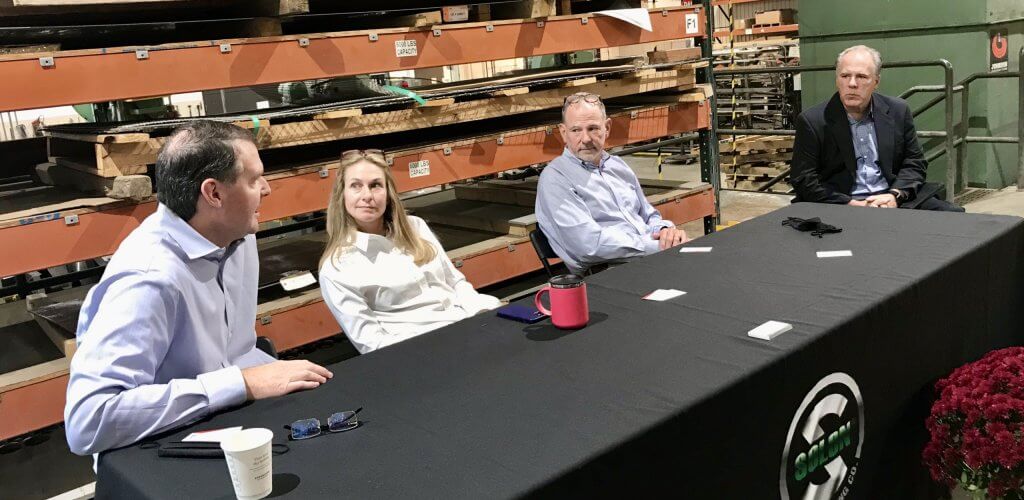
The three executives running Solon Manufacturing Company in Chardon know where the company has been for the last 72 years and where it will be in 50 years.
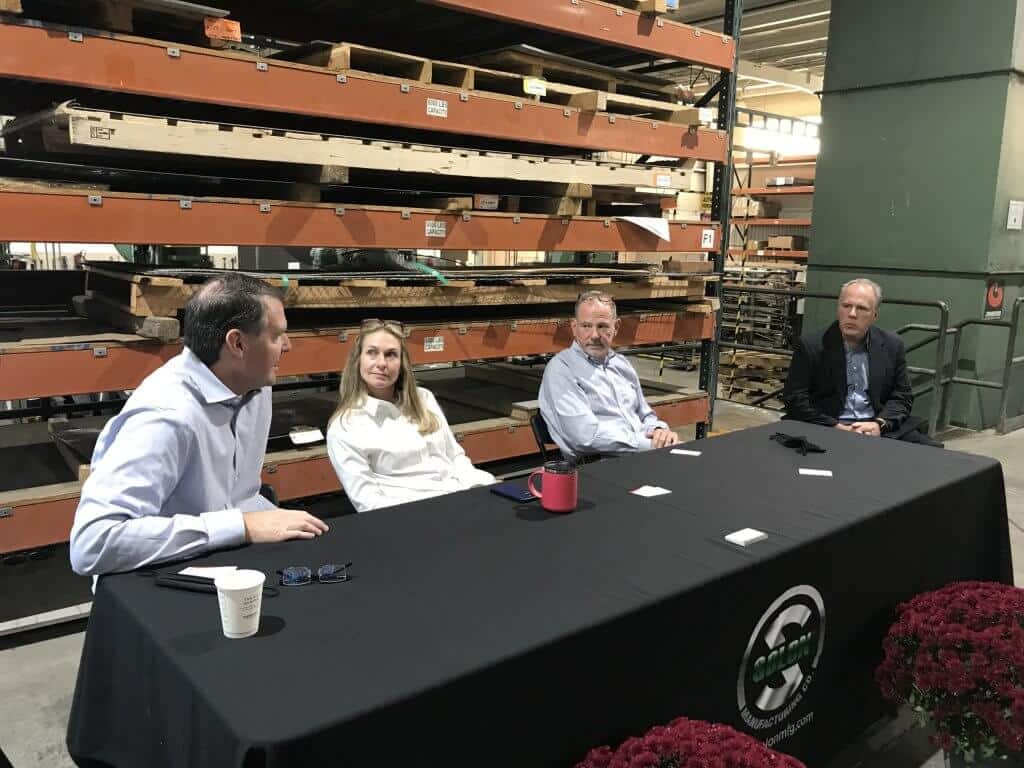
The three executives running Solon Manufacturing Company in Chardon know where the company has been for the last 72 years and where it will be in 50 years.
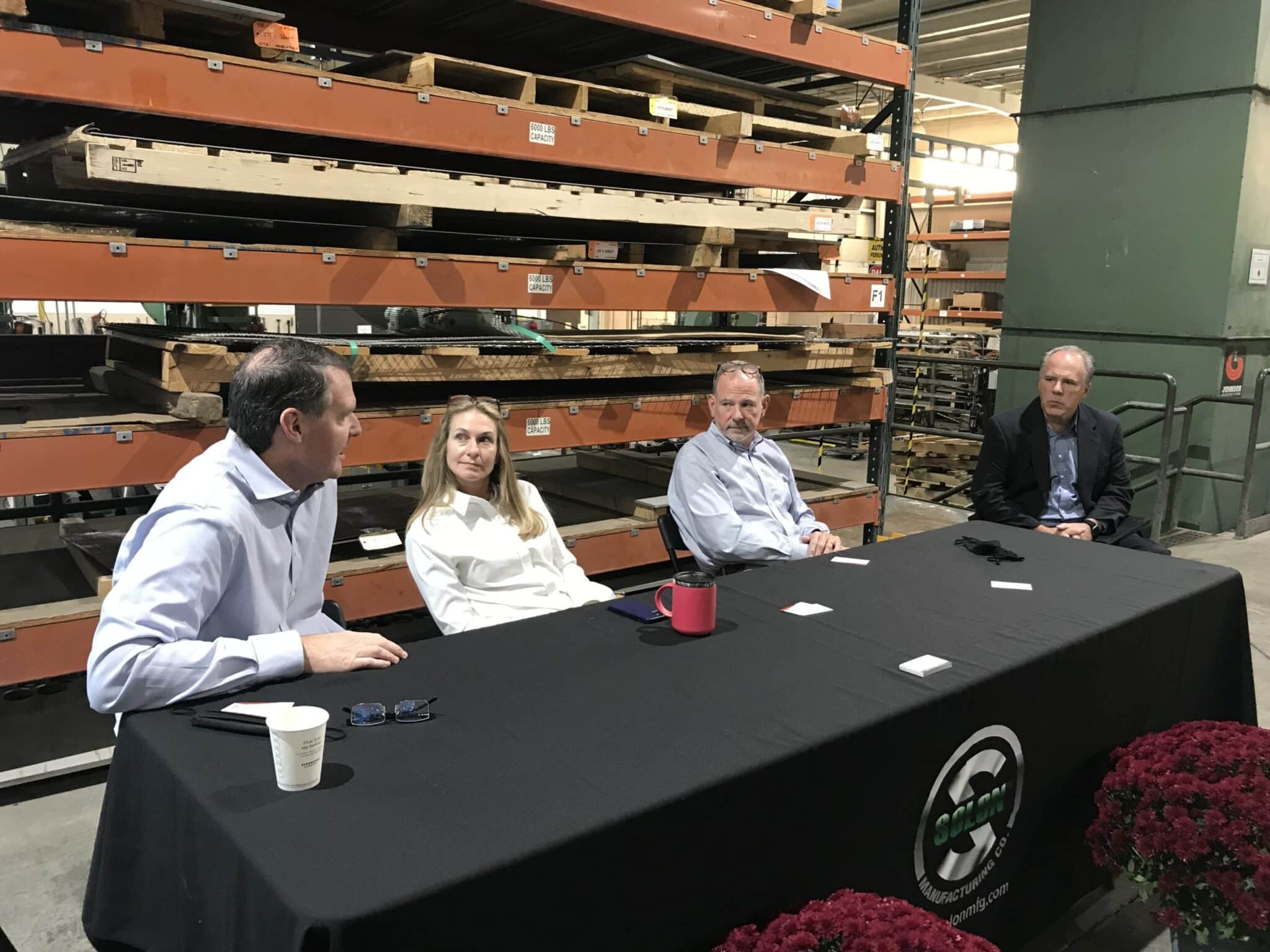
They also told Geauga Growth Partnership visitors on Oct. 21 what they are doing and why it is important to each of them and their 50-plus employees.
SMC’s story started just as the world was recovering from World War II. Four engineering graduates from Case Western Reserve University decided to bring manufacturing innovation to Northeast Ohio.
Arnold Siedle, Red Ralston, Joel Carpenter and Bob Ramsdell founded SMC in 1949 in Solon, creating a company they wanted to outlast them, said Tim Dunn, principal owner.
Their development, production and sales of pressure switches, Belleville springs and washers provided the focus for their vision — to build a business that would continue after they retired, said Dunn.
Thirty years ago, George Davet, now executive vice president of SMC, took his five years of experience in the steel industry to the company.
Davet said he happened along when the son of one of the founders was looking for the next phase of management.
“It worked out that it was an opportunity for me,” he said.
In 2015, Diane Popovich, president, joined the management team and worked with Davet and Dunn to realign the operation and lay down a path to the future.

“We were good at making stuff, but we lacked the vision and structure to take that into the future,” she said. “We wanted to be the best we could be at what we were doing. We had many challenges.”
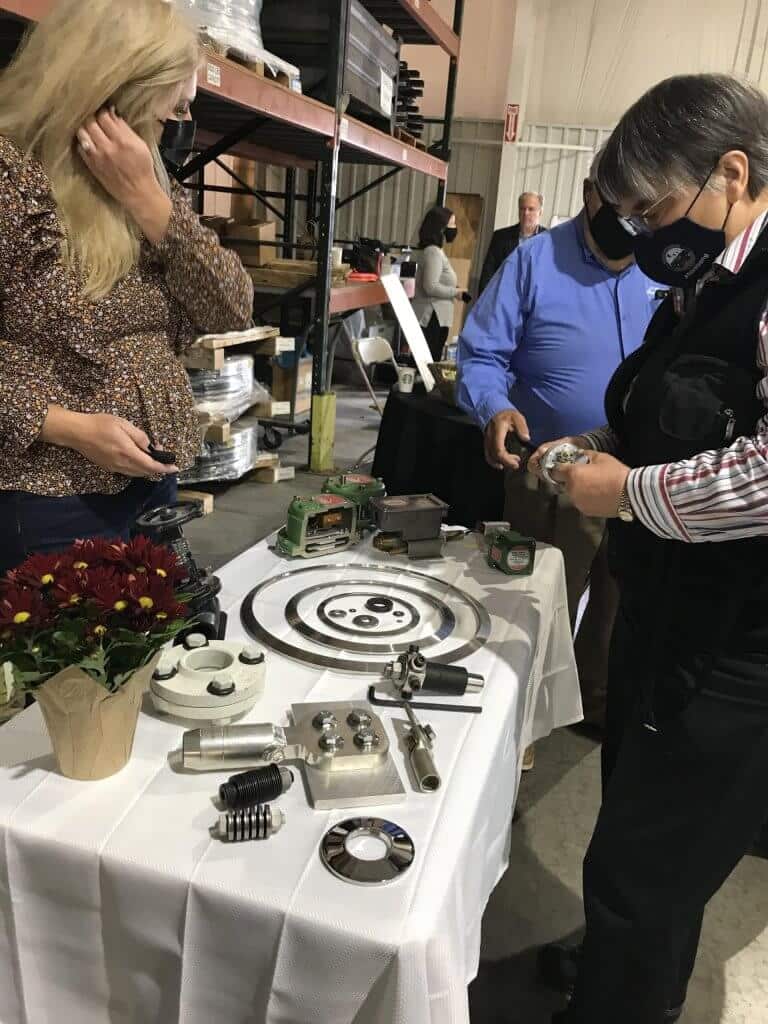
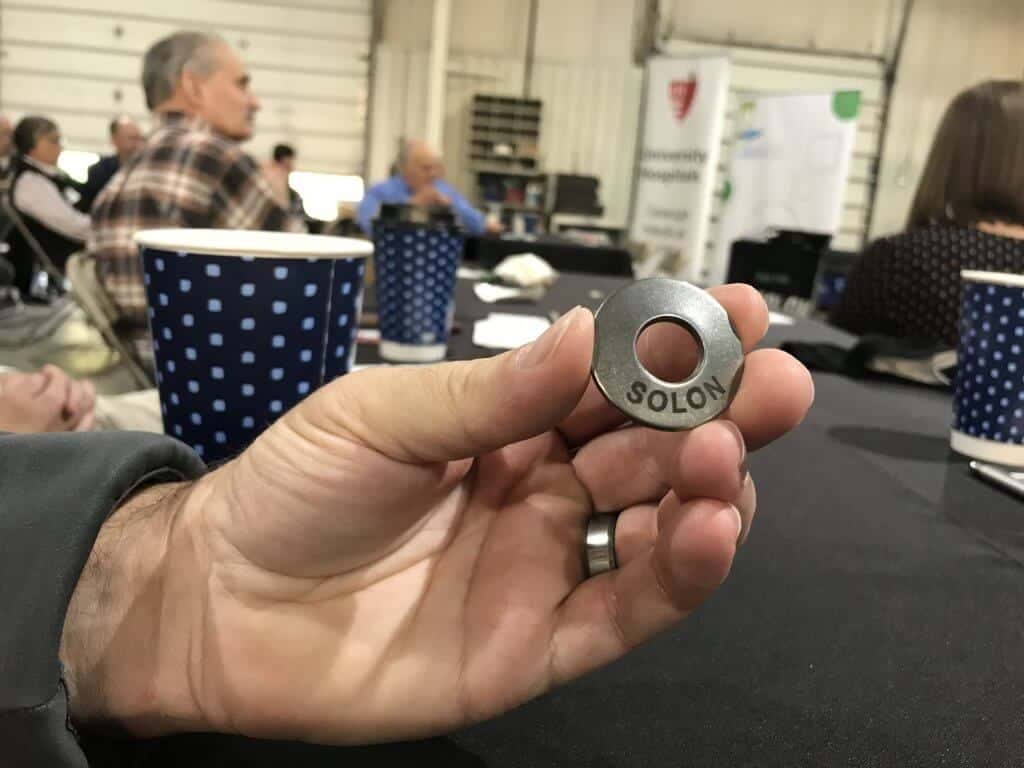
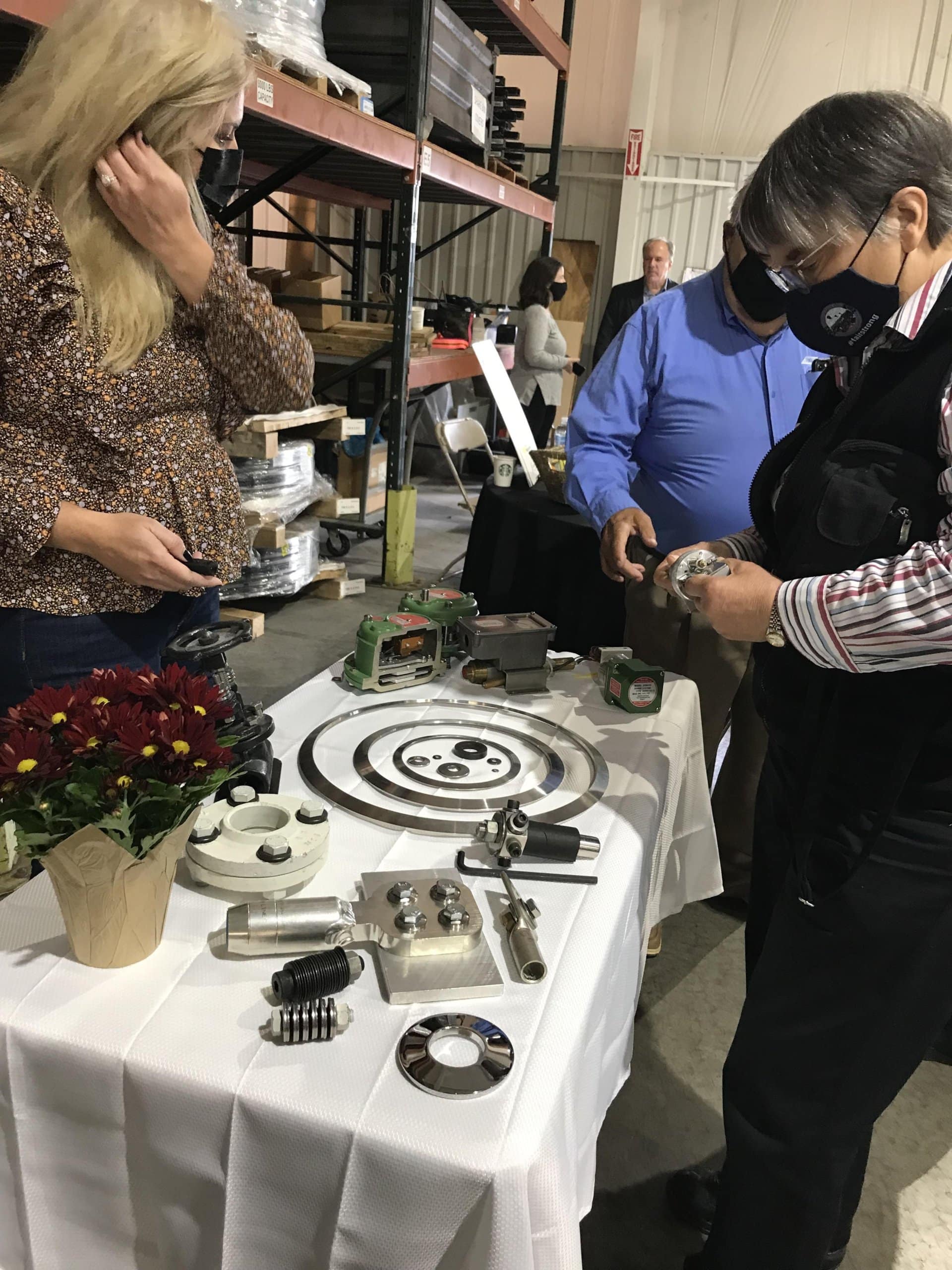
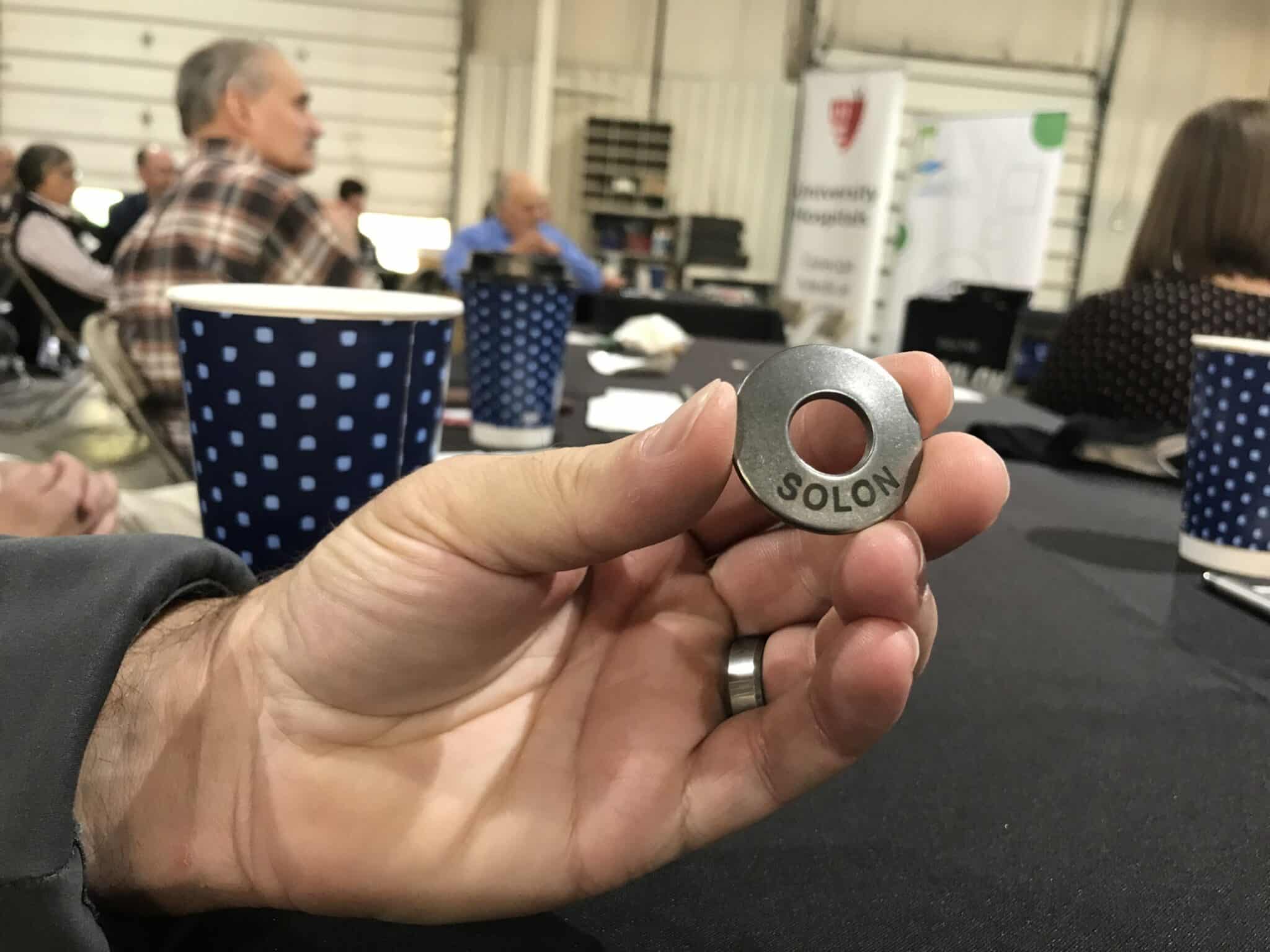
The company has been largely balanced on the conical washer that fits in the palm of your hand, Dunn said.
The Belleville spring washers are designed to create tight connections better than conventional springs and maintain bolt preload, according to the SMC website.
One of Ralston’s original products, the washer keeps tension on bolts in any environment a customer requires, Dunn said, adding some were used in John Glenn’s space suit.
“There are so many applications, it’s really hard to name what they all are,” he said.
Learning from Failures
Over the decades, SMC has designed and produced a variety of items, not all of which were successes.
Dunn said Ralston made a conduit bender for the steel industry that is no longer in production.
Another kitchen gadget had an even shorter lifespan.
“Solon used to make an incinerator for garbage,” Davet recalled. “You could put a banana peel on it and it would turn into ash after a couple of hours. It was a super-hot plate. That was one product SMC tried out and discovered there was no market for it.”
Then there was the turbulator that cleaned parts using a boat motor in a drum of liquid – another idea without a buyer.
“If we want to talk about failures, we would be here all day,” Popovich said. “We talk about how the company was built on its failures.”
Somewhere in the mix of new products and failures, there existed a market for SMC items people wanted. By 1960, the company had outgrown its building and couldn’t expand in Solon to meet demand for its products.
“We wanted to build in Chardon,” Dunn said, adding the permit cost $3. “The zoning wasn’t strict. Things were a little simpler back then.”
When SMC was smaller, employees wore several hats. Everybody did everything, Popovich said.

Take Time to Realign
Sales improved, products diversified, the workforce increased and somewhere, the founders’ vision lost focus.
“We hit pause (and asked), ‘What are we trying to do here?’” Popovich said. “Sometimes, you have to take a few steps backwards to know how to move forward. Those are painful lessons that help you grow better.”
SMC aligned as a team with shared core values and got back in gear, she said.
The meshing of the three is a testament to one of those values — not pigeonholing a person because he or she has a certain background or degree
Davet was an engineer when he connected with SMC. Dunn’s background was in manufacturing. He started out on a lathe in the machine shop and worked his way into management. Popovich has a degree in education.
Some of the challenges they faced included taking on new individual jobs.
Dunn said his career had focused on improving parts and production. Shifting to motivating 50 people to move the company forward required he make some changes.
“I got thrown into the deep end, trying to make the company grow,” he said. “My skills were in manufacturing. Running a business is much different.”
SMC suffered through a lot of turnover for about 10 years, Dunn said.
When Popovich came aboard six years ago, she brought an ability to organize that helped right the ship, he said.
Popovich said part of her program is getting the right people in the right places.
“It’s important to coach and mentor and bring people along,” she said. “Internships are critical. We need these people to run our world.”

COVID Challenges
Like every business, SMC has struggled with the COVID-19 effect on employees, receiving and shipping.
“We laugh because in (early) March 2020, we had a celebratory moment. We were really coming out of the infrastructure challenge,” Popovich said.
On March 19, the universe shifted and their thought processes did, too.
“What do we do? We’ve never had layoffs. We might not be open in two weeks. What does this look like?” she recalled thinking.
Their vision planning for the next 50 years shrank to wondering what was going to happen next week.
“Those were interesting times,” Popovich said.
So, they automated some of their processes, did more local sourcing of material and focused on taking care of customers — tricky when the price of spring steel has gone from $1.70 a pound to $7 a pound and a customer order that used to go out in six to eight weeks can now take 40 weeks, Popovich said.
When people couldn’t come to work, cross-training came into play and IT helped set up work-from-home programs, Davet said.
“We managed our way through it,” he said, crediting Popovich with keeping employees calm. “People did not panic. They worked the problem and here we are.”
Supply and workforce issues are not unique, but SMC uses the challenges as opportunities to improve, he said.
“There are things you can use to solidify your business if you are smart about it,” he said. “Also, strategically set up your company for the next 50 years.”
Dunn said a lot of people drive by the facility at 425 Center Street and don’t even know what is made there, so part of the plan is to get more exposure in Geauga County and connect through GGP to other companies. That is a new concept for the company.
“We didn’t even have a sign until five years ago,” Davet said.
Despite the last year of pandemic problems and an uncertain future for the country, he said he doesn’t lose sleep over SMC’s future.
“I’m very confident this company will be here 50 years from now. There’s no doubt in my mind,” he said.


