


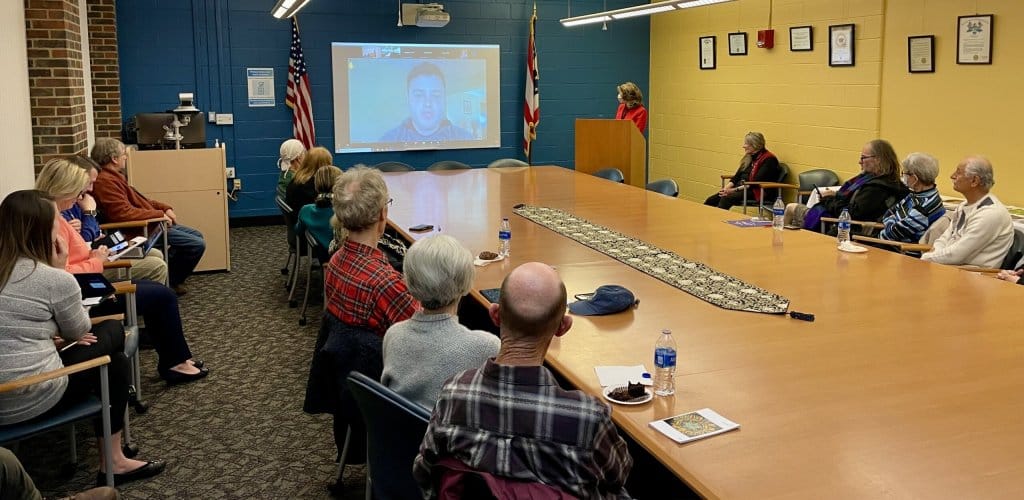
One look at author Grace Butcher’s bio reveals a life filled with inspiration.
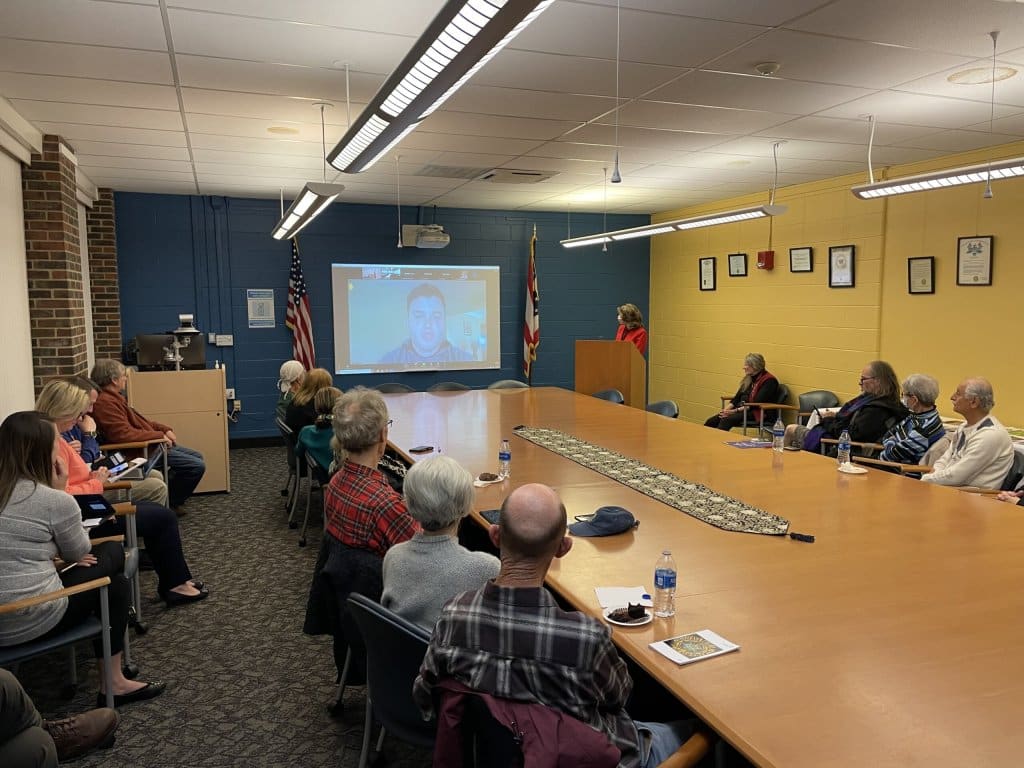
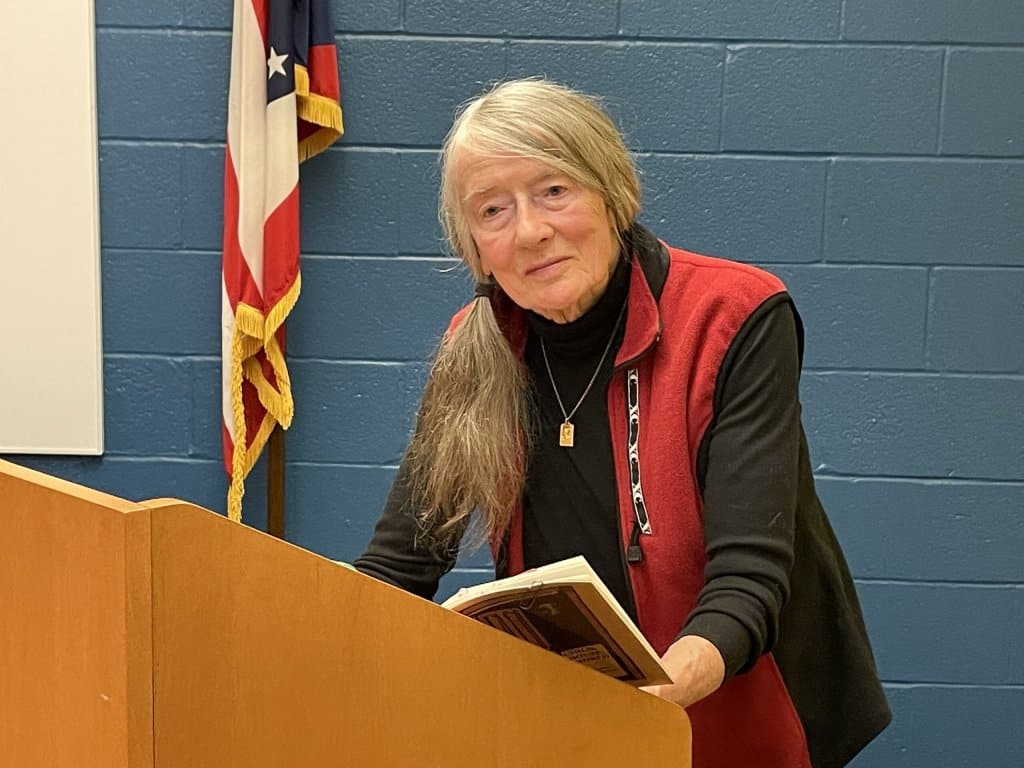
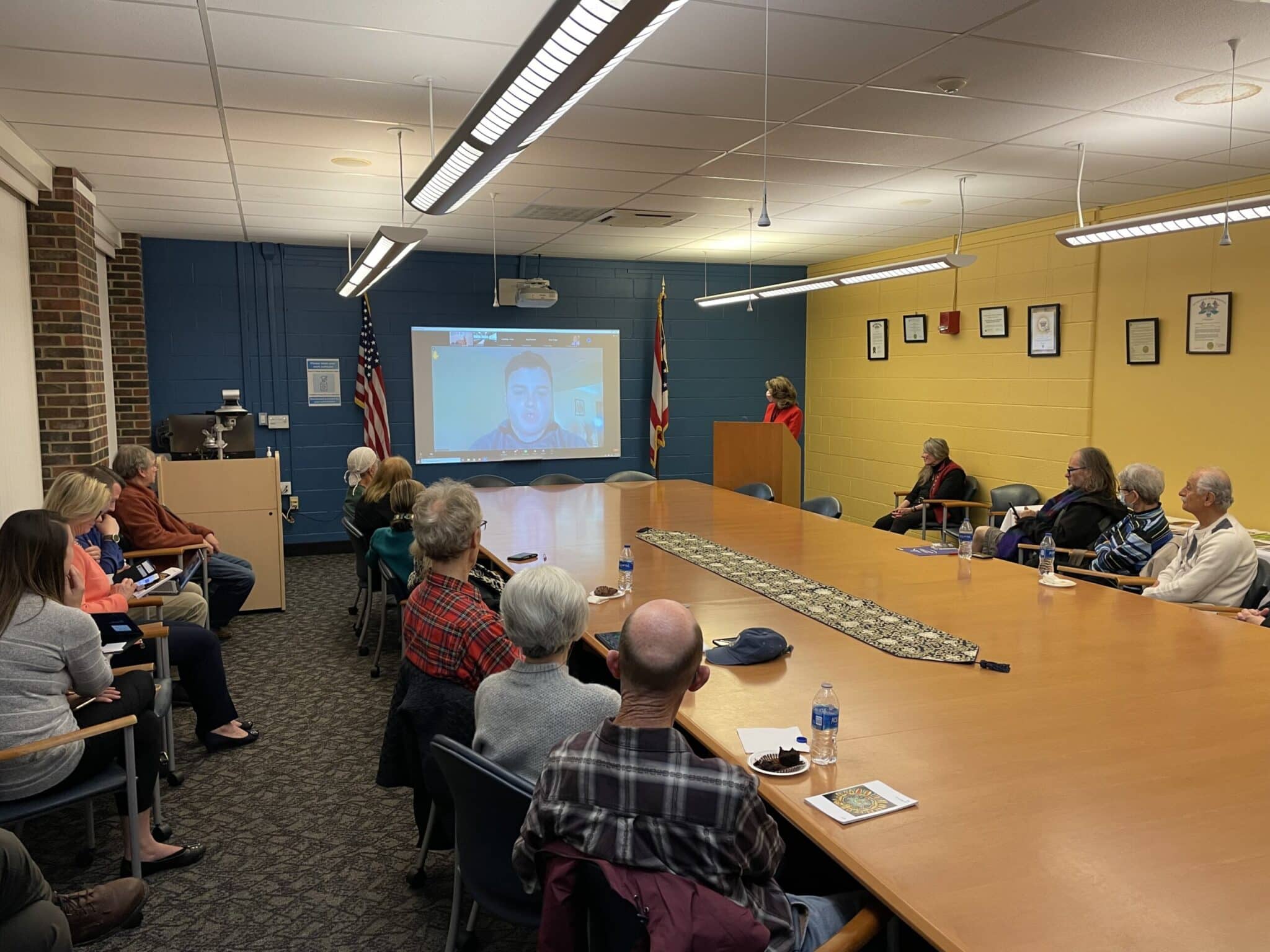
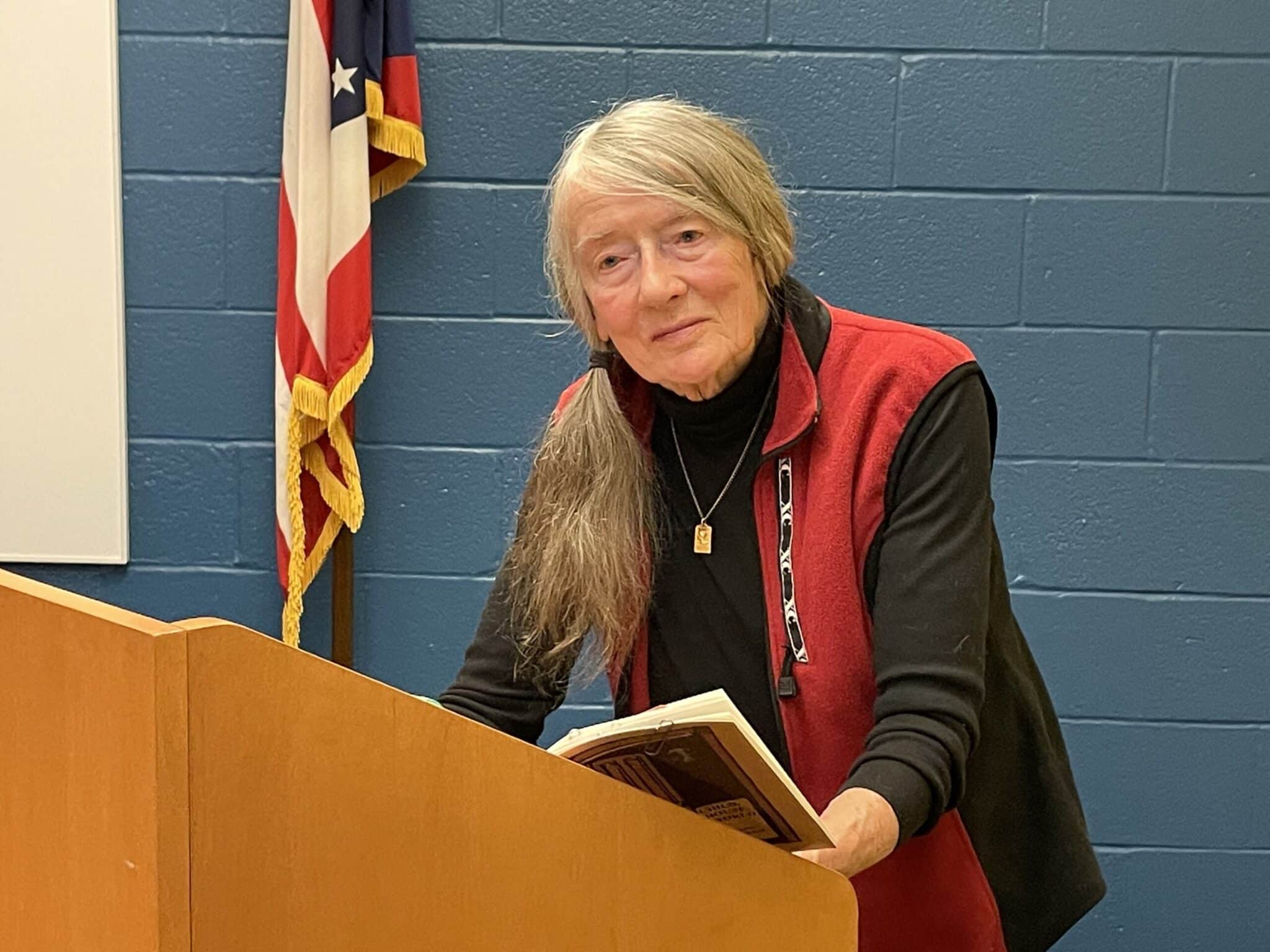
One look at author Grace Butcher’s bio reveals a life filled with inspiration.
The poet, writer, horsewoman, motorcyclist, actor and runner, is also the founder of Kent State University – Geauga’s literary magazine The Listening Eye — which is still going strong more than half a century later.
TLE is published in early fall and showcases poetry, short fiction, creative nonfiction and art on a national level.
On the heels of April’s National Poetry Month, the feisty Chardon octogenarian and Ohio Poet of the Year 1992 has no plans of slowing down.
On April 26, KSU – Geauga celebrated the half-a-century anniversary of the literary journal, featuring Butcher, TLE’s editor, as well as a reading of poems and opening remarks by David Hassler, Kent State Wick Poetry Center director.
Butcher, who began teaching English at KSU – Geauga in 1968, continues to make her mark on the literary world with the magazine she founded in 1970.
KSU – Geauga’s Assistant Professor of English Bonnie Shaker met Butcher in 2018 when she approached their campus dean looking for a third assistant editor to the journal.
“Grace is nothing short of miraculous,” Shaker said. “She has single-handedly kept an annual publication going for half-a-century.”
Grace said she has been a poet since at least age 11, when she wrote the first poems she kept.
“I still have them,” Butcher said.

The annual publication paused as much of the country did in 2020, due to COVID-19, later publishing a combined 2020-2021 issue.
“We are transitioning from all paper submissions to mostly digital and some paper for writers whose circumstances make digital not feasible,” Butcher said. “I don’t speak the language. Shaker is handling all of the technical difficulties of transitioning to digital at the request of our new publisher, Outlandish Press in Lakewood.
Butcher still enjoys reading the submissions for the chapbook-style format, with cover artwork featuring an interpretation of a listening eye.
TLE is listed in national directories and continues to attract submissions from all over the country. Local and student submissions are encouraged, along with the national pool of entries.
“I look for tight lines that don’t sound like prose, unexpected images or juxtapositions, the unusual use of language, noticeable relationships of sounds, a twist of viewpoint, an ordinary idea in extraordinary language, an amazing and complex idea simply stated, play on words and with words, an obvious love of language,” Butcher said.
In the early days, Butcher paid for publishing out of her own pocket for a few years when funding wasn’t available.
“I’ve loved doing the magazine through thick and thin these many years, but the transition has been extremely difficult for me,” Butcher said, adding she’s admittedly, “old school.”
“All I plan to do in the future as editor in chief is read submissions and decide on acceptances,” she said. “We all three read them and must agree two out of three on acceptances. As for what the magazine means to me now, it’s hard to say. It has been a labor of love all these years.”
Many hugs, smiles and handshakes greeted Butcher following the event, with Shaker close by her veteran colleague’s side.
“Much of her work — from selecting poems, to corresponding with contributors, to working with printers and distributing copies — she did herself, even while teaching full-time,” Shaker said of Butcher. “I don’t know how many of my colleagues, myself included, could do that now.”
What Shaker said is special about the journal is that it is local and comes from the Geauga campus.
“Publications are markers of prestige at any university and we have one right here in our midst,” Shaker said. “Grace, of course, turned TLE into the respected publication that it is, but we’re not in a high-profile major metropolis. We’re in Burton, Ohio.”
She said it’s unusual for publications to come out of small towns rather than large publishing centers, but there is still room for poetry and the arts in general in all lives.
“By making us feel, they move us to think and act,” Shaker said. “So many of the world’s challenges remain unaddressed because people aren’t inspired to participate or care. Poetry can make us care. Poetry can be the spark of motivation that overcomes apathy, ignorance, or the reticence to step away momentarily from our busy lives to serve the greater good.
“We need poets as surely as we need STEM workers,” she continued. “Our economy doesn’t reward their labor in the same way, however, which is one reason poetry journals are supported by colleges and universities. We are very lucky to have such a gem at Kent State – Geauga.”


