


Letter to State Criticizes O&M Program
Geauga County Commissioners voted in favor of giving up one commissioner seat on the Northeast Ohio Areawide Coordinating Agency board to give the county engineer a guaranteed spot June 17.
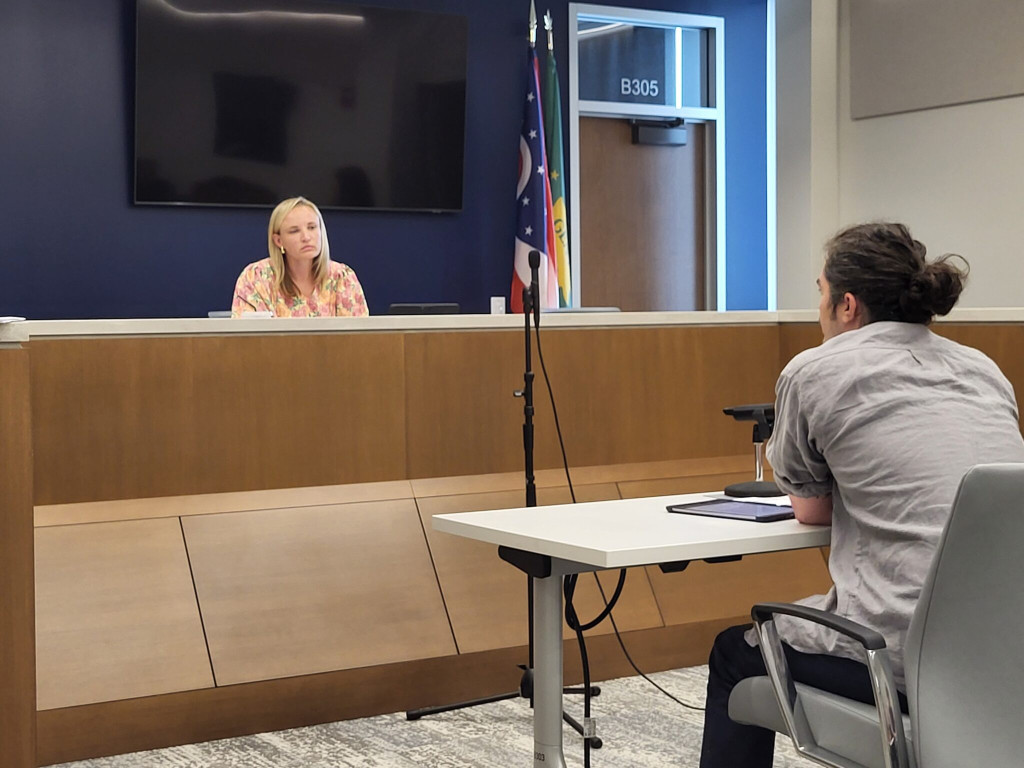
Geauga County Commissioners voted in favor of giving up one commissioner seat on the Northeast Ohio Areawide Coordinating Agency board to give the county engineer a guaranteed spot June 17.
NOACA recently approved changing its code of regulations to reserve one of the county’s three seats for Engineer Andy Haupt and now, individual counties must ratify it, Commissioner Carolyn Brakey explained.
She and Commissioner Jim Dvorak voted in favor of ratifying the amendment last Tuesday, while Commissioner Ralph Spidalieri was absent and, therefore, did not vote on the issue.
“Our other member counties have their engineers on board as voting members now,” Haupt said during last Tuesday’s meeting. “It allows a voice that supports the taxpayers of rural, Amish communities.”
Many of NOACA’s constituent counties are more urban than rural, he said.
“(The guaranteed engineer seat) allows roads, bridges, safety concerns to be paramount from (the) point of technical expertise and experience that the engineer brings to that table,” he said. “Chasing, supporting and advocating for funding that we are due is one of the most important things that seat has to represent …”
All of NOACA’s other counties have their engineer as a voting member and that is all Geauga wants, as well, Dvorak said.
Brakey wished Haupt could be added as a fourth seat, but Geauga County does not have the population for an additional seat, she said.
Resident Skip Claypool, who is Spidalieri’s alternate on the NOACA board, took issue with the change.
“I’m very sad about this ratification because it actually is detrimental to Geauga County,” he said, adding it is removing a commissioner voice from the board.

“What has been said is that we need a county engineer at the table,” Claypool said. “That’s true and we’ve always had our county engineer at the table. They’ve always been named an alternate.”
Commissioners also regularly interact with the engineer to stay up to date, he said, adding this amendment shows a lack of integrity.
“One of the commissioners who’s likely impacted is not in this meeting,” he said, referring to Spidalieri. “This board never had a public discussion about doing this.”
Commissioners should be asking NOACA for a fourth seat, Claypool said.
At this time, the board does not know which commissioner will give up his or her seat to Haupt, Dvorak said in a follow-up interview June 23.
Currently, all three commissioners are retaining their seats, he said, adding the other counties still have to ratify the amendment, which may take several weeks.
They are also uncertain whether the change would be implemented this year or during January’s reorganizational meeting, he added.
This action has been in progress for 12 years or more, Dvorak told Claypool last Tuesday, reiterating Brakey’s comment that the county needs a higher population to have a fourth vote.
Two other residents, Elsie Tarczy and Christine Stenzel, echoed Claypool’s words and emphasized their desire to see a fourth seat.
Geauga County is unlike other NOACA counties and does not have an equal say, they said.
The county will not be losing a vote with this change, Dvorak emphasized.
In other business, commissioners also voted to send a letter to the state criticizing the ongoing operation and maintenance program, which Geauga Public Health is currently rolling out.
The letter, addressed to Ohio Department of Health Director Bruce Vanderhoff, expresses concern about the program’s impact on the county.
“Geauga County is uniquely impacted by this regulation,” commissioners said in the letter. “The majority of our residents live in homes serviced by septic systems — estimated at 30,000 across the county. These are not fringe cases; they represent the backbone of our rural housing infrastructure.”
While GPH has gone out of its way to implement the state mandated program — which requires homeowners to pay permit fees — in a way that is minimally burdensome, the rule mandates a one-size-fits-all program with no flexibility for responsible homeowners to be exempt, commissioners wrote.
Nearly a third of the county’s population is elderly and on fixed income, with many individuals forced to absorb the cost while also juggling the rising cost of living, they said in the letter.
“We believe Ohio can protect clean water without saddling residents with another unfunded mandate,” commissioners wrote, calling for a more targeted approach and expressing a willingness to work with ODH on finding a balanced path.
Cleveland resident Xavier Rivera also came before commissioners during the public comment section of the meeting to ask the county to cancel its contract with United States Immigration and Customs Enforcement.
Currently, ICE detainees are housed at the Geauga County Safety Center. Geauga County Sheriff Scott Hildenbrand has previously said the agency pays $100 per detainee per day.
“I’m here to ask you to cancel the ICE contract that the county has, to close the detention facility that we have here,” he said. “As of January, dozens of people were detained here after a series of arrests in Northeast Ohio, when 20 people were arrested.”
Deportation efforts have focused on ordinary, hardworking people and not on violent criminals, he said.
“By maintaining this ICE contract, the county is complicit with the violence and the ongoing attack on undocumented people who are not dangerous to our decadent society, but the backbone of it,” he said.
Commissioners did not comment, but invited Rivera to email them the rest of his statement after his allotted time to speak ran out.


