


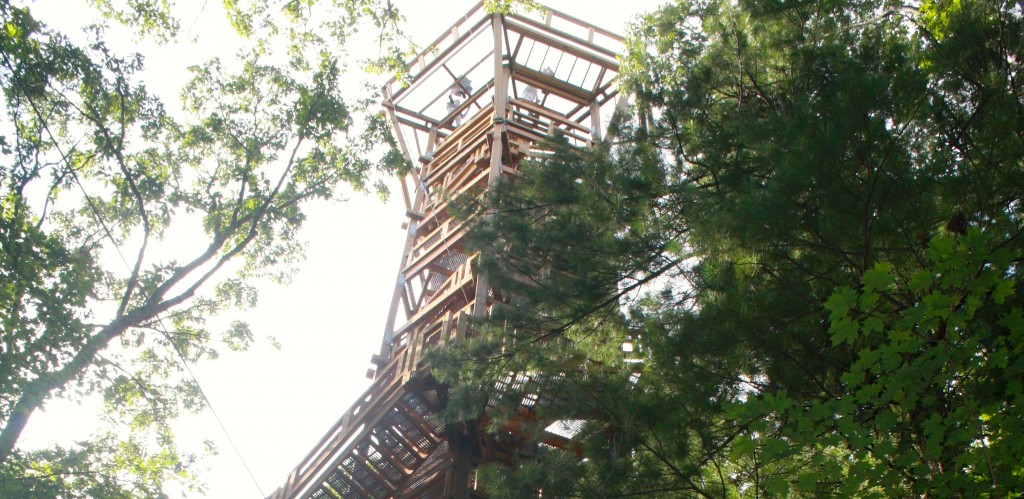
Kirtland residents will soon have two breathtaking new attractions right in their own backyard. On Sept. 14, the Holden Arboretum, 9550 Sperry Road, will officially…
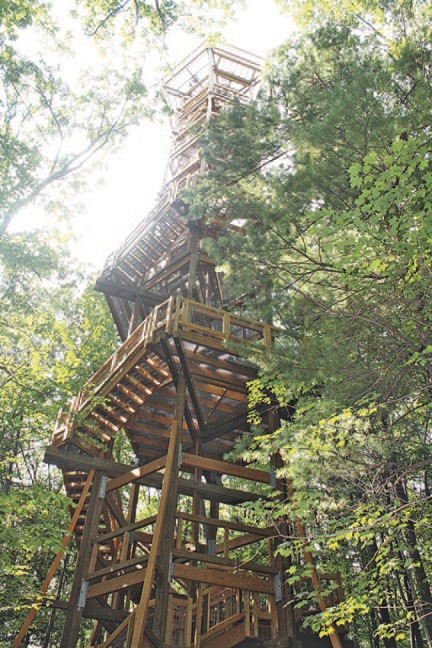
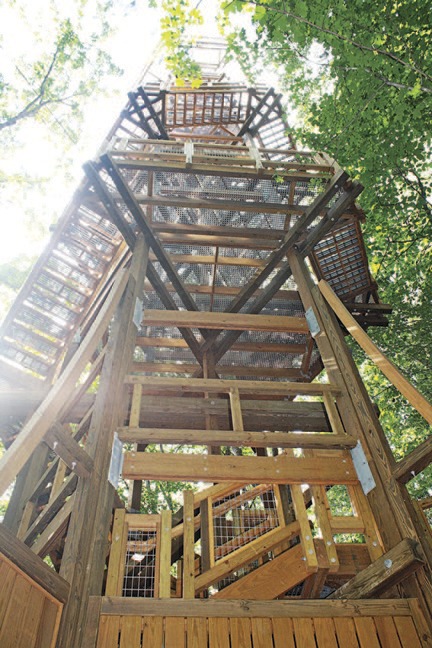
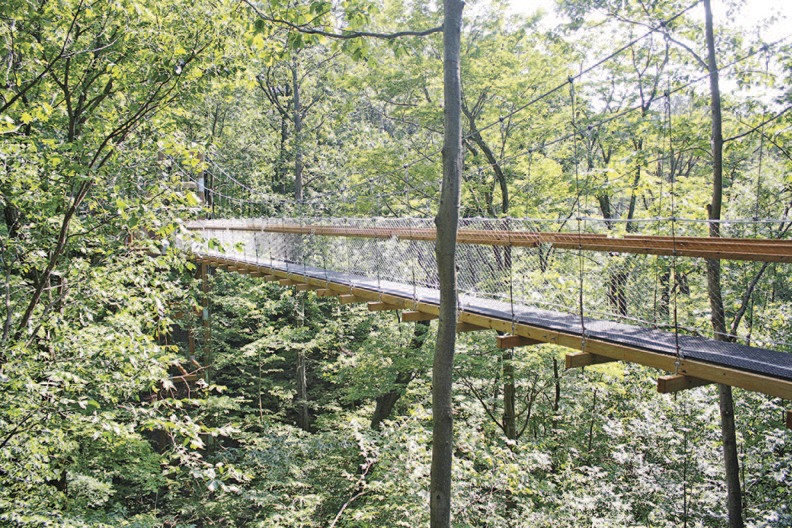
Kirtland residents will soon have two breathtaking new attractions right in their own backyard.
On Sept. 14, the Holden Arboretum, 9550 Sperry Road, will officially open its Kalberer Family Emergent Tower and Judith and Maynard H. Murch IV Canopy Walk to the public.
Both the emergent tower and the canopy walk give visitors a chance to see and experience the forest in a way like never before.
“We know that what engages people is as much visceral and emotional as it is intellectual,” said arboretum President and CEO Clem Hamilton. “And so we asked ourselves: How can we engage people deeply?”
The arboretum wanted to do more than just tell people that forest conservation is important; it wanted to make people feel it by giving them an experience they wouldn’t normally have. Hamilton said the arboretum has achieved this by building structures that put people up and into the forest’s canopy.
“As far as we know, there is nothing else like this in Ohio,” he said.
Locals may have noticed the top of the emergent tower peeking above the trees for the past few months. Since construction began last fall, the 120-foot structure has slowly climbed from the forest floor to surpass the tops of the arboretum’s tallest trees.
Up close, the hexagonal tower is an impressive sight that still manages to blend into the surrounding forest. The tower’s design intentionally mimics that of a tree, beginning at a broad base, tapering into an elegant “trunk” and finally bursting out of the forest canopy to silhouette against the blue Northeast Ohio sky. The spiral staircase, which begins on the outside, gently migrates to the inside as it winds up the tower’s column.
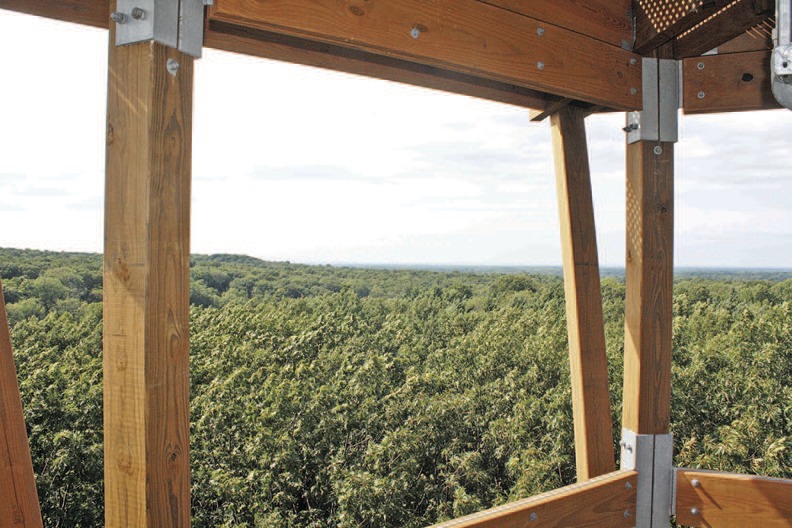
On a clear day, you can see all the way to Lake Erie from the top.
“Part of the experience of the forest that people don’t have is being up and into the canopy. We wanted everyone to have this experience and to engage with the forest,” explained Hamilton.
Spectacular views aren’t the only thing the tower offers. It also gives visitors a unique opportunity to experience the changing environment of the forest, which varies based on how high up you climb.
“As you go up, you can feel the difference in temperature. Not only does the climate change, but the temperature changes,” said Roger Gettig, the arboretum’s director of Horticulture and Conservation.
Plants, insects and wildlife also vary depending on your location on the tower. Viewing platforms and benches positioned at several intervals along the column’s 202 steps make it easy to pause and take in the arboretum’s multilayered, natural beauty.
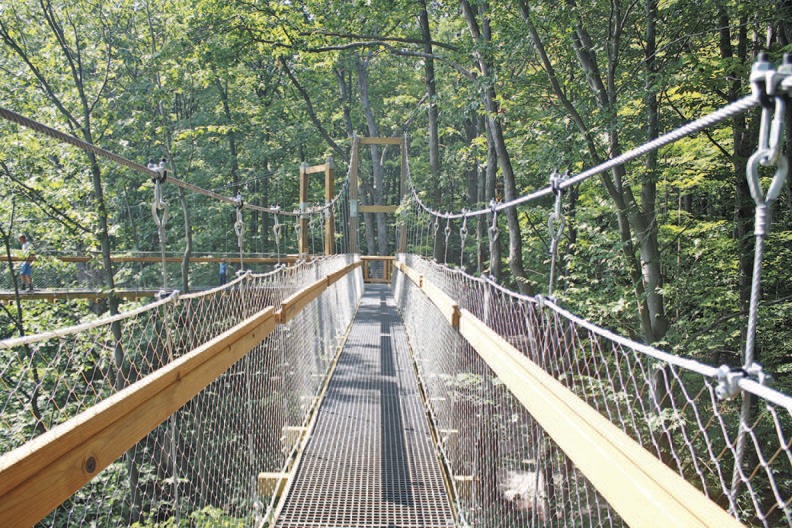
The canopy walk, which is a short trek from the emergent tower, offers a different but equally stunning view of the arboretum. Visitors can get up close and personal with nature on one of the structure’s four suspension bridges, which hover above the forest floor at varying heights — the tallest bridge suspended 65 feet off the ground.
Unlike the emergent tower, with its dizzying height and hundreds of steps, the canopy walk features gently sloping ramps that are wheelchair-accessible. The bridge walkways are constructed of heavy duty mesh mats that allow visitors to see straight through to the forest floor below. The bridges sway slightly, emulating the look and feel of long, trailing tree branches reaching through the forest. Together, they stretch 500 feet across the air.
“We wanted to take people out of their comfort zones, but not into their panic zones,” Hamilton said, explaining how the arboretum has struck a balance between ensuring safety while giving visitors the thrill of entering previously inaccessible areas of the forest.
In the future, both the canopy walk and the emergent tower will contain instructional panels that provide visitors with more information about the trees, birds and insects visible from the viewing platforms and suspension bridges.
The construction of both structures was made possible by Holden’s New Leaf capital campaign, which raised $9 million. The arboretum used $1.3 million to build the tower and canopy walk. The rest of the funds are being used to install a rhododendron garden and carry out the restorations of Corning Lake and Lotus Pond.
Admission to the emergent tower and canopy walk is free for arboretum members. Nonmembers can access both structures by purchasing a $4 ticket in addition to the price of general admission. Children between ages 6 and 18 are $2. Children ages 5 and under are free. Tickets can be purchased at the Corning Visitor Center.
Both structures are located about a half-mile walk from the visitors’ center.


