Former Geauga County Commissioner Walter “Skip” Claypool is suing commissioners Carolyn Brakey and Jim Dvorak, as well as the Northeast Ohio Areawide Coordinating Agency, over a recent bylaw change that would prevent him from continuing to serve as alternate on the multi-county planning organization.
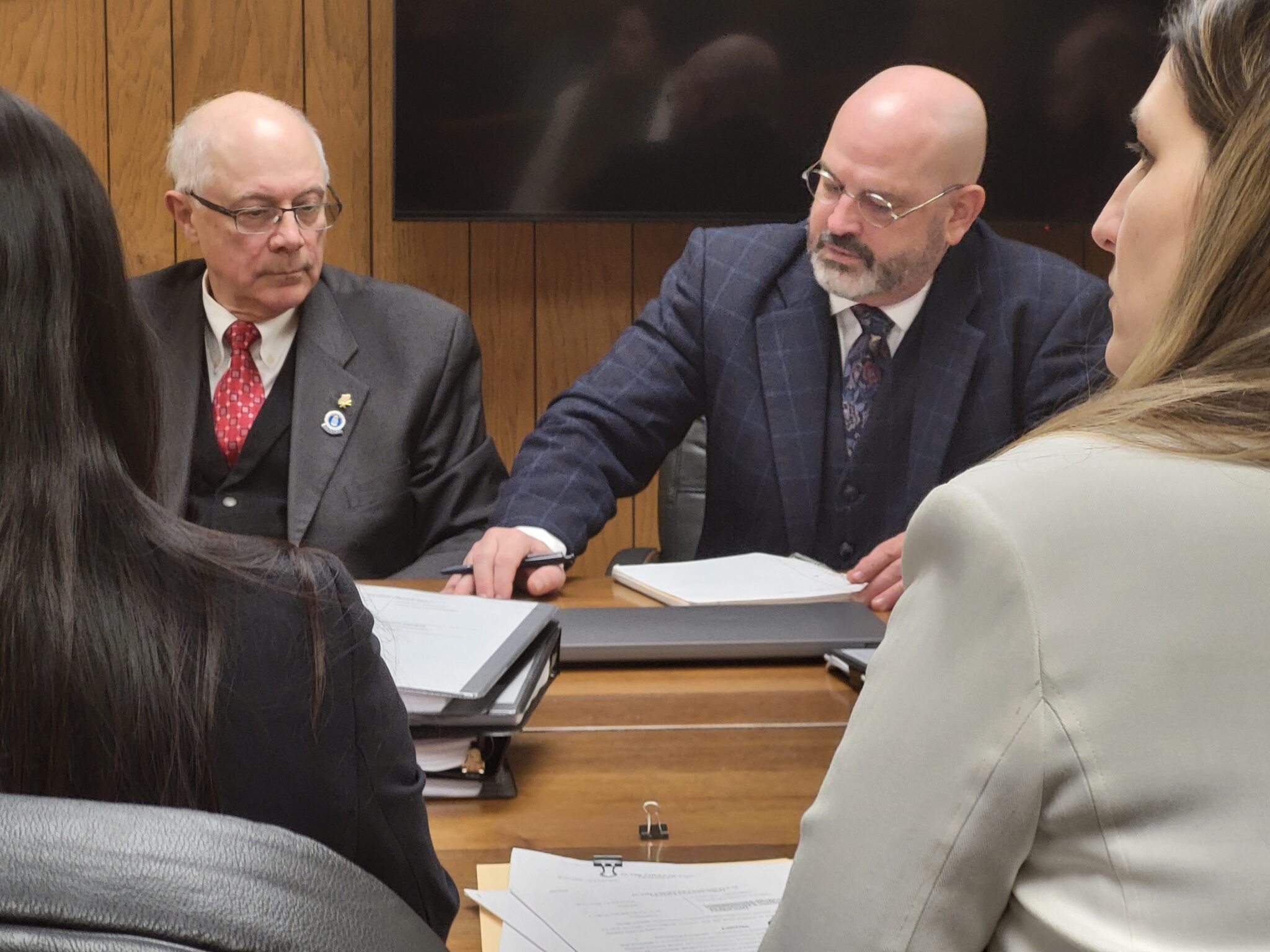
Former Geauga County Commissioner Walter “Skip” Claypool is suing commissioners Carolyn Brakey and Jim Dvorak, as well as the Northeast Ohio Areawide Coordinating Agency, over a recent bylaw change that would prevent him from continuing to serve as alternate on the multi-county planning organization.
The bylaw change requires board members, including alternates, to be elected officials or county employees with a speciality in transportation, planning or other related fields, rendering Claypool ineligible. Geauga County Commissioners had not ratified the change as of their Jan. 13 meeting.
According to Claypool’s filing with the Geauga Court of Common Pleas, Dvorak and Brakey requested the bylaw change.
“NOACA Director Grace Gallucci claimed (at a June 13, 2025, meeting) that a request to change the NOACA bylaws to require the replacement of one of the Geauga County Commissioners’ votes with that of the Geauga County engineer on the board of directors came from Geauga County,” Claypool said in the lawsuit.
He said he submitted a public records request seeking communications between Brakey and Dvorak, or between Brakey, Dvorak and NOACA staff, about the bylaw change.
The documents provided do not show Brakey or Dvorak requesting the change, he said, and commissioner Ralph Spidalieri has sworn under oath and submitted an affidavit stating the topic has never been discussed in a public meeting.
The actions and verbal communications between Brakey and Dvorak requesting the bylaw change constitute a public meeting and violate the Ohio Revised Code, Claypool alleged.
He asked the court to find Brakey and Dvorak “…engaged in substantive private discussion regarding such a request; that such a private discussion concerns public business…” and that the board, with the exception of Spidalieri, “…participated in improper private discussions of public business and issuance of a request on behalf of a public body outside of a public meeting as required by Ohio law.”
Claypool also said in the lawsuit that he is seeking a temporary restraining order to prevent any action being taken on the proposed changes to the bylaws.
Claypool filed an emergency motion for a temporary restraining order Jan. 15, asking the court to prevent Brakey and Dvorak from providing approval to the bylaw change.

“On information and belief, defendants Brakey and Dvorak intend to act based on the unlawful amendments of the NOACA Code of Regulations to deprive (Claypool) of his office and statutory powers at the Jan. 22, 2026, meeting of the Geauga County Board of Commissioners,” Claypool said.
NOACA, Brakey and Dvorak all filed responses with the court Jan. 20.
Attorney Ryan Gembala, representing NOACA, asked the court dismiss the lawsuit, saying Claypool has an axe to grind against perceived political rivals.
Brakey and Dvorak have previously defeated Claypool in elections, and Claypool bemoans NOACA’s goals, he said.
“As a mere alternate, Claypool lacks even a whisper of standing to pursue claims against NOACA,” Gembala said. “Moreover, even if Claypool could establish standing, his claim against NOACA is not ripe because the challenged amendments have not been ratified or adopted.”
The lawsuit is a meritless quest for injunctive relief designed to prevent NOACA from seating its board of directors at their next organizational meeting so Claypool might “…sew chaos within the organization,” Gembala alleged.
One of the NOACA board members representing Geauga made the motion to change board delegation makeup at the June meeting, Gembala said, adding not only have the challenged amendments not yet been ratified, but Claypool is only speculating in his restraining order about what might happen at the Jan. 22 commissioners meeting.
While Claypool clearly believes the board will ratify the amendments, they could vote against ratifying, or decide Claypool has the qualifications to serve as an alternate, he said.
Claypool also does not have standing to attack NOACA when his issue is with the commissioners, Gembala said, as the bylaws have yet to be ratified and it is the county’s decision whether to ratify, not NOACA’s.
“While Claypool baldly alleges that he is ‘entitled to benefits as an alternative member,’ there is no such thing as an ‘alternative member,’” he said. “And no benefits can exist where his designation as an alternate can be revoked at any time.”
Claypool’s only benefit as an alternate is the ability to vote, which he exercised at the Jan. 9 meeting where the bylaw changes were discussed. Claypool was “resoundingly outvoted,” Gembala said.
“The relief he seeks here would have the practical impact of entirely stopping NOACA from seating a board of directors at its organizational meeting,” he said. “Allowing him, an alternate, to halt NOACA’s business and thwart its mission by filing frivolous lawsuits is an abuse of the judicial process and should not be tolerated.”
Brakey and Dvorak denied Claypool’s allegations and pushed back against the restraining order request.

Reviewing Claypool’s complaint, attorney Amily Imbrogno, representing Brakey and Dvorak, noted the variety of reasons his claims do not hold water and asked the court to dismiss the case.
Claypool is a major liability to taxpayers, Brakey added in a later statement, citing a pattern of bad-faith litigation related to the commissioners.
“This lawsuit, like his prior one, lacks merit,” she said. “I am confident that it will be resolved in the commissioners’ favor. However, it’s unfortunate that Geauga County taxpayer resources will again be used to defend Mr. Claypool’s repeated lawsuits driven by his personal grievances.”
The court should deny Claypool’s restraining order, Imbrogno said in a separate memorandum.
Claypool cannot prove he would suffer irreparable harm without the injunction, but granting the injunction would harm both Geauga’s public and the public of the greater NOACA area, she said.
The bylaw changes that would make Claypool ineligible to serve as an alternate have not yet been approved by all member counties, meaning the court would have to speculate on how each might vote in order to issue the injunction, she said.
“It will not serve public policy for this court to circumvent two county commissioners from using their lawful voting authority to approve a change to the NOACA Code of Regulations, just so that one person who is not in privity with those commissioners may serve as an alternate on the board of directors,” Imbrogno concluded, asking the court to deny the motion for the restraining order.
While a hearing was held regarding the restraining order Jan. 20, attorney Jay Crook, representing Claypool, withdrew the motion for it.
The matter has been continued to Jan. 28.