


GPH Vaccine Clinics Open
Society has become desensitized to the high (COVID-19 death) numbers and the rate of increase of those numbers. They have become statistics instead of people. Psychologically, it’s difficult to have that level of stress maintained and we don't want people to be fearful every day, but the reality is, we’ve got numbers that are tenfold worse than they were last summer when things were getting shut down. – GPH Commissioner Tom Quade

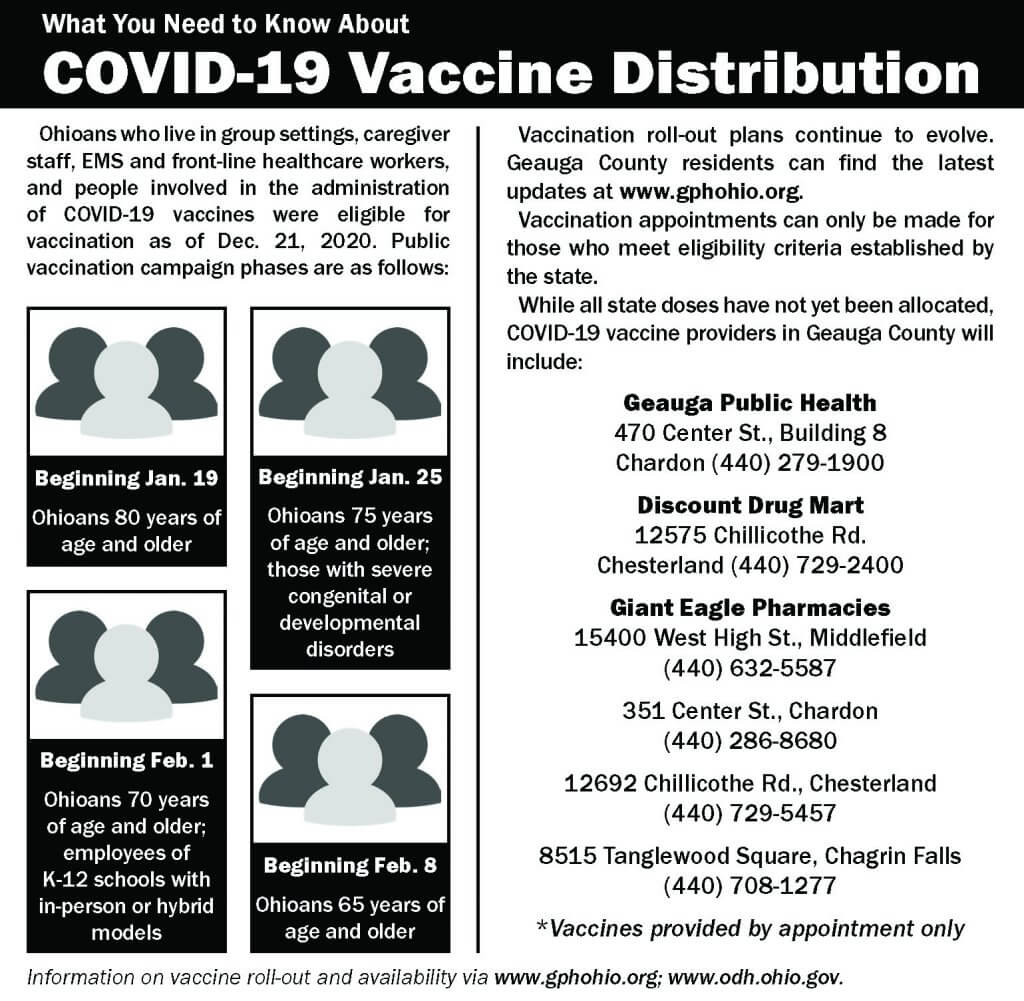
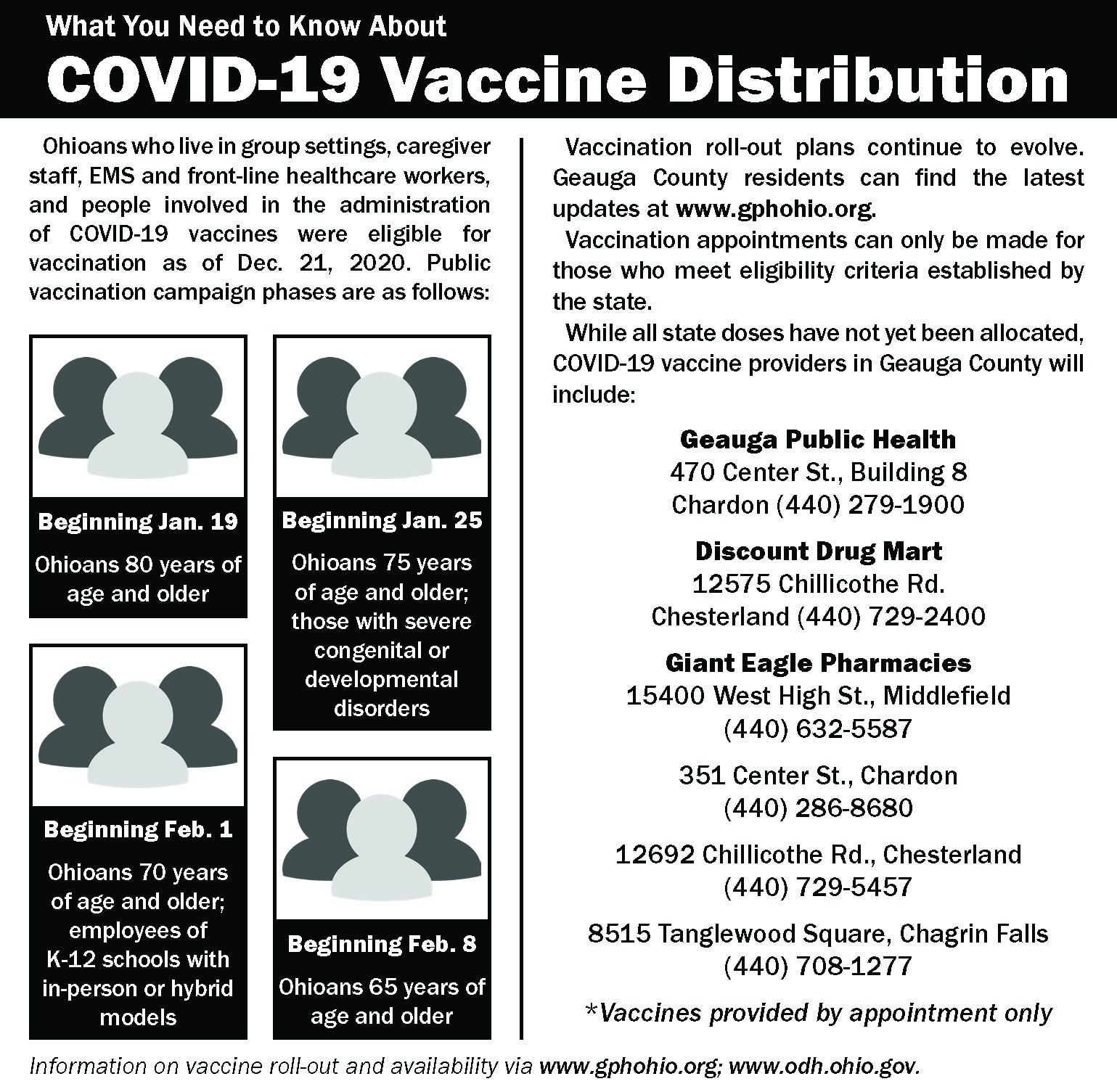
On Jan. 19, Geauga County residents eligible to receive the first round of publicly available COVID-19 vaccines were given the chance to schedule an appointment with Geauga Public Health for an upcoming vaccine clinic.
By the afternoon, GPH Commissioner Tom Quade said via Facebook hundreds of vaccination appointments were scheduled, even though call volume bogged down the county phone system.
GPH Commissioner Tom Quade said Geauga County has around 1,500 to 2,000 residents eligible for the first round — Phase 1A — of the vaccine. Those eligible for the first vaccines include people living in group settings, staff providing care in group settings, those in emergency medical services, healthcare providers who work directly with COVID-19 patients and residents over 80 years old.
In a phone interview Jan. 18, Quade said the county is receiving about 100-200 doses per week, but it is difficult to know how many eligible residents will want to receive the vaccine.
Another difficulty is not knowing exactly how many doses will come from the state. GPH knows on any given Tuesday how many doses the county will receive the next Tuesday, but not further out, he said.
University Hospitals Geauga Medical Center is planning to pass 500 doses to GPH next week, Quade said.
Giant Eagle pharmacies around the county and Discount Drug Mart in Chester Township are scheduled to receive 100 doses, as well, he added.
Quade said while the Ohio Department of Health told local departments to give out all doses, GPH is keeping the second dose of the vaccine — which comes either 21 or 28 days after the first dose — tied to those who receive the first dose.

“We’re scheduling our second dose four weeks later. We’re not really holding it back, we’re just scheduling in advance,” Quade said. “If we’re committing to give someone their first dose, we’re committing to get them their second dose.”
In response to confusion over ODH vaccination guidelines for school personnel, Quade said the original state plan was to have kids back in school by March, but the state backed up and decided to vaccinate eligible teachers first.
Gov. Mike DeWine said Jan. 7 school personnel would begin the vaccination process Feb. 1 and schools would reopen March 1. However, the multi-week vaccine is not fully effective until 10-14 days after the second dose.
“This was one of the several examples now where the policy comes out of someone’s mouth before there’s a lot of exploration of pragmatic implementation of the policy. It’s best-faith effort, but there’s a lot of misalignment between hopes and the ability to pull something off,” Quade said.
The state backed into the Feb. 1 eligibility date, but with less vaccine supply than demand, Quade said there has been a considerable amount of difference between when someone is eligible to receive the vaccine and when they can get it.
A lot of questions have come from local leaders about who gets the first shot of the vaccine, Quade said, especially since people in congregate settings — which include prisons and jails — are higher on the eligibility list than law enforcement officers.
Ohio’s biggest COVID-19 outbreak in 2020 was at the Marion Correctional Institution, Quade said, adding that outbreak is what put COVID-19 on the map in Ohio.
GPH staff held a vaccination clinic at the Geauga County Safety Center last week with the intent to vaccinate inmates, as well as staff who interacted directly with them. Vaccinating the prisoners would help prevent staff from taking it home, he said.
“That’s one where the governor, as well as the Ohio Department of Health, were very explicit,” Quade said. “On our weekly calls with the governor, we have the opportunity to clarify the rules. Somebody said why is it we can’t vaccinate the police — we can do EMS, but not (police), we’re getting beaten up over this.”

DeWine told local health departments while it’s unusual for first responders, including fire and police personnel, not to get the first of everything, they are not dying of COVID-19 in numbers as great as those in the Phase 1A eligibility groups, Quade said.
He said he is okay with taking the blame on vaccinating people incarcerated in the Geauga County Safety Center because the vaccine is a state asset and the county’s ability to receive a state asset is based on its ability to stick to the rules set by DeWine and ODH.
Quade also warned a new, much more highly contagious strain of COVID-19 is making its way through Ohio. While not deadlier than the original strain, the ability to infect more people means this strain increases the chances of a deadly infection simply based on percentages.
Across the U.S., COVID-19 deaths reached almost 400,000 last week.
“Society has become desensitized to the high (COVID-19 death) numbers and the rate of increase of those numbers. They have become statistics instead of people,” Quade said. “Psychologically, it’s difficult to have that level of stress maintained and we don’t want people to be fearful every day, but the reality, is we’ve got numbers that are tenfold worse than they were last summer when things were getting shut down.”
Information on vaccine eligibility and how to schedule a vaccination appointment is available at www.gphohio.org.


