


Kenston Supt. – Public Schools Appear to Be ‘Under Attack’
Gov. Mike DeWine introduced budget changes Feb. 3 that appear to benefit private schools, but harm public education, said Kenston Schools Superintendent Bruce Willingham March 10.
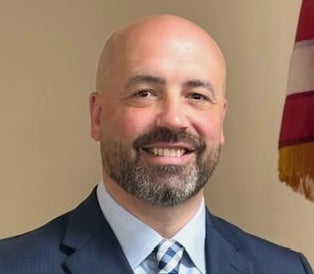
Gov. Mike DeWine introduced budget changes Feb. 3 that appear to benefit private schools, but harm public education, said Kenston Schools Superintendent Bruce Willingham March 10.
The proposed budget would cut $103 million from public schools over two years, according to the Statehouse News Bureau, which reported vouchers and charters would get about a half a billion dollars more in the budget.
The House is currently reviewing the budget before it will move to the Senate for approval.
“It sure feels like public schools are under attack, right?” Willingham said during the Kenston Schools Board of Education meeting. “You know, we were the only education system that does not see an increase in the state and we’re technically the only one that’s really provided for. Vouchers are increasing exponentially. It’s a way to privatize education.”
Vouchers give parents the ability to use public funding for private schools, shifting funds away from public schools, according to Ed Choice, an education reform nonprofit.
The funding changes are ultimately helping the private schools, the superintendent said.
“The vast majority of students that are using vouchers in our district are not impoverished students by any stretch of the imagination, and that is something that you’re seeing statewide. You’re not seeing — the legislators will tell you, ‘Hey, we’re doing this because this is helping some of our more impoverished families.’ Well, that’s not the case,” Willingham said. “The case is the people that always went to private schools are still going to private schools. The kids that went to public schools are still going to public schools. Yet, the money and the increases are following the privates and the vouchers.”
In a follow-up interview, Willingham further explained the budgetary changes, which he said will cause the district to rely more heavily on bonds and levies.
“The big issue for us is we are already overly reliant upon local property taxes … yet here we are being forced to potentially go back to voters because of reductions in state funding,” he said. “It’s frustrating for schools and the communities we serve.”

Willingham reiterated public schools are going to see a decrease in funding, while vouchers and charter schools will see an increase.
“Public schools are set to get roughly $16 billion, but that includes a cut from current spending, which adds up to $103 million over the two years of the budget,” he said, adding the state share base cost decreases for districts 87% in the first year and 83.1% in the second year.
Vouchers are set to get $2.4 billion, or a 16.5% increase and charter schools will get $2.7 billion, or an 11.7% increase (over two years), he added.
In other business last Monday, Kenston Middle School Principal Adam Fender and Kenston High School Principal Tom Gabram cited progress on the STOPit program.
Willingham announced at the Jan. 13 school board meeting the district would begin using the anonymous reporting system, which allows students and parents to report issues like suicidal tendencies, substance or alcohol abuse to school administration through text, photo, or video.
Fender said it’s giving students an opportunity to share things they wouldn’t otherwise.
“It’s easy and it’s been effective for the most part because you can see even some of the reports are there, there’s small, minor things for us, but the student who’s writing it, it’s their work,” he said. “So, we’re taking each one, one at a time, and working through it and meeting with the students, or whatever we need … They are not the end of the world things, but it’s teaching them to say something.”
Similarly, Gabram said the program allows the district to keep track of any patterns among students, giving them a database for timelines for investigations.
“It’s really a complete database. It’s filing everything, so (it’s) very transparent for us to kind of see any of the history, any of the patterns that could be developing,” he said. “It’s definitely a way to see that history as we move through the potential investigation that might happen.”
Willingham said he thinks students and parents will soon get comfortable with the program.
“I think as kids and parents get more used to using it and find out that it is anonymous, some of the follow up is happening, I think people are gonna definitely feel more comfortable and safer reporting,” he said.
Willingham also said the program has been loaded onto the school’s Chromebooks, as students don’t have access to their cellphones during the school day.


