


Chardon Native Aims to Bring Hope, Awareness to Mental Illness
Tony Semple Talks Near Suicide Attempt, Bipolar Disorder
I still have a glitch, don’t get me wrong, I still struggle. I’m still dealing with the highs and lows. The difference now is I know how to ask for help. – Tony Semple
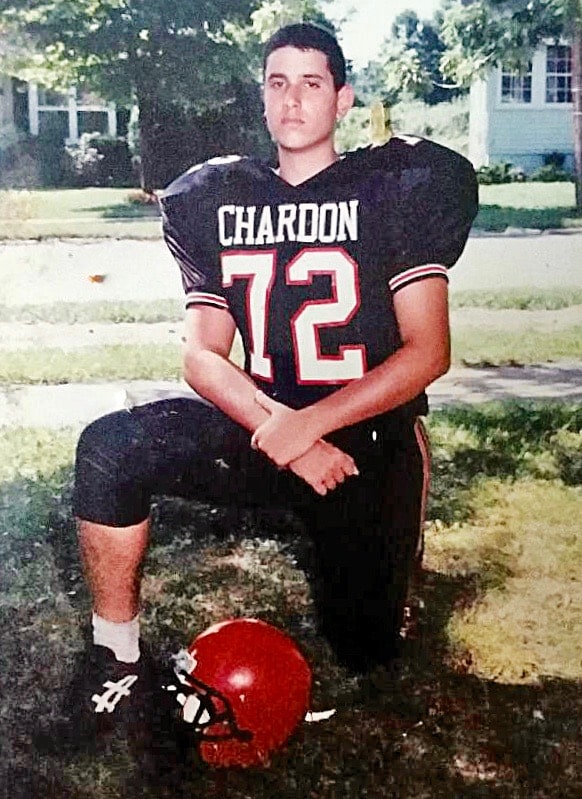
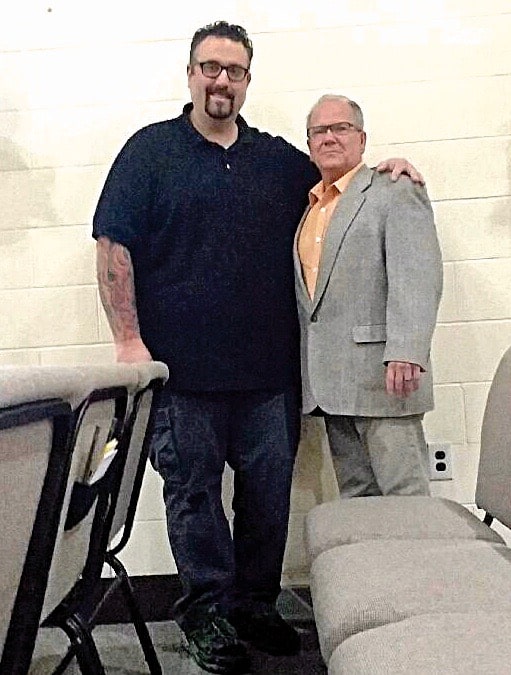
On March 16, 2018, Tony Semple sat at his kitchen table — a notebook in one hand, a cup of coffee in another and a loaded handgun in front of him.
The 40-year-old Semple, who struggled with bipolar disorder for 22 years of his life, had hit his ultimate rock bottom and decided it was time to end his agony.
The Chardon native, who now lives in Madison with his wife and two kids, filled the entire notebook, apologizing to the people closest to him and writing instructions to the next man who might take his place.
He took a final sip of his coffee, put the cup down and reached for his handgun.
Just before he grabbed it, his phone went off.
A distraught Semple paused, looked at his phone and saw a text from his church pastor.
“Rejoice in those who do not follow in the advice of the wicked or walk in the ways of the ungodly,” it read, quoting a Bible verse.
“I just (fell to) my knees. I was a wreck,” Semple recalled during a recent interview, adding a warm wave of goose bumps had flooded his body. “I realized at that point, God wasn’t punishing me, he wasn’t playing games with me, he was teaching me something, that there is always going to be struggles, there is always going to be highs and lows, but I knew at that point if my heart was open and I was willing to take His hand and let Him pull me up off the ground, that it was going to be alright.”
Semple sat down with his pastor the next morning and told him, “I owe you my life.”
“He said, ‘No you don’t.’ I said, ‘What do you mean I don’t?’ He said God put something on his heart to share with me. He called it acting as an instrument for the Lord,” Semple recalled. “He said, ‘But I’m going to tell you something young man. You’ve got a story to tell.’”
And telling his story he is.

Semple — now a marketing person for a group home in Chester Township for people with mental illness as well as a driver and CopeLine worker in Geauga County — is working with the National Alliance on Mental Illness in Geauga, Lake and Ashtabula counties, and sharing his personal story with as many groups of people as he can.
He recalled a 2015 bout in the psychiatric ward at Ashtabula County Medical Center. Semple had had an adverse reaction to a steroid he was taking for mild back inflammation that didn’t agree with his medications, causing one of the worst hallucinations he had ever experienced.
“It was the scariest hallucination of all because not only did I hear it, not only did I see it, but I felt it. A 9-foot-tall, Viking-like man was in my room and then basically picked me up, then pinned me down on my bed, knelt down and put his knee on the back of my neck, pushed my head down and I could feel it,” Semple recalled. “And it all happened in front of my wife. I could feel the pain, I could feel the restriction in the back on my neck.”
While in the psych ward, Semple said all he wanted was to see a guy, just like him, who had made it.
“I wanted someone to be there who was a guest speaker, who had worn that gown before, who got their stuff figured out and made it. But that wasn’t there. It was more of the same,” he said, adding people were despondent, hopeless and sad.
After his near-suicide attempt, Semple remembered that psych ward experience and realized a new purpose.
“I thought, I don’t know where I’m going to start, but I’m gonna be that guy,” he said.
A Bipolar Diagnosis
Semple, who grew up in Chardon with his three older sisters, was diagnosed with bipolar disorder* at age 18.
“Leading up to that, I was voted friendliest senior in high school,” he said. “I was in a state championship football team in ‘94 … real good grades, very active in the church, active in the community, great family life. And then when I went away to college is when things really turned.”
Semple went to Mount Union College in Alliance, Ohio. During his first semester, he became depressed, isolated, had no energy, no social life and his grades suffered.
“Then one weekend, I didn’t go to sleep. I was awake from the time I woke up Friday morning until Monday night,” he said. “No caffeine, unimaginable energy. It was severe mania. I had increased strength, increasing thoughts, increased irritability. I became very argumentative with my professors because I was trying to catch up on all the work I had missed, but my pen couldn’t keep up with my brain. You couldn’t even read my handwriting on my assignments. My professors were all asking me about it, thinking I’m literally on something, and I’m getting all defensive … not having a clue what’s going on with me.”
Semple lasted another four weeks before he quit school and came back home. He told his parents what was going on.
“It was the day after I came home, I had my first hallucination. I was in a mania state. I was in a parking lot late at night, about 11:30 p.m.,” he said. “There was laughter coming from my car radio, but the radio was off and the windows were up and there was nobody around. It sounded like Vincent Price, only deeper, louder and scarier, and it wouldn’t go away. You could call it demonic if you want to. It was terrible. That put me in the hospital for the first time.”
Semple got on medication, started counseling and had follow-ups with his doctors.
“I felt like a guinea pig. It was a struggle, but I kept trying,” he said. “I went through a lot of different jobs. I went through a lot of different doctors and counselors.”
He tried college two more times, once at Lakeland Community College for about a year, and then again at Cleveland State University.
“I was on a drug that had adverse effects, causing more hallucinations … these were auditory and visual this time,” he said, adding he was 20 years old then. “They were horrible. We tried switching doctors again, counselors, we just kept making changes. That was the hardest part; you think you would start making progress and then something like that came back and it was haunting. They diagnosed me with night terrors … I was getting migraines.”
The Up and Down Struggle
At 25, Semple lost a truck-driving job and decided to get into welding.
He received his certificate in welding from Auburn Career Center in 2005 and met the woman who would become his wife.
“That was a good year. I got a good job with Lincoln Electric. It was definitely the best job I’d had that paid the most and had the most job security,” he said. “I was proud of that because I thought, ‘I made it.’ I hadn’t had hallucinations in years, I hadn’t been hospitalized in years. Yeah we had to tweak my medication, but I found a team of doctors I was comfortable with, stayed with them for quite awhile.”
Semple and his wife married at the end of 2005, had a daughter, now 12, and son, 8.
“In 2011, the only person that I ever confided in about my illnesses besides my parents and my wife was my best friend. He was killed in a horrible car accident and I derailed,” he said. “In 2012, I left Lincoln. I couldn’t process it. I bottomed out again. I became full-time Mr. Mom. My ego took a hit, my masculinity. I got real depressed. I was embarrassed of my new role.”

A Journey to God
Semple tried to go back to work in 2013 at another welding company.
“I lasted a year and a half. This time, I had some pretty incredible mania happening for an extended period of time. I essentially became a human robot,” he said. “My productivity was off the charts. And when the mania went away and I went into a slump, my productivity was obviously not good. And they liked me, but you can only give a nice guy so many opportunities.”
He was let go and, this time, he embraced being a stay-at-home dad. But there was always something missing, he said.
“There was a void that I couldn’t pinpoint,” said Semple. “In February of 2018, I’m on my way home from my parents’ house and I drive past this church. I’ve driven past this church hundreds of times. As I drove past the sign, the hair on the back of my neck went straight up and I got really warm and I felt compelled to check it out.”
Semple went to service the following Sunday and, as soon as the live music began, he started to cry and couldn’t stop, and he was filled with that same warm feeling inside.
He began to attend service regularly, feeling lighter and lighter each week for the next month, as though he had been liberated from his bipolar disorder.
But then suddenly, he started spiraling down again and bottoming out. He felt heartbroken, thinking he was having an amazing religious experience, but it was just a mild case of mania.
“I took it as God just hit me with a right hook and said, ‘Psych.’ I took that as I was being punished. I took that as there is no more hope, if I can’t even get right with God, what’s the point,” Semple said. “March 16, 2018, was my absolute bottom. I got the kids on the bus to school, my wife left for work early. And I sat at my kitchen table with a single subject notebook, a cup of coffee, a cell phone and a loaded handgun. I was 100 percent committed to taking my own life.
“I was beyond angry, but mostly just hopeless. I sat there for a good four or five hours writing, crying, being angry. And I filled that notebook. I put the pen down, I had a little more coffee and it was time. Literally, when I put the pen down to go reach for the gun, my cell phone went off with (my pastor’s) text message.”
After that day, Semple, his wife and their children all had major shifts in perspective and attitude, he said, adding they all began going to church together and his kids are excelling in school and in their lives.
Finding Purpose in Advocacy
Besides learning about and working for NAMI, the organization has also designated Semple to go to Columbus to talk to state senators and representatives about mental health.
“In the last year, I’ve gone to colleges, high schools, churches. This month, I’m going to jails,” he said, adding he shares his story to give others hope and encourages dialogue and feedback.
“I still have a glitch, don’t get me wrong, I still struggle,” he said. “I’m still dealing with the highs and lows. The difference now is I know how to ask for help and so many more people are depending on me now than they ever were before, and I’m not just talking about my family. I’m mentoring kids, (too).”
Semple said he would take doing this work over anything else he has done or received monetarily in his life.
“Having people approach me telling me thank you for giving them hope, that I’ve made them feel better, inspires not on my own recovery, but gave me 10 times the satisfaction I received from getting (Lincoln Electric) Christmas bonus checks in excess of $15,000,” he said.
He recently spoke at the Lake County Maximum Security Jail and it went so well NAMI is sending him to Columbus to train to be a facilitator for their peer-to-peer groups, with the hope to create one of them at the Lake County Jail, Semple said.
“You’re basically facilitating a group therapy session with your peers,” he said. “You’re all in their struggling, but you’re the guy that made it.”
SPEAKER EVENT
WHO: NAMI Lake County
Guest Speaker: Tony Semple
WHEN: 4 p.m., May 19
WHERE: Lifeline Church, 5236 Middle Ridge Road, Madison
* Bipolar Disorder
Bipolar disorder, sometimes referred to as manic-depressive disorder, is characterized by dramatic shifts in mood, energy and activity levels that affect a person’s ability to carry out day-to-day tasks. These shifts in mood and energy levels are more severe than the normal ups and downs that are experienced by everyone. – National Institute of Mental Health
NATIONAL SUICIDE PREVENTION LIFELINE
1-800-273-TALK (8255)
COPELINE
1-888-285-5665 or 440-285-5665 to access a Crisis Intervention Specialist.
Text the keyword 4hope to 741 741 and expect a reply from a trained Crisis Counselor within five minutes. Your message is confidential, anonymous and secure.
NAMI HelpLine
1-800-950-6264
For a list of additional resources visit: https://namigeauga.org/crisis-info/


